
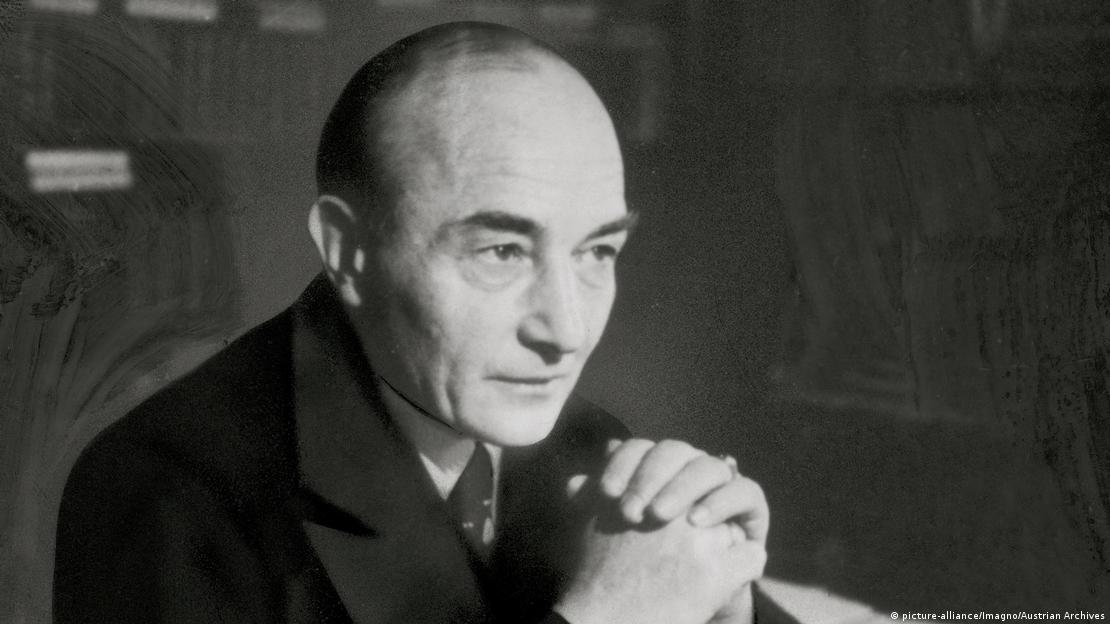
Robert Musil is one of the least widely read of the great European modernist writers, yet his work occupies a distinctive place in twentieth-century intellectual culture. His fiction is neither conventionally religious nor militantly anti-religious. It explores the spiritual exhaustion of modern civilisation, the collapse of moral certainty, and the persistent human longing for transcendence in a world increasingly shaped by scepticism, bureaucracy, and technology.
Musil’s novels and stories reveal deep connections between philosophy, psychology, politics, aesthetics, and theology. Through irony, speculation, and extraordinarily subtle psychological observation, he asks what remains of spiritual life after the decline of traditional religious authority. Although his fiction can be intellectually demanding, it rewards patient readers with unusual moral and philosophical depth.
For newcomers to Musil, Five Women may be a good starting point. Originally published in German as separate works in 1911 and 1924, the collection offers an accessible introduction to his style and concerns. Five Women is to Musil’s magnum opus, The Man Without Qualities, as James Joyce’s Dubliners is to Ulysses. Literary critic Frank Kermode described the five stories collected in the English translation (by Eithne Wilkins and Ernst Kaiser) as “elaborate attempts to use fiction for its true purposes, the discovery and regeneration of the human world.”[1]
Musil is best known for The Man Without Qualities, his monumental unfinished novel published between 1930 and 1943. Set in the final years of the Austro-Hungarian Empire before the First World War, the novel portrays a civilisation drifting toward catastrophe while remaining strangely incapable of recognising its own spiritual and moral decline.
The protagonist, Ulrich, is a mathematically gifted intellectual who moves through elite Viennese society searching for forms of meaning that might survive the erosion of inherited moral and religious traditions. He embodies the dilemma of modern Europe: intellectually sophisticated yet spiritually uncertain. Musil uses Ulrich not merely as a character but as a vehicle for exploring the psychological and moral condition of modernity itself.
The theological significance of Musil’s fiction lies partly in this search for meaning. Although he rejected dogmatic religion, he remained fascinated by what he called the “religious dimension” of existence. His work repeatedly returns to experiences of wonder, ecstasy, moral intensity, transcendence, and unity. Like other major modernist writers such as Franz Kafka, Hermann Broch, and Rainer Maria Rilke, Musil wrestled with the spiritual crisis created by the weakening of traditional Christian frameworks in modern Europe.
One of Musil’s central concerns is the inability of rational systems to account for the depth and complexity of human experience. Ulrich frequently speaks of the need for a “sense of possibility,” a way of perceiving reality that transcends narrow utilitarian logic. Musil observed that civilisation had achieved extraordinary scientific and bureaucratic sophistication while simultaneously impoverishing the inner life, and technological progress did not necessarily produced moral wisdom. Musil sensed that modernity could not live indefinitely on procedural systems, legal frameworks, and economic efficiency alone. People hunger for deeper forms of significance. Many readers recognise the same tensions in their own experience of the world.
At the same time, Musil was sceptical of simplistic religious revivalism. Organised religion in his fiction often appears conventional, sentimental, or intellectually exhausted. Churches struggle to speak convincingly to modern consciousness. His characters are frequently caught between an inability to fully believe and an inability to completely abandon religious imagination.
Moreover, Musil was fascinated with mysticism and “the other condition” (der andere Zustand), referring to moments of heightened consciousness in which ordinary distinctions between self and world seem temporarily dissolved. These experiences resemble contemplative and apophatic traditions within Christianity, especially those associated with figures such as Meister Eckhart and John of the Cross.
In the later sections of The Man Without Qualities, Ulrich and his sister Agathe pursue an intensely introspective relationship aimed at recovering this “other condition.” Their conversations resemble philosophical theology stripped of doctrinal boundaries. They seek an experience of absolute connection and spiritual immediacy, yet Musil presents these aspirations ambiguously. The longing for transcendence is genuine, but its fulfilment remains elusive and potentially dangerous. For Musil, mysticism hovers uneasily between illumination and dissolution.
Throughout his fiction, Musil refused both nihilism and certainty. He did not celebrate chaos for its own sake, nor retreat into nostalgic traditionalism. His work consistently embodies ambiguity. Theology in Musil is less about defending doctrinal propositions than about exploring unresolved questions concerning meaning, ethics, transcendence, and human destiny. His prose style reinforces these concerns. Narrative often gives way to essayistic reflection, producing a hybrid literary form capable of philosophical and spiritual inquiry. The result is fiction that behaves almost like theology conducted through imagination rather than dogma.
Musil’s imaginative literature engages theology by exposing the spiritual tensions inherent in modern existence. His novels portray a civilisation haunted by transcendence while simultaneously doubting its possibility. His characters are intellectually refined yet morally uncertain, spiritually restless, and persistently drawn toward realities beyond rational explanation. In probing these tensions with irony, precision, and psychological depth, Musil has created literature that challenge us to reflect more deeply on questions of human identity, moral responsibility, and the spiritual condition of the worlds we inhabit.
Rev Dr Rod Benson is General Secretary of the NSW Ecumenical Council and a minister of the Uniting Church in Australia serving at North Rocks Community Church in Sydney.
Reference
[1] Robert Musil, Five Women (Boston: Verba Mundi, 1966); quotation from the preface, page 13. In the preface, Kermode refers to “discovery and registration of the world”; on the back cover, “registration” is replaced by “regeneration.” Both words are apposite.
Image source: DW News


Thank Rod,
I’ve often wondered about The Man without Qualities and now you’ve given me a helpful handle on it.
Thanks for the feedback! It’s a mammoth book, and difficult for most of us to read. And I don’t hear it talked about much. But that’s no reason to leave it on the shelf (or against the door) gathering dust!