
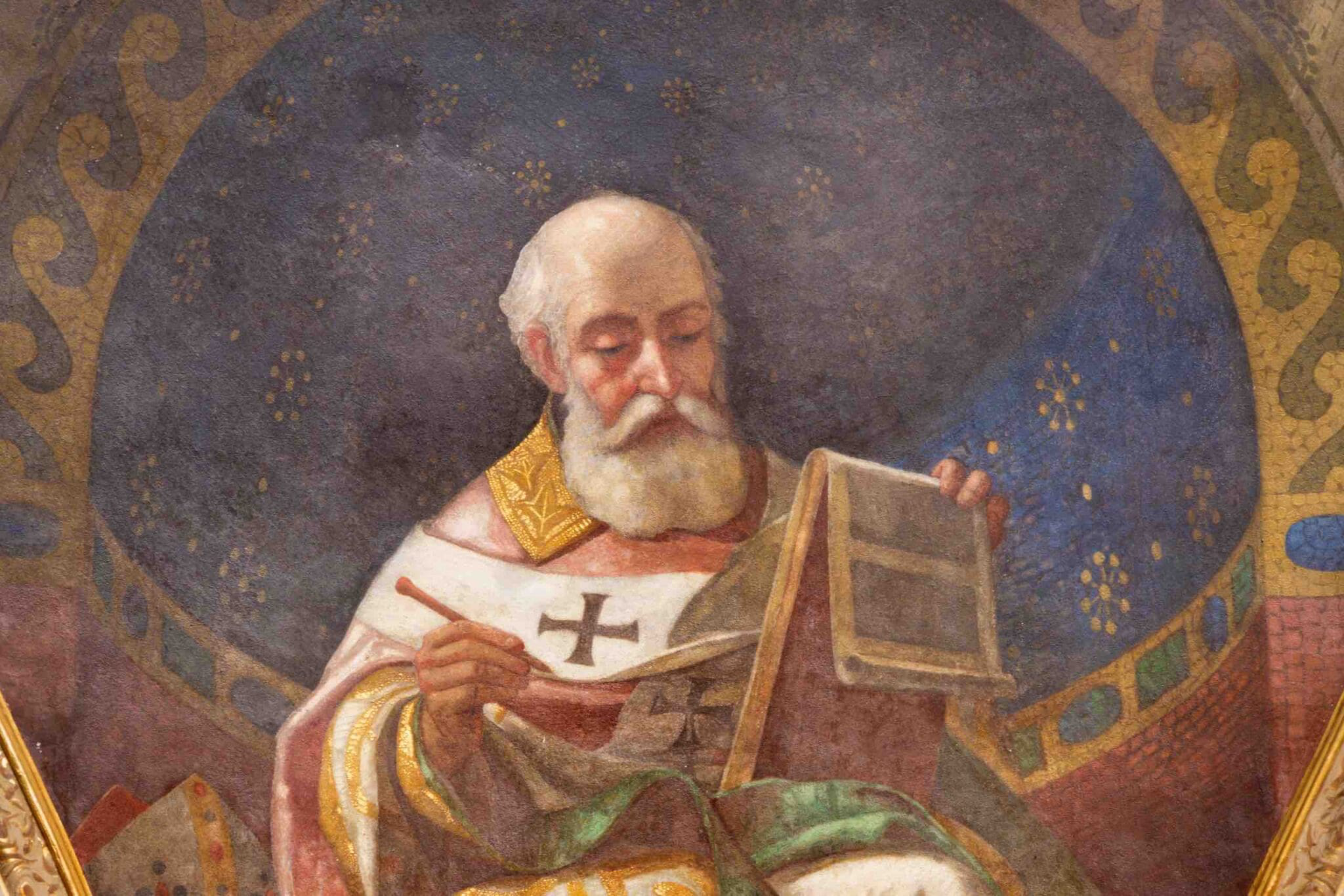
Self-identity and faith in contemporary Western culture
Who am I?
Earlier generations generally inherited much of their identity from family, church, occupation, locality, or nation. Today, personal identity is increasingly understood as something each of us must discover, construct, express, and renovate. The modern quest to discover who we really are is more liberating and more burdensome than it has ever been.
Personal fulfilment, authenticity, and self-expression have become dominant cultural values. Social media, consumer choice, and unprecedented personal freedom multiply the possibilities and pressures of self-definition. At the same time, we hear reports of unprecedented levels of loneliness, anxiety, and uncertainty in relation to self-identity.
How does faith relate to the quest for self-identity? The relationship between Christianity and modern individualism is surprisingly complex. The Christian tradition has made a profound contribution to the modern appreciation of the individual person. Yet it also questions many of the assumptions upon which contemporary understandings of identity are built.
For Christians, self-knowledge is ultimately inseparable from God-knowledge. Rather than seeing identity primarily as a project of self-construction, Christian theology understands it as a gift of creation, bent by sin, renewed through Jesus, nurtured by the Holy Spirit within the community of faith, expressed through vocation, and fulfilled in the kingdom of God.
The modern concern for the individual reflects a long historical development. Scripture asserts that every human person is created “in the image and likeness of God” (Gen 1:26) and possesses inherent dignity. The Hebrew prophets called people to repentance, Jesus summoned individuals to discipleship, and the apostles emphasised personal faith and accountability before God. Despite the profoundly social and communal context of the ancient world, familiar notions of the person and the individual appear recognisable to us.
Augustine’s famous autobiographical Confessions, written in the fourth century after Christ, introduced an unprecedented exploration of the inner life. Centuries later, the Protestant Reformers strengthened the significance of conscience, personal faith, and direct engagement with Scripture. Christianity helped prepare the ground for the articulation of many of the rights and freedoms that later generations would cherish.
The nineteenth century, however, marked a significant turning point. The Enlightenment had encouraged unprecedented confidence in reason and individual judgement. The subsequent turn to romanticism shifted attention toward feeling, imagination, and authenticity. Industrialisation and urbanisation loosened the bonds of traditional local community, while democratic institutions expanded individual liberty. Change was in the air.
During the twentieth century, the developing field of psychology explored personality, emotion, and identity formation with increasing sophistication, and contemporary digital culture has transformed identity into something that is continually displayed, managed, and evaluated before others. The Canadian philosopher Charles Taylor describes this as the “age of authenticity,” in which people increasingly believe that their deepest obligation is to be true to themselves.
Much of this development represents genuine moral progress. Modern Western societies rightly affirm the dignity of every person, protect freedom of conscience, oppose arbitrary authority, and encourage personal responsibility. Christians should welcome these achievements rather than nostalgically longing for earlier social arrangements that often denied equal dignity to many people. The gospel of Jesus Christ (not to mention the incarnation itself) affirms the immeasurable worth of every person before God.
Yet Christianity also distinguishes between individuality and individualism. Individuality recognises that every person is unique, gifted, and morally responsible. In contrast, individualism elevates the autonomous self as the ultimate source of meaning and moral authority. The self becomes responsible for creating its own identity without reference to objective reality, and freedom is detached from truth, community, and vocation. This transition arguably generates many of the anxieties that characterise contemporary life.
Christian faith offers a radically different starting point. It begins with the God who creates, knows, and loves every person. According to Scripture, human beings do not invent themselves; they receive a sense of self-identity as a gift from God. Before we accomplish anything, develop a career, establish relationships, or form political convictions, we already innately bear the image of God. Our deepest identity is not earned or confected but given. Our identity rests upon God’s gracious initiative rather than our own achievements.
This understanding transforms the search for self-knowledge. Contemporary psychology has made invaluable contributions to understanding personality, attachment, trauma, emotional intelligence, and human development. Christians have every reason to welcome these insights as gifts that illuminate aspects of God’s creation. Yet psychology alone cannot answer the deepest questions that pertain to the notion of human identity. Psychology may explain much about how personalities develop, but it cannot fully answer why we exist, what ultimately gives life meaning, or for what purpose we have been created.
The Swiss Reformer John Calvin famously observed that nearly all the wisdom we possess consists of two closely connected forms of knowledge: the knowledge of God and the knowledge of ourselves. The two cannot be separated. We understand ourselves more truthfully as we encounter God’s holiness, justice, mercy, and love.
At the same time, our awareness of our own limitations, aspirations, failures, and longings drives us toward a deeper knowledge of God. Self-knowledge is therefore never merely introspective but relational. We come to know ourselves most truthfully as we stand before the One who knows us completely.
This also explains why Christianity refuses to identify authenticity with simply expressing whatever lies within us. Scripture presents a more realistic account of the human condition. We are capable of remarkable creativity, generosity, and wisdom because they bear God’s image. Yet they are also subject to pride, fear, selfishness, and self-deception because that image has been distorted by sin.
Not every desire reveals our true identity. Some desires lead us away from the people we were created to become. Genuine self-knowledge requires honesty and fosters transformation. The Christian life is not merely about discovering ourselves but about becoming our truest selves through the redeeming work of Jesus Christ and the renewing power of the Holy Spirit.
The Christian life is not simply about discovering who we are but becoming the people we were designed to be. The New Testament consistently presents Christian discipleship as a process of transformation. Those who claim allegiance to Jesus are called to be “transformed by the renewing of your mind,” “growing into maturity with a stature measured by Christ’s fullness,” having “put on the new self,” (Rom 12:2; Eph 4:13, 24). Identity is not a possession to be defended but a dynamic calling to be lived out.
Modern discussions of identity often concentrate on personality, preferences, or self-expression. Christianity is more concerned with virtue and character. The question is not simply, “Who am I?” but “What kind of person am I becoming?” Through prayer, worship, Scripture, repentance, obedience, and service, the Holy Spirit cultivates humility, courage, patience, justice, wisdom, faithfulness, hope, and love within us. These virtues are the mature expression of self-identity. Character rather than personality reveals who we truly are.
Christian faith also locates our individual stories within a larger narrative. Contemporary Western culture often encourages us to construct our own life stories from personal experience and individual choice. While personal stories matter, they can become fragmented if detached from any larger framework of meaning. Followers of the way of Jesus understand their lives within the unfolding story of creation, fall, redemption, the life and death and resurrection of Jesus, the mission of the church, and the promised renewal of all things.
Our lives become intelligible because they participate in a grand story that began long before us and will continue long after us. We discover our identity not by inventing our own narrative but by finding our place within the story of God.
This larger story also gives meaning to vocation. In contemporary society, identity is frequently tied to occupation, success, or personal fulfilment. Career becomes a primary marker of self-worth, and retirement or unemployment can therefore produce profound crises of identity.
Christian vocation is much broader. God calls people not merely to particular occupations but to lives of faithful love and service. Paid work matters, but so too does friendship, parenting, citizenship, creativity, hospitality, prayer, generosity, and care for the vulnerable. Every legitimate sphere of life becomes an arena for the exercise of faithful discipleship. Our deepest identity lies not in what we do for a living but who we serve.
One of the most distinctive features of the New Testament is its understanding of the church as the community within which Christian identity is formed. Modern Western culture often imagines identity as an intensely private matter. Individuals choose beliefs, values, and communities according to personal preference.
The Christian faith offers an alternative vision. Through baptism, believers are incorporated into the Body of Christ. They learn to worship together, bear one another’s burdens, forgive one another, encourage one another, and exercise their diverse gifts for the common good. Identity is therefore not simply personal but ecclesial.
Far from suppressing individuality, this shared life enables it to flourish. The apostle Paul compares the Church to a body whose many members possess different gifts and responsibilities. Diversity is not an obstacle to unity but one of its essential features. Every member contributes something unique to the life of the whole. The Christian community therefore resists both collectivism, which absorbs individuals into the group, and radical individualism, which isolates them from one another. True personhood develops through relationships of love, accountability, mutual service, and shared worship.
This vision has profound implications for life in an age of rapid cultural change. Personal identity can become fragile because it depends upon constant performance and public recognition. Christian faith offers a more resilient foundation. Because our identity rests in God’s gracious love rather than public approval, it endures success without pride and failure without despair. It remains secure when a career ends, health declines, relationships change, or cultural fashions shift. Moreover, the Christian is free to acknowledge personal weakness because dignity does not depend upon perfection or even effort.
Every life encounters disappointment, illness, grief, ageing, and death. An identity built solely upon achievement, youth, productivity, or popularity inevitably becomes vulnerable when these foundations are shaken. Christianity neither romanticises suffering nor denies its pain. It proclaims that God entered human suffering in the person of Jesus Christ and transformed even the experience of the cross into the means of redemption. Suffering and loss need not destroy identity. They may deepen faith, enlarge compassion, and strengthen hope.
Christian identity is shaped as much by the future as by the past. Christian self-understanding is profoundly hopeful. The New Testament speaks of Christians as a new creation while acknowledging that their transformation is incomplete. “Dear friends,” writes the Apostle John, “we are God’s children now, and what we will be has not yet been revealed (1 Jn 3:2). We are unfinished people, being formed by grace, awaiting the day when God’s work of renewal will be complete.
The modern search for self-identity reflects a genuine human longing. It expresses our desire to know who we are and how our lives matter in relation to the world and other people. Christianity affirms that longing but orients it toward a deeper horizon.
We do not come to know ourselves by looking endlessly inward or by constructing an identity from our desires alone. We know ourselves most fully as we come to know the God who created us, redeemed us, and calls us by name. In that relationship, identity is a gift of grace, and the lifelong journey of becoming ourselves finds its fulfilment as we follow Jesus ever more closely, modelling his moral vision and ethical virtues.
Who am I? There are many ways to answer that question, but one true response is to confess that I am a child of God, a disciple of Jesus, embarked on a journey that began with grace and ends in love.
Rev Dr Rod Benson is General Secretary of the NSW Ecumenical Council and a minister of the Uniting Church in Australia serving at North Rocks Community Church in Sydney.
Image source: unknown (public domain)

