
The earliest Christian missions in New Guinea and the Solomon Islands
Part One of Five
By Rod Benson
The history of Christianity in New Guinea and the Solomon Islands is often told through celebrated landings, missionary pioneers and denominational anniversaries. Such events matter, but they provide only the outer framework of a more complex history. Christianity moved through Moluccan trading networks, European empires, Pacific churches, mission schools, labour migration and Indigenous kinship. It was preached by European clergy, but also by Papuan teachers, Fijian and Samoan couples, returned Solomon Island labourers and local evangelists whose names were often omitted from official accounts.
This article distinguishes brief Christian encounters from permanent mission and places the earliest missionary ventures within existing worlds of exchange, political authority and religious meaning. Its central argument is that missionaries entered neither an empty religious landscape nor an isolated collection of societies. They entered a mobile, linguistically diverse and politically negotiated island world.
Presence mission and Indigenous expansion
It is helpful to map the early history of Christian mission in New Guinea and the Solomon Islands in four stages. The first was Christian presence: chaplains, prayers, Masses and crosses accompanying voyages of exploration. The second consisted of missionary attempts, including ventures that collapsed after only a few years. The third involved permanent missions capable of maintaining stations, schools, translations and congregations. The fourth, and ultimately decisive, was Indigenous Christian expansion, when Pacific and local teachers carried the faith beyond expatriate-controlled stations.
The founding of a Christian mission in new territory was a far step from the conversion of the surrounding population. In some places, decades separated the first missionary residence from the first baptisms. Further decades might pass before local teachers or ordained clergy assumed leadership. Founding anniversaries express the theological memory of present churches, but they compress into a single date what is always a prolonged and contested process of development and change.
Missionary journals often emphasise danger, sacrifice and extraordinary conversions because reports of such events were used to raise funds in the home countries. Colonial records generally interpreted events through administrative interests, while denominational histories celebrated their founders. Indigenous speech generally survives through foreign translation, and women and Pacific Islander teachers were frequently unnamed in the colonial mission records. Oral histories provide indispensable alternative perspectives, although they too may reflect later church identities. No single archive supplies the whole story, and much archival material is now lost due to physical deterioration and lack of awareness of its enduring historical value.
Iberian voyages and early Christian presence
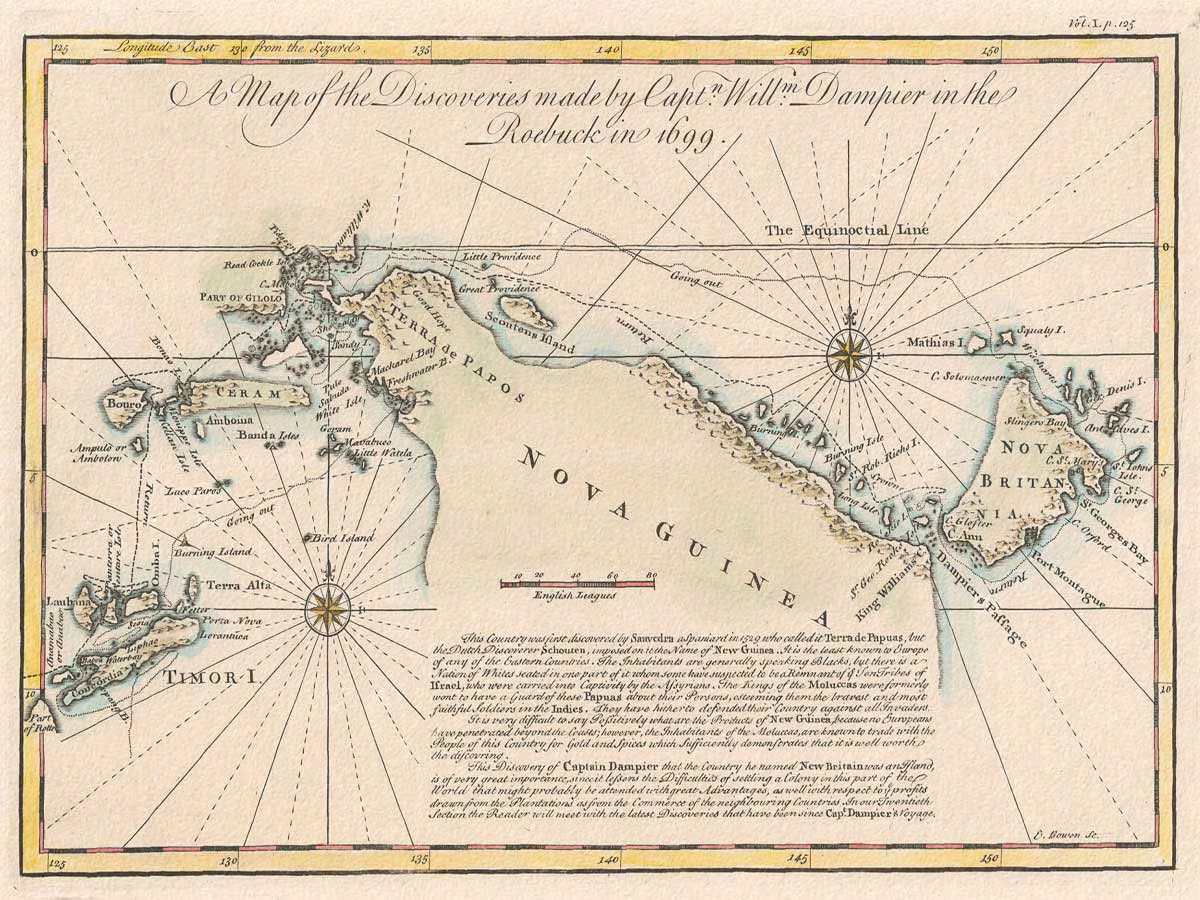
Contact with the world of the Europeans was relatively early due to the proximity of the island of New Guinea to the Spice Islands. Portuguese and Spanish mariners were the first Europeans known to have brought Christian observance to coastal New Guinea. Jorge de Meneses probably reached the north-western region in 1526 or 1527. The Spanish navigator Íñigo Ortiz de Retes sailed along the north coast in 1545 and applied the name Nueva Guinea. Catholic prayers and chaplains accompanied such voyages, but no evidence demonstrates the establishment of an enduring Christian community.
In the Solomon Islands, the earliest documented Christian rites accompanied Álvaro de Mendaña’s expedition of 1568. Franciscan friars travelled with the Spaniards, Mass was celebrated and crosses were erected. Mendaña returned in 1595 intending to create a colony, although the attempted settlement was at Santa Cruz on the south-eastern edge of the Solomon archipelago. Disease, violence and internal conflict destroyed the enterprise. These expeditions introduced Christian symbols but left neither continuing congregations nor institutions.
The Indigenous people of western New Guinea nevertheless participated in long-established maritime networks, linking Papuan communities with Seram, Tidore and other Moluccan islands. After the sixteenth century these networks included traders and government officials of Islamic and Christian faith. Papuans may well have encountered Christian people, objects or ideas before any resident missionary arrived. There is no firm evidence of a permanent early Christian community, but the absence of an organised mission should not be confused with complete absence of contact between cultures.
The religious worlds encountered by early missionaries
The religions of New Guinea and the Solomons cannot adequately be described by the single category ‘animism.’ Different communities possessed diverse understandings of ancestors, territorial beings, sacred places, human vitality, death, fertility and the causes of illness or misfortune. Ritual specialists mediated between visible and invisible dimensions of life. Gardening, exchange, warfare, initiation, healing and leadership all possessed elements of religious significance.
Missionaries commonly divided human existence and experience into religious and secular spheres, while the Indigenous societies they encountered did not. Condemning or suppressing a cultural ritual might affect medicine, land, kinship and recognised authority. Conversely, Christian teaching about creation, healing, resurrection and protection was assessed by Indigenous communities in the context of existing local knowledge. Communities are likely to have considered asked whether the Christian God could be trusted, whether Christian prayer was effective, and what allegiance to the mission would require and deliver.
Conversion to Christian faith was therefore rarely the instantaneous replacement of one complete religion by another. Christian prayer, education or medicine might initially be adopted alongside ancestral practices. Some people found the Christian account of God, forgiveness or eternal life persuasive. Others sought literacy, protection or new alliances. Still others rejected a mission that threatened ritual knowledge, established authority or relationships with ancestors and land.
The first Catholic missions
The first sustained missionary attempt in the wider region was undertaken by French Marists. In 1844 Pope Gregory XVI created the enormous Catholic Vicariate of Melanesia and Micronesia. Bishop Jean-Baptiste Épalle and a Marist party reached Makira, then commonly called San Cristobal, on 2 December 1845. Épalle was attacked on Santa Isabel later that month and died from his injuries. Older accounts emphasised martyrdom; a broader interpretation also considers misunderstanding about gifts, authority and reciprocal obligation.
Under Bishop Jean-Georges Collomb, the Marists continued their efforts and moved westward. In September 1847 they established a mission on Woodlark Island, or Muyua, east of New Guinea, and later worked on Rooke Island, now Umboi, between New Britain and the mainland. Collomb died in 1848. Illness, insecurity and inadequate resources forced the surviving missionaries to withdraw in 1849. The institution failed, but the venture preceded the more famous Protestant landing at Mansinam by eight years.
The Marist experience exposed conditions that would shape every later mission. Missionaries depended on communities whose political relationships they understood imperfectly. Gifts could initiate enduring reciprocal obligations rather than complete a purchase. Permission to settle could draw outsiders into established rivalries. Missionary descriptions of unprovoked hostility often concealed the disruptive effects of foreign shipping, trade and recruitment.
From encounter to permanent mission
By the middle of the nineteenth century, Christianity had appeared at several points around New Guinea and the Solomons but had established no durable regional centre. The decisive change came when missions combined continuing residence with language learning, schools, maritime supply and the formation of local teachers. Even then, institutional survival did not guarantee acceptance. Communities observed foreign residents for years before deciding what their message meant.
The first mission to achieve this continuity emerged at Mansinam in Dutch New Guinea. Its founders endured disease and isolation, but its real historical significance lay in the Papuan teachers who eventually carried Christianity beyond the station. The next article examines how a precarious foreign settlement became the starting point of a Papuan Christian movement.
This is Part 1 of a five-part series.
Rev Dr Rod Benson lives in Sydney and writes about a range of topics from books and local history to food, faith, philosophy, ethics, research skills, and everyday life. Away from the keyboard, he enjoys cooking for friends, walking in the Australian bush, exploring a beach, discovering new restaurants, and reading philosophy, fiction and poetry. He is married to Emma and is minister of North Rocks Community Church, a Uniting Church congregation. He lived in PNG from 1978-1983.
Image source: Antique Print and Map Room

