
By Rod Benson
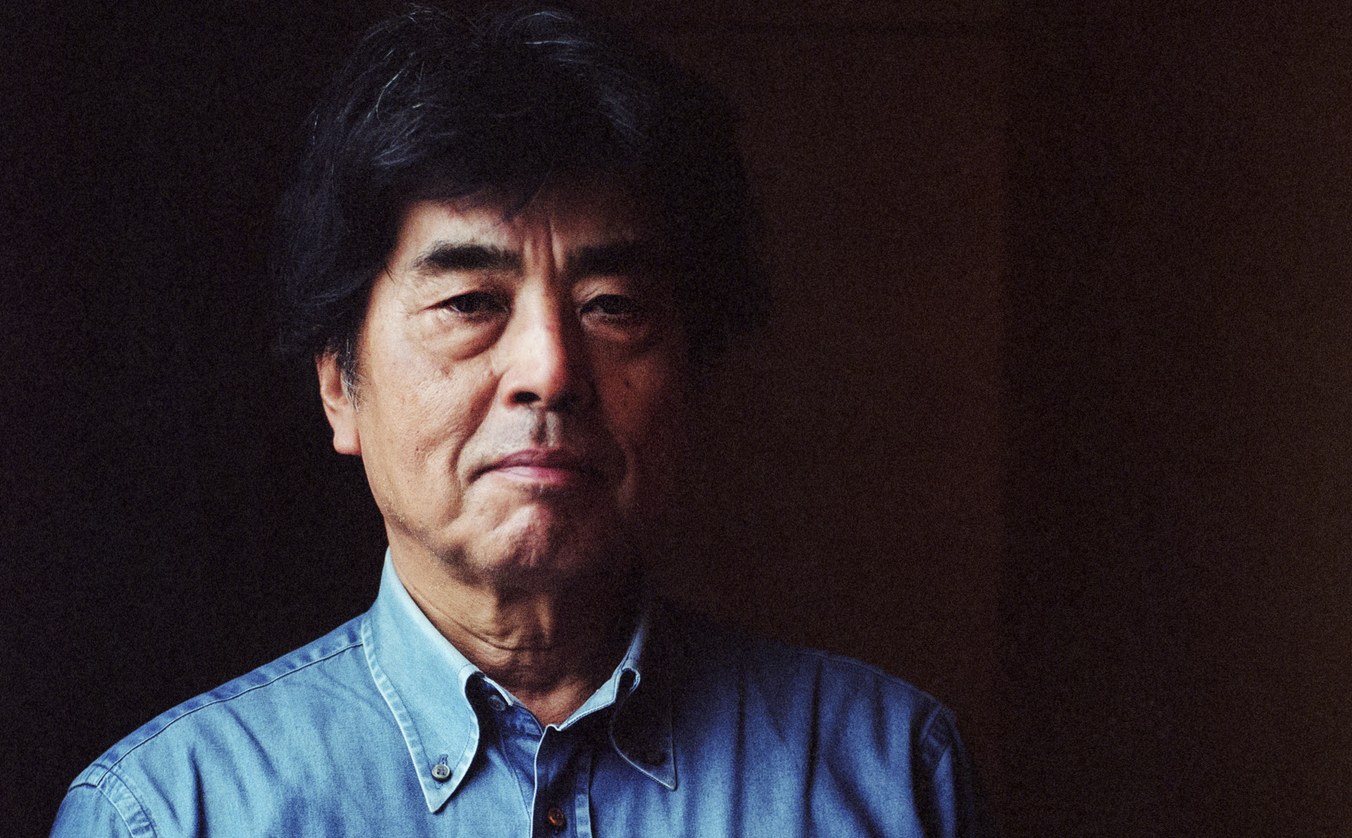
The death of the Japanese novelist and filmmaker Ryu Murakami on 17 October 2026, aged 74, brings into focus one of the most unsettling and inventive literary careers of the past half-century.
Across more than four decades of publication, Murakami joined formal experimentation to a sustained examination of violence, estrangement, consumer culture and institutional inadequacy. His work is sometimes presented as a literature of provocation, but the description is incomplete. At its strongest, his fiction asks why societies capable of remarkable material achievement so often fail to provide the relationships, purposes and institutions necessary for human flourishing. Recent obituaries rightly emphasise his imaginative audacity and appeal to younger readers; they also invite a more searching account of the ethical questions that animate his fiction.[1]
Literary form and the experience of dislocation
Murakami was born in Sasebo, Nagasaki Prefecture, in 1952. Growing up in a city associated with an American naval presence and coming of age during the cultural ferment of the late 1960s, he encountered both imported cultural forms and the rapid transformation of postwar Japan. These influences help locate his persistent concern with the unstable relationship between freedom, cultural belonging and modernisation.
I read his debut novel, Almost Transparent Blue (1976), while engaged in graduate studies in creative writing at Macquarie University. I was suitably shocked by its explicit content and intrigued by its revelation of alienation and the search for meaning that lie at the heart of the (post)modern hyman psyche. Written while he was a student at Musashino Art University, Almost Transparent Blue won the Gunzo Prize for New Writers and the Akutagawa Prize. Its disaffected young urban protagonists inhabit a world of intoxication, sex and fractured encounters. Its significance lies not simply in the controversial subject matter but in the author’s exploration of sensory accumulation, compressed observation and the withholding of overt moral explanation which together make disorientation a feature of reading as well as a theme of the narrative. Form and content are inseparable: the reader is not told what alienation means but drawn into its rhythms and limits.
Murakami subsequently demonstrated that this technique was neither a youthful mannerism nor a fixed formula. Coin Locker Babies (1980), awarded the Noma Literary Prize for New Writers in 1981, enlarges his fictional scale through the history of two boys abandoned as infants in railway-station lockers. Its grotesque and sometimes surreal inventions connect the intimate experience of rejection with questions of social responsibility. By contrast, 69 (1987) employs comedy and affectionate irony to portray adolescent rebellion. Piercing (1994), Audition (1997) and In the Miso Soup (1997) exploit psychological suspense, showing how menace can emerge from seemingly familiar situations. Across these different registers, Murakami refined a craft in which narrative shape and emotional effect serve a coherent social inquiry.[2]
Prosperity without hope
An important expression of that inquiry appears in the 2000 novel Kibō no kuni no ekusodasu, commonly rendered in English as Exodus to the Land of Hope. Its premise has middle-school students withdrawing from conventional education to organise new activities and enterprises through digital networks. Against a background of political and economic instability, the novel questions whether established institutions still offer younger people credible grounds for commitment. A character’s observation that Japan has everything except hope provides a concise formulation of Murakami’s wider preoccupation. The claim is literary and polemical, not a sociological measurement; its force lies in exposing the distance between prosperity and a sense of shared future.[3]
Matthew Strecher’s study of Murakami’s fiction situates such narratives within Japan’s problems of social withdrawal, educational disengagement and the perceived completion of the national project of modernisation. His account of Murakami’s “document novel” is valuable because it identifies a formal strategy through which the novelist joins fictional invention to recognisable public anxieties. Murakami does not reduce every personal catastrophe to economic or institutional causes; nevertheless, his fiction repeatedly resists the notion that private disorder can be understood in isolation from social arrangements.[4]
This critique has implications beyond Japan. Economic expansion, technological sophistication and enhanced consumer choice can increase human opportunity without themselves defining what human life is for. Murakami’s characters frequently mistake immediate gratification, mastery or independence for a durable account of freedom. Their failures suggest a difficult question: what sustains personal agency when the bonds of trust and reciprocal responsibility have weakened? The novels diagnose that question more consistently than they answer it.
The moral range of a disquieting writer
Murakami’s achievements outside fiction prevent an easy identification of his outlook with nihilism. His career guidance book, 13-Year-Old’s Hello Work (2003), introduced young readers to an extensive range of occupations, offering an imaginative alternative to narrowly prescribed futures. He also became widely known as a principal interviewer on the television programme Cambrian Palace, where he engaged with business leadership and innovation. His filmmaking and the celebrated 1999 adaptation of Audition by Takashi Miike extended the reach of his imaginative work. These activities reveal interests in initiative, education and possibilities for renewal alongside his fascination with violence and collapse.[5]
There are limits to the literary use of extremity. The representation of sexual exploitation and brutality in Murakami’s works may disclose social indifference, but it may also risk repeating the objectification it appears to criticise. Artistic innovation does not by itself settle ethical questions about narrative perspective or the treatment of victims. Such reservations qualify Murakami’s achievement: his fiction compels readers to confront situations that more consoling forms of cultural expression leave unseen and unexamined.
Theological interpretation without appropriation
Murakami was not a systematic religious thinker, and his novels should not be treated as disguised Christian parables. Yet his depictions of abandonment and distorted desire invite comparison with Christian accounts of sin as estrangement: not merely discrete violations of a rule, but disorders of relation involving the self, other people, society and God. The vulnerability of the children in Coin Locker Babies becomes particularly resonant when read beside the biblical affirmation that human beings bear the image of God (Gen 1:26–27). Such a comparison does not ascribe Christian intentions to the novelist; it asks what moral responsibilities his imagined world discloses.
His portrayal of craving and dissatisfaction may also recall Buddhist reflection on attachment and suffering, although similarity of theme is not evidence of doctrinal influence. What matters for the present argument is that Murakami’s fiction identifies a deficit that neither private appetite nor social achievement can reliably overcome. This is precisely the point at which his literary diagnosis can enter a conversation with the theological category of hope.
Hope in a crucified and risen Christ
Christian hope should not be confused with optimism about historical trends. It is rooted in the conviction that God’s purposes for the world have been disclosed decisively in the life, death and resurrection of Jesus Christ. The ministry of Jesus identifies that future with the arrival of God’s reign: healing, forgiveness, the restoration of relationships and good news to those excluded from social honour and power (Lk 4:16–21). The cross prevents this claim from becoming an evasion of suffering. Jesus’ execution under Roman authority places injustice, humiliation and death at the centre of the Christian story, rather than treating them as embarrassing exceptions to an otherwise triumphant account of progress.
German theologian Jürgen Moltmann’s Theology of Hope (ET 1967) argues that God’s promised future belongs at the centre, not the margins, of Christian theology. The resurrection opens history towards a future that present circumstances cannot guarantee. In The Crucified God (ET 1973), Moltmann complements this argument by refusing to detach divine love from the reality of suffering. Taken together, the two works help articulate a hope that neither denies the wounds of history nor makes human improvement its ultimate foundation. Murakami’s landscapes of abandonment offer a demanding test for such claims: a credible theology of hope must attend to actual injury rather than rush to reassuring closure.[6]
The resurrection supplies the distinctive Christian answer to the apparent finality of death and defeat. In 1 Corinthians 15, Paul describes the risen Christ as the “firstfruits” of a coming resurrection, linking the Easter proclamation to the destiny of humanity. In Romans 8:18–25, this expectation widens to include creation itself, portrayed as groaning for liberation. Revelation 21:1–5 imagines God dwelling with humanity in a renewed heaven and earth, where death and mourning are overcome. These texts do not offer a technical programme for history. They proclaim that the present conditions of alienation, decay and injustice are not the final truth about the world.
English theologian N. T. Wright’s Surprised by Hope (2007) similarly insists that the biblical horizon is bodily resurrection and new creation, not merely the departure of souls from an expendable material world. Wright and Moltmann differ in method and emphasis, yet both resist the confinement of Christian salvation to private consolation. Resurrection faith has a social horizon because the world God promises to renew is the world in which human beings now suffer, cooperate, create and exercise responsibility.[7]
Hope as responsibility in the present
The future orientation of Christian hope consequently has present ethical force. The kingdom of God is announced and inaugurated in Christ, yet its fullness remains anticipated rather than possessed. This tension guards against identifying any government, church or programme of reform with the completed purposes of God; it equally rules out passive withdrawal from the world. Paul concludes his argument for resurrection with an exhortation to steadfast labour (1 Cor 15:58). Hope does not make present action unnecessary. It makes responsible action intelligible even where outcomes remain uncertain.
Read alongside Murakami, such a theology implies an affirmation of irreducible dignity against the seemingly inevitable reduction of persons to their market value. Against abandoned children and isolated adults stand obligations of protection, solidarity and belonging. Against violence and distrust stands the difficult work of justice and reconciliation. These are not activities by which the church manufactures the new creation; they are provisional signs of the future Christians believe God has promised. Hope so understood does not remove tragedy from history. It creates responsibilities within history, especially towards those whose experience makes hope difficult to imagine.
Questions the literature leaves open
Murakami’s legacy is wider than the notoriously disturbing works that first brought him international attention. His writing spans satire, psychological suspense, speculative fiction, filmmaking and cultural commentary; much of it remains unavailable in English. Obituary tributes to his originality and influence are warranted, although his most valuable contribution may be the persistent question whether a materially successful society can sustain a meaningful human future without stronger forms of belonging, moral responsibility and shared purpose.
The life of Jesus identifies hope with the restoration of human relationships; his crucifixion exposes the seriousness of violence and abandonment; his resurrection grounds the promise that neither death nor the apparent permanence of injustice will have the last word. Murakami gave compelling literary expression to prosperity without hope. Christian faith responds with a vision not of inevitable progress or human self-redemption, but of renewed creation and transformed humanity—and with a summons to anticipate that future through justice, compassion and reconciliation in the present.
Rev Dr Rod Benson lives in Sydney and writes about a range of topics from books and local history to food, faith, philosophy, ethics, research skills, and everyday life. Away from the keyboard, he enjoys cooking for friends, walking in the Australian bush, exploring a beach, discovering new restaurants, and reading philosophy, fiction and poetry. He is married to Emma and is minister of North Rocks Community Church, a Uniting Church congregation.
References
[1] “Ryu Murakami, cult Japanese author, dies aged 74,” The Guardian, 23 October 2026. https://www.theguardian.com/books/2026/oct/23/ryu-murakami-cult-author-of-coin-locker-babies-and-audition-dies-aged-74; AFP–Jiji, “Japanese novelist Ryu Murakami dies at 74,” The Japan Times, 23 October 2026. https://www.japantimes.co.jp/culture/2026/10/23/books/novelist-ryu-murakami-obituary/; Jiji Press, “Famed Japanese Novelist Ryu Murakami Dies at 74,” Nippon.com, 23 October 2026. https://www.nippon.com/en/news/yjj2026102300567/famed-japanese-novelist-ryu-murakami-dies-at-74.html
[2] John Clute and others, “Murakami Ryū,” The Encyclopedia of Science Fiction. https://sf-encyclopedia.com/entry/murakami_ryu
[3] Janet Ashby, “‘Exodus’ to a country of hope?”, The Japan Times, 6 October 2000. https://www.japantimes.co.jp/culture/2000/10/06/books/exodus-to-a-country-of-hope/
[4] Matthew Strecher, “(R)evolution in the Land of the Lonely: Murakami Ryū and the Project to Overcome Modernity,” Japanese Studies 28, no. 3 (2008): 329–344. https://doi.org/10.1080/10371390802446885
[5] “Japanese novelist Ryu Murakami dies at 74,” UPI, 23 October 2026. https://www.upi.com/Entertainment_News/2026/10/23/ryu-murakami-dies/4721792790476/
[6] Jürgen Moltmann, Theology of Hope: On the Ground and the Implications of a Christian Eschatology (1964; ET London: SCM Press, 1967); Jürgen Moltmann, The Crucified God: The Cross of Christ as the Foundation and Criticism of Christian Theology (1972; ET London: SCM Press, 1973).
[7] N. T. Wright, Surprised by Hope (London: SPCK, 2007).
Image source: Yamato Magazine, adapted

