
The second in a series of posts about religious creeds and confessions.
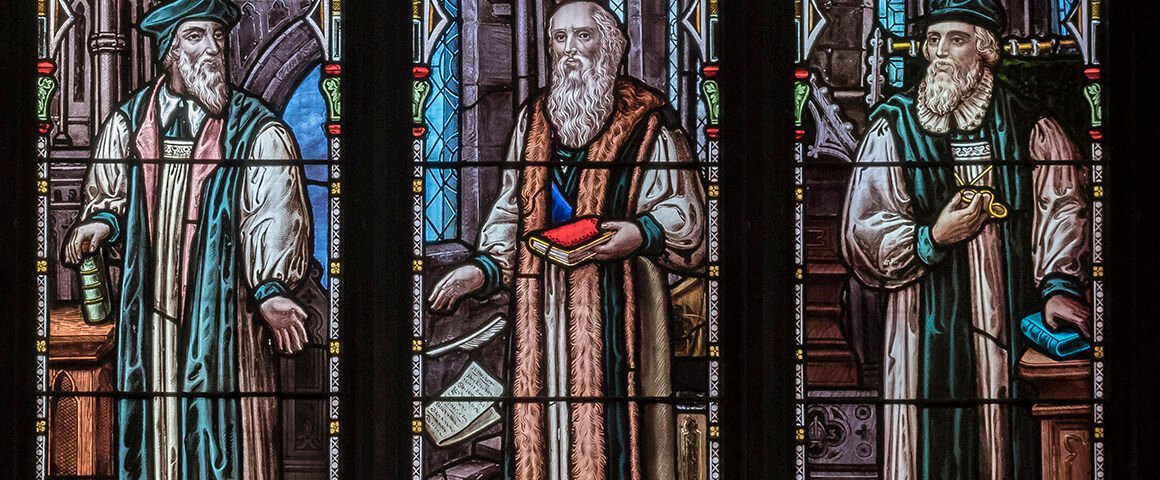
A creed is a short formal statement expressing religious truth. The English word “creed” derives from the Latin credo, “I believe.” This implies both assent to concepts and trust or reliance upon the implications of such concepts. A creed, therefore, is firstly a personal confession of faith, and a personal affirmation of trust in the God in whom one believes and in related matters.
Usually, however, a creed is recited within a community of faith, or communicated with a wider public, as a brief statement of essential religious belief. Creeds are often incorporated in the regular liturgy of the church, with participants reciting or singing the words. Creeds are intended to be universally accepted by all who identify as Christian, and to exclude those who cannot or do not assent to the doctrines as expressed.
Examples of early creeds include the Apostles’ Creed, the more detailed Nicene Creed, and the longer still Athanasian Creed, which (unlike the first two) includes anathemas condemning those who disagree with its statements. The Apostles’ Creed, although not crafted by the apostles of the New Testament, displays all the characteristics of a creed:
The Apostles’ Creed
I believe in God, the Father almighty,
creator of heaven and earth.
I believe in Jesus Christ, his only Son, our Lord,
who was conceived by the Holy Spirit,
born of the Virgin Mary,
suffered under Pontius Pilate,
was crucified, died, and was buried;
he descended to the dead.
On the third day he rose again;
he ascended into heaven,
he is seated at the right hand of the Father,
and he will come to judge the living and the dead.
I believe in the Holy Spirit,
the holy catholic Church,
the communion of saints,
the forgiveness of sins,
the resurrection of the body,
and the life everlasting.
Amen.
A confession of faith is a detailed exposition building on credal statements and articulating the distinctive beliefs and emphases of a community of faith. Examples include The Thirty-Nine Articles of the Church of England (1562), the Westminster Confession of Faith of the Presbyterian Church (1658) and the Barmen Declaration, a common call to resistance against the theological claims of the Nazi state adopted by the Lutheran Church, the Reformed Churches, and the United Churches in 1935.
Anglican theologian John Webster (1955-2016) correctly observes that creeds and confessions “emerge out of one of the primary and defining activities of the church, the act of confession … [in which] the church binds itself to the gospel.”[1] It is in this sense that creeds are held to be ecumenical. Creeds are profoundly shaped by the biblical revelation of God and seek to summarise essential biblical doctrines in words that precisely echo the biblical teaching.
We do not know who wrote the first Christian creeds or confessions of faith, but during the first decades of the church’s life, following the death, resurrection and ascension of Jesus Christ, the statement, “Jesus is Lord” resonated with those who had pledged allegiance to the risen Christ. Affirmation of the Lordship of Christ united his followers and set them apart from others who were ignorant of his claims, those who rejected his claims, and those who swore absolute allegiance to rival authorities such as Caesar.
In New Testament usage, and for most of Christian history, such phrases as “believing in,” “believing that,” and “confessing that” refer not to the doctrines themselves but to God and God’s redemptive acts. Credal statements clarify belief in God as Trinity (the Father, the Son, and the Holy Spirit), and often briefly indicate essential aspects of the person and work of Christ (the Son) such as his incarnation, propitiation for sin, and resurrection from the dead. By implication, this extends to biblical doctrine about the revelation of God and to biblical history.[2] Affirmation of credal statements is thus seen by many as an instance of godly devotion to the purity of “the apostles’ teaching” (Acts 2:42).
A creed, then, does not consist of dogmas imposed on Scripture as is sometimes argued by those who take the view, “No creed but the Bible.” Rather, a creed is a carefully crafted and precise summary of biblical doctrine pertinent to the time, place and community of faith in which it is crafted. At the same time, a creed is always intended as a universal, ecumenical document, providing “a touchstone to the faith for Christians of all times and places.”[3]
By virtue of their reliance on the meaning of the biblical text, the nature of their content (that is, what they do, and do not, affirm), and their longevity in the service of the gospel, the ecumenical creeds have a permanent place in the life of the church.
Dr Rod Benson is Research Support Officer at Moore Theological College, Sydney. He previously pastored four Baptist churches in Queensland and NSW, and served for 12 years as an ethicist with the Tinsley Institute at Morling College. The previous column in this series on creeds is available here.
References:
[1] John Webster, “Confession and confessions,” Toronto Journal of Theology 18 (1), 2002, 167.
[2] Jaroslav Pelikan, Credo: Historical and Theological Guide to Creeds and Confessions of Faith in the Christian Tradition (New Haven: Yale University Press, 2003), 64.
[3] Justin S. Holcomb, Know the Creeds and Councils (Grand Rapids: Zondervan, 2014), 13.
Image source: The North American Anglican
 iDigress