
An address by Dr Rod Benson, Moore Theological College, Sydney, 23 Sep 2023
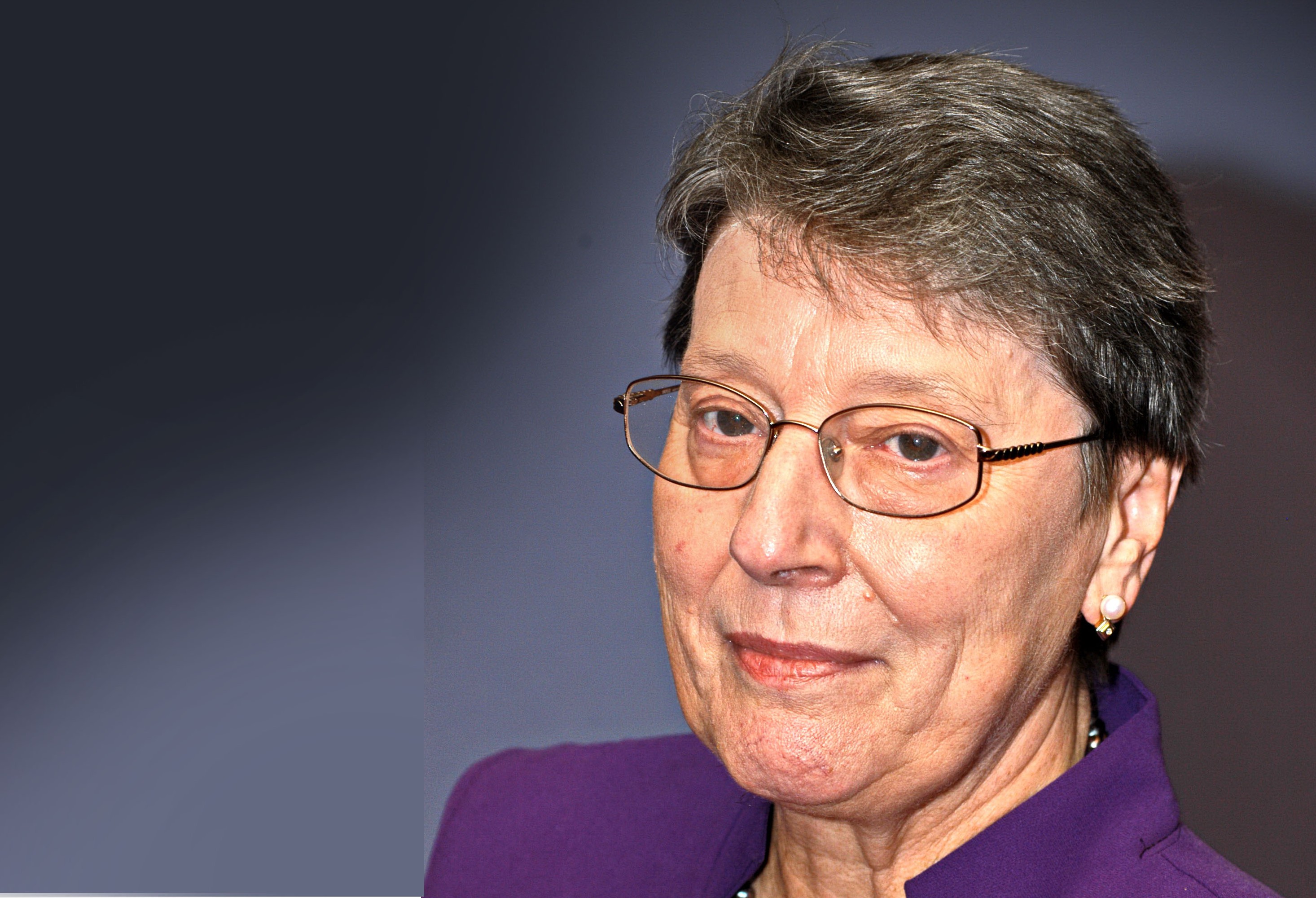
In a motion to the General Synod of the Anglican Church of Australia on 1 July 2014, referring to the late Deaconess Margaret Rodgers AM, Dr Robert Tong AM observed that “Margaret’s extensive ‘extracurricular’ activities were largely undertaken in Margaret’s own time, during periods of annual leave or in some instances where her employer decided it would be beneficial for all concerned for Margaret to be involved as ‘part of her employment’.”[1] It is my pleasure today to comment on some of those “extracurricular” activities.[2]
I. INTRODUCTION
By all accounts, Margaret Rodgers (1939-2014) was an extraordinary gift of God to the Anglican Church. For some years, I worked with Margaret on the executive of the NSW Council of Churches; I succeeded her as writer and broadcaster of the Council’s “Sunday editorials” on Sydney radio station 2CH; and I had the honour of writing the entry on Margaret’s life and work in the second edition of the Australian Dictionary of Evangelical Biography.[3] I quote from the ADEB article:
Developing a reputation as kind and intelligent, with keen historical and theological judgment, a dry wit, and common sense, Rodgers was ordained a deaconess of the Anglican Church in 1970. Disinclined to pursue ordination as a priest, which would necessitate leaving the Sydney Diocese, she nevertheless rose to become one of the most powerful lay leaders in the Diocese…
In 1994, Rodgers was appointed chief executive officer of Anglican Media, serving the Sydney Diocese, where she remained until 2003. In this role, she transformed the diocesan newspaper, Southern Cross, into a free monthly magazine with a circulation of 40,000 and significantly strengthened the Diocese’s media profile. She wrote a regular column for Southern Cross, penning articles ranging from a critique of the theology of Pope Benedict XVI to a commentary on the morality of the fashion industry. From 2004-2007, she was Archbishop Peter Jensen’s media officer. [4]
Margaret’s scholarship reflects her passion for Anglicanism and her desire for greater recognition of the contribution of women in the church. Her 1977 Bachelor of Divinity (Hons.) thesis, submitted to the University of Sydney, presents a history of deaconesses in the Church of England in the nineteenth century with special reference to the early years of Bethany Church of England Deaconess Institution, Sydney. Various publications on related themes followed.[5]
Margaret served as a member of the Synod of the Anglican Diocese of Sydney from 1976-2011, at times being the only woman elected. In 1978, she was the first woman elected to the Synod’s Standing Committee. In her 1996 Halifax-Portal Lecture, the inaugural series of this ecumenical venture, on “The ministry of women,” Margaret remarked that she found it “a little dismaying” to be the only woman lecturer.[6]
Her keen intellect, forthrightness, and theological formation were early evident, such as when she negotiated with Archbishop Marcus Loane the terms of her Institution Service as Principal of Deaconess House. In a letter to Archbishop Loane dated 8 December 1975, Margaret writes:
For some time I have been uneasy about the service presently used at the Institution of Deaconesses and Parish Sisters in the Diocese … In its present form I find the Service repetitive, rambling, sentimental and possessing no liturgical merit. When I read it I am unable to isolate any underlying doctrine of ministry upon which it rests, and it seems to me to sit very uneasily within the context of the liturgy which surrounds it. If you are happy with the idea, I would like to suggest that perhaps Alan Blanch, Peter Jensen and myself could design an alternate service, and submit it to you for your approval.[7]
Archbishop Loane was apparently happy with the idea, and an alternate service was approved.
II. MEDIA WORK
These qualities served Margaret well in the male-oriented and ideologically charged world of the Sydney Diocese. They also served her well in the combative secular media world. The Diocese proposed various plans to make better use of print, radio and television media to promote the gospel message and the Anglican brand.[8] Arguably the best such proposal was to employ Margaret in her various media roles. Veteran Sydney journalist and blogger John Sandeman viewed Margaret as “the secret weapon behind Sydney Anglicans’ high profile in the media.”[9] Moreover,
Most Australian Christians will complain about how the mass media deals with their church, or Christianity itself. It’s rare to see someone set out to deal with this problem and even rarer to see someone succeed, not just once but many times. Margaret Rodgers, who ran media relations for the Sydney Anglicans for a decade and a half, fitted the third category exactly.
She was the reason the Sydney Diocese rose to punch above its weight in the media. In Australia’s most competitive media market, the Anglicans got a lot of coverage; a lot of surprisingly positive coverage. Margaret was a master tactician at the media game: she knew the power of rarity, reserving Peter Jensen for the right sort of stories, sending out other spokespeople for day to day combat.[10]
Margaret wrote numerous articles and in later years her media advisory role for the Archbishop was the envy of other diocese and especially the Primate’s office.
Strategy and tactics
What is sometimes overlooked is the strategic role that Margaret’s media comments played in public life, especially in her role as Research Officer with General Synod. Where others may have spoken in platitudes or rebuffed journalists, Margaret knew how to manage information feeds and provided first-rate copy for media organisations, even though some of her colleagues may have preferred no publicity at all.
For example, in 1987 The Canberra Times reported Deaconess Margaret Rodgers as calling on “Anglican parishioners to admit they had ‘failed as a church to deal with [the problem of domestic violence] adequately,” and closed the story with another quote by Rodgers: “Obviously any woman who has been bashed and violated by a man would find it difficult to talk to a [clergy]man.”[11]
Similarly, General Synod’s Social Responsibilities Commission published a report in 1989 encouraging bishops to establish a uniform policy and practice regarding divorced Anglicans intending to remarry. Margaret is reported to have called the church’s current policy on remarriage “inconsistent” and in many cases producing “negative results.” Demonstrating her capacity for deploying nuance and diplomacy on controversial matters, she affirmed that “the church would always regard marriage as a lifelong commitment,” but added, quoting the report:
The Commission contends, however, that translating theological positions into pastoral practices which have the care of people and the development of mature personal relationships as their primary aim will not erode the importance of marriage in this society … Rather, it will demonstrate that the Anglican Church is more concerned about pastoral care than an apparent theological legalism.”[12]
Media statements often served tactical purposes. In an article in The Sydney Morning Herald in 1994, for example, Margaret suggested that the Anglican Church was “on the brink of a controversy potentially more divisive than women’s ordination” – namely, lay presidency at the Lord’s Supper.[13] Historian and Anglican priest Tom Frame makes much of this comment, arguing that Margaret’s purpose in commenting on the policy “was presumably to draw out its opponents.”[14] Perhaps he was right.
A theological rationale
Self-promotion was not one of Margaret’s strong points: she preferred her achievements to speak for themselves. This makes it difficult to identify a particular theological basis for her media work. Yet there are occasional clues. In 2008, she wrote at length on the role of media in promoting the Christian faith. Quoting evangelical statesman John Stott, she said:
[Stott’s] call for radical discipleship and gospel proclamation is both urgent and necessary. The preaching of the gospel of God’s forgiveness and saving grace for repentant sinners through Christ Jesus is the essential message that ought to be the focus and burden of every Christian preacher to the citizens of the secularized, relativist and materialist world of today.[15]
Since most people today rarely enter a gospel-saturated church, she suggested, “they must be first touched, or have their consciences stirred, and initial interest piqued and gained through media communication avenues.”[16] She commends Archbishop Peter Jensen’s strategic use of the media, especially his 2005 Boyer Lectures,[17] and adds:
He does not present as a politician, or a specialist commentator on every issue under the sun, but as a Christian theologian and preacher who is willing to bring his Bible-informed Christian mind into public discussions of the critical issues of the day…
To earn its place, Christian witness should be encased with winning persuasion and flair … Christians should not attempt to force their views upon others; they should rather aim to convince their hearers with reasoned and informed debate. Media in all forms provide a tremendous setting to further this aim.[18]
Similarly, in her acceptance letter to Archbishop Peter Jensen on appointment as his media relations officer in October 2003, she said, “I believe there will be many more opportunities for gospel proclamation through the media work.”[19] That was her primary purpose and aim.
III. ECUMENICAL WORK
When Margaret Rodgers was made a Member of the Order of Australia, the nation’s highest civilian honour, in January 2014, it was for “significant service to the Anglican Church of Australia through governance and representational roles, and to ecumenical affairs.” What were these ecumenical affairs, and why was a lay Sydney Anglican woman at the centre of them?
Ecumenical Affairs Committee
In one sense, ecumenism came to the Sydney Synod with the establishment of an Ecumenical Affairs Committee (EAC) in October 1974. Margaret was elected unopposed to this committee on 20 November 1978 (and to Standing Committee on 11 December 1978), and faithfully served for many years. Her predecessor at Deaconess House, Deaconess Mary Andrews (1915-1996), was also an active member of the EAC.[20]
The EAC’s brief was massive: to “serve, advise and inform the Diocese in regard to ecumenical matters”; to study theological and practical issues arising from such matters; to initiate and encourage discussions within the Diocese and with other denominations on relevant matters; to monitor the development of “church union schemes” in Australia; and to inform the Diocese concerning the programs of a wide range of ecumenical conciliar bodies including the World Council of Churches, the Christian Conference of Asia, the Australian Council of Churches and its NSW State Council (the NSW Ecumenical Council), the (evangelical) NSW Council of Churches, the Evangelical Alliance, and the NSW Inter-Church Trade and Industry Commission. By 1989, the exhausted and depleted committee had effectively ceased to function. In a memo to the Diocesan Secretary in March 1989, Bishop Donald Cameron advised that “there is limited interest in institutional ecumenism in the Diocese of Sydney.”[21]
Ecumenical Working Group
In 1990, the EAC was disbanded and Synod established a new ad hoc Ecumenical Working Group (EWG) whose first major task was to analyse preliminary documents relating to the World Council of Churches Assembly to be held in Canberra in 1991 and report to the Synod Standing Committee with a view to informing the Diocese generally on the issues at stake. Key EWG players were Bishop P. R. Watson, Rev. R. H. Avery, and Deaconess Margaret Rodgers.[22]
NSW Council of Churches
There was much ecumenical work beyond the Diocese. For many years, for example, Margaret served as an Anglican representative on the executive of the NSW Council of Churches, and as a director of NSW Council of Churches Broadcasters Pty Ltd, which managed the Council’s Sunday broadcasting on Sydney radio station 2CH. From 2008-2010, she served as the first woman president of the NSW Council of Churches.[23]
I observed Margaret at work in executive meetings of the NSW Council of Churches for several years. She was not the sole woman Council member: other long-term members included Mrs Leslie Hicks. Unlike many of her male colleagues, Margaret spoke only when she had something substantive or new to contribute to discussions, and she did not suffer fools gladly. The Rev. Dr Ross Clifford and I used to travel together to Council meetings, and on the way back to Morling College after my first meeting he said to me, “Margaret’s good value. Don’t be surprised if she appears to ignore you. When she needs your help, she will let you know.” He was right: the time came when she sought me out, and for my part I found her helpful, thoughtful, kind and reliable.
Before my time, Margaret worked closely with the Rev. Bernard Judd (1918-1999), who presented weekly broadcasts on 2CH for 27 years. When he retired from this role in 1996, the Council appointed Dr Clifford for a short time, then invited Margaret to be writer and presenter, a service she continued to provide for 13 years. At the time, I served as the Council’s Public Affairs Director, writing research reports and lobbying state and federal politicians on issues of interest to the Council of Churches. In July 2009, Margaret announced to the board that she would step down from her radio work and that I would succeed her.[24]
This came as a surprise to me. I said to her, “What’s the brief?” She replied, “I asked Bernard Judd that question, and he said, ‘Christian social commentary’.” So it was that I came to write and present the Council’s “Sunday editorials” on 2CH for more than six years before passing the baton to Russell Powell in January 2016.
Another story from the NSW Council of Churches illustrates Margaret’s attention to detail and singular passion for promoting the gospel of Christ. In 2006, along with many other agencies, the Council contributed a formal statement to an independent publication calling on Australian faith communities to take principled action to combat climate change. At a subsequent Council executive meeting, interest was expressed in “endorsing” the document. Margaret intervened, insisting that we merely “acknowledge” it. When challenged, she replied, “If you had read all the statements, you would have observed that the Hindu statement refers to ‘Lord Shri Krishna,’ and there is only one Lord, the Lord Jesus Christ. We cannot in good conscience ‘endorse’ a statement recognising the authority of the ‘Lord’ Krishna.”[25]
General Synod
On the national front, Margaret was a member of the Standing Committee of the General Synod of the Anglican Church in Australia from 1981-2000. She served as Research Officer for the General Synod Office from 1985-1993, based at St Andrew’s House, Sydney, where she engaged with a wide range of issues in theology, policy and practice. She worked with all the commissions of General Synod, with special attention given to the Doctrine Commission, the Missionary and Ecumenical Commission, the Social Responsibilities Commission, and the Task Force on Mission, Evangelism, Ministry and Training.[26]
Margaret’s research work with General Synod – information-gathering, analysis, evaluation, synthesis, report writing, networking, representation, and publicity – deserves separate academic attention. Here I will briefly mention a few of the highlights of which I am aware. In 1989, there was a large report co-authored by Michael Horsburgh and Margaret Rodgers on remarriage in the Anglican Church.[27]
In 1990, she wrote a report titled, “The future life and direction of the Australian Council of Churches: A Response from the Anglican Church of Australia,” in which she observed that Anglicans strongly supported actions that would “facilitate cooperation and understanding between the churches, and would initiate common action on prophetic, human rights and justice issues. Indeed, it might almost be said that Anglicans expect the ACC to act as their ecumenical conscience.”[28] Yet, in her conclusion she warned that such support “also obviates the need for the [Anglican] Church itself to initiate and engage in ecumenism apart from membership of the Australian Council of Churches.”
In 1992 there was a book-length publication, co-edited with the Right Rev. Maxwell Thomas, Chairman of the Doctrine Commission, on a theology of the human person.[29] Also in 1992, Margaret authored a report to the Bishops’ Conference which collated responses from the Diocesan bishops on ecclesiastical record-keeping practices relating to baptism, admissions to communion, confirmation, trends in adult baptism and confirmation, and related issues. Margaret offered two pages of recommendations for reform.[30] In 1994, Margaret co-authored a report on Anglican clergy marriage breakdown, drawing on findings of a survey she designed based on a similar survey conducted by Roger Hennessey in the United Kingdom.[31]
In her role as Research Officer for General Synod, Margaret was also a delegate to general meetings of the Australian Council of Churches. When the ACC was restructured to create the National Council of Churches in Australia, she was appointed as a a member of the NCCA executive from 1994-1997.
Anglican Consultative Council
There was also participation in meetings of the Anglican Consultative Council, a gathering of the global Anglican Communion. Margaret attended ACC meetings in Wales (1990), Panama (1996), Dundee (1999), and Hong Kong (2002), and attended the Lambeth Conference of Anglican Bishops as a media officer in 1998. Reports of all these meetings were circulated.
In 1996, Archbishop Harry Goodhew wrote to Mr Warwick Olson, chairman of the Anglican Media Council, supporting the notion that the Diocese had “a role to play beyond its own borders.” He argued that “it is all too easy for the antipodes to be forgotten in the world church, particularly in the Anglican Communion. Margaret Rodgers’ presence, along with that of Robert Tong as a delegate, will, in my judgment, help us to be seen and known.”[32]
Christian Conference of Asia
Margaret also participated as an Anglican delegate to the Christian Conference of Asia, a regional ecumenical organisation and forum for Christian unity and cooperation. She was elected to the CCA General Committee in June 1990 and served as CCA President from 1995-2000. As well as analysing and circulating various CCA reports, Margaret wrote detailed accounts of CCA proceedings and her personal experiences and observations for the benefit of General Synod and the Australian Council of Churches.[33]
World Council of Churches
In 1980, Margaret was an Anglican observer at the WCC Commission on World Mission and Evangelism conference in Melbourne. She was also involved in subsequent WCC meetings, notably the 1991 Seventh Assembly in Canberra, where she was an original signatory to a critical “Letter to Churches and Christians worldwide from participants who share evangelical perspectives.”[34]
Rationale for ecumenical engagement
What can we say about Margaret Rodgers’ approach to ecumenical engagement? Her commitment and perseverance are evident. As I said earlier, Margaret rarely spoke about herself. There is one place, however, where she outlined a considered personal rationale for engagement in ecumenical affairs. At a conference in Canterbury, UK, in 1993, Margaret was invited to formally respond to a paper by Bishop Michael Nazir Ali on “Scripture in ecumenical dialogue.” Her response was published, and in it she makes two remarkable disclosures. First, Margaret describes a local ecumenical gathering between parishioners from her local Anglican Church in Newtown, Sydney, and the local Catholic parish to discuss the ARCIC text, Salvation and the Church. She writes:
A good deal of work had been done by a group appointed by the two Archbishops to prepare studies on this ARCIC text. When our people from St Stephen’s met with the people from St Joseph’s the discussions were about everything else but the said text. People told each other their faith stories, they were so excited to be together. For they saw the value in their meeting and said they did not want to talk about Salvation and the Church. It belonged to the theologians, not to them. If we are addressing the issues of ecumenical dialogue we need to take this into account. I fear our multi-lateral and bi-lateral conversations would appear to be of only peripheral interest to most people in the pews![35]
Second, Margaret observed that:
When I engage in ecumenical discussion, like everyone else, I take my own presuppositions and assumptions with me. I have been formed in an evangelical Anglican context which gives priority to the Scriptures as the sole rule and standard [of faith and life] and which regards the Scripture specialist as the most essential contributor to theological discussion. Our theological and social/ethical work always commences with a careful review of the relevant Scriptural teaching and we move from the Scriptural perspective we thereby deduce into the issue which is our focus. We move from Scripture to context, and hopefully we bring a Scripturally informed mind and conscience to the issue.
There is a danger to this, of course. It is that one can spend so much time on an investigation into the real meaning of the text in the context of the time in which it was written that the whole endeavour is focused on that question, and the process can descend into irrelevancy in regard to our own contemporary questions…
I am always grateful for the rich diversity of people and life situations which I meet in ecumenical circles and I benefit greatly from the insight I am given into the reality of the life of many people in our world. I hear the cry for justice and my heart echoes it, but I still wish to move from Scripture to context. I do not regard this approach as an example of the imperialism of Western Scriptural method but rather as a model of Scriptural inquiry appropriate to every culture which allows one to bring the word of the Gospel to bear upon culture and context – a priority of Scripture and Gospel over culture and context – including my own.[36]
CONCLUSION
The work of Deaconess Margaret Rodgers in the public sphere and beyond the Diocese of Sydney was astonishing for its intentionality, its professionalism, its notable intellectual calibre, its demonstration of theological learning and diplomacy, its warm evangelical spirituality, its diversity, and its longevity. Sydney Anglican Archbishop Glenn Davies summed up Rodgers’s contribution to church life, describing her as “for many years the leading laywoman of the Diocese of Sydney,” and “a warrior for Christ, not ashamed of the gospel and not afraid to confront those with whom she disagreed, but always with a winsome smile and a heartfelt desire to see Christ honoured in all areas of her life. [37] As John Sandeman eloquently put it, her power and influence “puzzled everyone, except for those who worked with her and knew that talent had risen to the top.”[38]
Dr Rod Benson is the Acting Library Manager and Research Support Officer at the Donald Robinson Library, Moore Theological College. This address was presented as the fourth of four addresses at the 2023 Donald Robinson Library Lectures at Moore Theological College. The other addresses were by The Rt Rev. Dr Peter Jensen (Principal of Moore Theological College 1985-2001 and Archbishop of Sydney 2002-2013), The Rev Dr Colin Bale (former Vice Principal and Head of Church History at Moore Theological College), and The Ven. Kara Hartley (Archdeacon for Women’s Ministry in the Anglican Diocese of Sydney).
References
[1] Resolution 35/14, seconded by Dr Karin Sowada.
[2] I am very grateful to Ms Erin Mollenhauer, Senior Archivist and Special Collections Librarian at the Donald Robinson Library, Moore Theological College, for managing the 2023 Donald Robinson Library Lectures at which this address was presented, and to Dr Louise Trott, Senior Diocesan Archivist, for her excellent research support in relation to this project.
[3] Rod Benson, “Margaret Amelia Rodgers,” in Paul F. Cooper (ed.), Australian Dictionary of Biography Online (Sydney: Evangelical History Association, 2023), available at https://sites.google.com/view/australian-dictionary-of-evang/q-r/rodgers-margaret-amelia-1939-2014.
[4] Ibid.
[5] For example, “In Sydney – Deaconesses or Sisters? The coming of the Kilburn sisters,” Australian Church Record, 15 Dec 1980, 1, 8; “Deaconesses and the diaconate: An Anglican debate,” St. Mark’s Review, Dec 1980, 38-47; “The ministry of women,” in Ewan Donald Cameron et al, A Real Yet Imperfect Communion: The 1996 and 1997 Halifax-Portal Lectures (Smithfield, NSW: St Paul’s Publications, 1998), 69-86.
[6] Rodgers, “The ministry of women,” 69.
[7] Letter from Margaret Rodgers to Archbishop Marcus Loane, 8 Dec 1975.
[8] For example, in 1992 the Standing Committee formulated a “media plan for the 90s,” a recommendation to the Council of Anglican Information Office in connection with Mr Kel Richards, referred to in minutes of Standing Committee, Anglican Diocese of Sydney, 27 Jul 1992, p. 111.
[9] John Sandeman, “Margaret Rodgers, Christian communicator dies,” Eternity News, 1 Jun 2014, available at https://www.eternitynews.com.au/archive/margaret-rodgers-christian-communicator-dies/#:~:text=News%20%7C%20John%20Sandeman,their%20church%2C%20or%20Christianity%20itself.
[10] Ibid.
[11] The Canberra Times, 3 Dec 1987, 7.
[12] The Canberra Times, 9 Aug 1989, 7.
[13] 20 Oct 1994.
[14] Tom Frame, Anglicans in Australia (Sydney: UNSW Press, 2007), 182; idem., “The distinctive heritage of Australian Anglicans,” Sewanee Theological Review 52 (2), 2009, 154f.
[15] Margaret Rodgers, “Can you believe what you read?” in Donald Howard (ed.), Preach or Perish: Reaching the Hearts and Minds of the World Today (Camden, NSW: privately published, 2008), 205.
[16] Ibid., 206.
[17] See https://www.abc.net.au/listen/programs/bigideas/2005-boyer-lectures-by-dr-peter-jensen-lecture-one/3316646. Published as Peter Jensen, The Future of Jesus: Does He Have a Place in Our World? (2nd edition; Kingsford, NSW: Matthias Media, 2008).
[18] Rodgers, “Can you believe what you read?”, 207.
[19] Letter from Margaret Rodgers to Peter Jensen, 15 Oct 2003, held by Sydney Diocesan Archives.
[20] For example, Deaconess Mary Andrews coauthored an EAC paper addressing a World Council of Churches document by Professor Klaas Runia titled, “Theological problems concerning the W.C.C.’s Programme to Combat Racism” (1975).
[21] Memo from Donald Cameron to Diocesan Secretary, 9 Mar 1989, held by Sydney Diocesan Archives. On Don Cameron’s considered views regarding ecumenism, see his paper titled, “Ecumenism as I see it,” August 1986, in Ewan Donald Cameron Correspondence 1974-1990, Ecumenical Affairs Committee Minutes [1993/057/052].
[22] Minutes of Standing Committee, 29 Oct 1990; 17 Dec 1990; 25 Feb 1991.
[23] “NSW Council of Churches elects first woman president,” media release, 3 July 2008.
[24] Minutes of a board meeting of NSW Council of Churches Broadcasters Pty Ltd, 21 July 2009, author’s personal files.
[25]Common Belief: Australia’s Faith Communities on Climate Change (Sydney: The Climate Institute, 2006), https://d3n8a8pro7vhmx.cloudfront.net/arrcc/pages/61/attachments/original/1443343972/Common_Belief.pdf?1443343972. For the Hindu statement see page 24.
[26] Michael Horsburgh & Margaret Rodgers, In Penitence and Hope: Remarriage and the Anglican Church of Australia. General Synod Paper No. 1 (Sydney: Anglican General Synod Social Responsibilities Commission, 1989), 1.
[27] Horsburgh & Rodgers, In Penitence and Hope.
[28] Report dated 22 June 1990, in Ewan Donald Cameron Correspondence 1974-1990, Ecumenical Affairs Committee Minutes [1993/055], Sydney Diocesan Archives.
[29] Margaret Rodgers & Maxwell Thomas (eds), A Theology of the Human Person (North Blackburn, Vic.: Collins Dove, 1992). The Appendix reproduced General Synod Paper No. 3 on “A Christian discussion of sexuality.”
[30] Margaret Rodgers, Report to the Bishops’ Conference: Survey on Baptism, Admission to Holy Communion, Confirmation (Sydney: Anglican Synod Office, 1992).
[31] April Hyde, Margaret Rodgers & Michael Horsburgh, A Godly Model: A Study of Clergy Marriage Breakdown in the Anglican Church of Australia (Sydney: Anglican General Synod Social Responsibilities Commission, 1994).
[32] Letter from Archbishop Harry Goodhew to Warwick Olson, 3 May 1996, Sydney Diocesan Archives.
[33] For example, “Report of a visit of a delegation from the Christian Conference of Asia to the Churches in China, November 1988” (14pp); and “Report to the Australian Council of Churches : Christian Conference of Asia Assembly” (6pp), held in Manila, Philippines. Both reports held by Sydney Diocesan Archives.
[34] “Evangelical perspectives from Canberra,” Transformation, July/September 1991, 18-20.
[35] Margaret Rodgers, “Scripture in ecumenical dialogue: A response to Bishop Michael Nazir Ali,” in John Stott (ed.), The Anglican Communion and Scripture: Papers from the First International Consultation of the Evangelical Fellowship in the Anglican Communion, Canterbury, UK, June 1993 (Carlisle, UK: EFAC/Regnum Books, 1996), 97.
[36] Rodgers, “Scripture in ecumenical dialogue,” 103. She continues: “The more prevalent hermeneutical method within WCC discussions gives priority to context and one moves from that into the Scripture. The danger of this approach is that the Scriptural work becomes irrelevant or else the Word is read only through the lens of the context. The meaning of the text in its original context becomes a word from the past, a mere historical irrelevancy. This hermeneutical approach has developed in recent years in that WCC stream of activity called Church and Society, which is the home of many we might feel tempted to call ‘fundamentalist liberals’.” (103f).
[37] Rod Benson, “Margaret Amelia Rodgers,” op. cit.
[38] Sandeman, “Margaret Rodgers, Christian communicator dies,” op. cit.
Image source: Eternity News
 iDigress