
Holly Ordway, Tolkien’s Faith: A Spiritual Biography (Elk Grove Village, IL: Word on Fire Academic, 2023). 480pp. ISBN 9781685789916
Reviewed by Dr Rod Benson
There is a scene in J. R. R. Tolkien’s The Lord of the Rings where Frodo and Sam, hobbits from the Shire, are about to enter the evil land of Mordor in their quest to destroy the Ring of power. They pause to eat and find themselves reflecting on their journey.
“I wonder what sort of tale we’ve fallen into?” Sam muses. Frodo replies that he doesn’t know, but the characters in a real tale don’t know what kind of tale they are in either, nor how it will end. Sam recalls the mythical tales of Middle Earth he has heard, and suddenly realises that some of the light of an ancient Silmaril lies within the vial that the Lady Galadriel gave to Frodo as their journey commenced.
“Why, to think of it,” says Sam, “we’re in the same story still! It’s going on. Don’t the great tales never end?”
Tolkien was keenly aware of the great Story he inhabited, although he took care to avoid employing the kind of Christian apologetics present in his friend and colleague C. S. Lewis’s fiction. Not even Tolkien’s evident debt to Norse mythology obscures the profound Christian sensibility that informs his literary oeuvre.
In interviews, he discouraged talk of Christian influences, but they are present – from the short story Leaf by Niggle (one of my favourites), dealing with ideas of purgatory and heaven, to the eucharistic lembas bread that sustains the hobbits on their quest, to the virtues and vices Tolkien assigned to hobbits – and, of course, the notion of dogged endurance against the odds and the final triumph of good over evil.
Tolkien also exulted in what he called “eucatastrophe,” the experience of the in-breaking of “a sudden miraculous grace.”
The biographer, Holly Ordway, is Cardinal Francis George Professor of Faith and Culture at the Word on Fire Institute and Visiting Professor of Apologetics at Houston Christian University. She is also Subject Editor for the Journal of Inklings Studies. Her task was to differentiate her narrative from those of previous Tolkien biographers, all of whom have written about his faith, and to focus on his spiritual life.
The circumstances of childhood profoundly shaped Tolkien. His father Arthur died, probably from typhoid fever, when John was four years old. His mother died from diabetes when he was eight. Both his parents were Nonconformists: the extended Tolkien family were all Baptists, although Arthur, a banker, defected to the Unitarians; his mother’s family were Methodists.
In Bloemfontein, South Africa, where Tolkien was born in 1896, the family identified with the Anglican Church. Upon her husband’s death, however, Mabel converted to Roman Catholicism, and when she died John and his younger brother Hilary became children of the Oratory of St Philip Neri, Birmingham, founded half a century earlier by John Henry Newman. The influence of Newman on J. R. R. Tolkien is worth a study of its own.
Ordway shows how the liturgy and virtues instilled in young John remained with him and inspired his literary work. Specific influences were devotion to the Blessed Virgin Mary, receiving the Eucharist, and Bible reading. In Ordway’s view, Catholic theology was the “canvas” and “paint” that Tolkien employed to create his “picture.” For example, there is no messianic figure in The Lord of the Rings, but several characters (Aragorn, Gandalf, even Tom Bombadil and Galadriel) display aspects of the person and mission of Jesus.
Moreover, as several commentators have noted, the main action in The Lord of the Rings occurs between 25 December (our Christmas Day) and 25 March (the Feast of the Annunciation), the day on which the Ring of power is destroyed.
Ordway has written a friendly, unpolemical biography. It is easy to read, though long, and includes 39 pages of photographs, a timeline of Tolkien’s life, two appendices (one presenting liturgical texts that Tolkien would have memorised, the other a glossary of religious terms), a detailed bibliography, and a Scripture and a general index.
For those who love the novels and who appreciate Tolkien’s literary legacy, and have sometimes wondered about his spiritual allegiances, this book will satisfy.
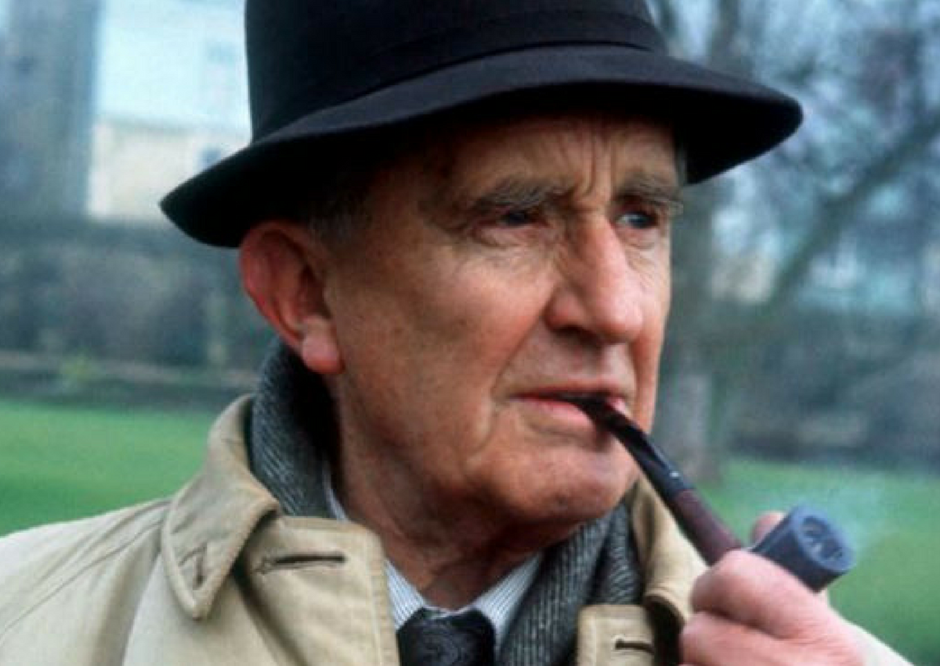
Image source: 9 Facts About J.R.R. Tolkien
 iDigress