
When I moved from Queensland to New South Wales in 1998, it took some time for the NSW Baptists to credential me. In Queensland, where I had been engaged in church planting, the denomination moved quickly to accredit me as a minister of religion so that I could be licensed as a marriage celebrant. It was like a declaration or affirmation of an existing (albeit new) vocation.
Ordination by Queensland Baptists was, however, a more complex process. I first had to complete my formal theological education and be approved by a denominational committee following appropriate checks on character, spirituality, reason for seeking ordained ministry, and skeletons in the cupboard. And then I would join other approved candidates and be formally recognised and ordained at the annual gathering of Queensland Baptists.
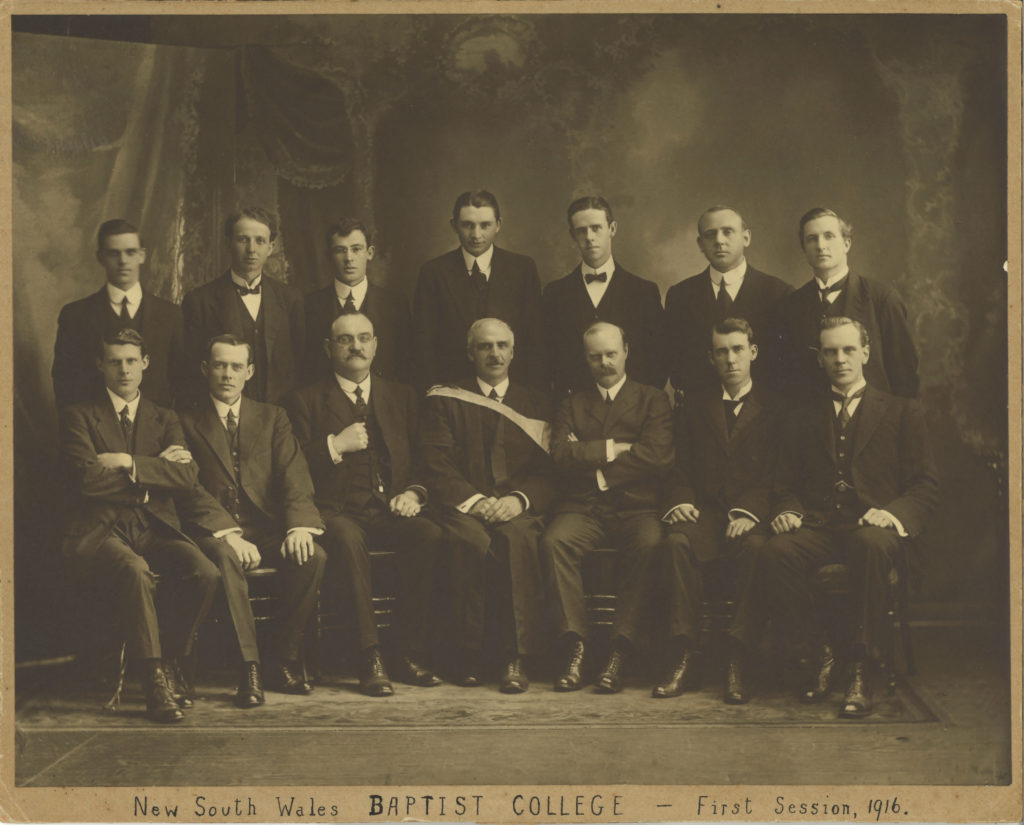
As it turned out, I had completed neither my formal theological studies nor my discernment process with the denomination prior to approval for ordination when I moved to my second church placement, taking up the role of pastor of the Blakehurst Baptist Church in Sydney (NSW).
In NSW, the policy had recently switched to accommodate churches that refused to accept the ordination of women, and in 1999 I was among the first batch of candidates who were accredited by the denomination before our local congregations were permitted to ordain us. Previously in NSW, the denomination had ordained all new approved ministers at an annual gathering of congregational delegates and denominational officials.
When it came time to put my signature to a NSW Baptist confessional statement in order to be accredited, I discovered there were two options. The first, a minimalist statement enshrined in state legislation in 1919, consisted of eight clauses that barely qualify as a Baptist confession of faith:
- The Sinfulness of man
- The Deity of Jesus Christ
- His atonement for the sin of Man
- The need of the Holy Spirit for conversion
- The Divine Inspiration of the Scriptures
- The Resurrection of the Dead
- Rewards and punishments in a future state
- Baptism of Believers only by Immersion.[1]
It’s a surprising list. There is no statement about the Trinity or God the Father, little about Christ and the purpose of the incarnation, and nothing about ecclesiology or mission (both of central importance to Baptist church life). The only clause that could conceivably be regarded as a Baptist distinctive is the last, and other Christian denominations also practiced or allowed adult or believers’ baptism by immersion in water. Moreover, the bizarre irony that the core doctrines of NSW Baptists were established by state legislation was not lost on me.
The second statement, formulated during the fundamentalist resurgence of the late 1970s, was a more detailed confession of faith under 13 headings which remains in force today.[2] It was this statement that I chose to affirm prior to my ordination, although I voiced my discomfort with the notion of the “infallibility” of Scripture, preferring to speak of its divine inspiration and authority.
Those candidates who, for reasons of conscience, were unwilling to affirm the 1979 statement had the option of affirming the 1919 statement.
At the time, the General Secretary of the Baptist Union of NSW, Rev. Bruce Thornton, advised me that, since Baptists were non-credal, “accreditands” need not regard the 1979 statement as credal but merely as “a statement of beliefs commonly held by Baptists.” Indeed, these words appeared in the introductory pages of the denomination’s annual Handbook from 1989 on, and in the preamble to the 1979 statement printed in the 2001, 2002, 2008 and 2009 Handbooks, after which they were quietly removed. Hardly anyone noticed.
As previous posts in this series have indicated, it is my view that in recent years the Baptist denomination in NSW has moved in a theologically conservative direction, embracing a more credal approach to doctrine and a doctrinaire approach to ecclesiology, liberty of conscience, and theological diversity among its churches and ministers.
Time will tell if this gamble pays off. Certainly, there is notable disquiet among some of the constituent churches and ministers, although there is also enthusiastic support for the conservative trend by the pietists and pragmatists in the tent. Sadly, as I listen to Scripture and pray for guidance, I am forming the view that these recent moves are not in harmony with what I know of the mission of God and the example of Jesus.
And that has me wondering whether my Baptist friends back in 1919 may have acted with uncommon wisdom in resisting the temptation to codify detailed doctrinal statements that would unnecessarily bind future generations and prove very difficult to change.
Dr Rod Benson is Research Support Officer at Moore Theological College, Sydney. He previously pastored four Baptist churches in Queensland and NSW, and served for 12 years as an ethicist with the Tinsley Institute at Morling College.
References
[1] https://legislation.nsw.gov.au/view/whole/html/inforce/current/act-1919-bui
[2] https://nswactbaptists.org.au/who-we-are/beliefs/
Image source: Morling College
 iDigress
Thanks Rod for the memory journey which relived many past associations with NSW & ACT Baptist. I do remember preaching on one of the creeds over a number of Sunday.