
From the creation mandate that framed the lives of Adam and Eve to the call of Abraham and the anointing of prophets, priests and kings, vocation features prominently in the Hebrew Bible. In this post, I want to take a brief look at some of the stories.
The English word “vocation” derives from the Latin vocatio, from vocare (“call”), to cry out in joy, fear, pain, or command. The Hebrew equivalent is quara, related to the Arabic Qur’an, a summons to obedience or duty. Etymologically, vocation has to do with a call to pursue a particular path or way of life (hence “calling”).
The Bible is not merely a collection of ancient ideals, nor a manual of moral rules, but a series of accounts of the lives of real people and communities not so different from us. Each of them has aspirations and aims, fears and shortcomings, duties and desires.
Their life situations, and their responses to challenge, revelation and opportunity, offer excellent instruction for ordering our own lives, for decision-making, and for perceiving spiritual truths that would otherwise be hidden.
Above all, the Bible introduces us to Jesus, the longed-for Messiah, and his teaching and example. The background to his arrival is the Bible Jesus knew – the Hebrew Bible. What do these ancient writings tell us about vocation?
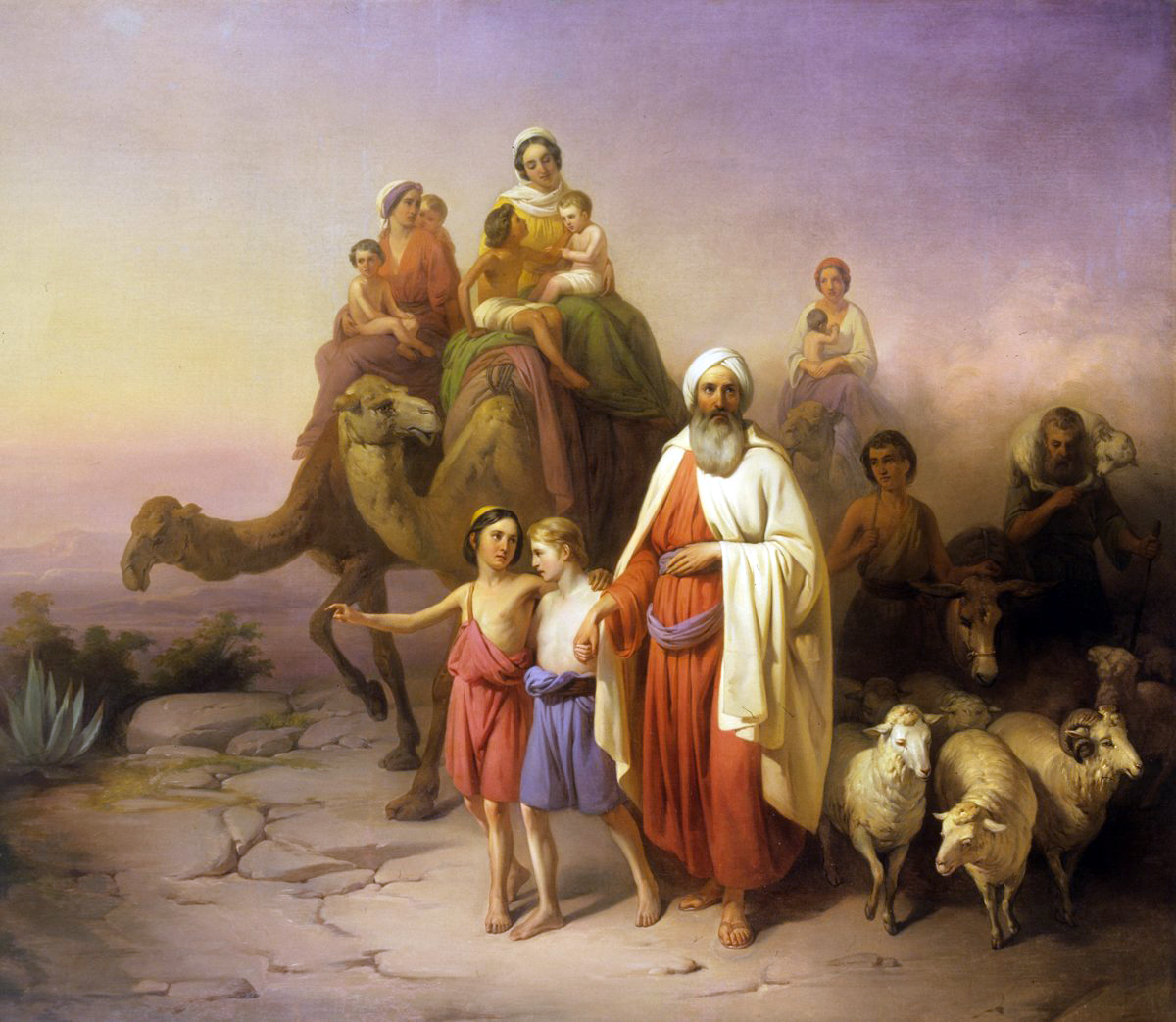
I’ll discuss the so-called creation mandate (Genesis 1-2) in my next post. In Genesis 12, a pagan named Abram (later renamed Abraham) receives a divine message to leave his homeland and clan to settle in an unknown land in a process that will become apparent. Abram responds to this bizarre revelation in trust and reliance on this divine messenger and sets out.
God promises Abram that his descendants will become a great nation, and ultimately all families of the earth will be blessed through him. Abram’s faith and obedience mark the beginning of a covenant relationship with God, foundational to the story of Israel and the broader biblical narrative that provides the context for the coming of Jesus and the birth of the church.
The narrative of Genesis 12:1-9, often titled, “The call of Abram,” describes Abram’s acceptance of a divinely ordered vocation which shapes his decisions, identity, career, fortunes and family, his descendants, and key aspects of world history. Abram was unique, but so are you. How would people write the history of your vocational formation?
Then there’s Moses, one of the least likely and most flawed leaders in the Hebrew Bible. Moses is called by God out of obscurity at a critical moment in Israel’s history. Reluctantly, he agrees to stand against the might of Pharaoh and emancipate his people from slavery in Egypt, leading them through many trials to Canaan, the land promised to Abram.
When we first encounter Moses, he is a shepherd (Exodus 3), but a burning bush and a divine commission prepare him for service as a prophet, priest, lawgiver, and statesman. Despite initial self-doubt and reluctance to embrace a new vocation, Moses accepts the call and perseveres, transformed by the mercy of God into a great and inspiring leader. From little things, big things grow.
Later, God calls another shepherd, David, for leadership and he is anointed to rule Israel by the prophet Samuel – whose own call story is recorded in 1 Samuel 3. For David, accepting a royal vocation brought him astonishing power, wealth and influence, but also many enemies, and many opportunities to do wrong and to serve his own interests rather than the common good.
In 1 Kings 19, we encounter the story of the prophet Elijah appointing his successor, Elisha. By his own admission, Elijah was a “very zealous” prophet, yet he laments that “the Israelites have abandoned your covenant, torn down your altars, and killed your prophets with the sword. I alone am left, and they’re looking for me to take my life” (1 Kings 19:14). His whole life seems meaningless.
But God does not see Elijah as a failure. God instructs Elijah to appoint a new king in Aram, and another in Israel, and then to anoint Elisha as his successor. The remarkable stories of Elijah and Elisha invite reflection on faithfulness, encouragement, doubt and depression, and the wisdom of seeing the big picture, and the fruit of a life’s work, that may be obscured by the many small details of a difficult and often thankless calling.
Jeremiah was called to a prophetic vocation by God as a youth (Jeremiah 1:6). He often felt unworthy, unprepared and intimidated by enemies, and is known as “the weeping prophet,” but a sense of God’s presence and empowerment enabled him to confidently speak truth to power.
Esther too has much to reveal about vocation. Raised by her Jewish uncle Mordecai in Persia, she becomes Queen and discovers that her royal vocation gives her an opportunity to save the Jewish people from impending genocide. Her willingness to risk her life for the greater good demonstrates the impact of a life shaped by divine calling and dedicated service (see Esther chapter 8).
Much more could be said about these characters and their vocations. And there are thousands more, with influence large or small, whose vocations were a blessing to others, including future generations.
Each one of these individuals played a crucial part in God’s ultimate plan for good. They recognised, sometimes reluctantly, that God had placed them where they were for a reason and came to understand that “it’s not about me” but about the wellbeing of others and the establishment of justice and peace through wise and humble service.
In my next post, I discuss some key principles for vocation drawn from the Hebrew Bible.
Dr Rod Benson is Research Support Officer at Moore Theological College, Sydney. He previously pastored four Baptist churches in Queensland and NSW, and served for 12 years as an ethicist with the Tinsley Institute at Morling College.
Image source: Wikimedia Commons
 iDigress