
Ask people what they’re doing for Lent, and you’re likely to get a wide range of replies. Formally, Lent is a 40-day season in the Christian liturgical calendar intended to prepare the faithful to experience the ultimate meaning and resurrection joy of Easter.
We take the word “Lent” from the Anglo-Saxon lencten, meaning “spring-time,” which in the Northern Hemisphere occurs around the time of Easter. North of the equator, Lent is associated with emergence from the cold and dark of winter, with regeneration, with the bursting forth of new life.
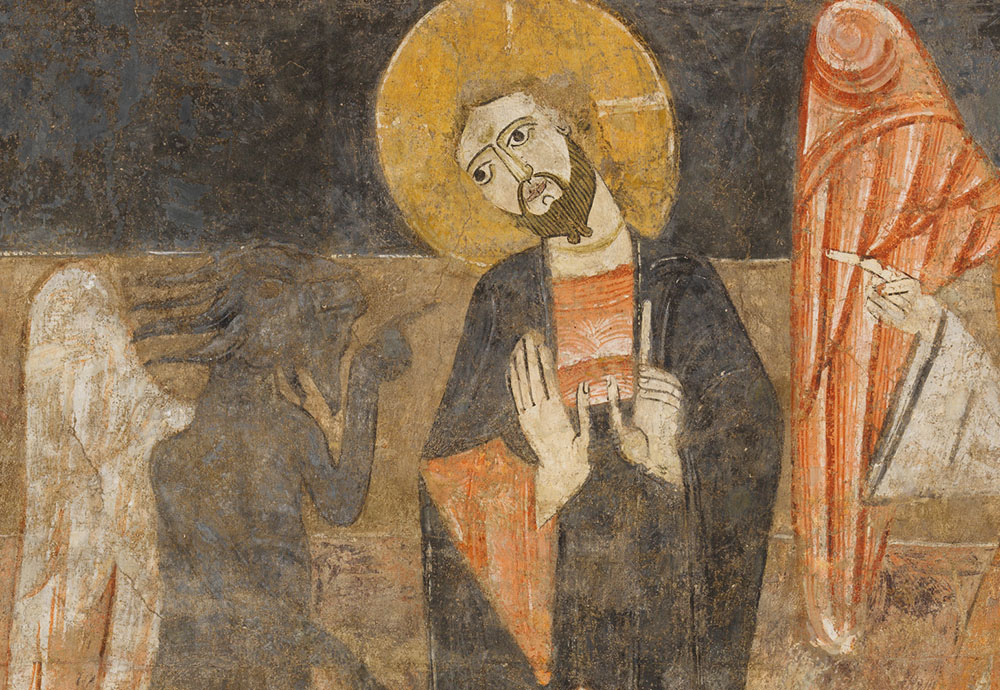
The 40-day period recalls the forty days of rain during Noah’s flood, the forty years of Israel’s wandering in the desert, and also the forty days of Moses’s fasting, Elijah’s hiding, and the temptation of Jesus.
In many church traditions, this season is a time of renewed focus on prayer, fasting, self-examination, repentance, exploring a deeper experience of the God in one’s consciousness, and a renewed care for the poor and suffering.
Theologian Wendy M. Wright writes,
The forty days of Lent celebrate the dismembering, disequilibrium, and dying that are preludes to the creative transformation of Eastertide. It is a season of being changed and emptied so that new life might come to birth in us and resurrection be found in us as well.[1]
Lent is celebrated by Catholic, Orthodox, Anglican, Lutheran and other churches. In recent years, various Protestant churches have rediscovered the benefits of practicing Lenten traditions as a means of spiritual formation. It is not uncommon to hear invitations to voluntarily practice Lent among evangelical churches today.
Lenten traditions are extrabiblical but not unbiblical, and have evolved over time. The practices appear to have arisen very early in church history. For example, in about AD 200, Tertullian wrote about a general practice of fasting before Easter, distinguishing this from the stricter fasting discipline of catechumens.
Bishops at the Council of Nicaea in 325 spoke of the Quadragesima Pascae (“forty days before Easter”), suggesting that Lenten fasting was becoming a formal practice. In the fourth century, Eusebius of Caesarea wrote that a pre-Easter fast was widely observed, though the duration varied from place to place.
By the end of the fourth century, a practice of a 40-day Lent was established among different Christian traditions, although regional variations persisted.
Through the influence of the teaching of the anonymous author of the Rule of the Master (central Italy, c.500) St Benedict (480-c.547), and Pope Leo the Great (e.g., his “Sermons on Lent”), the tradition of preparation for Easter increasingly became one of silence, prayer, fasting, and abstinence from distractions. These practices were principally observed by monks, but others too participated.
The sermons of the Church Fathers, and later writers, highlight three biblical-theological themes associated with Lent:
- identification with the experience of fasting, solitude and temptation encountered by Jesus in the Judean desert (e.g., Luke 4:1-13)
- participation in the struggles and sufferings of Jesus in the days leading up to his crucifixion
- remembering the forty years of Israel’s wandering in the desert in the time of Moses, with many trials and temptations
The desert motif and the absence of the comforts we often associate with human community are central to Lent, focusing the mind and body on spiritual reality. Victoria E. Jones writes,
Lent is a time when we go down, of our own volition but by the Spirit’s leading, into the desert, into a bare and quiet space, to dwell there with listening ears and watchful eyes to discern what God wants to communicate to us. Here is a chance for us, as it was for Jesus, to refine our sense of self and our sense of mission and to take a definitive stance against the fears and temptations that have been threatening us.[2]
For hundreds of years, fasting from food was the central practice of Lent. Gradually, the principle of giving up something other than food became popular. Today, fasting remains a widely practiced Lenten tradition, but may be accompanied or replaced by abstinence from a luxury such as chocolate, coffee, red meat, or even activities such as television viewing or engaging with social media.
What is the one thing you are unwilling or unable to give up for God? Your answer will reveal much about yourself, your spirituality, and what constitutes idolatry for you.
Theologian Joel Hodge reminds us that fasting is a physical symbol of spiritual detachment aimed at cultivating
interior freedom from sin and evil in all their forms, especially egotistical self-centredness, pride, acquisitiveness, and domination. It seeks to test one’s deepest hunger and perceive what one truly desires. In this way, fasting, as a spiritual practice, recalls the existential yearnings that all humans have for a full and flourishing life …
Lent, particularly through fasting, reminds Christians of these fundamental yearnings and asks whether they are being addressed in healthy or unhealthy ways. In this way, Lent involves a process of decluttering in a spirit of minimalism that combines with prayer and good works, so as to be more open and receptive to God’s love.[3]
Why celebrate Lent? In his message for Lent in 2021, referring to Jesus’s words in John 14:23, Pope Francis said, “Lent is a time for believing, for welcoming God into our lives, and allowing him to ‘make his dwelling’ among us.”[4]
It is not a holiness competition. It is about refining and strengthening our desire for God to saturate our whole lives with his love and grace. It invites self-reflection, self-discovery, repentance from sins, and spiritual renewal, empowered by the Spirit of God who is at work within us.
Paul’s words in Titus 2:11-14, summarising the good news, are especially meaningful for me as we move through this season of Lent:
For the grace of God has appeared, bringing salvation for all people, instructing us to deny godlessness and worldly lusts and to live in a sensible, righteous, and godly way in the present age, while we wait for the blessed hope, the appearing of the glory of our great God and Savior, Jesus Christ. He gave himself for us to redeem us from all lawlessness and to cleanse for himself a people for his own possession, eager to do good works.
May God bless, transform and sustain you as we draw near to Easter and the glorious celebration of resurrection joy!
Rev Dr Rod Benson is General Secretary of the NSW Ecumenical Council.
References
[1] Wendy M. Wright, The Rising: Living the Mysteries of Lent, Easter, and Pentecost (Nashville: Upper Room Books, 1998), 17.
[2] Victoria E. Jones, “The season of Lent,” paraphrasing a lecture by Julie Canlis, “Lent to the rescue!”, 4 Feb 2015, Biola University. See https://artandtheology.org/2016/02/09/the-season-of-lent/
[3] Joel Hodge, “The journey toward Easter: The meaning of Lent and the mystery of divine love,” ABC Religion & Ethics, 26 Feb 2023, available here.
[4] Pope Francis, “Lent: A time for renewing faith, hope and love,” available here.
Image source: A 12th-century Spanish fresco depicts the temptation of Christ by the devil. (Metropolitan Museum of Art/The Cloisters Collection and Gift of E.B. Martindale). Courtesy NCR.
 iDigress