
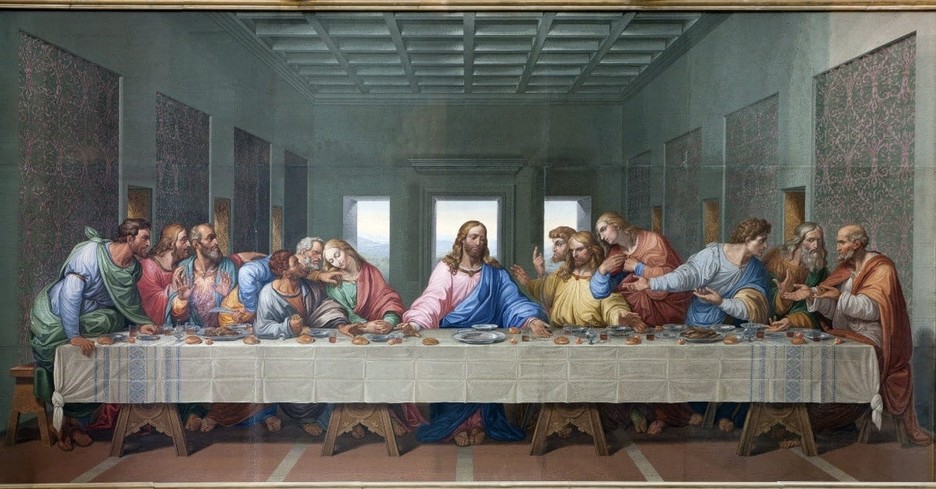
When you look at the amount of persecution and martyrdom of Christians around the world, the statistics tell a sobering story. According to Open Doors’ World Watch List, 4,476 Christian were killed for faith-related reasons in 2024, and some 380 million Christians today suffer high levels of persecution and discrimination for their faith.[1]
A martyr is literally a “witness” who dies for their faith. The first martyr was Stephen, whose death is recorded in Acts chapter 6-7. While he was preaching the good news of Jesus, his opponents dragged him out of the city and stoned him to death, while the young man who would one day be the Apostle Paul looked on with approval.
Of the Twelve Apostles, only the Apostle John died naturally. Each of the others suffered a horrible and violent fate. Tradition and historical sources suggest that:
Andrew was crucified on an X-shaped cross in Patras, Greece.
Bartholomew was flayed alive and beheaded in Armenia.
James the Son of Alphaeus survived being thrown from the pinnacle of the temple in Jerusalem, and was then beaten to death.
James the Son of Zebedee was beheaded in Jerusalem (the only apostle whose martyrdom is recorded in Scripture – Ac 12:1-2).
Jude was martyred with arrows.
Matthew was either stabbed or burned to death.
Matthias, chosen to replace Judas (Ac 1:26), was stoned and beheaded in Jerusalem.
Peter was crucified upside-down in Rome.
Philip was also crucified upside down.
Simon the Zealot was sawn in half in Persia.
Thaddeus was martyred in Persia, beaten to death with sticks, or killed with an axe.
Thomas was speared to death in India.
Paul faced torture and was beheaded by Emperor Nero in Rome.
Jesus himself suffered death by crucifixion.
The shape of apprenticeship to Jesus
To be a Christian is to be an apprentice to Jesus. We shape our lives after his life. We make time to be with him, become like him, and do the things he did.
Among many other things, the Book of Revelation shows us what it can be like to authentically follow Jesus, even when that faithfulness comes at the highest cost. The Book of Revelation was written to churches in Asia Minor living under the shadow of the Roman Empire. These believers were tempted to worship Caesar, to participate in trade guild feasts, to bow to cultural idols.
John’s vision lifts their eyes to the risen Christ, the one who says, “I am the Alpha and the Omega, the First and the Last, the Living One; I was dead, and behold I am alive for ever and ever!” (Rev. 1:17–18).
To be an apprentice of Jesus meant living counter-culturally, shaping a distinctive life, being noticeably different from the crowd. Where empire demands compromise, Jesus demands faithfulness. Where culture celebrates wealth and ease, apprenticeship to Jesus calls for perseverance and endurance.
Suffering as a mark of apprenticeship
Revelation repeatedly states that following the Lamb comes at a cost. The “saints” are described as those who “overcame by the blood of the Lamb and by the word of their testimony; they did not love their lives so much as to shrink from death” (Rev. 12:11).
To follow Jesus is to share in his suffering. We see this in the letters to the seven churches in Revelation chapters 2-3. To the church at Smyrna, Jesus says, “Do not be afraid of what you are about to suffer … Be faithful, even to the point of death, and I will give you life as your victor’s crown” (Rev. 2:10). He commends the church at Pergamum for not renouncing faith, “not even in the days of Antipas, my faithful witness, who was put to death in your city” (Rev. 2:13).
We might wonder why all these ordinary people were willing to die for their faith in Jesus. Their absolute loyalty to Jesus is a sign that what they believed and lived and shared was true.
Jesus made it clear to those who entertained thoughts of following him: “If anyone wants to follow after me, let him deny himself, take up his cross daily, and follow me” (Lk 9:23). And while your “cross” and mine may be awkward or embarrassing, there are others who have literally given their lives rather than renounce their faith and confidence in Christ and the good news.
Total devotion to Jesus
In Revelation, the martyrs are those who bear witness to Jesus by their words and their lives, even unto death. Revelation 6 pictures them beneath the altar, crying out, “How long, Sovereign Lord, holy and true, until you judge the inhabitants of the earth and avenge our blood?” (Rev. 6:10).
In a world of divided allegiances, the martyrs show us what true devotion looks like. Their deaths declare that Jesus is worth living and dying for, that life with Christ is of greater value than life itself.
Will you and I be faithful in the small costs borne by followers of Jesus – mockery, exclusion, sacrifice of time and resources? If we are called to pay a higher cost, will we stand firm?
Hope at the centre of our faith
The good news is that apprenticeship to Jesus is fuelled by hope. At the center of Revelation is a throne, and seated on the throne is the Lamb who was slain (Rev. 5:6).
Around the throne there’s a song being sung right now: “Worthy is the Lamb who was slain, to receive power and wealth and wisdom and strength and honour and glory and praise!” (Rev. 5:12).
This is the vision that sustains our discipleship. Apprenticeship to Jesus is not drudgery; it is worship. We endure suffering not because we enjoy pain, but because we are devoted to the Lamb on the throne, the Saviour of the world. We imitate Jesus not because we are forced to do so, but because we see, and have come to experience, his beauty and grace and love.
Apprenticeship as presence, formation, and mission
Revelation calls us to worship, to lift our eyes to the throne, to live with the constant awareness of the presence of Jesus with us. The Spirit repeats the refrain, “He who has an ear, let him hear what the Spirit says to the churches” (Rev. 2–3). Apprenticeship to Jesus requires careful attention, listening, understanding.
The goal of apprenticeship is transformation. Revelation portrays the saints as those who follow the Lamb “wherever he goes” (Rev. 14:4). Slowly, through obedience and endurance, they are conformed to his image. And so are we. Apprenticeship is about identity and likeness to Jesus, who unites us with God.
Apprenticeship is also active service. In Revelation, the church is called to bear faithful witness, to resist idolatry, to embody the kingdom of God in the midst of Babylon. Apprenticeship is mission.
The restoration of Peter
All of this comes into focus in John 21:15–19, where the risen Jesus meets Peter on the shore of Galilee. Peter has denied Jesus three times, and is gently restored by three questions: “Simon son of John, do you love me?”Each time, Peter affirms his love and loyalty to Jesus, and Jesus says, “Feed my lambs… take care of my sheep… feed my sheep.”
Then comes the solemn word: “When you are old … someone else will dress you and lead you where you do not want to go.”
John tells us this was to indicate the kind of death by which Peter would glorify God. And then Jesus simply says: “Follow me.”
This is apprenticeship to Jesus in action. Peter is with Jesus, and Jesus calls back into vital relationship. It’s one of the most beautiful stories in the Gospels.
Peter’s ugly failure becomes an inspiring example of formation in the way of Jesus. He is commissioned for a new task: he will shepherd others as Jesus has shepherded him. But Peter will also lay down his life for the people of God, and for the good news, just as the Good Shepherd laid down his life for the sheep. Peter’s apprenticeship will cost him his life. He too will be martyred. His life’s end will echo the cross-shaped way of his Master, and his story will magnify the grace of Jesus. He rejoices in heaven today.
Jesus spoke clearly about the cost of discipleship. The apostles spoke about it and demonstrated it with their lives. Every Christian hears the call of Jesus to deny themselves, take up their cross, and follow him.
But there is also a cost of non-discipleship. Every day, we face choices between following and not following Jesus, between witnessing to the way of Jesus and remaining silent, between sharing the love of God and keeping it to ourselves.
What would Jesus do if he were me?
Sermon 828 copyright © 2025 Rod Benson. Preached at North Rocks Community Church, Sydney, Australia, on Sunday 28 September 2025. Unless otherwise noted, Scripture quotations are from The Christian Standard Bible (Nashville: Holman Bible Publishers, 2020).
[1] See https://www.opendoors.org/en-US/persecution/countries/
Image source: Leonardo da Vinci, The Last Supper, c. 1495–1498. Public domain.
 iDigress