
A Christmas Eve sermon based on Luke 2:1-20.
Luke’s Gospel slows the world to a hush as it tells the story of the birth of Jesus. Empires rise and fall, decrees are issued from distant palaces, caravans move across desert trade routes, shepherds settle in for another night’s work out in the hills, and angel choirs prepare to sing.
In a forgotten corner of a small, occupied country, the God of the universe prepares to write a new chapter in the history of humankind. Mary and Joseph, weary travellers, arrive in Bethlehem not to applause or privilege, but to an improvised cradle in borrowed space (vv. 1-5).
As divine potentiality merges with human insubstantiality, as heaven and earth unite to roll out the rescue plan of the ages, the holy moment is marked not with the blast of silver trumpets and the assembling of dignitaries, but with the soft breath of a newborn child (vv. 5-6). This birth, so much like every birth and yet unique in world history, was the quiet dawn of redeeming grace.
Our eyes are drawn to the shepherds, wide-eyed, and it is to them that the angel declares, “Don’t be afraid, for look, I proclaim to you good news of great joy that will be for all the people” (v. 10). The glory of the Lord shines in the darkness of an ordinary hillside, illuminating faces lined with weather and worry. The favour of God seeks out those who never expected to be seen, let alone found.
In this unlikely gathering, heaven and earth meet. Hope stirs in the cold night air. Justice and peace are on their way. The obscure and unlikely birth of Jesus was the quiet dawn of redeeming grace.
The shepherds “hurry off” (v. 16) compelled by wonder and anticipation, and discover a scene even more profound than the angelic vision: a child wrapped in cloth, lying in a manger, soothed by a teenage mother, and guarded by a young father.
Nothing is spectacular, but everything is significant. They see the true King of the world before others recognise him, before others comprehend the eternal significance of his birth. And grateful praise breaks forth from hearts and minds awakened to divine possibility.
For, in this child, the God of Abraham dwells, and dwells with us, not in theory but in flesh and blood. His birth was the quiet dawn of redeeming grace.
And Mary treasures these things, and ponders them deeply (v. 19), reminding us that the coming of Christ invites thoughtful contemplation as much as joyful proclamation.
It is in the nature of God to plan boldly and surprisingly; to act decisively, yet gently; to draw near to us in mercy and grace. The salvation that will one day shake the world’s foundations begins almost imperceptibly, like the first faint light edging over the horizon, whispering of the glorious sunrise that is on the way.
What God initiates in the stillness of Bethlehem will unfold in the ministry, the cross, the resurrection, and the ascension of Jesus. And, in keeping with the miracle of the incarnation of Christ, what God has initiated will continue in us, and through us, as we faithfully bear the clear light of Christ into places still shadowed by fear and injustice.
For, in every place, and in every generation, just as in that first night, the birth of Jesus Christ remains the quiet dawn of redeeming grace.
Sermon 840 copyright © 2025 Rod Benson. Preached at North Rocks Community Church, Sydney, Australia, on Christmas Eve 2025. Unless otherwise noted, Scripture quotations are from The Christian Standard Bible (Nashville: Holman Bible Publishers, 2020).
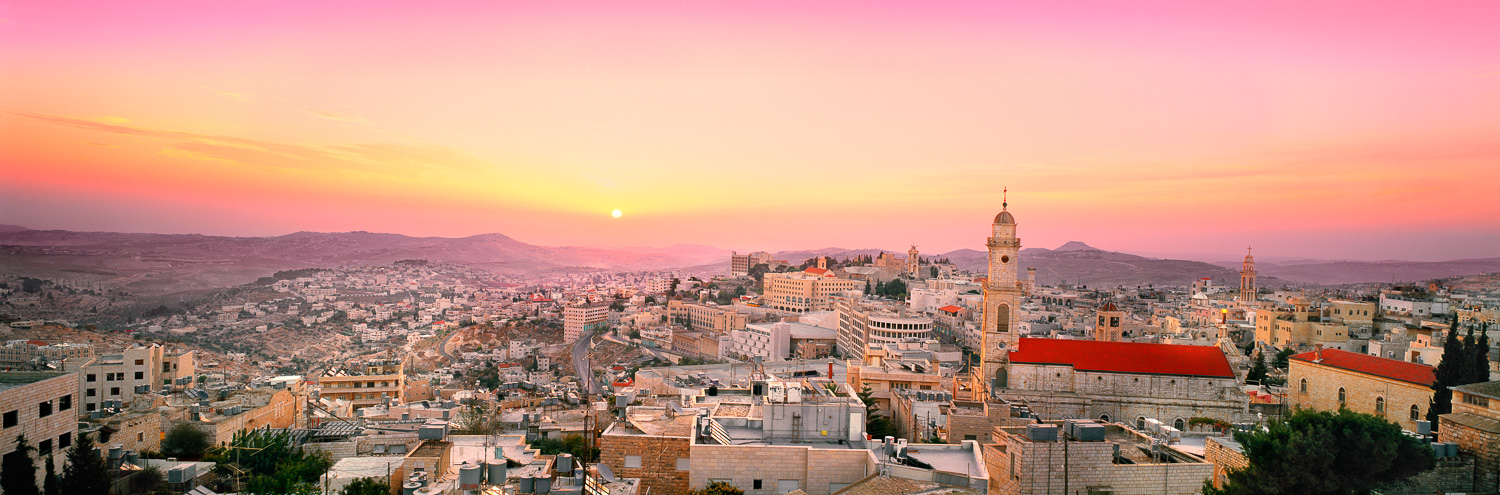
Image source: Ken Duncan, Sunrise over Bethlehem.
 iDigress