
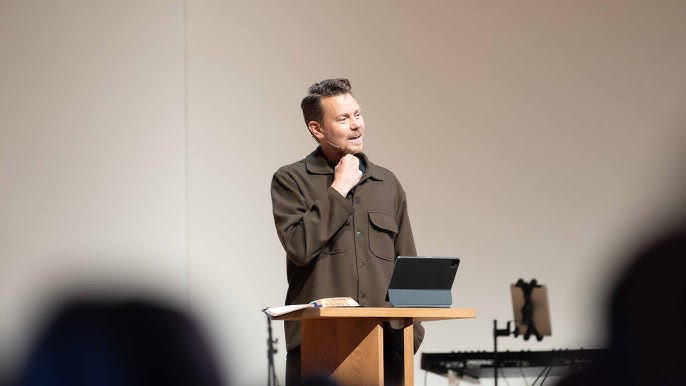
John Mark Comer’s Practicing the Way model of discipleship invites participants to “apprentice under Jesus” through shared practices, rhythms, and communal formation. It is increasingly popular, and has helped many Christians recover the notion that the essence of Christian discipleship is not believing the right truths so much as learning an alternative way of life.
Imagine Jesus walking into a church shaped by this model. How would Jesus respond? What might we expect him to say? These are searching but reasonable questions that I think everyone who encounters Practicing the Way should consider.
How Jesus might praise Practicing the Way
First, Jesus would likely praise the Comer’s insistence that discipleship is apprenticeship. Jesus did not primarily call people to adopt a worldview or affirm a set of propositional statements. He literally called people to follow him: he said, “Come, follow me,” and those who did became his disciples.
The Gospels describe the classic process of a Jewish rabbi attracting new followers who spend quality time with their master, become like him through learning and imitation, and then take on the mantle of teaching others to teach others. What we often call the Great Commission in Matthew 28:18-19 is a fine example of graduation from rabbinic apprenticeship.
Comer’s language helps modern believers and seekers to remember that Christianity is not chiefly a set of doctrinal propositions but a lived obedience shaped by proximity to Christ. That impulse resonates deeply with the Gospels: disciples learn by walking with Jesus, watching him, failing near him, and being restored by him.
Second, Jesus might praise the recovery of practice as spiritual realism. The Sermon on the Mount, for example, is not merely a set of inspiring ideas but a summons to embodied action: reconciliation, integrity, enemy-love, generosity, prayer, fasting. In that sense, Comer’s emphasis on practices (habits or spiritual disciplines such as Sabbath, silence, prayer, Scripture, simplicity, community) sounds like Jesus’s own training regimen for life in the kingdom of God. These practices are not tricks to impress God, but training that makes space for communion with God.
Third, Jesus would almost certainly affirm the model’s resistance to hurry and distraction. Jesus regularly withdrew to pray. He lived with a pace that refused the tyranny of urgency. Among other aims, Practicing the Way seeks to help people to stop living as though anxiety is normal, and confusing busyness is holiness. I think Jesus would agree. A church that learns how to rest well is a church that begins to lean into God’s love and grace.
Fourth, Jesus might commend the communal nature of this approach to spiritual discipline. Discipleship is not an individual self-improvement project; it is the formation of a people. Jesus formed a community—imperfect, irritating, quarrelsome though it was—and still considered it to be his “body.” A model that invites shared formation, accountability, and relational rhythms fits the grain of the kingdom. It confronts the Western religious assumption that spiritual maturity is private and individual conscience is king.
Finally, Jesus would praise the model’s hopeful vision of inner transformation. He did not call people to manage their sin but to be remade in his image: the angry can become peacemakers, the lustful can become pure in heart, the fearful can become courageous, the greedy can become generous. Any discipleship model that expects real change is closer to Jesus than one that expects and plans for permanent defeat.
How Jesus might critique Practicing the Way
Yet Jesus would also probe the fault lines in a program like Practicing the Way. First, he might critique the ever-present danger of turning practices into performance. Even good spiritual habits can become a new Pharisaism: “My Sabbath practice is superior to yours. I’m more minimalist. I’m more emotionally healthy.” The sharpest words Jesus used were reserved for those who were outwardly disciplined but inwardly proud, outwardly godly but empty inside. He would warn that practices do not replace repentance, and faithfulness to rhythms cannot become a substitute for genuine relational love.
Second, Jesus might critique a subtle drift toward control. A structured model can give the illusion that transformation is predictable: do the practices, get the results. But Jesus is not a productivity system. Some of Jesus’s deepest work happens not in carefully curated routines but in uncomfortable and unwelcome disruption: betrayal, grief, suffering, unanswered prayer. Jesus might say: “Your plan is useful—but my cross is still an offence.”
Third, Jesus would likely critique any version of discipleship that becomes therapeutic without becoming cruciform. There is genuine healing in Christ, and Jesus cares about the whole person. But Jesus never reduces salvation to feelings of calmness, clarity, or wellness. He calls people to take up a cross, lose their life, forgive enemies, give to the poor, and serve the least. If the model ever trains people to feel peaceful but not to embrace sacrificial love, Jesus would most likely seek to expose the gap.
Fourth, Jesus might critique how easily “practices” can become accessible fake middle-class holiness. Silence, retreat, slow living, and simplicity can unintentionally assume the freedom and resources many people do not possess. Single parents, shift workers, refugees, the poor, and those with chronic illness may unintentionally be excluded. Jesus always went about building his community with the overlooked and outcast at the centre. He would ask, “Are you forming disciples who can follow me from the margins, or only from the safety of middle-class comfort?”
Fifth, Jesus might warn that a practice-based model has the potential to underplay the beautiful scandal of grace. Apprenticeship to a spiritual master matters, but no one apprentices their way into acceptance with God. The kingdom begins with gift: forgiveness, adoption, mercy. If practices are not constantly framed as response to grace—not a ladder to earn it—Jesus would overturn the tables of that logic. As Dallas Willard put it, “grace is not opposed to effort; it is opposed to earning.”
The verdict Jesus might give
Jesus would likely say to Comer and his readers and practitioners: “You are right to teach my people how to live. You are right to call them to follow. Keep teaching them to pray, to rest, to listen, to forgive, to become a community shaped by my presence. But remember this: the point is not the practice but me. The practice is not the kingdom; it is a doorway into the abundant life to which I point the way. Don’t use it to impress, exclude, or control. Use it to love God and neighbour; use it to help you carry your cross with joy.”
In other words, I think Jesus would applaud the recovery of radical Christian discipleship as a way of life as John Mark Comer has encapsulated it in Practicing the Way. But Jesus would also insist that his Way remains inseparable from the way of the Crucified One who carries disciples when their practices fail just as lovingly as when they excel.
Rev Dr Rod Benson is General Secretary of the NSW Ecumenical Council and a minister of the Uniting Church in Australia serving at North Rocks Community Church in Sydney.
In another post, Rod reflects on what the senior devil Screwtape (from C. S. Lewis’s classic allegory) might advise the junior devil Wormwood on Practicing the Way.
Image source: Bridgetown Church
 iDigress