
Australia has a difficult journey ahead in securing reconciliation with First Nations people, but others have walked a similar path, writes Rod Benson.
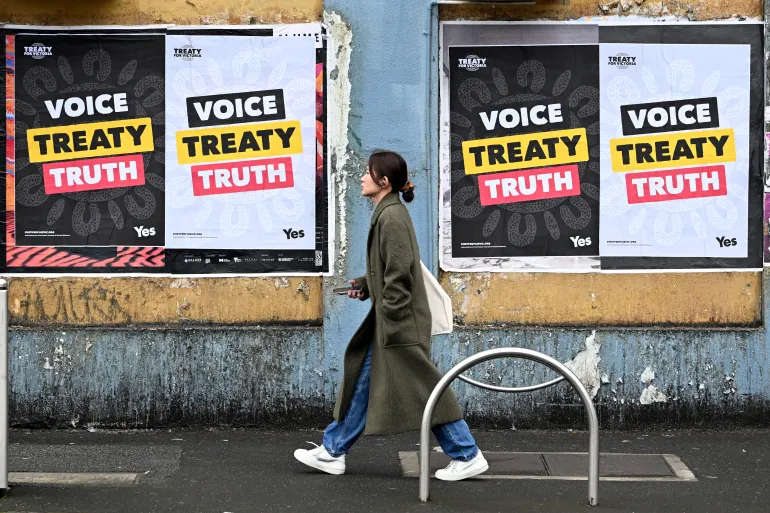
The defeat of the 2023 referendum proposing an Aboriginal and Torres Strait Islander Voice to Parliament left many Australians unsettled. For some it represented relief that constitutional change had been avoided; for others it felt like a rejection of long-promised recognition. Whatever one’s position during the campaign, the result exposed something deeper than disagreement over a policy mechanism. It revealed a moral impasse within the nation — uncertainty about how to hold together equality, historical injustice, shared belonging, and the future we hope to build together.
Several influential Indigenous thinkers help explain why the question proved so difficult. Writers such as Bruce Pascoe, Noel Pearson, Tyson Yunkaporta, Linda Tuhiwai Smith, and Glen Coulthard, though far from identical in outlook, challenge Australians to reconsider inherited assumptions about land, knowledge, and political legitimacy.
Pascoe’s work unsettles the long-standing myth that Aboriginal societies were purely nomadic and technologically simple, showing instead sophisticated systems of land management and agriculture. The implication is uncomfortable: if Indigenous peoples exercised forms of settled stewardship, then the moral story Australians tell about settlement becomes more complicated.
Yunkaporta pushes further by describing Indigenous knowledge as relational rather than individualistic — a way of understanding people, land, and responsibility as interconnected rather than owned or controlled.
Smith, writing from an Indigenous research perspective, argues that institutions often reproduce colonial patterns even when they intend to help. Similarly, Coulthard warns that reconciliation risks becoming symbolic recognition that leaves underlying power structures untouched. Pearson, meanwhile, insists that dignity requires justice with responsibility, arguing that empowerment must accompany recognition.
Together these perspectives explain why reconciliation cannot simply be reduced to goodwill or symbolic gestures. They confront Australians with difficult questions about sovereignty, memory, and fairness that do not fit easily within familiar political categories.
The referendum became a focal point for these tensions. Many voters worried that constitutional recognition might divide Australians or create unintended legal consequences. Others believed that rejecting the proposal reinforced a long history of Indigenous voices being heard politely but rarely trusted with authority. Between these positions lies a profound dilemma: how can a democracy committed to equal citizenship also acknowledge historical injustice without undermining shared national belonging?
Peacebuilding scholarship suggests that such dilemmas rarely yield to technical solutions alone. Conflict mediator John Paul Lederach argues that reconciliation depends on what he calls the “moral imagination” — the ability to see former opponents not simply as adversaries but as partners in a shared future. Political debates often focus on institutional design, yet trust grows through relationships. Much of the referendum campaign revolved around legal detail rather than relational encounter. Fear and suspicion flourished where personal understanding was thin.
South African Archbishop Desmond Tutu’s experience with the Truth and Reconciliation Commission offers another lesson. Genuine reconciliation requires truth telling, but also generosity toward those who fear being condemned. In Australia, conversations about colonisation often became defensive on one side and frustrated on the other. Some Australians felt accused for events beyond their control; many Indigenous communities felt the reluctance to confront historical harm signalled ongoing denial. Tutu’s insight was that healing begins when societies learn to acknowledge suffering without humiliating those asked to listen.
Legal scholar Martha Minow similarly observes that societies responding to injustice face imperfect choices. They can pursue punishment, attempt to forget, or seek forms of repair that satisfy no one completely. Democracies frequently choose incremental steps because perfect justice is rarely achievable. The referendum debate sometimes treated compromise as moral failure rather than the ordinary work of democratic repair.
For churches, these realities create a particularly demanding moment. Christianity speaks constantly about reconciliation — between people, and between humanity and God. Yet churches in Australia are not neutral observers. Many benefited historically from colonial structures even while individual Christians advocated strongly for Indigenous welfare. That mixed legacy complicates the church’s public voice.
Still, faith communities may have an important role to play precisely because they understand repentance, forgiveness, and long-term commitment. Political processes operate on election cycles; reconciliation unfolds across generations. Daniel Philpott’s work on “just peace” argues that lasting social healing requires practices such as confession, accountability, forgiveness, and restored relationships. None of these can be legislated into existence.
The challenge for churches today is therefore neither partisan activism nor quiet withdrawal. Instead, they are called to cultivate spaces where difficult conversations can occur without fear of ridicule or accusation. Congregations can host dialogues between Indigenous and non-Indigenous Australians, support local truth-telling initiatives, and model patient listening rather than social media outrage. Worship can be a fruitful space for lament and hope, encouraging people to acknowledge their grief and loss without surrendering to despair.
This work will not produce quick victories. Many Australians are weary of culture-war debates and suspicious of institutions claiming moral authority. Churches must earn trust through humility, recognising their own failures as well as their aspirations. Yet the alternative — silence — risks allowing resentment and misunderstanding to deepen.
The referendum did not end the question of reconciliation. It exposed how unfinished the task remains. Australia’s moral impasse will not be resolved by a single constitutional proposal or political campaign. It will require sustained relationship-building, courage to face uncomfortable truths, and imagination strong enough to hold justice and unity together.
Whether churches can help nurture that long work, patiently and without moral triumphalism, may prove to be a significant test of their public witness.
Rev Dr Rod Benson is General Secretary of the NSW Ecumenical Council and a minister of the Uniting Church in Australia serving at North Rocks Community Church in Sydney.
Image source: Aljazeera
 iDigress