
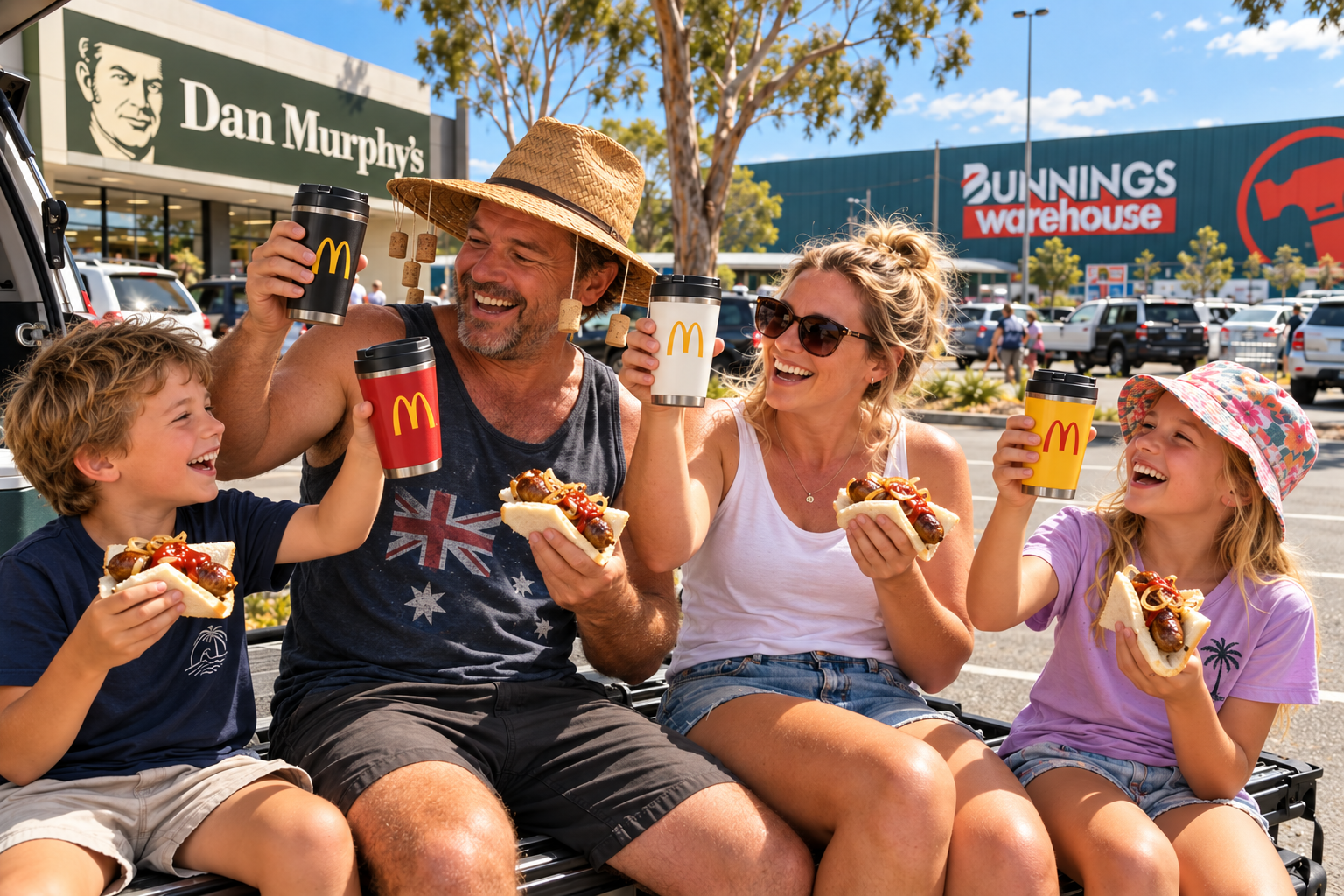
By Rod Benson
You know how it is. It’s Saturday arvo, the mowing is done, and you pull in to the Bunnings car park with the fam. And what happens? The unmistakable aroma of caramelised onions and fat-seared sausages hits the old olfactories, reminding you that you came for a tap washer but you might just take a gander at those battery-powered leaf blowers. But first, something to eat.
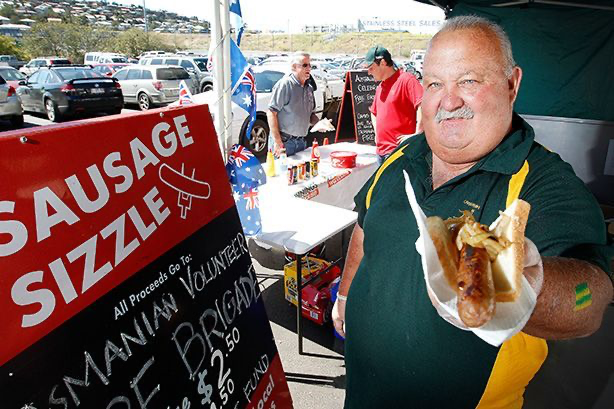
For anyone unfamiliar with the place, Bunnings is a hardware and home improvement chain in Australia and New Zealand. It sells tools, timber, paint, plants and enough plumbing parts to make you believe you can fix a tap without calling a plumber. Community groups run sausage sizzles outside many Bunnings stores to raise funds for their causes.
A Bunnings visit brings together people with very different ideas of a good Saturday. The tradie knows exactly which fitting is needed and wants to be gone in seven minutes. The keen amateur has watched one video, bought a spirit level and is quietly wondering whether a wall can be load-bearing if you ask it nicely. Some middle-class shoppers arrive for a pot plant and leave with plans for an outdoor kitchen. All of them can smell the onions.
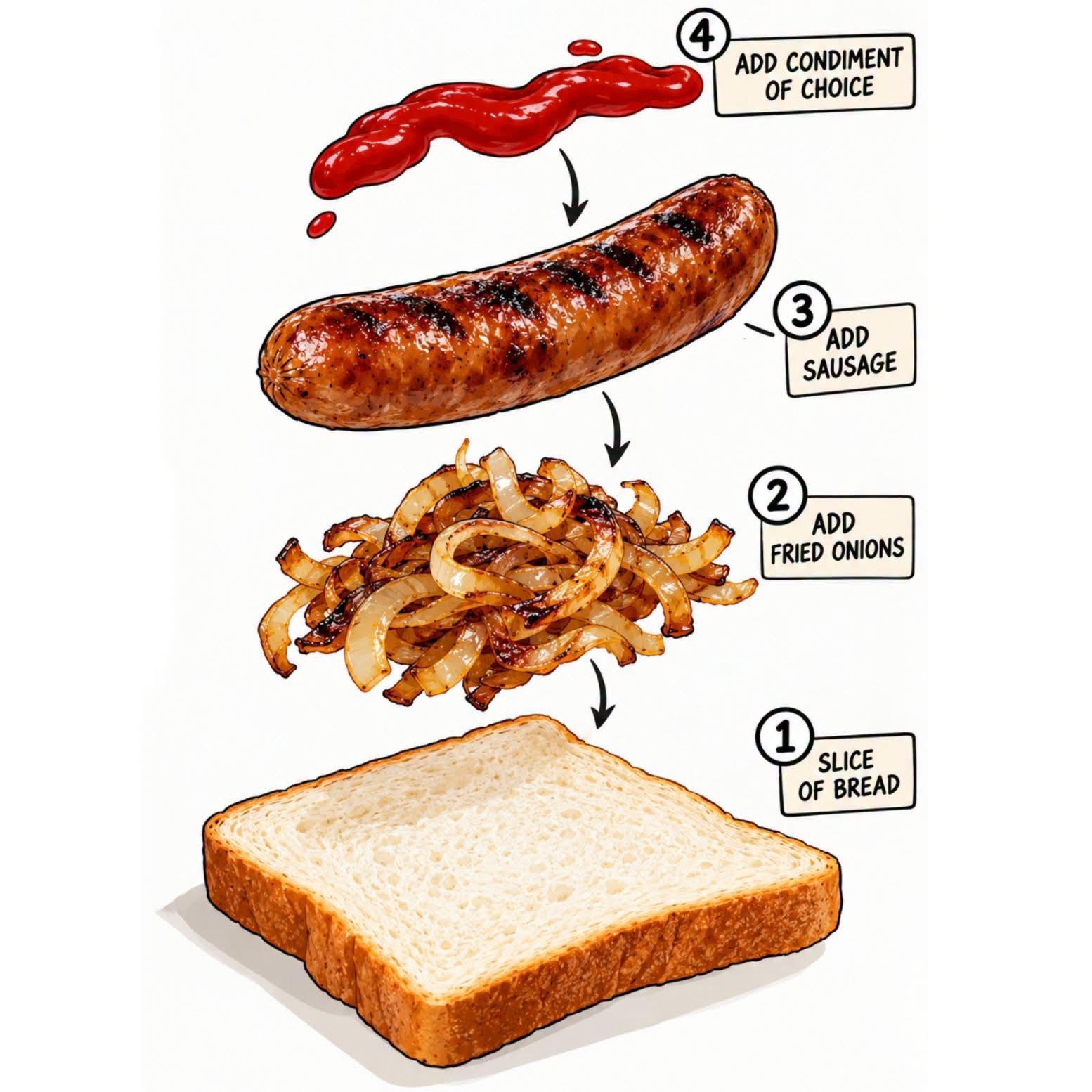
The Bunnings sausage is Australian culinary engineering par excellence: one sausage, one slice of white bread, fried onions and sauce. It requires no cutlery, table or reliable memory of why you entered the store. Here is how to build one.
First, organise the workforce
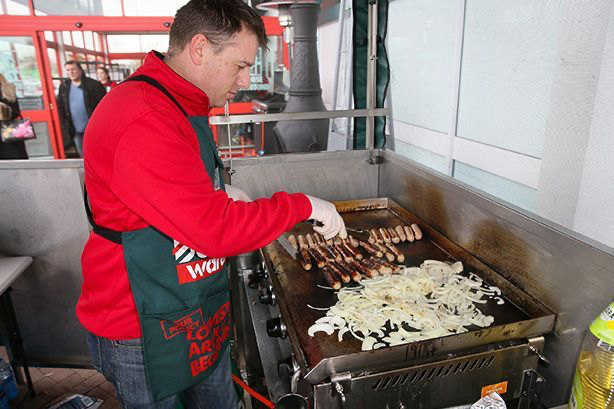
You will need a barbecue, sausages, onions, sliced white bread, sauces, serviettes and volunteers. One cooks, one takes payment and another keeps track of the tomato sauce and mustard. If somebody offers to supervise, hand them a pair of tongs. Helpfully, Bunnings supplies all of the above.
Slice the onions and cook them until soft and golden. Cook the sausages thoroughly, turning them often. A little char adds flavour; anything resembling a roof tile needs replacing. If a volunteer says, “She’ll be right,” check whether they mean the sausage or the barbecue.
Keep the bread soft and untoasted. Crusty sourdough will not fold properly and gives the sauce too many escape routes. Nobody wants to spend the afternoon removing tomato sauce from the passenger seat.
Step one: lay the foundation
Place one slice of bread flat in your hand, with a corner pointing towards you. The diagonal arrangement makes folding easier. It also gives the sausage somewhere to sit while you work out how to hold your change, your shopping list and the flat white you bought on the way in.
Do not use two slices. That is a sausage sandwich, a respectable but unrelated construction. A bun is also unnecessary unless you enjoy explaining yourself in queues. The bread is there to carry the sausage, catch some sauce, and leave your other hand free to point vaguely towards the entrance when someone asks where the rest rooms are.
Step two: add the onions
Place a line of fried onions down the middle of the bread. Add enough to taste, but not so many that they immediately return to the car park.
The onions go beneath the sausage, where its weight helps hold them in place. This remains controversial, but the arrangement is practical, particularly in wind. You are free to prefer onions on top. The volunteer has another forty sausages to cook and will probably let you.
Step three: position the sausage
Lay the sausage along the onions, from corner to corner, and centre it. A crooked sausage produces an unstable fold and a difficult first bite. There is no need to fetch a spirit level. Near enough is good enough, as any tradie worth his salt knows.
One sausage is a snack; two could be lunch; three suggest the tap washer can wait. If you are eating the third while looking at paving stones, tell yourself you are comparing prices. Nobody else needs to know.
Step four: apply sauce
Tomato sauce is traditional, though mustard and barbecue sauce have their dedicated supporters. Squeeze a line along the sausage. Avoid getting sauce on your T-shirt unless you’re wearing the one you always wear to Bunnings for just this reason. A generous squirt of sauce is fine; an application suited to sealing a bathroom is too much.
Fold the free corners of the bread around the filling and grip gently. Wrap a serviette around the base. Take the first bite while standing still, preferably before pushing a trolley that turns left. If an onion falls out, let it go. You have already paid for it, but chasing it through the car park will make matters worse.
Step five: wine pairings
The finished sausage needs no garnish or explanation. It is hot, satisfying and made by people raising money for a good cause. Thank the volunteers, devour the beast, then go inside and try to remember what you came for—unless you’re feeling a little parched and need a drop of something nice to quench your well-earned thirst.
Now this one is optional, but if you’re determined to bypass the electric leaf blowers and the latest in ultra-pagodas, and yet still need to make the Bunnings experience financially outrageous, you need to drop in to Dan Murphy’s on the way to the Bunnings car park and pick up some booze.
Uncle Dan’s, the Bunnings of the discount liquor market, helpfully lists several delightfully appropriate French wines to accompany your lightly caramelised saucisse de bœuf en robe de pain. There’s the crowd-pleasing Dom Pérignon Vintage Champagne, the fine Joseph Drouhin Meursault and the robust Château de Beaucastel Châteauneuf-du-Pape. The Champagne will refresh the palate, the Meursault will pair well with the onions, and the Châteauneuf-du-Pape will give the tomato sauce something to think about.
Decant your selection into a travel mug and raise a discreet toast to the volunteers. When the tradie beside you asks how the grog goes with the snag, simply say, “Yeah, good mate.” Then buy another sausage. It will always be the sweet spot in your Bunnings experience.
Rod Benson lives in Sydney and writes about a range of topics from books and local history to food, faith, philosophy, ethics, research skills, and everyday life. Away from the keyboard, he enjoys cooking for friends, walking in the Australian bush, exploring a beach, discovering new restaurants, and reading philosophy, fiction and poetry. He is married to Emma.
Image sauce: taste.com.au, The Gherk, and author

