
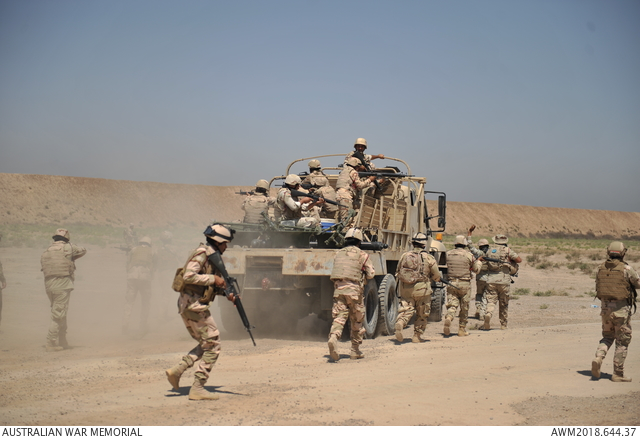
A theology of military service in the context of the Uniting Church in Australia
By Rod Benson
Introduction
Conscientious objection to military service tests the relationship between Christian discipleship and political citizenship. Beyond a principled aversion to violence, the question of conscientious objection raises the question of whether and to what extent the state may demand actions that appear incompatible with obedience to God. For the Uniting Church in Australia (UCA), established in 1977 from Congregational, Methodist and Presbyterian traditions, the issue belongs within a wider theology of reconciliation, responsible citizenship and Christian freedom. Its official documents consistently prioritise peacemaking, although this commitment must not be confused with a binding denominational rule that all members ought to refuse military service.
The key question, then, is how a Church committed to a radical understanding of peace, according to the way of Jesus, responds to competing claims of conscience, national security and public responsibility.
Scripture, conscience and the limits of obedience
The biblical witness resists a simple opposition between obedience to government and resistance to it. Romans 13:1–7 describes public authority as having a legitimate ordering function; 1 Peter 2:13–17 similarly counsels respect for governing institutions. Yet Acts 5:29 declares that obedience to God takes precedence over obedience to human authorities, while Revelation 13 exposes the capacity of imperial power to become idolatrous. These texts are not interchangeable political programmes. Read together, they suggest that governmental authority is real but morally qualified: no institution may demand ultimate allegiance or exempt its commands from scrutiny under the gospel.
The ministry of Jesus intensifies this scrutiny. The Beatitude concerning peacemakers (Mt 5:9), the command to love enemies (Mt 5:43–48), and the refusal of retaliatory violence at his arrest (Mt 26:52) place reconciliation at the centre of discipleship. Nevertheless, Christians have historically differed over whether these teachings prohibit every use of armed force or instead govern the ends, means and circumstances of its exercise. A careful UCA treatment must make room for conscientious pacifism and for the argument that force might exceptionally protect others from grave aggression. Neither position should be caricatured as indifference to justice or to the sanctity of life.
The Basis of Union: Church, state and reconciliation
The UCA’s Basis of Union grounds the Church in the crucified and risen Jesus Christ, whom it confesses as Lord (paragraph 3). It presents the Church as a fellowship of reconciliation, a pilgrim people oriented towards God’s renewal of creation, rather than towards the permanence of any political order. Paragraph 5 assigns Scripture its distinctive role in nourishing and regulating Christian faith and obedience. These affirmations do not supply a detailed theory of international relations; they do establish theological criteria by which national claims must be judged. The state may serve the common good, but it cannot become the ultimate source of Christian identity or moral duty.
The Basis also acknowledges the Reformation witnesses and Wesleyan inheritance (paragraph 10), encouraging historically informed, continuing theological discernment rather than automatic identification of church and nation. This matters in a denomination joining traditions with differing histories of attitudes to warfare. In a plural democratic society, the Church can cooperate with government in the protection of the vulnerable, insist on the rule of law, and criticise public decisions that threaten human dignity. It is neither a department of the state nor a community licensed to disregard the needs of neighbours. Conscientious objection is one possible expression of that critical, responsible citizenship.
A developing public theology of peace
The inaugural Assembly’s Statement to the Nation (1977) affirmed that the Church’s response to the gospel would involve participation in social and national affairs. It located this public engagement within a commitment to the wellbeing of the community and recognised the possibility of conflict between Christian and political loyalties. Consequently, conscientious dissent need not be understood as withdrawal from national responsibility: it may be a form of public witness that calls government to account. Nevertheless, the statement is foundational social theology, not a specific resolution providing procedures or guarantees for conscientious objectors.
The Third Assembly’s Militarism and Disarmament statement (1982; Assembly Minute 82.57) made explicit the priority of peacemaking. It affirmed Christ’s calling of Christians to save life, heal and love their neighbours, and placed the burden of justification on recourse to military force in international disputes. It also questioned the allocation of scarce resources to armaments. The theological significance is not merely opposition to particular weapons: the normal presumption favours peace, while military action requires demanding ethical explanation. This approach can legitimate conscientious refusal of warfare judged unjust, while stopping short of demonstrating that the Assembly imposed compulsory pacifism on every member.
The 1988 statement Nuclear Deterrence, Disarmament and Peace developed the critique in relation to nuclear weapons, expressly rejecting dependence on nuclear threats as a means to security. The Tenth Assembly’s Uniting for Peaceresolution (2003, 03.19.02) called members and church bodies to examine complicity in violence, transform unjust structures and cultivate security through nonviolent relationships. Both documents connect peacemaking with justice rather than reducing it to the absence of conflict. More recently, the Assembly’s 2023 statement on AUKUS challenged increased military expenditure and reliance on armaments. While these are identifiable positions of the Church’s national councils, their application to an individual’s military obligations requires further moral reasoning.
Pacifism, just war and forms of objection
Conscientious objection should be distinguished from absolute pacifism. A person may oppose all participation in warfare, accept noncombatant service while rejecting killing, or refuse involvement in a particular conflict because its aims, authority, proportionality or likely consequences are judged morally unacceptable. Christian just-war reasoning traditionally examines just cause, legitimate authority, right intention, last resort, proportionality and discrimination between combatants and civilians. Pacifist reasoning may challenge the permissibility of organised killing itself, or argue that nonviolent resistance better embodies the reconciling work of Christ. A UCA account benefits from bringing these positions into disciplined conversation rather than pretending that their disagreement has been resolved by a single Assembly statement.
Conscience is not a private preference immune from examination, nor mere obedience to whatever a person sincerely feels. Christian conscience is formed through Scripture, worship, discussion, historical knowledge, attention to victims and awareness of one’s own fallibility. A church that respects dissent should support serious discernment, challenge poorly informed judgments, and avoid coercing moral decision-making. It should also recognise that military personnel may encounter conflicts of conscience after enlistment, particularly if an operation, command or method of warfare raises new moral objections.
Australian law and the practice of objection
Australian law assigns concrete significance to these distinctions. Section 61A of the Defence Act 1903, in its September 2026 compilation, exempts from liability for wartime service persons whose conscientious beliefs prohibit participation in war generally or in a particular war or warlike operation. It separately provides exemption from combatant duties for those whose convictions prohibit such duties, without necessarily exempting them from service. Part IV defines conscientious belief in terms of a fundamental, compelling and enduring moral conviction, whether religious or not, and establishes a tribunal process for relevant claims. These are statutory rules for the specified wartime call-up context; they must not be presented as an unrestricted right of voluntarily serving personnel to disregard orders or leave service.
The legal framework also demonstrates that religious freedom is not restricted to church members or to explicitly theological arguments. Christians may advocate equitable protection for secular and other religious objectors while explaining the distinctive theological origins of their own convictions. International human-rights discussion generally connects conscientious objection with freedom of thought, conscience and religion under Article 18 of the International Covenant on Civil and Political Rights. The Church’s public responsibilities thus extend beyond defending members of its own communion to protecting the moral agency of all people.
Military chaplaincy and ecclesial responsibility
A further tension relates to UCA ministry among Australian Defence Force personnel. Pastoral presence in military institutions need not signify theological approval of every deployment or doctrine of deterrence; chaplains may care for wounded consciences, families, bereaved personnel and those questioning their participation. Yet such ministry raises questions about independence, institutional loyalty and the freedom to criticise military conduct. A 2016 Crosslight discussion recorded that some uniformed chaplains appear to have read the 2003 resolution as implying a pacifist position that was potentially at odds with the principles and protocols of military chaplaincy.
The Church’s obligation is correspondingly broader than praising dissent in principle. Congregations and councils can teach the traditions of nonviolence and just-war ethics, provide confidential pastoral care, help people obtain reliable information about legal procedures, and listen to service personnel and veterans without presuming that all have made the same moral choices. Advocacy for civilian protection, diplomatic conflict prevention, peacebuilding and the reduction of destructive armaments gives institutional substance to the Church’s stated convictions. Such proposals should be identified as implications for church practice, rather than inaccurately attributed to a binding Assembly directive.
Conclusion
The Uniting Church’s theology of church and state combines recognition of legitimate civil authority with a principled refusal to grant the nation ultimate moral sovereignty. Its Basis of Union establishes Christological and ecclesial foundations; its successive Assembly statements clearly make peace, justice and reconciliation central to Christian public responsibility. Within this framework, conscientious objection may be understood as a serious practice of discipleship, although neither the Basis nor the peace statements examined here establish a universal obligation to refuse military service.
The enduring theological task is to form consciences capable of judging political demands, protect those who dissent conscientiously, care for those who serve, and scrutinise the Church’s support for and participation in systems of violence. Christian loyalty to the state is a valid option for followers of Jesus because it is not absolute.
Rev Dr Rod Benson lives in Sydney and writes about a range of topics from books and local history to food, faith, philosophy, ethics, research skills, and everyday life. Away from the keyboard, he enjoys cooking for friends, walking in the Australian bush, exploring a beach, discovering new restaurants, and reading philosophy, fiction and poetry. He is married to Emma and is minister of North Rocks Community Church, a Uniting Church congregation.
References
Commonwealth of Australia, Defence Act 1903, Compilation No. 88 (29 September 2026), especially ss 4(3), 61A and 61CA–61CW. https://www.legislation.gov.au/C1903A00020
Crosslight, “Ministry of War” (7 August 2016). https://crosslight.org.au/2016/08/07/minstry-of-war/
International Covenant on Civil and Political Rights, art 18; UN Human Rights Committee, General Comment No. 22 (1993), para 11.
Uniting Church in Australia Assembly, “Nuclear-powered submarines not a path to peace” (20 March 2023). https://uniting.church/aukus-statement/
Uniting Church in Australia, Basis of Union (1971; revised 1992), especially paras 3, 5 and 10. https://uniting.church/basisofunion/
Uniting Church in Australia, Militarism and Disarmament (Third Assembly, 1982, minute 82.57); Nuclear Deterrence, Disarmament and Peace (1988); summaries and links in Assembly, “On UN day for nuclear elimination” (25 September 2024). https://uniting.church/un-nuclear-uc-statements/
Uniting Church in Australia, Statement to the Nation (Inaugural Assembly, 1977). https://uniting.church/wp-content/uploads/2020/02/1_StatementNation1977.pdf
Uniting Church in Australia, Uniting for Peace, Tenth Assembly Resolution 03.19.02 (July 2003). https://doczz.net/doc/8498708/03.19.02-uniting-for-peace
Image source: Australian War Memorial

