
A few years ago, while browsing Dogmatic Theology by W. G. T. Shedd, a friend expressed surprise that such a book was in print today. To be fair, the book was originally published in three volumes from 1888-1894, and the title dates from that period. It seemed somehow out of place in the 2020s.
In theology, the word “dogma” denotes a principle or set of principles set forth by an authority as incontrovertibly true. It is therefore sometimes used to describe credal statements. Today, however, “dogma” often has a definite negative connotation, perhaps implying rigid and outdated beliefs held by people resistant to change and the claims of reason.
Dogmas also often support tradition against modernity, and impede progress and innovation in theology, liturgy and church practice. In the 1940s, liberal Baptist theologian Conrad Henry Moehlman (1879-1961) wrote that “creeds are convenient summaries arising out of definite religious situations, designed to meet urgent contemporary needs, and serving as tests of orthodoxy. Therefore, they are inadequate in new crises and unable to secure uniformity of belief.”[1]
Moehlman had a point. The trinitarian and Christological controversies that gave rise to the ecumenical creeds were creatures of their time, yet they continue to possess binding authority for churches today. Later creeds and confessions of faith are likewise the products of their time and place, and affirmation of historic creeds becomes increasingly meaningless as time passes and emphases shift.
However, new crises in theology and church life do not render obsolete the earlier ecumenical, almost universally accepted creeds. They require new confessional statements in addition to, and guided by, established credal statements.
Therein lies the danger of dogma. A creed’s authority is proportional to the clarity of its reflection of biblical truth. As new crises are overcome and new doctrinal disputes resolved, formal statements by “winners” tend to assume the authority of creeds or confessions, yet they relate to matters formerly regarded as disputable or non-essential to salvation.
Moreover, none of these latter statements speak for the whole church, and they rarely speak for all within the faith communities that gave rise to them. They reflect novel definitions of orthodoxy and intentionally exclude the new “heretics.” They narrow the range of acceptable belief and practice.
Such credal creep is evident in nonconformist churches and church associations such as the Southern Baptist Convention. A recent instance is the decision by the SBC’s annual meeting in June 2023 to exclude member churches that employed female pastors, and Rick Warren’s appeal against the exclusion of Saddleback Valley Community Church.[2]
The trend is also evident among Baptist churches in New South Wales, Australia. Until 1979, the basis of union for churches and ministers was a brief doctrinal statement set forth in state legislation in 1919.[3] In 1979, following damaging debates about biblical inerrancy, the state association affirmed a more detailed and theologically conservative statement of beliefs. Originally, the title described it as “a statement of belief commonly held by Baptists,” thus explicitly not a creed, although this was later quietly removed.
Affirmation of the 1919 statement remained the minimum requirement for churches unwilling to affirm the 1979 statement (now called the “Foundational Beliefs”).[4] However, when a new Constitution was approved in 2017, the “core values” of the Association included a new binding phrase affirming male-female marriage only (“honouring marriage as an institution created by God as the foundation for a lifelong faithful union of a man and a woman”).
This was reaffirmed and strengthened in February 2021 when the annual meeting of the Baptist Association passed the following motion:
That assembly affirm in principle that continued support for the basic doctrines, objects and core values of the association should be an ongoing requirement for affiliation, and request that assembly council bring to a future assembly recommendations on (1) any constitutional amendments necessary to make that explicit, (2) a process for churches to give periodic reaffirmation of the basic doctrines, objects, and core values (no less frequently than 5 yearly), (3) a suitable process to apply section 17.5(a) of the constitution in circumstances where a church no longer meets such requirements.
A subsequent motion was also passed:
Assembly affirms that accredited ministers are required to subscribe to the basic doctrines, objects and values of the Association as defined in the constitution and requests that Assembly Council bring to the next Ordinary Assembly a proposal to require annual confirmation of this as part of Continuing Ministerial Development.
Ironically, many who dissented from recent Baptist statements on marriage did so not because they affirmed same-sex marriage but because of convictions about the primacy of conscience in matters of faith.
For more on this issue see, for example, an article by my friend Erin Martine Sessions and a response by another friend, Murray Campbell.[5] The debate is far from over.
The rise of such binding agreements among allegedly non-credal churches illustrates the danger of dogma. These recent actions demonstrate that NSW Baptists are credal, reactionary, and socially conservative. The centre of gravity has shifted from core beliefs to core values, from salvation issues to splinter issues, from the primacy of the local congregation to the primacy of the Association and its star chamber.
One is left wondering: what will they coerce us to affirm next?
Dr Rod Benson is Research Support Officer at Moore Theological College, Sydney. He previously pastored four Baptist churches in Queensland and NSW, and served for 12 years as an ethicist with the Tinsley Institute at Morling College. The previous column in this series on creeds is available here.
[1] Conrad Henry Moehlman, “Creeds of Christendom,” in Vergilius Ture Anselm Fern (ed.), An Encyclopedia of Religion (New York: Philosophical Library, 1945), 208.
[2] Among many commentaries, see https://www.baptiststandard.com/news/baptists/sbc-approves-amendment-limiting-pastorate-to-men/ and https://baptistnews.com/article/the-sbc-2023-when-dogma-trumps-gospel/
[3] See “Schedule A” at the end of the Baptist Union Incorporation Act 1919 (Private Act).
[4] https://nswactbaptists.org.au/wp-content/uploads/2018/08/BA-Constitution-1.4.17.pdf
[5] https://www.abc.net.au/religion/have-baptists-just-sold-their-soul-over-same-sex-marriage/14103278; and https://murraycampbell.net/2022/11/18/baptists-havent-sold-their-soul-they-are-following-gods-heart/
Image source: Kentucky Today
 iDigress
The danger of dogma
A few years ago, while browsing Dogmatic Theology by W. G. T. Shedd, a friend expressed surprise that such a book was in print today. To be fair, the book was originally published in three volumes from 1888-1894, and the title dates from that period. It seemed somehow out of place in the 2020s.
In theology, the word “dogma” denotes a principle or set of principles set forth by an authority as incontrovertibly true. It is therefore sometimes used to describe credal statements. Today, however, “dogma” often has a definite negative connotation, perhaps implying rigid and outdated beliefs held by people resistant to change and the claims of reason.
Dogmas also often support tradition against modernity, and impede progress and innovation in theology, liturgy and church practice. In the 1940s, liberal Baptist theologian Conrad Henry Moehlman (1879-1961) wrote that “creeds are convenient summaries arising out of definite religious situations, designed to meet urgent contemporary needs, and serving as tests of orthodoxy. Therefore, they are inadequate in new crises and unable to secure uniformity of belief.”[1]
Moehlman had a point. The trinitarian and Christological controversies that gave rise to the ecumenical creeds were creatures of their time, yet they continue to possess binding authority for churches today. Later creeds and confessions of faith are likewise the products of their time and place, and affirmation of historic creeds becomes increasingly meaningless as time passes and emphases shift.
However, new crises in theology and church life do not render obsolete the earlier ecumenical, almost universally accepted creeds. They require new confessional statements in addition to, and guided by, established credal statements.
Therein lies the danger of dogma. A creed’s authority is proportional to the clarity of its reflection of biblical truth. As new crises are overcome and new doctrinal disputes resolved, formal statements by “winners” tend to assume the authority of creeds or confessions, yet they relate to matters formerly regarded as disputable or non-essential to salvation.
Moreover, none of these latter statements speak for the whole church, and they rarely speak for all within the faith communities that gave rise to them. They reflect novel definitions of orthodoxy and intentionally exclude the new “heretics.” They narrow the range of acceptable belief and practice.
Such credal creep is evident in nonconformist churches and church associations such as the Southern Baptist Convention. A recent instance is the decision by the SBC’s annual meeting in June 2023 to exclude member churches that employed female pastors, and Rick Warren’s appeal against the exclusion of Saddleback Valley Community Church.[2]
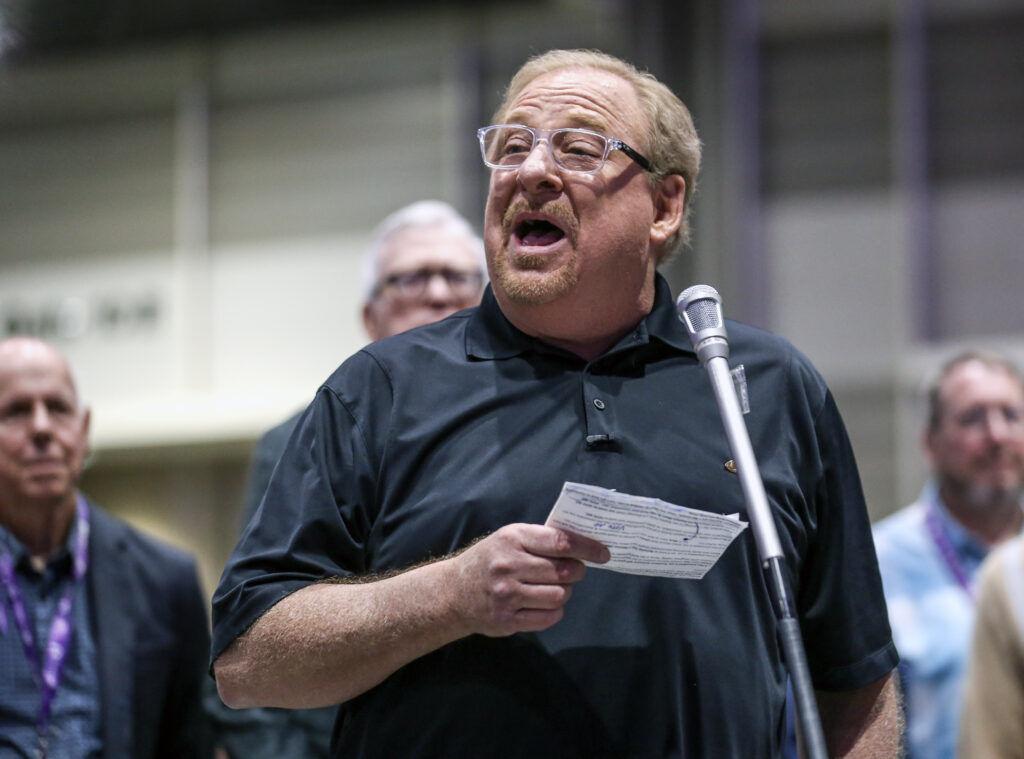
Rick Warren, founding pastor and pastor emeritus of Saddleback Church in Lake Forest, Calif., appeals to Southern Baptists to reject the SBC Executive Committee’s decision to remove Saddleback. “No one is asking any Southern Baptist to change their theology,” Warren said. “I’m not asking you to agree with my church. I am asking you to act like a Southern Baptist.” Photo by Sonya Singh
The trend is also evident among Baptist churches in New South Wales, Australia. Until 1979, the basis of union for churches and ministers was a brief doctrinal statement set forth in state legislation in 1919.[3] In 1979, following damaging debates about biblical inerrancy, the state association affirmed a more detailed and theologically conservative statement of beliefs. Originally, the title described it as “a statement of belief commonly held by Baptists,” thus explicitly not a creed, although this was later quietly removed.
Affirmation of the 1919 statement remained the minimum requirement for churches unwilling to affirm the 1979 statement (now called the “Foundational Beliefs”).[4] However, when a new Constitution was approved in 2017, the “core values” of the Association included a new binding phrase affirming male-female marriage only (“honouring marriage as an institution created by God as the foundation for a lifelong faithful union of a man and a woman”).
This was reaffirmed and strengthened in February 2021 when the annual meeting of the Baptist Association passed the following motion:
That assembly affirm in principle that continued support for the basic doctrines, objects and core values of the association should be an ongoing requirement for affiliation, and request that assembly council bring to a future assembly recommendations on (1) any constitutional amendments necessary to make that explicit, (2) a process for churches to give periodic reaffirmation of the basic doctrines, objects, and core values (no less frequently than 5 yearly), (3) a suitable process to apply section 17.5(a) of the constitution in circumstances where a church no longer meets such requirements.
A subsequent motion was also passed:
Assembly affirms that accredited ministers are required to subscribe to the basic doctrines, objects and values of the Association as defined in the constitution and requests that Assembly Council bring to the next Ordinary Assembly a proposal to require annual confirmation of this as part of Continuing Ministerial Development.
Ironically, many who dissented from recent Baptist statements on marriage did so not because they affirmed same-sex marriage but because of convictions about the primacy of conscience in matters of faith.
For more on this issue see, for example, an article by my friend Erin Martine Sessions and a response by another friend, Murray Campbell.[5] The debate is far from over.
The rise of such binding agreements among allegedly non-credal churches illustrates the danger of dogma. These recent actions demonstrate that NSW Baptists are credal, reactionary, and socially conservative. The centre of gravity has shifted from core beliefs to core values, from salvation issues to splinter issues, from the primacy of the local congregation to the primacy of the Association and its star chamber.
One is left wondering: what will they coerce us to affirm next?
Dr Rod Benson is Research Support Officer at Moore Theological College, Sydney. He previously pastored four Baptist churches in Queensland and NSW, and served for 12 years as an ethicist with the Tinsley Institute at Morling College. The previous column in this series on creeds is available here.
[1] Conrad Henry Moehlman, “Creeds of Christendom,” in Vergilius Ture Anselm Fern (ed.), An Encyclopedia of Religion (New York: Philosophical Library, 1945), 208.
[2] Among many commentaries, see https://www.baptiststandard.com/news/baptists/sbc-approves-amendment-limiting-pastorate-to-men/ and https://baptistnews.com/article/the-sbc-2023-when-dogma-trumps-gospel/
[3] See “Schedule A” at the end of the Baptist Union Incorporation Act 1919 (Private Act).
[4] https://nswactbaptists.org.au/wp-content/uploads/2018/08/BA-Constitution-1.4.17.pdf
[5] https://www.abc.net.au/religion/have-baptists-just-sold-their-soul-over-same-sex-marriage/14103278; and https://murraycampbell.net/2022/11/18/baptists-havent-sold-their-soul-they-are-following-gods-heart/
Image source: Kentucky Today
Share this:
TwitterFacebookEmailPrint
What is a creed?
June 25, 2023
In “academic”
No creed but the Bible
June 24, 2023
In “academic”
Jesus or the Bible
Several years ago, around the time when he was President of the Baptist Union of Australia, I recall the Revd Tim Costello writing an opinion piece in response to an article by one of the leading Sydney Anglican heavyweights published in The Sydney Morning Herald. I can’t recall the issue…
October 15, 2012
In “articles”
Hello, Rod.
I appreciate you post–in a contemporary context.
Words, I have been urged to recall, don’t have meaning so much as they have use. Which is to say that words used decades ago have taken on new (and often rigid) conotations.
Over a century ago dogmatics was an appropriate and useful way to talk about systematice theology.
I am reminded that Karl Barth cut his theological teeth of the work of Schleiermacher–widely embraced as the originator of what blossomed as systematice theology.
Barth finally resisted Scheiermacher’s appeal to experience and undertook the task of neo-orthodoxy as a way to return the work of theology to biblical foundations and, too, the historical trajectory of the creeds and subsequent confessions of the church.
Ironically, Barth’s *Dogmatics* and *Evangelical Theology* were soundly rejected by US conservative theologians, to whom you allude in your post.
I am reminded of an anecdote about Barth and Tillich.
As the story goes, they met late in their lives. They revelled in stories about grandchildren (and I am sure, enjoyed more than a pint).
As they bid farewell at the train station, Barth is reported to have clutched Tillich’s elbow and said, “Paulus, I regard you as the most important philosopher in the 20th century.”
Tillich is said to have clutched Barth and said, “And, Karl, I regard you as the greatest theologian . . . of the sixteenth century.”