
A creed is a concise, formal, public and authoritative statement of key religious beliefs. For Christians, a creed is validated by Scripture, and is a formula “in which the church’s understanding of the gospel is laid bare.”[1]
The classic Christian creeds invoke the story of Jesus and the experience of the first Christians, and there appear to be traces of some early creeds in the New Testament documents. I will explore these traces in future posts. The question arises: are similar credal statements present in the Hebrew Bible?
On reflection, few texts in the Hebrew Bible take a credal or confessional form. The first verse in the Bible famously declares, “In the beginning God created the heavens and the earth” (Gen 1:1). This is the ultimate affirmation of God’s existence, power and freedom. It nimbly describes a fact but does not attempt to persuade or to articulate convictional trust. It prepares the way for all of history, but it lacks the confessional quality of a creed.
There may be a hint of a creed in Exodus 3:13-14. Here, Moses asks God what he should say to the Israelites if they demand to know the identity of “the God of their ancestors,” and God replies, “I AM WHO I AM… I AM has sent me to you.”
This enigmatic phrase most likely conveys the idea that the deity whom Moses has encountered will be true to his own nature. That nature will be revealed in the emancipation and exodus of the people of Israel from Egypt and their establishment as God’s chosen people through the covenant ratified at Mount Sinai.[2] This is a defining moment in Israel’s faith journey, but it is not a creed.
What of the “Ten Commandments” (Exodus 20:2-17)? These may be understood as principles for faithful living, or as a description of what a faithful life entails or requires. They may be recited in liturgy by a community of faith and bind members of the community to one another and to God. But whatever else it may be, the Decalogue reads more like a list of ethical demands than an affirmative statement of belief and trust by the people of God.
A text in the previous chapter, Exodus 19:3-7, more closely resembles an early Hebrew creed. At Mt Sinai, Moses receives preliminary instructions from God before receiving the Ten Commandments. God impresses on Moses the importance of recounting Israel’s salvation history, urges the necessity of covenant faithfulness, and outlines the missional vocation of God’s people.
In verse 7, Moses briefs the elders of the community on what God has commanded him. We do not know precisely what he said, or what the elders later taught the community in summary form, but perhaps it would be recognisably credal.
Many of Israel’s psalms appear to employ credal language. Psalm 9:1, for example, states, “I will thank the Lord with all my heart; I will declare all your wondrous works.” Here is personal trust, and concrete belief. But creeds are not prayers.
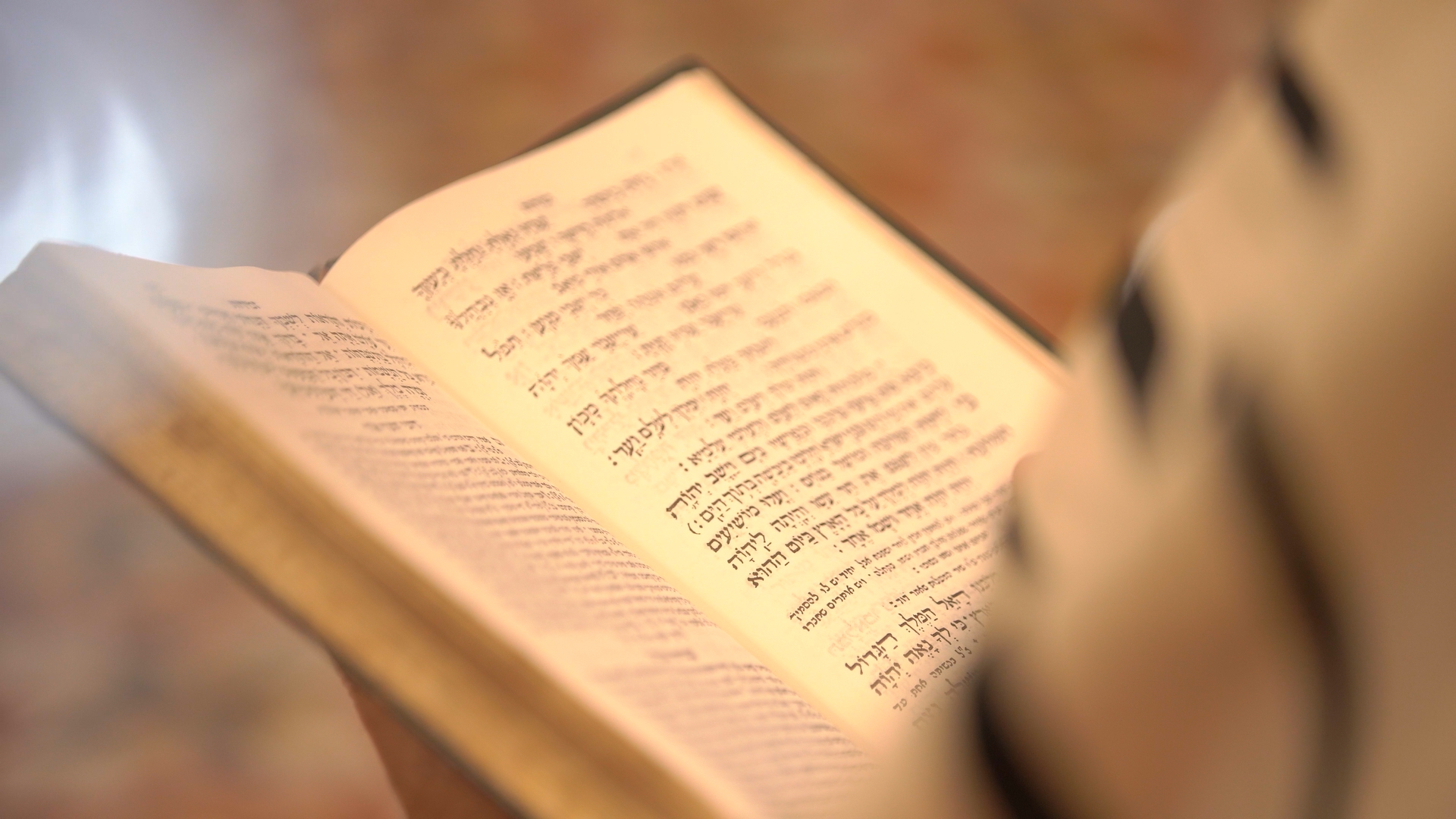
The text in the Hebrew Bible that most closely approximates a creed is Deuteronomy 6:4-5, commonly called the Shema: “Listen, Israel: The Lord our God, the Lord is one. Love the Lord your God with all your heart, with all your soul, and with all your strength.” The subsequent verses (vv. 6-9) outline the expected response by the Israelite community.
The Shema is a confession of covenant loyalty, indicating a commitment to reject polytheism and to participate in an exclusive relationship with God initiated by divine love. It remains the central affirmation of Judaism, recited twice a day by traditionally observant Jews.
The Shema has been called “the key confession of the Jews,” “Israel’s pledge of allegiance,” and “the primal creed and confession of the Christian church.”[3] However, verses 4-5 are difficult to translate since the text lacks a verb and “consists of a small number of words whose interrelationships are not explicit.”[4] Perhaps this merely indicates the origins of the text in an ancient creed orally passed down by descendants of Abraham.
There may be echoes of the Shema in Isaiah 52:7-10; Jeremiah 31:31-34; Hosea 4:1-6; and Zechariah 14:9. Given its primacy in Israel’s religion, however, it is striking that only faint echoes appear elsewhere in the Hebrew Bible.
For Christians, it is noteworthy that the Lord Jesus quotes the Shema in Mark 12:28-30, and Paul alludes to it in his letters (e.g., 1 Cor 8:4-6; 1 Tim 2:5). Just as the people of Israel came to embrace the Shema as their quintessential confession of faith, so too Christians may confess that “the Lord our God, the Lord is one.”
A more fundamental basis for definite religious belief is difficult to imagine.
Dr Rod Benson is Research Support Officer at Moore Theological College, Sydney. He previously pastored four Baptist churches in Queensland and NSW, and served for 12 years as an ethicist with the Tinsley Institute at Morling College. The previous column in this series on creeds is available here.
References:
[1] Michael Leyden, Faithful Living: Discipleship, Creeds and Ethics (London: SCM Press, 2019), 22.
[2] T. Desmond Alexander, Exodus (Leicester: Apollos, 2017), 89.
[3] Ajith Fernando, Deuteronomy: Loving Obedience to a Loving God (Wheaton: Crossway, 2012), 257; Daniel I. Block, Deuteronomy (Grand Rapids: Zondervan, 2012), 186; Jaroslav Pelikan, Credo: Historical and Theological Guide to Creeds and Confessions of Faith in the Christian Tradition (New Haven: Yale University Press, 2003), 374.
[4] J. G. McConville, Deuteronomy (Leicester: Apollos, 2002), 140.
Image source: Kerela Tourism

