
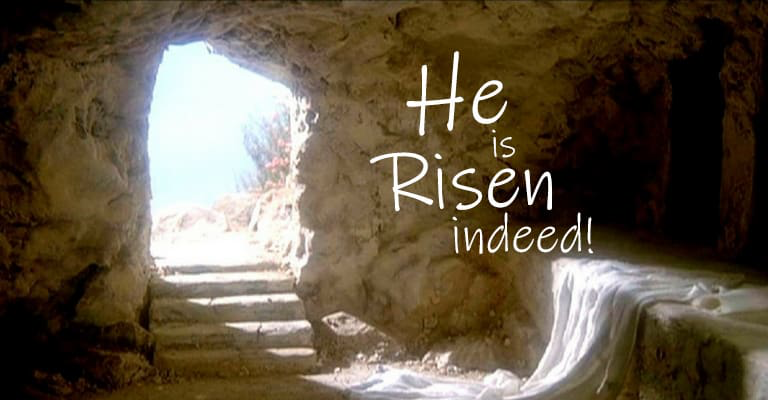
Upon arrival at my place of worship this Easter Sunday, I was greeted by the declaration, “Christ is risen!” And, aware of liturgical protocol, I replied, “He is risen indeed!” When I stood before my congregation to preach the Easter sermon, I spoke the declaration, and the people replied, with joy, “He is risen indeed!”
What is the origin of this beautiful religious tradition? It is a concise confession of faith, a fragment of ancient liturgy, and a shared participation in the central claim of Christianity that Jesus Christ has been raised from the dead.
Origins in early Christian practice
The origin of the greeting is difficult to establish with precision. The Greek form—Χριστὸς ἀνέστη (Christos anesti)—is attested in written sources by the fifth century after Christ, along with the response Ἀληθῶς ἀνέστη (Alethōs anesti, “Truly he is risen”). These written forms likely reflect a much older oral tradition embedded in the life of the Church.
The greeting is antiphonal: one voice declares, another responds. This call-and-response pattern was characteristic of early Christian worship and has parallels in synagogue practice. It signals that the resurrection is not an individual belief but a communal confession.
The greeting also echoes biblical texts. In 1 Corinthians 15:3–5, Paul the Apostle records an early creedal summary: Christ died, was buried, and was raised on the third day. Likewise, Luke 24:34 preserves the declaration, “The Lord has risen indeed!” These texts suggest that the greeting may reflect the earliest Christian proclamation.
Development in liturgical tradition
By late antiquity, the greeting had become firmly established, especially in Eastern Christianity. In the Byzantine tradition, Christos anesti is proclaimed repeatedly throughout the Paschal season, often replacing ordinary greetings. The response—Alēthōs anesti—reinforces the shared character of belief: resurrection is declared and mutually confirmed.
As Christianity spread, the greeting took root in multiple linguistic and cultural contexts. Unlike more elaborate liturgical developments, it has remained remarkably stable. The greeting moves easily between formal worship and everyday speech, bridging the sacred and the ordinary. Alongside creeds and early Christian hymns, it provides a tangible link to the worship of the ancient Church.
Early Christian worship held together doctrine and praise. What the Church believed was what it sang, prayed, and proclaimed. Likewise, the Easter greeting compresses the essence of the gospel into a form that is memorable and communal.
In recent years, this sense of continuity has been reinforced in new ways. The ancient Oxyrhynchus Hymn, preserved only in fragments, has been reimagined by contemporary composers, with the process documented in The First Hymn by John Dickson.[1]Such projects remind modern Christians that their worship is not an isolated phenomenon but part of a long and living tradition.
Theological significance
To speak the Easter greeting recalls a past event and participates in a living confession. The call-and-response form enacts the Church’s identity as a community shaped by shared faith in the crucified and risen Jesus. The statement binds the community, situates the speaker within the narrative of redemption, and renews the Church’s central confession.
In preserving this liturgical tradition, Christians around the world enter into a pattern of speech that has been repeated for almost two thousand years. The annual repetition becomes a form of memory, an embodied recollection of the ancient roots of the faith. As we participate, we stand in continuity with generations of believers who have spoken the same words in hope and conviction.
The enduring force of the Easter greeting lies in its capacity to unite historical claim and theological meaning. It announces not only that something happened, but that what happened alters the structure of reality.
The greeting affirms that the resurrection is not an isolated miracle but the decisive act of God within creation. It resonates with the New Testament vision of new creation. To declare that “Christ is risen” is to announce that death does not hold ultimate authority, and that creation itself is in process of renewal.
Conclusion
Across languages, cultures, and centuries, the Easter greeting has endured because it expresses the heart of Christian faith. It is a fragment of the earliest proclamation and a continuing act of shared confession. In the resurrection of Jesus, Christians discern the vindication of his audacious claims and an affirmation that life, not death, is the final word.
Further, to affirm that “He is risen indeed!” is to claim that the whole creation is held within the loving and redemptive purposes of God. The resurrection of Jesus is woven into the fabric of a universe created, sustained, and redeemed by God. In speaking this truth, year after year, the Church remembers the inauguration of the new creation and bears witness to it anew.
Rev Dr Rod Benson is General Secretary of the NSW Ecumenical Council and a minister of the Uniting Church in Australia serving at North Rocks Community Church in Sydney.
Reference
[1] See https://www.thefirsthymnmovie.com
Image source: ActiveChristianity
 iDigress