
A guide for Baptist ministers transitioning to the UCA (Part 3 of 12)
Rod Benson, 18 July 2026
part three of this series, I highlight the continuing influence of the three traditions as I have observed them, while acknowledging that the Uniting Church in Australia has developed its own distinctive identity over the five decades of its life.
One of the greatest discoveries for Baptist ministers considering entering the Uniting Church is that it is not simply another denomination. It is the living inheritance of three historic ecclesial traditions – Methodist, Presbyterian and Congregational – each of which continues to shape the Uniting Church’s life in important ways. Although the Uniting Church has developed its own theological identity since 1977, the gifts of its founding traditions are readily apparent and deeply significant to those like me who take the time to observe and analyse.
Methodism
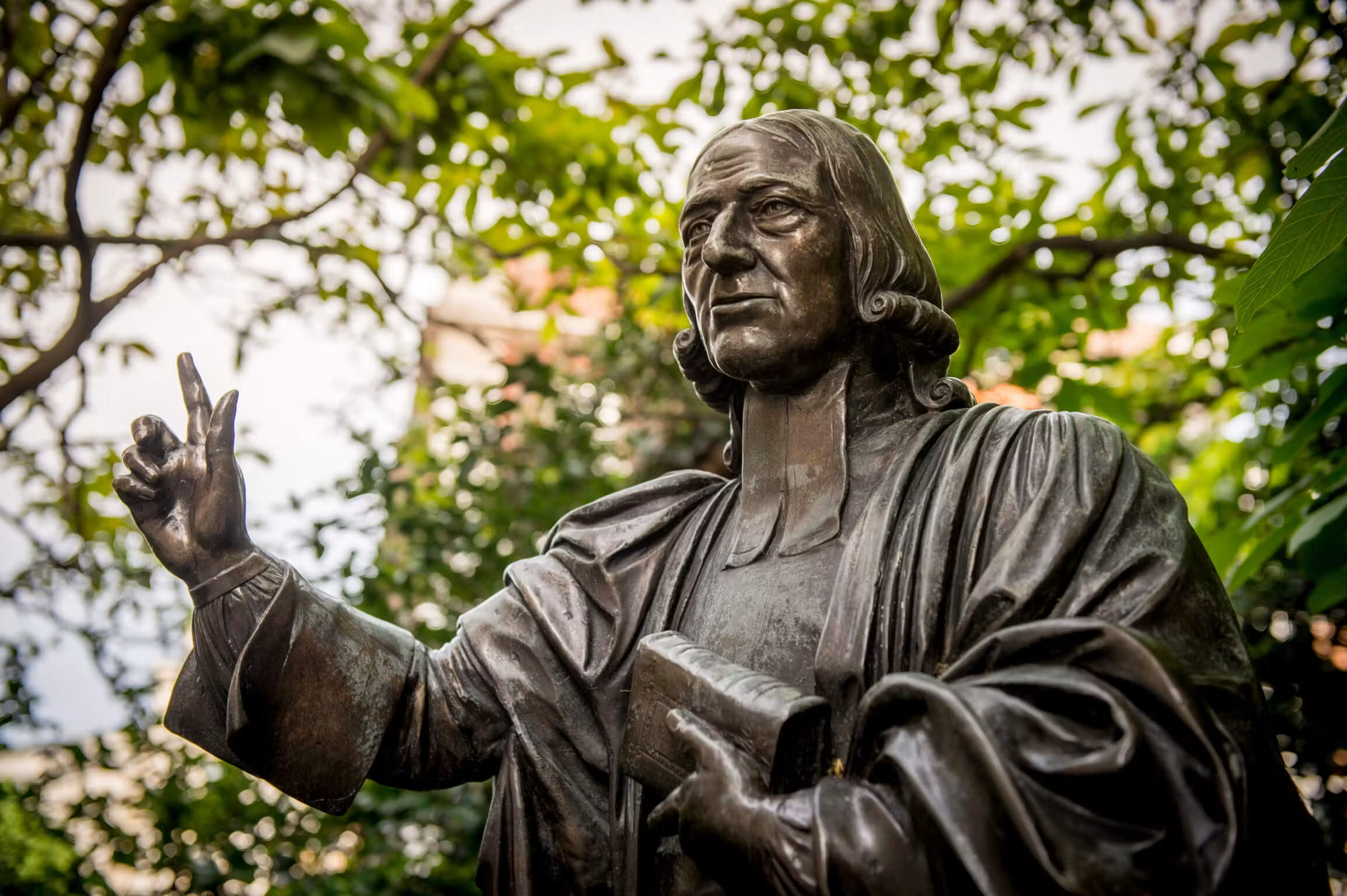
The Methodist inheritance is perhaps the most immediately recognisable. The Methodist Church of Australasia entered union in 1977 as the largest of the three participating denominations and contributed much of the evangelical and missionary energy that continues to characterise the Uniting Church. Rooted in the eighteenth-century revival led by John and Charles Wesley, Australian Methodism combined a strong emphasis on the grace of God, personal conversion, disciplined discipleship, passionate preaching, hymn singing, and evangelistic outreach with an equally strong commitment to education, social reform and compassionate service.
Methodist ministers were expected to be effective preachers, capable pastors and practical leaders, while lay people exercised extensive leadership through local preachers, class leaders and circuit stewards. This combination of evangelical conviction, organisational energy and concern for both personal holiness and social holiness remains one of the defining characteristics of the Uniting Church.
John Wesley’s emphasis upon the experience of the grace of God, personal conversion to Christ, holy living, evangelism, social concern, and practical discipleship continues to influence many congregations and ministers. The best of Methodist preaching combines careful biblical exposition with heartfelt pastoral application and an expectation that the gospel calls people to genuine repentance, a lived faith, and transformed living that impacts the wider world.
Equally significant is Methodism’s longstanding concern for education, social holiness and service to the wider community. Many Baptist ministers find this combination of evangelical conviction and practical engagement with society deeply congenial.
Presbyterianism
The Presbyterian contribution is most evident in the Church’s structures of governance. The Presbyterian Church of Australia brought a rich inheritance of Reformed theology, theological scholarship and representative church government. Its ministers were generally trained within a strong academic tradition that valued careful biblical interpretation, doctrinal coherence and thoughtful preaching.
Presbyterians understood the Church as being governed not by individual ministers or independent congregations but by a series of representative councils – sessions, presbyteries, synods and assemblies – through which Christ exercises his rule over the Church. Although the Uniting Church significantly reshaped this inheritance by developing its own conciliar theology in the Basis of Union, its structures of governance continue to bear a distinctly Presbyterian imprint. Equally enduring is the Presbyterian commitment to serious theological reflection, ordered ministry and leadership exercised through prayerful corporate discernment rather than individual authority.
While the Uniting Church has significantly reshaped Presbyterian polity through its own conciliar theology, its emphasis upon councils of the Church, ordered decision-making, representative leadership and corporate discernment clearly reflects its Presbyterian heritage. Ministers who initially find committee structures and formal processes unfamiliar often come to appreciate the wisdom of decisions reached collectively rather than resting upon the authority or personality of a single leader. The Presbyterian tradition has also left a legacy of theological seriousness, disciplined reflection and respect for the Church’s historic confessional inheritance.
Congregationalism
The Congregational tradition is sometimes less obvious, yet it remains indispensable to Uniting Church polity. The Congregational Union of Australia was numerically the smallest of the three founding partners but contributed an influence far greater than its size might suggest. Congregationalism insisted that every local congregation gathered around Word and Sacrament is a full expression of the Church of Jesus Christ, directly accountable to Christ as its living Head. This fostered a strong commitment to local initiative, lay participation, freedom of conscience and democratic decision-making.
Congregational churches often encouraged innovation in worship, mission and pastoral leadership while valuing theological breadth and liberty within the bounds of Christian faith. Although public attention in the Uniting Church can sometimes become focused on Synod or Assembly debates, the Congregational inheritance continues to remind the Church that its true life is found in local congregations where Christians gather each week for worship, discipleship, fellowship and mission. The wider councils exist not to overshadow congregational life but to nurture, connect and strengthen it in the service of Christ.
Congregationalism insisted that the local gathered community of believers is not merely an administrative unit but a true manifestation of the Church of Jesus Christ. That conviction continues to remind the Uniting Church that its primary vocation is lived out in local congregations where people worship, pray, proclaim the gospel, celebrate the sacraments, care for one another and engage in mission.
While debates within Synods, the Assembly or the wider Church can sometimes dominate public attention, the heart of the Uniting Church still beats in hundreds of local congregations serving their neighbourhoods week by week. The wider councils exist to support, encourage and connect those congregations rather than to eclipse them.
For Baptist ministers, this Congregational legacy often provides an important point of continuity. Although congregations participate within a wider conciliar structure, they remain the principal communities in which Christian discipleship is initiated and nurtured, and the primary context in which the Church’s mission is embodied. Ministers who invest deeply in the life of the local congregation while also embracing the wider councils of the Church are likely to flourish.
Of course, every denomination is comprised of local congregations, but the Baptist distinctive of local church autonomy, and the positive culture that such emphasis fosters, perhaps enables Baptist ministers to respect and love their Uniting Church congregations at least as well as ministers formed in episcopal or presbyterian contexts.
A threefold cord
Together, these three spiritual inheritances continue to give the Uniting Church much of its distinctive character: the evangelical warmth and missionary energy of Methodism, the ordered and collaborative governance of Presbyterianism, and the local, participatory vitality of Congregationalism. Ministers entering the Church are not asked to choose between these traditions but to receive them as complementary gifts, enriching one another in the shared task of proclaiming and enacting the gospel of Jesus Christ in contemporary Australia.
Ministers contemplating service in the Uniting Church should also be aware that there are continuing expressions of the original Methodist, Presbyterian and Congregationalist Churches still in existence in their own right. Their separate decisions to decline the invitation to join the new denomination in 1977 have led to a strengthening of the conservative and introspective aspects of their ecclesial cultures. Leaders of these continuing Churches have been among the most critical of developments and innovations within the Uniting Church.
While the founding traditions remain significant, they are not parallel streams flowing independently within the Uniting Church today. The union in 1977 was decisive, and created an entirely new and unique entity in the Australian religious environment. Church’s theological centre is found in the Basis of Union, which receives the gifts of Methodism, Presbyterianism and Congregationalism and reinterprets them in the light of the gospel of Jesus Christ.
The Basis calls the Uniting Church to be a pilgrim people, continually renewed by the Holy Spirit, listening afresh to Scripture and bearing witness to Christ in every generation. Ministers entering the Uniting Church find that they are not merely learning the customs of three historical denominations but are being invited into a distinctive theological vision that arises out of, but is not confined by, those earlier traditions.
These three inheritances are also best understood as complementary rather than competing. Each tradition contributes strengths that help to balance the others. Methodist zeal for evangelism, discipleship and social holiness is enriched by Presbyterian theological depth and disciplined corporate discernment. Presbyterian order and representative governance are enlivened by the missionary energy of Methodism and grounded in the Congregational conviction that the Church’s life is ultimately embodied in local worshipping communities. Congregational freedom and local initiative, in turn, flourish most fruitfully when exercised within the mutual accountability of the wider councils of the Church.
Together, these three formative traditions create a richer ecclesial life than any one of them could sustain alone. The legacy of each distinctive tradition corrects, enriches and complements the others in our shared mission of proclaiming the gospel of Jesus Christ.
The next chapter in a lifelong vocation
For many Baptist ministers, entering the Uniting Church is seldom a rejection of their past. The convictions formed within Baptist life – love of Scripture, believer’s faith, evangelistic preaching and congregational mission – need not be abandoned. Instead, they are wonderfully enriched by receiving and participating in the enduring wider gifts of Methodist spirituality, Presbyterian theological discipline and Congregational participation, within a Church that seeks to live as a reconciled community under the lordship of Christ.
Many ministers discover, to their delight, that God has not called them away from their Baptist heritage but through it into a broader ecclesial imagination. That has certainly been my experience.
Rev Dr Rod Benson is General Secretary of the NSW Ecumenical Council and a minister of the Uniting Church in Australia serving at North Rocks Community Church in Sydney.
For other articles in this series, click on the links: Part 1 * Part 2 * Part 3 * Part 4 * Part 5 * Part 6 * Part 7 * Part 8 * Part 9 * Part 10 * Part 11 * Part 12
Image source: lineagejourney.com

