
A guide for Baptist ministers transitioning to the UCA (Part 5 of 12)
Rod Benson, 17 July 2026
In my previous article, I observed that ministers contemplating transition from Baptist to Uniting Church contexts do so for various reasons. If you are one of those, it is vitally important to consider your motives and discern whether and why God has prompted you to consider ministry in a different institutional setting. Here are twelve signs that God may be calling you to pursue ministry in the Uniting Church.
1. You sense a genuine call from God rather than mere dissatisfaction.
The strongest reason to seek recognition as a Uniting Church minister is a settled conviction that God is leading you in that direction. Such a call usually grows gradually through prayer, reflection, conversation and experience rather than arising from frustration with your present ministry. Every minister encounters seasons of disappointment, conflict or fatigue, but these alone are poor reasons for changing denominations. A genuine vocation is characterised less by running away from one context than by being drawn towards another because you believe Christ is calling you there.
2. You find yourself increasingly drawn to the vision of the Basis of Union.
Many Baptist ministers discover that the Basis of Union resonates deeply with their own developing theological convictions. It is an inspiring and challenging document. Its Christ-centred theology, its emphasis upon the Church’s continual reformation under the Word of God, its ecumenical vision, and its confidence in the work of the Holy Spirit offer a compelling account of what it means to be the Church. If, after careful study, you find yourself saying, “I could happily make this theological vision my own,” that may be an important sign of vocation.
3. You value the conciliar life of the Church and shared discernment.
Rather than viewing Presbyteries, Synods and the Assembly as unnecessary bureaucracy, you begin to appreciate them as expressions of the Church seeking together the mind of Christ. You recognise that important decisions are often made more wisely when they arise from prayerful communal discernment rather than individual leadership alone. While no system is perfect, you increasingly value accountability, collaboration and representative leadership as gifts rather than constraints. Uniting Church ministry may well be for you.
4. You are committed to the visible unity of the Church.
The Uniting Church was born from a conviction that the divisions between Christians diminish the Church’s witness to Christ. If you find yourself increasingly passionate about ecumenical relationships, praying and working with Christians from other traditions, and believing that visible unity is itself a form of Christian witness, the ethos of the Uniting Church may feel like a natural home. This commitment does not diminish denominational distinctives but places them within the larger calling of the one Church founded by Jesus and sustained by his Spirit.
5. You can faithfully administer the sacraments according to the Church’s practice.
Recognition as a minister requires more than tolerance of the Church’s sacramental theology. It requires the ability to administer baptism and Holy Communion with integrity according to the Church’s theological understanding. Even if aspects differ from your Baptist upbringing, you have come to appreciate the theological rationale behind the Church’s practice and can exercise this ministry with a clear conscience and pastoral confidence.
6. You enjoy working constructively with people whose theology differs from your own.
The Uniting Church contains an unusually broad theological spectrum. Ministers flourish when they are able to hold strong convictions while extending generosity to colleagues who interpret Scripture or theology differently. If theological diversity stimulates thoughtful conversation rather than defensive reaction, and if you can distinguish between disagreement and disunity, you are well suited to this environment.
7. You welcome accountability, supervision and lifelong learning.
You no longer see ministry as something mastered once theological college is complete. Instead, you value supervision, continuing education, peer learning and professional reflection as essential disciplines for faithful ministry. You welcome wise feedback, recognise your own limitations and remain eager to grow in wisdom, character and pastoral effectiveness throughout your ministry.
8. You see the local congregation as the heart of the Church while valuing its wider councils.
The Uniting Church’s life is expressed through congregations gathered for worship and mission, yet those congregations belong to a wider fellowship of councils that support, challenge and encourage one another. If you can hold these two convictions together – deep commitment to the local congregation and genuine appreciation for the wider Church – you have grasped one of the defining characteristics of Uniting ecclesiology.
9. You want to contribute your spiritual gifts and experience without recreating Baptist life inside the Uniting Church.
Your experience as a Baptist minister is a gift to be shared, not a blueprint to be imposed. You bring strengths in biblical preaching, evangelism, discipleship, congregational participation and leadership development, yet you are equally eager to learn from Methodist, Presbyterian and Congregational traditions. You seek integration rather than transplantation, enrichment rather than replacement. Your heart is for the Church of Jesus Christ, not for the Baptist franchise.
10. You have found a Uniting Church congregation in which you genuinely belong.
Rather than attending occasionally or remaining an interested observer, you have become part of the worshipping community. People know you, trust you and minister alongside you. You have invested in the congregation’s life without expecting recognition or appointment in return. Such belonging provides the relational foundation upon which the Church can responsibly discern your call to ministry.
For many Baptist ministers exploring their vocation and contemplating transition to the Uniting Church, it is costly and difficult to exit Baptist ministry, leave a familiar congregation, join a Uniting Church congregation, and proceed to discern one’s future vocation in a new ecclesial setting. Often family considerations as well as personal preferences and heritage weigh heavily in such decisions. Nevertheless, it is necessary in most cases to join a local congregation of the Uniting Church if you want to exercise professional ministry in the Uniting Church. If this is for you, then have confidence that God will meet your needs and make a way.
11. The congregation and Presbytery recognise in you the gifts of a Uniting Church minister.
Christian vocation is never discerned alone. Alongside your own sense of call comes the affirmation of others who have observed your character, ministry and commitment over time. When respected members of the congregation, Presbytery leaders and experienced ministers independently recognise that your gifts align with the ministry of the Uniting Church, this communal affirmation becomes a significant confirmation of God’s leading.
12. You can honestly say, “I love this Church, and I want to devote myself to its worship, witness and mission.”
Ultimately, recognition as a Minister of the Word is an act of love as much as vocation. Ministers promise not merely to perform certain functions but to give themselves to the life of the Church in all its strengths and imperfections. When you find that your heart has become genuinely attached to the people, worship, theology and mission of the Uniting Church, and you desire to serve its congregations for the sake of Jesus, you may well have discovered that God is calling you to make this Church your spiritual home and the principal context of your ordained ministry.
None of these signs should be interpreted as a checklist to be completed or a formula guaranteeing God’s call. Christian vocation is always a mystery of grace, discerned patiently through prayer, Scripture, the prompting of the Holy Spirit and the wisdom of the people of God. If, however, these signs increasingly resonate with your own experience, they may indicate that God is inviting you into a new chapter of ministry within the Uniting Church.
Such a transition is not an abandonment of your Baptist heritage but an opportunity to offer its finest gifts – love of Scripture, commitment to evangelism, confidence in the ministry of all believers and devotion to Christ – within a broader conciliar and ecumenical fellowship. Move forward with gratitude, humility and hope, trusting that God who faithfully guided your ministry thus far will continue to lead you into fruitful service for the sake of Jesus Christ, his Church and the world that God loves.
Rev Dr Rod Benson is General Secretary of the NSW Ecumenical Council and a minister of the Uniting Church in Australia serving at North Rocks Community Church in Sydney.
For other articles in this series, click on the links: Part 1 * Part 2 * Part 3 * Part 4 * Part 5 * Part 6 * Part 7 * Part 8 * Part 9 * Part 10 * Part 11 * Part 12
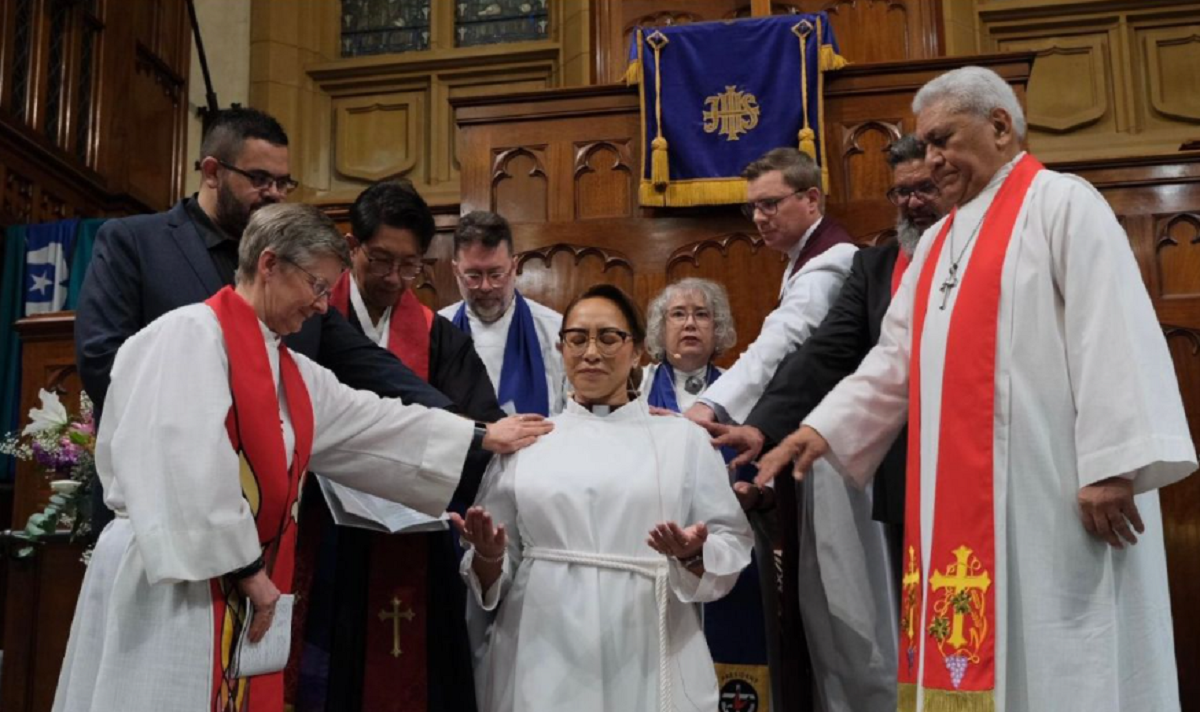
Image source: Crosslight

