
A guide for Baptist ministers transitioning to the UCA (Part 1 of 12)
Rod Benson, 16 July 2026
Over the past two years, I have been engaged in the difficult but inspiring task of transitioning from ministry in the Baptist Church to the Uniting Church.
I was ordained by the Baptist Union of NSW (now known as the Association of Baptist Churches in NSW & ACT) in 1999. During my theological studies prior to ordination, I served as a church planter in Ipswich, Queensland. In 1998, I relocated to Sydney and took up the role of Senior Pastor of Blakehurst Baptist Church. From there, I moved to Morling College where I worked as an ethicist, public theologian and media officer for state and national Baptist agencies for 12 years. That role was made redundant at the end of 2014, and I moved to Lithgow, a regional city west of the Blue Mountains, as Interim Minister for almost three years.
In late 2017, I returned to Sydney and served for seven years in a completely different role as Research Support Officer at the (Anglican) Moore Theological College, where I was responsible for selecting the books purchased by Moore Theological Library and coached higher degree students in research and writing skills. During this time, by default, my Baptist accreditation as a minister lapsed since the Baptist Association declined to recognise my continuing ministry in theological education. In early 2025, I left Moore College and took up dual roles as General Secretary of the NSW Ecumenical Council and Transition Minister at North Rocks Community Church, a congregation of the Uniting Church.
You are not alone
Every year a small number of Baptist ministers in Australia, like me, begin exploring ministry opportunities within the Uniting Church. Some are attracted by its more liberal theology or its commitment to ecumenism, others by opportunities for chaplaincy, congregational ministry, presbytery leadership, theological education, justice work, or Synod-based or national ministries. Some come because their theological convictions have developed in ways that sit more comfortably within the broad theological culture of the Uniting Church. Others simply discern that God is calling them into a new context.
For Baptist ministers, transition is possible. Yet it is not simply a change of employer. It involves learning a different ecclesial culture, a different understanding of authority, and a different way of exercising ministry.
A different ecclesiology
The most significant difference between Baptists and the Uniting Church lies in church polity. Although the Association of Baptist Churches in NSW & ACT functions in many ways like a denomination, Baptists tend to describe themselves as a “movement” of autonomous congregations. In principle, each local church governs itself, appoints its own leaders, calls its own ministers, owns its own property (or holds it through trustees), and determines its own theological direction. The Association exists primarily to encourage, resource and connect churches rather than govern them. In practice, this is only partly true.
By contrast, the Uniting Church understands itself as one Church expressed through interconnected Councils: congregations, presbyteries, synods and the national Assembly. Each council has responsibilities that cannot be ignored by another. Ministers are not employed solely by local congregations but are ordained into the ministry of the whole Church and serve under the oversight of the Presbytery. Spiritual and institutional authority is more dispersed, more collaborative and more conciliar than many Baptists are accustomed to.
A Baptist minister entering the Uniting Church will need to become comfortable working through committees, councils, discernment processes and collective decision-making. While this can sometimes feel slower, it also reflects a theological conviction that Christ governs the Church through the wisdom and prayerful discernment of the whole body.
Ministry belongs to the whole church
Another adjustment concerns the understanding of ordination. In Baptist life, ordination recognises God’s call and the affirmation of a local church and the wider Baptist family. Ministers often retain considerable independence in shaping their ministry. The Uniting Church places greater emphasis upon ministry as belonging to the whole Church. Induction into a congregation or other ministry normally occurs through a formal placement process involving both the Presbytery and Synod. Ministers remain accountable to the wider Church throughout their ministry.
A broader theological landscape
Within the NSW Baptist movement there is certainly considerable theological variety, ranging from conservative evangelical to moderately progressive congregations. Nevertheless, most churches operate within recognisably evangelical assumptions concerning biblical authority, conversion, preaching and mission.
There are notable exceptions, but my experience suggests that a large majority of Baptist churches in NSW and the ACT are best described as “conservative evangelical.” Recent decisions by the Baptist Association have emphasised this, and both ministers and congregations who decline to accept the increasingly conservative stance of the Association, or whose freedom of conscience on secondary issues is denied, face excommunication.
The Uniting Church encompasses a considerably wider theological spectrum. Within one Presbytery you may encounter ministers who identify as evangelical, Reformed, Barthian, Wesleyan, liberal, progressive, charismatic, sacramental, feminist, liberationist, evangelical-charismatic or deeply ecumenical. Many ministers resist simple labels altogether.
For Baptist ministers this diversity can initially feel unsettling. Yet it also offers opportunities for rich theological conversation and mutual learning. The Church’s doctrinal standards, especially the Basis of Union, intentionally encourage continuing theological reflection rather than enforcing narrow confessional conformity. Ministers are expected to think theologically, engage respectfully with differing viewpoints, and remain committed to the unity of the Church amid disagreement.
Scripture and theological method
Most Baptist ministers will discover that the authority of Scripture remains central within the Uniting Church, but approaches to interpretation vary more widely. Some congregations preach in a strongly expository manner through books of the Bible. Others follow the Revised Common Lectionary. Some combine biblical exposition with contemporary social, ethical and pastoral concerns. Others employ narrative, theological or contextual approaches.
A minister moving across should avoid assuming either that every Uniting congregation is theologically liberal or that every congregation wishes to hear purely academic sermons. Many congregations value careful biblical preaching delivered with pastoral warmth, intellectual honesty and practical application. That has certainly been my experience as minister at North Rocks Community Church.
Worship can look somewhat different
Perhaps the most immediately visible difference is worship. Baptist churches often display relatively consistent patterns: extended contemporary music, substantial preaching, informal leadership and comparatively infrequent celebration of Communion.
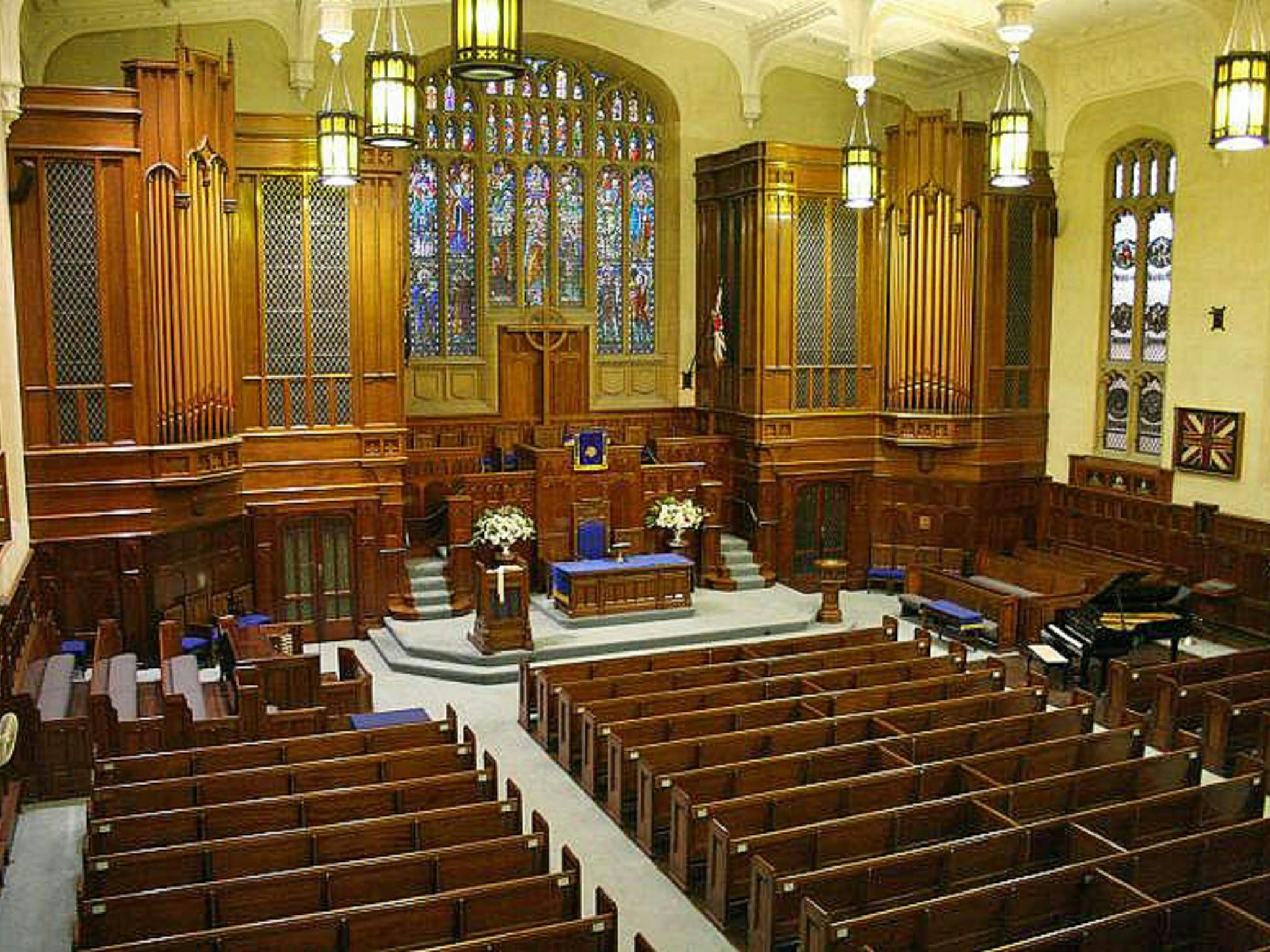
The Uniting Church displays enormous variety. Different congregations may feature traditional hymns accompanied by organ, contemporary worship bands, liturgical worship following printed orders of service, highly informal gatherings, weekly or monthly Communion,Taizé-style contemplative services, overtly multicultural worship, or experimental forms incorporating art, silence or drama.
Rather than asking which style is “correct,” the Uniting Church generally asks whether worship faithfully forms people as followers of Jesus within their local context. Flexibility and contextual ministry are important pastoral skills.
Baptist ministers will also notice differences regarding the sacraments. While believer’s baptism remains common in Baptist churches, the Uniting Church practises both infant and believer’s baptism. Ministers are expected to administer both faithfully according to the Church’s understanding. Similarly, Holy Communion normally occupies a more central place in congregational life than it does in many Baptist churches.
Beyond congregational ministry
One distinctive strength of the Uniting Church is the breadth of recognised ministries available. Alongside parish ministry are opportunities in schools, universities, hospitals, prisons, aged care, community services, theological colleges, multicultural ministries, social justice advocacy, disaster recovery, rural ministry, Presbytery leadership and Synod support roles.
Many Baptist ministers who possess gifts in leadership, education, mentoring or public engagement discover opportunities that would be difficult to pursue within more congregationally focused traditions.
Pastoral ministry also extends into ecumenical relationships. Ministers regularly participate alongside Anglican, Catholic, Orthodox, Lutheran, Presbyterian and other Christian leaders in local and regional initiatives. For ministers who value Christian unity, this can become one of the most rewarding dimensions of Uniting Church ministry.
Learning the culture
Theological agreement alone is insufficient. Successful transition depends upon learning the culture of the Church. I would recommend investing time attending Presbytery meetings before beginning placement. Read the constitutive Basis of Union carefully. Become familiar with the regulations governing ministry. Build relationships with experienced Uniting Church colleagues.
Every congregation has its own personality. Appreciate the history and ethos of the Uniting Church congregation you are joining and serving. A coastal congregation, an inner-city congregation, a multicultural congregation and a rural congregation may each express Uniting identity quite differently.
Baptist ministers also bring valuable gifts to the Uniting Church. These often include strong biblical preaching, confidence in evangelism, intentional discipleship, leadership development, congregational initiative, mission entrepreneurship and an expectation that lay people actively participate in ministry. These strengths are widely appreciated when exercised with humility and a willingness to learn.
A ministry of generous orthodoxy
Perhaps the greatest adjustment is learning to minister within what might be described as a “generous orthodoxy.” The Uniting Church seeks to hold together conviction and openness, theological seriousness and pastoral generosity, catholicity and reform, tradition and continuing discernment. Ministers are expected neither to abandon their convictions nor to insist that every faithful Christian must share them.
For Baptist ministers, this requires intellectual hospitality alongside theological integrity. Those who flourish are usually people who remain deeply committed to Christ and Scripture while becoming increasingly skilled at listening, collaborating and discerning together.
For ministers sensing God’s call across this ecclesial boundary, the transition offers not the abandonment of Baptist identity but its enrichment. Many discover that the strengths formed within Baptist life – such as love for Scripture, commitment to mission, congregational leadership and personal faith – find fresh expression within the broader, conciliar and ecumenical life of the Uniting Church.
The result is often a ministry that is simultaneously more collaborative, more ecumenically engaged, and more deeply appreciative of the many ways in which Jesus continues to build his Church.
Rev Dr Rod Benson is General Secretary of the NSW Ecumenical Council and a minister of the Uniting Church in Australia serving at North Rocks Community Church in Sydney.
For other articles in this series, click on the links: Part 1 * Part 2 * Part 3 * Part 4 * Part 5 * Part 6 * Part 7 * Part 8 * Part 9 * Part 10 * Part 11 * Part 12
Image source: Sydney.com

