
The history and achievement of EAPPI
Rod Benson
The Ecumenical Accompaniment Programme in Palestine and Israel is among the most sustained and distinctive human rights initiatives of the modern ecumenical movement.
Established by the World Council of Churches in 2002, EAPPI arose during the violence of the Second Intifada in response to an appeal from the Heads of Churches in Jerusalem. The program was not imposed by an international agency but requested by local churches seeking a visible, disciplined and nonviolent expression of solidarity. International Christians were invited to come, observe, and accompany vulnerable communities, and return home as informed advocates for a just peace.
EAPPI developed from consultations conducted during 2001 and early 2002, drawing partly on the experience of Christian Peacemaker Teams. Its purpose was neither conventional humanitarian relief nor political negotiation. The plan was for Ecumenical Accompaniers to live for approximately three months in communities across the West Bank and East Jerusalem.
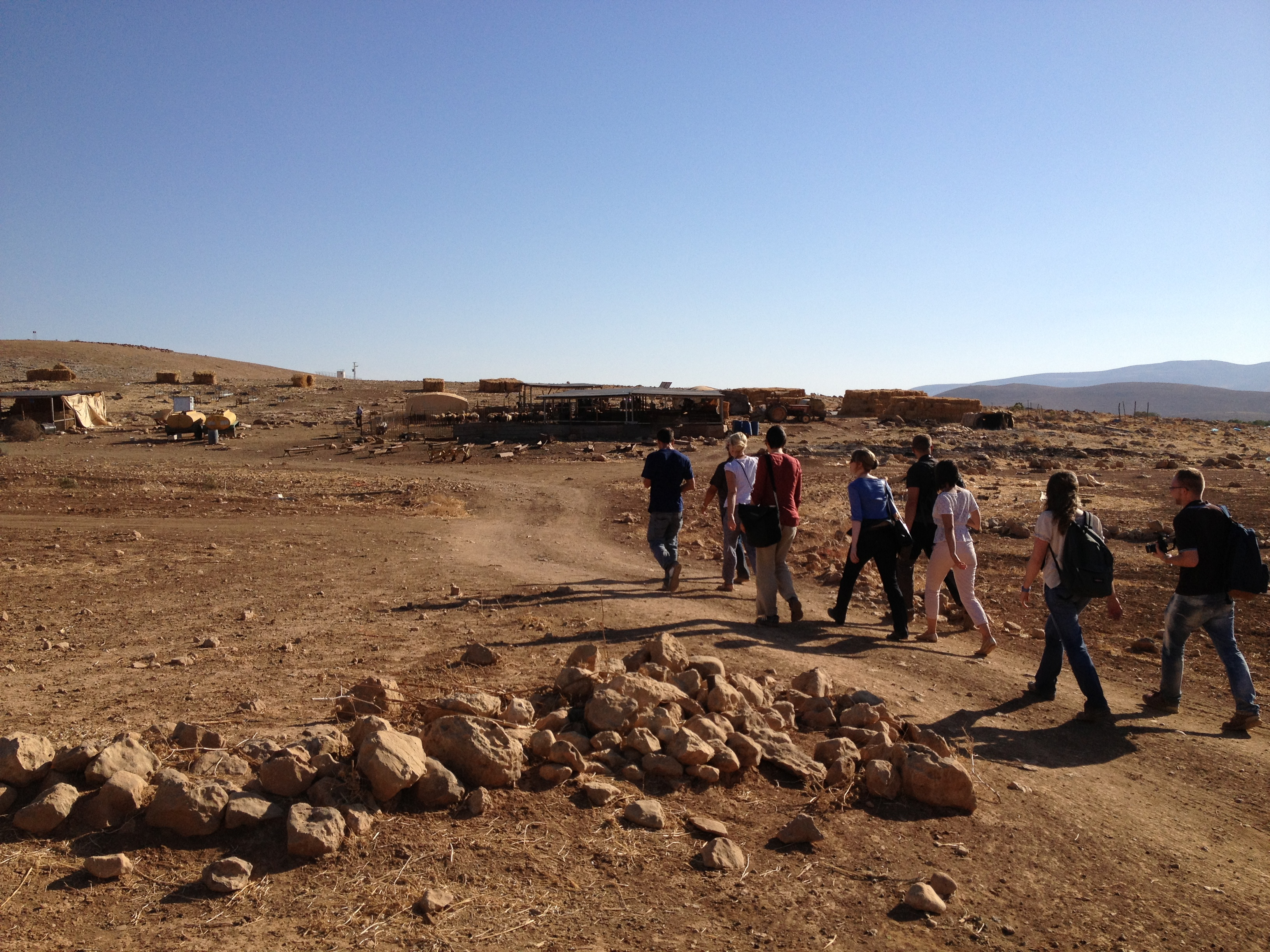
During this time, they would offer protective presence, monitoring checkpoints and other places of tension, documenting alleged violations of international humanitarian and human rights law, and supporting Palestinian and Israeli organisations committed to nonviolent change. On returning home, they would undertake education and advocacy in churches, universities, civil society and government.
The program’s development has depended on successive international coordinators and Jerusalem-based staff. Palestinian Christian human rights advocate Rifat Odeh Kassis was an early international coordinator and helped establish its theological and organisational foundations. Manuel Quintero subsequently served for eight years, strengthening EAPPI as a global network before retiring in 2016.
Quintero was succeeded by the Dutch Reformed pastor and theologian Owe Boersma, who emphasised the need for moral equilibrium without retreating into neutrality. Jerusalem coordinators and field staff, including Valentina Maggiulli in more recent years, have managed the difficult practical work of training teams, maintaining relationships, assessing security and adapting deployments to rapidly changing circumstances.
Over more than two decades, accompaniers from churches and partner organisations across many nations have served in places such as Jerusalem, Bethlehem, Hebron, Yanoun, Tulkarem, the Jordan Valley and the South Hebron Hills. Their work has included monitoring access to schools, farms, workplaces, hospitals and places of worship; observing home demolitions and settler violence; accompanying shepherds and farming communities; and reporting incidents to the United Nations and human rights organisations. Their presence cannot guarantee safety, but local testimony indicates that it can reduce fear, restrain misconduct and reassure communities that their circumstances are neither invisible nor forgotten.
EAPPI has endured several severe geopolitical crises since 2002. It began amid the closures, military incursions and violence of the Second Intifada. Later wars in Gaza, intensified settlement activity, restrictions on movement, visa uncertainty and increasing hostility towards international human rights monitoring repeatedly complicated its work. The COVID-19 pandemic interrupted normal international deployments, while the attacks of 7 October 2023 and the ensuing Gaza war created unprecedented security, political and pastoral challenges.
At times, accompaniers have had to withdraw, operate with reduced numbers or suspend work in particular locations. By 2025, the WCC described EAPPI’s continued operation, even in a constrained form, as remarkable, especially as other international monitoring presences had closed or been expelled by the Israeli state.
One of EAPPI’s achievements is the disciplined clarity of its mandate. As I have observed elsewhere in my reflections on Australian involvement, the program does not principally provide money, material aid or development services; it simply offers accompaniment. Its volunteers offer presence, observation, documentation and solidarity, while supporting Palestinians and Israelis who pursue peace through nonviolent means.
This narrow focus has enabled a relatively small program with quite limited resources to make a notable contribution to the preservation of human rights disproportionate to its size. I have also observed the impressive cooperation of people from widely different national, cultural, religious and ethnic backgrounds who unite in defence of those who are profoundly marginalised and comparatively powerless.
Perhaps the most enduring influence of EAPPI is in the formation of its participants. Accompaniers do not merely collect information; they learn to see. They encounter Palestinian families living with occupation, dispossession and uncertainty, but they also meet Israeli human rights advocates, peace activists and citizens shaped by terrorism, war and historic trauma. Such encounters engender moral complexity.
The emphasis on Palestinian families and livelihoods should not be seen as a dismissal of existential Israeli fears as imaginary or trivial. The Holocaust, the constant threat of suicide bombings, rocket attacks and other violent threats against Israeli citizens and infrastructure remain morally significant. Yet security concerns cannot justify every policy, nor should recognition of Jewish suffering require silence concerning Palestinian suffering. Accompaniment encourages neither ideological certainty nor indiscriminate neutrality, but disciplined compassion and moral consistency.
This approach is expressed in EAPPI’s principle of “principled impartiality”. The programme does not deny the humanity or legitimate security needs of either people, but neither is it neutral concerning human dignity, international law or violence against civilians. Its advocates must also resist antisemitism, anti-Palestinian racism and religious narratives that sanctify domination. Criticism that EAPPI gives disproportionate attention to Palestinian experience deserves serious consideration, but the programme’s focus on occupation and its impact reflects its specific mandate rather than a judgement that only one community suffers.
EAPPI is noteworthy for the way in which it joins professional human rights practice to a Christian theology of presence. Its work is theologically and ethically grounded in incarnation, solidarity, truth-telling, nonviolence and hope. Thoughtful prayer and worship accompany documentation, ecclesial partnership sustains public advocacy, and concern for state law stands alongside a focus on personal relationships.
EAPPI also embodies principles of receptive ecumenism as common action with reflection rather than institutional conversation alone. Christians divided by religious tradition stand together beside vulnerable neighbours and demonstrate that unity in Jesus Christ has positive social and political consequences.
A small agency such as EAPPI cannot resolve the Middle East conflict, end the Israeli occupation of Palestinian lands, or prevent every abuse. Its achievement is more modest but still profound: it has created a durable international community of witnesses, amplified local voices, supported nonviolent resistance and reminded the churches that justice requires more than statements issued from a safe distance.
Accompaniment means drawing near, seeing truthfully, remaining present and carrying what has been witnessed into the public life of the Church. In that sense, EAPPI is not merely a human rights programme administered by Christians. It is a demanding form of Christian discipleship.
Rev Dr Rod Benson is General Secretary of the NSW Ecumenical Council and a minister of the Uniting Church in Australia serving at North Rocks Community Church in Sydney. He was for several years a volunteer member of the management committee of EAPPI Australia before it became part of the peace work of Act for Peace. He visited EAPPI work in Palestine and Israel in 2007, 2013 and 2014.
Image source: author.

