
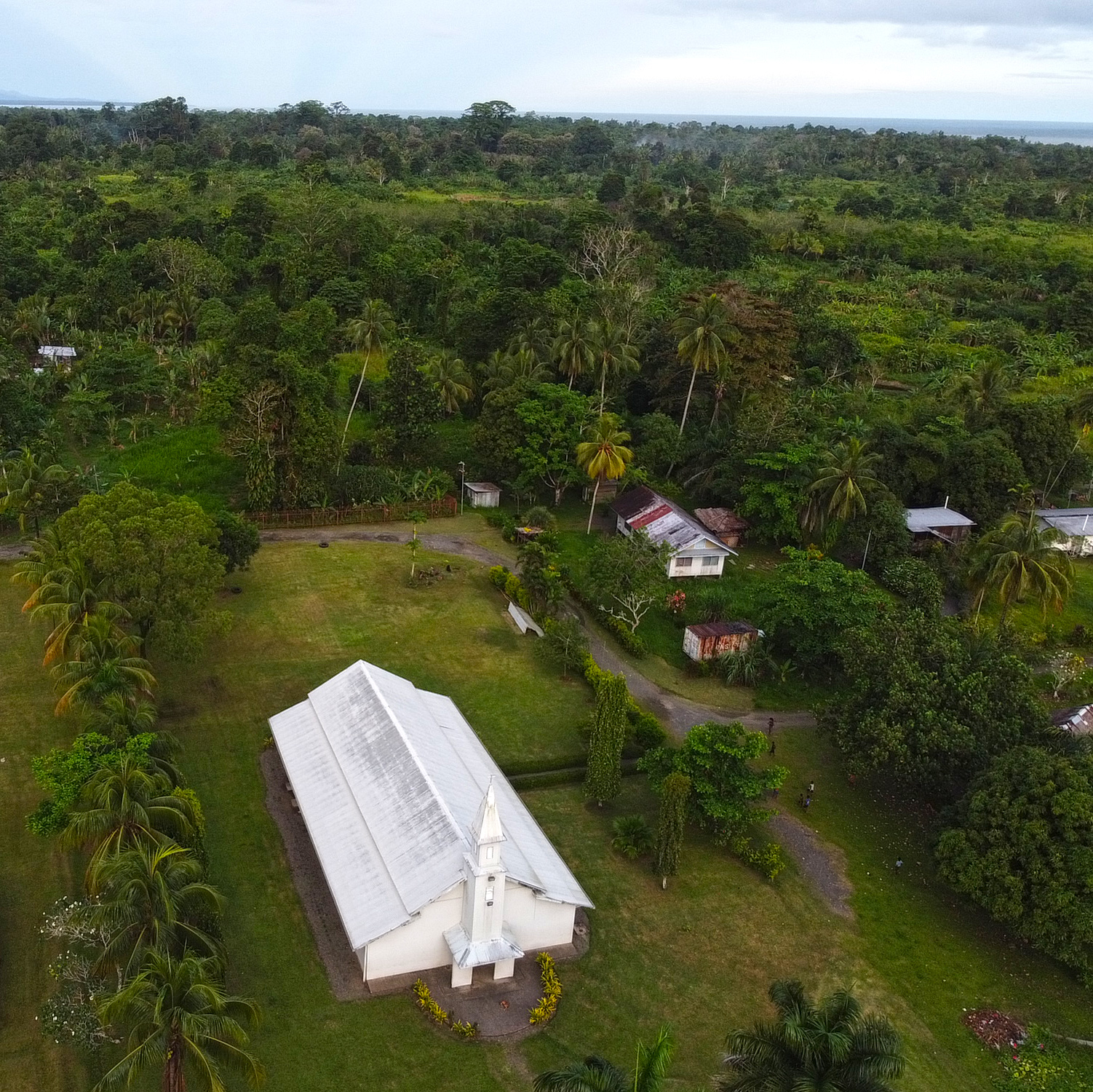
Papua New Guinea (PNG) presents one of the world’s most remarkable contexts for Christian ecumenism. Home to more than 800 living languages and immense cultural diversity, it is also an overwhelmingly Christian nation, largely the result of colonial policies, with more than 95 per cent of the population identifying as Christian in the most recent national census.
In such a complex social landscape, the search for Christian unity has never been a luxury. It has been essential to the Church’s witness. Over many decades, churches have learned that their common confession of Jesus Christ is strengthened, not diminished, by cooperation across denominational boundaries while remaining honest about enduring theological differences.
But ecumenism is about more than institutional cooperation. It embraces challenges such as common prayer, theological dialogue, mutual recognition, shared mission, practical service, and public witness. It seeks the visible unity of the Church without requiring uniformity in every aspect of doctrine or church order. The PNG experience demonstrates that cooperation in mission and service may flourish even where differences remain concerning ministry, sacraments, or ecclesiology. Its history illustrates the possibilities and limits of ecumenism.
Christianity arrived in Papua New Guinea through successive waves of missionary activity during the late nineteenth century. The London Missionary Society began work in the south in 1871, followed by Methodist, Roman Catholic, Lutheran and Anglican missions over the following two decades. During the twentieth century, various Seventh-day Adventist, Baptist, Evangelical, Pentecostal and other churches established or expanded their ministries throughout the country.
Moreover, many missionary societies negotiated informal “spheres of influence” or comity arrangements intended to reduce unnecessary competition and duplication. For the colonial authorities, this fast-tracked education, economic development and urbanisation. While comity agreements encouraged cooperation, they also reflected the assumptions of European missionary strategy and colonial administration, treating regions as fields to be allocated among foreign societies rather than recognising local communities as active participants in shaping their own Christian future.
Missionaries established schools, hospitals, literacy programs and Bible translation projects that transformed many communities and contributed significantly to the country’s later development. They often lived sacrificially under demanding conditions and advocated for Indigenous communities against exploitation.
Yet missionary activity also carried the assumptions of its time. Some missionaries dismissed Melanesian religions and customs too readily, imposed European cultural norms, and failed to appreciate the theological significance of local traditions. Christian mission was therefore deeply intertwined with the realities of colonial expansion, even though it cannot simply be reduced to an instrument of colonialism. Its legacy is one of remarkable achievement and genuine ambiguity.
Equally important is the recognition that Christianity in Papua New Guinea was never simply brought by Europeans to passive recipients. Indigenous Christians quickly became the principal agents of evangelisation. Catechists, evangelists, teachers, translators, pastors, women’s fellowships and village leaders carried the gospel across linguistic and cultural boundaries. Christians from elsewhere in the Pacific also played indispensable roles in the missionary movement.
The history of Christianity in Papua New Guinea is therefore best understood as one of translation, appropriation and local reconstruction. The churches that emerged were not merely European institutions transplanted overseas but communities in which Papua New Guineans increasingly interpreted and embodied the Christian faith through their own languages, customs and social relationships.
The institutional expression of ecumenism developed steadily during the twentieth century. The Christian Council of Papua New Guinea, established in 1959, provided an important framework for cooperation among the major churches. This work laid the foundation for the Papua New Guinea Council of Churches, established in 1965. Grounded in a shared confession of the triune God and the authority of Scripture, the Council encouraged theological dialogue, common witness and practical collaboration while respecting the distinctive identities of its member churches. It gave the churches a united public voice without seeking to erase legitimate theological differences.
One of the most significant ecumenical achievements followed in 1968 with the inauguration of the United Church in Papua New Guinea and the Solomon Islands, bringing together churches shaped by Methodist, Congregational and Presbyterian traditions. This represented not merely cooperation but organic church union, demonstrating that historic denominational divisions could sometimes be overcome through visible ecclesial unity. Although the United Church later became separate autonomous churches in Papua New Guinea and Solomon Islands, the union remains one of the Pacific’s most significant ecumenical milestones.
As Papua New Guinea approached independence in 1975, the churches possessed one of the broadest national networks in the emerging nation. Their schools, hospitals, theological colleges, literacy programs and community development initiatives extended into many remote areas where government services remained limited. Church leaders acquired considerable public influence and frequently contributed to national discussions concerning education, health, constitutional development, justice and social welfare.
Yet this close relationship with government also required careful discernment. Churches were called not only to cooperate in nation-building but also to exercise a prophetic responsibility by challenging corruption, injustice and violence wherever these threatened the common good.
Education has long provided fertile ground for ecumenical cooperation. Students from different traditions have studied together in theological colleges and universities, forming relationships that often continue throughout their ministries. Churches have collaborated in Bible translation, theological education, literacy, youth ministry and community development. Tok Pisin, the creole language spoken widely throughout PNG, and English have enabled communication across regional boundaries, while translation into hundreds of local languages has rooted Scripture, worship and theology within the diverse cultures of Papua New Guinea.
Healthcare has similarly become an enduring expression of Christian unity. Churches have administered hospitals, clinics and nursing schools for generations, frequently cooperating across denominational lines. During natural disasters, disease outbreaks and humanitarian crises, Christian organisations have often mobilised extensive local networks to provide practical assistance, particularly in isolated communities where government services remain difficult to sustain.
The churches have also played an important role in peacebuilding and reconciliation. Tribal conflict, election-related violence, disputes over natural resources, corruption and gender-based violence have all required sustained Christian engagement.
For example, during the Bougainville secessionist conflict between 1988 and 1998, churches, religious communities and women’s Christian organisations made significant contributions to humanitarian assistance, mediation, trauma healing and reconciliation. Their efforts were not without limitations or internal disagreements, but they frequently possessed levels of public trust and local access that enabled dialogue where political institutions struggled. Their experience demonstrated that ecumenism is not simply an internal concern of the churches but a public expression of the ministry of reconciliation entrusted to the whole body of Christ.
At the same time, ecumenism in Papua New Guinea is lived as much in villages and regional towns as in national church offices. Extended families commonly include members of several denominations. Children may attend schools operated by one church while receiving healthcare from another. Christians worship together at civic occasions, cooperate in community development, and share responsibilities during funerals, marriages and village celebrations. This everyday ecumenism often proves more resilient than formal agreements between denominational leaders.
Yet local relationships also reveal continuing tensions arising from competition for members, differing approaches to evangelism, charismatic renewal, church discipline and theological interpretation. The reality is therefore more complex than either institutional harmony or denominational rivalry.
The rapid growth of Evangelical, Pentecostal and independent churches during the later twentieth century has further reshaped the ecumenical landscape. Many participate actively in local ministerial fellowships, prayer movements and mission partnerships while remaining outside traditional ecumenical structures such as the PNG Council of Churches. Their growth reminds the wider Church that ecumenism cannot be defined solely by formal councils. Christian unity is also expressed wherever believers cooperate in faithful witness, compassionate service and common prayer while respecting differences of conviction.
An enduring theological question concerns the relationship between Christianity and traditional Melanesian cultures. Earlier missionary approaches often assumed that Indigenous customs were primarily obstacles to the gospel. Contemporary theology has adopted a more dialogical perspective. The gospel judges every culture, including those inherited from Europe as well as those of Melanesia, while also affirming whatever reflects God’s truth, goodness and justice. Melanesian understandings of kinship, communal responsibility, reconciliation and reciprocal obligation have enriched Christian theology throughout the Pacific.
The encounter between gospel and culture is therefore not a one-way process of replacing Indigenous traditions with foreign ones but an ongoing conversation in which every culture is transformed by Christ and every culture contributes fresh insight into the meaning of Christian discipleship.
The history of ecumenism in Papua New Guinea is a story of churches learning, often imperfectly, to bear common witness within one of the world’s youngest nation states and most culturally diverse societies. Shaped by missionary inheritance, Indigenous leadership, church union, national independence, theological diversity and the continuing search for justice and peace, ecumenism in Papua New Guinea demonstrates that Christian unity is not achieved by erasing differences but by cultivating relationships grounded in the reconciling work of God in Jesus Christ.
The experience of the churches in Papua New Guinea in pursuing visible unity offers a hopeful reminder that unity is both a gift of the Spirit and a discipline of faithful discipleship.
Rev Dr Rod Benson is General Secretary of the NSW Ecumenical Council and a minister of the Uniting Church in Australia serving at North Rocks Community Church in Sydney. He lived in Lae, Papua New Guinea, as a child.
Image source: The Write Stuff

