
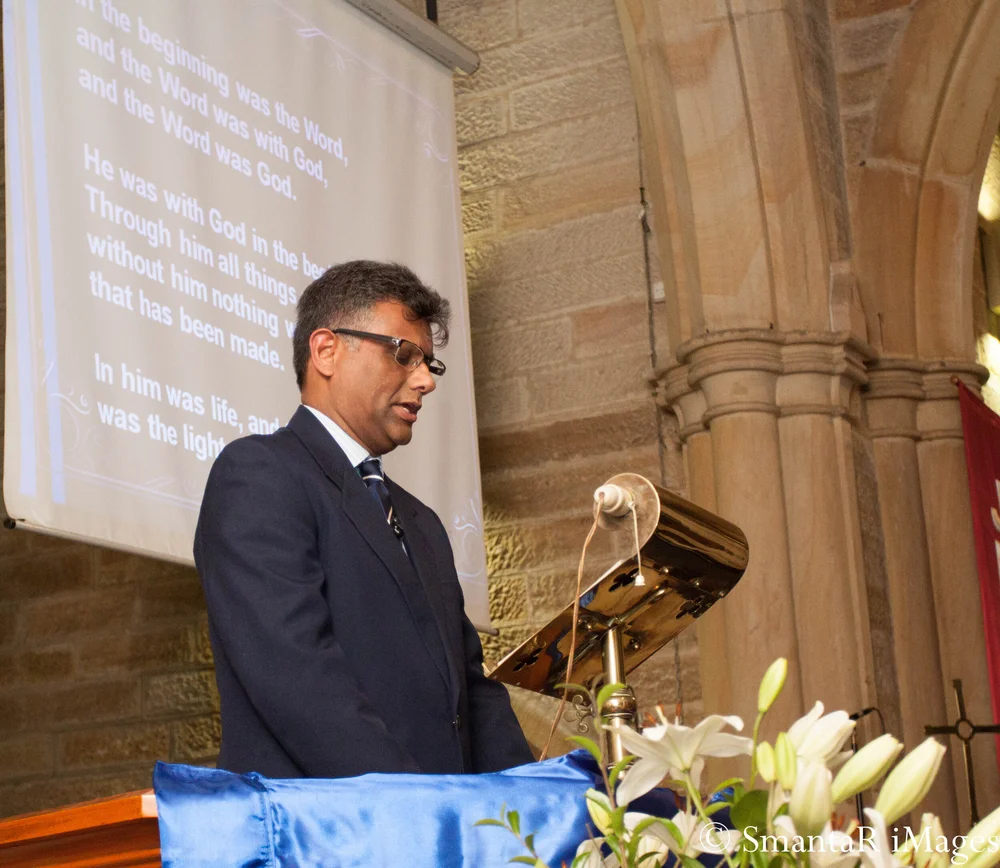
Generative artificial intelligence offers preachers powerful tools for biblical research, theological reflection, sermon preparation, editing, rehearsal and post-sermon evaluation. Used well, AI can serve as a research assistant, critical interlocutor and editorial aid. It can widen the field of inquiry, compare interpretations, test arguments, identify neglected questions and help refine material the preacher has already developed.
But AI should assist rather than replace the intellectual, spiritual and pastoral work of preaching. AI should reduce unnecessary labour without removing necessary labour. The preacher remains responsible for interpretation, theological judgment, pastoral discernment, spiritual preparation and the embodied act of proclamation.
I have arranged the following 25 AI prompts according to the natural progression of sermon preparation: understanding the biblical text, interpreting it theologically, testing one’s conclusions, constructing the sermon, editing the manuscript, preparing for delivery and evaluating the result. Use any or all of them to improve the quality and impact of your sermons, bearing in mind the advice presented in the previous four articles on AI and public communications.
I. Understanding the biblical text
1. Establish the literary context
Prompt: “Analyse [biblical passage] in its immediate literary context and within the structure and argument of the biblical book as a whole. Identify important connections with what precedes and follows it. Distinguish textual observations from interpretive judgments.”
Good exegesis begins with context. This prompt helps establish how a passage functions within its larger literary unit before attention turns to theological interpretation or contemporary application.
2. Investigate the historical context
Prompt: “Explain the historical, social, political, religious and cultural background relevant to [passage]. Which contextual details materially affect its interpretation? Distinguish well-established information from disputed or speculative claims.”
AI can rapidly assemble historical information, but apparent confidence should never be confused with historical certainty. Significant historical claims require verification.
3. Examine significant Hebrew or Greek terms
Prompt: “Identify the most significant Hebrew or Greek words in [passage]. Explain their semantic range and probable meaning in this context. Alert me to common word-study fallacies, and do not assume that etymology determines meaning.”
This can supplement the use of lexicons, grammars and technical commentaries, particularly for preachers with limited facility in biblical languages.
4. Compare translations
Prompt: “Compare [passage] in the NRSVue, NIV, ESV, CEB, NET and another relevant translation. Identify significant differences and explain the textual, grammatical or theological issues underlying them.”
Translation comparison often exposes exegetical questions that remain invisible when only one English version is consulted.
5. Trace biblical connections
Prompt: “Trace the principal biblical themes evident in [passage]. Identify significant Old Testament backgrounds, New Testament parallels, quotations, echoes and allusions. Distinguish strong textual connections from possible or speculative associations.”
This encourages canonical interpretation while guarding against uncontrolled proof-texting.
6. Survey scholarly interpretations
Prompt: “Identify four or five significant scholarly interpretations of [passage]. Summarise the evidence for and against each. Indicate where broad scholarly agreement exists and where significant disagreement remains.”
The purpose is not to allow AI to decide between interpretations, but to ensure that the preacher encounters serious alternatives rather than merely receiving confirmation of an initial reading.
7. Explore the history of interpretation
Prompt: “How has [passage] been interpreted by significant Christian thinkers from the early church to the present? Include patristic, medieval, Reformation, modern and contemporary perspectives where appropriate.”
Such inquiry reminds the preacher that biblical interpretation belongs to a long ecclesial conversation extending across cultures, traditions and centuries.
II. Developing theological understanding
8. Identify the theological claims
Prompt: “What does [passage] appear to say about God, Christ, the Holy Spirit, creation, humanity, sin, grace, salvation, church, justice, discipleship or hope? Distinguish claims arising directly from the passage from conclusions dependent on broader systematic theology.”
The distinction is important. Not everything Christians rightly believe is necessarily being taught by every biblical passage.
9. Compare theological traditions
Prompt: “Interpret [passage], where appropriate, from Catholic, Orthodox, Reformed, Wesleyan, Baptist, Pentecostal and progressive Christian perspectives. What might each tradition notice, emphasise or question that another might overlook?”
Comparative interpretation can expose assumptions inherited from one’s own tradition and reveal possibilities that might otherwise remain unnoticed.
10. Test the interpretation against the whole witness of Scripture
Prompt: “Examine my interpretation and proposed sermon on [passage] in relation to the wider canonical witness of Scripture. Identify biblical texts that support, qualify, complicate or challenge my argument. Am I making this passage bear more theological weight than it should?”
This helps prevent a legitimate emphasis in one passage from becoming an unbalanced theological generalisation. It also encourages the preacher to distinguish the particular voice of a text from the wider canonical conversation.
III. Critically testing interpretation
11. Identify the difficult questions
Prompt: “Act as a critical biblical scholar examining my interpretation of [passage]. Identify the five most difficult exegetical, historical, theological, ethical or pastoral questions that I should address or acknowledge before preaching.”
AI is often most useful when asked not to confirm an interpretation but to interrogate it.
12. Challenge your interpretation
Prompt: “Here is my interpretation of [passage]: [insert interpretation]. Construct the strongest scholarly argument against it. What evidence might weaken my reading? What assumptions am I making that the text itself may not warrant?”
This introduces an intentionally adversarial dimension into sermon preparation and can help counter confirmation bias.
13. Detect clichés and second-hand thinking
Prompt: “Examine my interpretation and developing sermon for Christian clichés, predictable illustrations, familiar but questionable claims, inherited interpretations that I have not adequately defended, and statements that sound profound without saying very much. Identify places where I need to think more deeply rather than merely improve the wording.”
This is especially useful because generative AI itself tends to reproduce conventional formulations. The prompt deliberately turns that tendency back upon both the preacher and the technology.
IV. Moving from exegesis to sermon
14. Formulate the sermon’s central claim
Prompt: “Using [passage] and my exegetical notes below, suggest five possible one-sentence sermon propositions. Each should express a significant claim genuinely arising from the text rather than imposing an external topic upon it.”
The preacher should make the final judgment. Formulating the sermon’s central claim is itself an important act of theological discernment.
15. Explore alternative sermon structures
Prompt: “Suggest four substantially different ways of structuring this material: expository, narrative, thematic and problem–gospel–response. Explain the strengths, weaknesses and theological risks of each.”
This can help preachers escape habitual structures and consider whether form adequately serves content.
16. Develop responsible application
Prompt: “What personal, congregational, social and public implications might legitimately arise from [passage]? Distinguish direct application, analogy and broader theological inference. Identify applications that exceed what the passage can reasonably support.”
The distinction between interpretation and application is particularly important when sermons address contentious ethical, social or political questions.
17. Identify neglected perspectives
Prompt: “Read my sermon outline from the perspectives of people who may hear it differently because of poverty, disability, grief, cultural difference, age, trauma, social exclusion or relative powerlessness. What might I be failing to notice? Avoid stereotypes and do not presume to speak for these groups.”
AI cannot possess the lived experience of such communities, but it can prompt the preacher to ask questions that might otherwise be neglected.
18. Anticipate how different listeners may hear the sermon
Prompt: “Imagine this sermon being heard by several different members of a congregation: a mature Christian, a new believer, a sceptical visitor, a teenager, someone grieving, someone experiencing hardship, and someone who strongly disagrees with my interpretation. What might each hear clearly, misunderstand, resist or find pastorally significant? Do not stereotype these listeners.”
This treats reception as part of homiletical preparation without pretending that AI can substitute for the preacher’s actual knowledge of the congregation.
19. Develop and verify illustrations
Prompt: “For each major idea in this sermon, suggest possible illustrations drawn from history, literature, biography, art, science, ordinary experience or contemporary culture. Do not invent quotations, statistics, historical incidents or bibliographical references. Clearly identify anything requiring independent verification.”
AI-generated anecdotes can sound persuasive while being inaccurate or entirely fabricated. Illustrations should therefore be checked as carefully as exegetical claims.
V. Testing and editing the manuscript
20. Conduct a theological and ethical audit
Prompt: “Critically examine this sermon for theological distortion, moralism, sentimentality, triumphalism, individualism, proof-texting, stereotypes, manipulative rhetoric, unexamined political assumptions or insensitive pastoral application. Identify specific problems and suggest how they might be corrected.”
Such critical review is especially valuable when preaching difficult texts or addressing socially contested questions.
21. Edit while preserving the preacher’s voice
Prompt: “Edit this sermon for clarity, logical progression, economy, theological precision and oral effectiveness while preserving my vocabulary, argument and speaking voice. Identify repetition, jargon, weak transitions and unnecessarily abstract passages. Do not homogenise the prose into generic AI-generated language.”
Editing is one of AI’s strongest legitimate uses. The objective should be refinement rather than ghost-writing.
22. Identify what should be omitted
Prompt: “Assume this sermon needs to be shortened by 15 per cent without losing its theological substance or pastoral effectiveness. Identify digressions, duplicated ideas, excessive background material, unnecessary quotations and secondary points. Explain what should be removed rather than simply rewriting everything more briefly.”
AI’s capacity to generate material makes a corresponding discipline of subtraction increasingly important. A sermon is strengthened not only by what the preacher discovers but by what the preacher decides not to say.
23. Fact-check the manuscript
Prompt: “Examine this sermon as a rigorous fact-checker. Identify historical claims, quotations, biblical references, statistics, names, dates and scholarly assertions requiring verification. Distinguish claims that can be established confidently from those I should check against primary or authoritative sources.”
Remember that AI may lead the preacher to a source, but AI should not ordinarily be treated as the source.Significant claims should be independently verified.
VI. Preparing for proclamation
24. Review the sermon as spoken communication
Prompt: “Review this sermon as spoken communication rather than written prose. Identify sentences that are too long, passages difficult to follow aurally, awkward transitions and places where silence, repetition, questions, changes of pace or brief summaries might improve delivery.”
A sermon is written to be heard rather than merely read. Material that appears clear on the page may prove difficult to comprehend when encountered once, in real time, by a listening congregation.
25. Rehearse and evaluate the sermon critically
Prompt: “Act as an attentive listener while I rehearse this sermon. Assess its opening, clarity of argument, transitions, pace, emotional register, use of Scripture, illustrations, application and conclusion. Identify where attention is likely to decline, where I am explaining rather than proclaiming, and where the manuscript may prevent natural engagement with the congregation. Suggest three specific improvements for delivery. After preaching, help me evaluate its biblical faithfulness, theological depth, clarity, pastoral sensitivity, application and delivery.”
This extends AI assistance beyond research and writing into reflective practice. Yet the final work remains irreducibly human and pastoral. AI can analyse a manuscript and offer observations about delivery, but it cannot preach. Voice, presence, conviction, responsiveness, prayerful discernment and relationship with a particular congregation belong to the embodied vocation of the preacher.
Rev Dr Rod Benson is General Secretary of the NSW Ecumenical Council and a minister of the Uniting Church in Australia serving at North Rocks Community Church in Sydney.
Image source: S. Thomas’ College Old Boys Association of NSW/ACT.

