
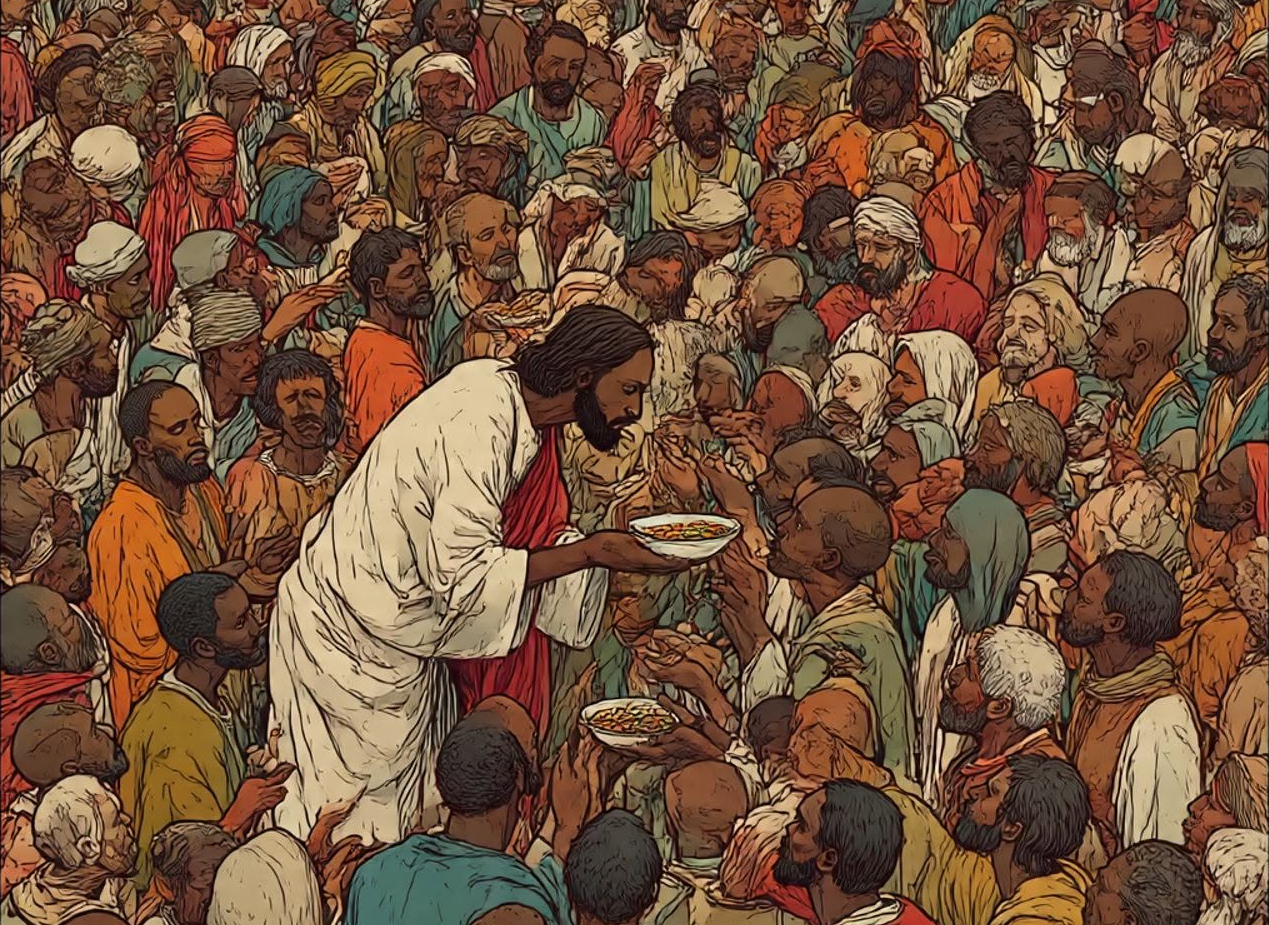
Toward a theological framework for contemporary public policy
By Rod Benson
Introduction
This article examines the relevance of ten major themes in New Testament teaching in relation to the economic responsibilities of the contemporary nation state. It argues that the New Testament offers neither a modern economic constitution nor an endorsement of capitalism, socialism or any fixed settings for public expenditure.
Rather, its proclamation of God’s reign, criticism of acquisitiveness, emphasis on mutual provision, recognition of public authority, defence of workers, concern for the poor, universal moral horizon, relativisation of prosperity, critique of domination and vision of creation’s renewal provide criteria for the ethical assessment of policy.
Reading these texts in their first-century literary and imperial contexts distinguishes obligations binding Christian communities from claims that might appropriately inform law in a plural democracy. The resulting framework gives attention to economic outcomes and institutional design without mistaking moral ends for sufficient evidence about the policy instruments needed to achieve them.
Keywords: New Testament; political economy; nation state; economic justice; taxation; Christian ethics; Uniting Church in Australia.
From apostolic communities to modern public institutions
The New Testament addresses a world of Roman imperial taxation, agrarian inequality, patronage, enslaved labour, itinerant trade and vulnerable urban households, rather than the fiscal and monetary institutions of a representative nation state. Its instructions most often concern disciples, congregations and relations among believers.
The transfer of these teachings to public policy therefore requires a sequence of judgments: first, what a passage meant in its literary and historical setting; second, what theological or moral claim it makes; third, which elements of that claim may be expressed as publicly defensible norms; and fourth, which contemporary institutional arrangements are most likely to serve those norms. To omit any of these steps risks the opposite errors of treating a parable as legislation or regarding the gospel as silent about the material conditions of human life.
The New Testament writings do not determine an optimal tax schedule, monetary regime, industrial-relations statute or welfare system. They do challenge political communities to evaluate economic institutions in relation to human dignity, material sufficiency, neighbour-love, just relationships, accountable authority and the integrity of creation. Policy disagreement will remain, not only because Christians interpret Scripture differently, but because empirical judgments about incentives, fiscal capacity, administrative feasibility and unintended consequences cannot be resolved by biblical quotation alone.
The ten themes that follow form an integrated moral inquiry, beginning with the purposes of economic life and ending with its ecological horizon.
1. The kingdom of God and the ends of economic life
Jesus’ announcement in the synagogue at Nazareth (Lk 4:16–21) draws on Isaiah 61 and evokes the prophetic promise of liberation and restoration; the reference to the year of divine favour also invites reflection on Israel’s jubilee traditions, though Luke does not supply a detailed programme for debt cancellation or land redistribution. Within Luke’s wider narrative, the poor are repeatedly placed near the centre of Jesus’ ministry (Lk 6:20–26; 14:12–14).
The theological claim is more substantial than an instruction to be charitable: the coming reign of God discloses the inadequacy of social arrangements in which the vulnerable are treated as marginal. Yet Jesus’ kingdom must not be identified without remainder with any government or economic order. It is the eschatological horizon against which human arrangements become accountable, not a mandate for the state to claim divine authority for its policies.
This distinction clarifies the appropriate treatment of economic growth. Gross domestic product, employment, productivity and price stability are valuable indicators of economic performance, but none is a complete account of whether a society is flourishing. The New Testament invites inquiry into the purposes for which wealth is produced and the human relationships it sustains or erodes.
For a nation state, the implication is not a rejection of growth, which can enlarge the resources available for public and private purposes, but a refusal to mistake growth for the final end. Economic assessment should consequently consider material security, opportunity, public participation and the condition of those with the least bargaining power. The scriptural contribution is a criterion of judgment; deciding which indicators and programmes best embody it remains a matter for informed democratic deliberation.
2. Wealth, property and the responsibilities of possession
The New Testament’s treatment of wealth is differentiated rather than uniformly condemnatory. Luke’s parable of the rich fool (12:13–21) exposes the illusion that accumulated assets secure life; the account of the rich man and Lazarus (16:19–31) identifies neglect of an impoverished neighbour as a decisive moral failure; and the encounter with Zacchaeus (19:1–10) brings restitution as well as generosity into view.
The pastoral instructions to the wealthy in 1 Timothy 6:17–19 neither deny that some Christians possess resources nor allow them to place their hope in riches. These texts distinguish legal possession from unrestricted moral entitlement. Property may facilitate prudent stewardship, provision for dependants and productive endeavour, but its use is answerable to the claims of neighbours and the practices of justice.
An account of public policy must nevertheless distinguish personal discipleship from enforceable obligation. Neither Zacchaeus’s voluntary response nor Jesus’ particular demand of the rich ruler provides a direct specification of inheritance tax, wealth tax or corporate law. Further argument is required to connect Christian teaching about possession to modern institutions: the grounds of legitimate state authority, the public purposes to be funded, the distribution of tax burdens and the effects of taxation on investment and opportunity.
Ethical criticism can also extend beyond redistribution to fraud, exploitative lending, rent-seeking and the disproportionate influence of accumulated wealth on political processes. The relevant question is not simply whether wealth is held privately, but whether rights of ownership are exercised consistently with obligations of justice and the common good.
3. Sharing, sufficiency and distributive justice
The summaries of communal life in Acts 2:44–47 and 4:32–35 present material sharing as an expression of solidarity among believers. Acts 4:34 connects such sharing with the absence of unmet need. It would, however, be inaccurate to characterise these episodes as a state-imposed abolition of private property: in Acts 5:4, Peter’s question to Ananias presupposes continuing discretion over his property and proceeds.
Paul’s collection for believers in Jerusalem provides a second and especially important witness. In 2 Corinthians 8:8–15, he describes giving as an appeal rather than a command and seeks an equality or fair balance in which one community’s abundance meets another’s need, while expressly rejecting relief for one group at the price of hardship for another. The appeal to the gathering of manna (Ex 16:18) supplies a theological image of sufficient provision.
These passages are neither a constitution for compulsory collectivisation nor a justification for indifference to distribution. They establish a norm of shared responsibility and the moral relevance of material need. Applying the norm within a nation state requires adjudicating questions that the texts do not answer: what counts as sufficiency, how eligibility ought to be established, what burdens can reasonably be borne, how measures affect incentives and whether universal or targeted provision is more effective. Distribution also operates through wages, housing, access to education, public services and opportunities to accumulate assets, not only through transfers after income is earned.
A sound Christian contribution thus examines both the institutional sources of deprivation and the effectiveness of remedies, while avoiding the assumption that every difference in wealth is itself proof of injustice.
4. Taxation, political authority and its limits
When asked about paying taxes to Caesar, Jesus refuses the trap of a simple opposition between religious allegiance and civic obligation (Mk 12:13–17 and parallels). Paul is more explicit: Romans 13:1–7, for example, calls for recognition of governing authority and payment of taxes, portraying the ruler as a servant for good. The passage makes it difficult to argue that public revenue is intrinsically incompatible with Christian faith. Its historical setting, however, is the Roman imperial order, not an accountable democratic state.
Nor should Romans 13 be isolated from Romans 12–13 on non-retaliation and neighbour-love, from Acts 5:29 on the limits of obedience, or from Revelation 13, where political power is exposed as potentially idolatrous and coercive. The New Testament therefore holds together the legitimacy and the fallibility of government.
Public institutions may therefore finance courts, infrastructure, social provision and other goods that cannot reliably be supplied through isolated private decisions. Their claims upon citizens must nevertheless be examined for legality, proportionality, transparency, administrative fairness and democratic accountability. Tax incidence matters as much as formal tax rates: the economic burden may fall differently from the person or enterprise legally charged.
Equally, expenditure must be assessed by outcomes and opportunity costs rather than by compassionate intentions alone. The biblical contribution is an account of authority ordered toward service, with a corresponding warning against identifying the will of God with a government’s fiscal preferences.
5. Work, wages and the dignity of economic participation
Labour is not merely a commodity in New Testament moral imagination. Jesus’ saying that the worker deserves payment (Lk 10:7) and James’s condemnation of wages withheld from agricultural labourers (Jas 5:1–6) identify remuneration and economic vulnerability as matters of justice. The parable of the labourers in the vineyard (Mt 20:1–16), by contrast, is chiefly a portrayal of divine generosity and should not be converted into a policy of equal hourly wages.
The household codes (Eph 6:5–9; Col 4:1), which address enslaved people and masters within the structures of their time, require critical historical interpretation: their existence does not legitimate slavery or establish a transhistorical model of employment relations. Their insistence that masters answer to a higher Lord can be read alongside the broader Christian affirmations of equality and mutual responsibility, without concealing the limitations of these ancient texts.
Likewise, the warning against unwillingness to work in 2 Thessalonians 3:6–12 is directed at disruptive conduct within a community, not at those unable to obtain employment or prevented from working by illness, disability or care responsibilities. In a modern economy, the resulting ethical inquiry embraces safe conditions, timely payment, bargaining power, insecurity, exclusion and access to meaningful work. Productivity is relevant because it can enlarge the resources available for wages, services and investment, but increases in output do not by themselves settle how benefits ought to be shared.
Policies concerning minimum standards, collective representation, skills, industrial innovation and income support involve contestable trade-offs. A Christian ethical perspective suggests that that workers, including those doing unpaid care work, must be regarded as persons and neighbours rather than solely as inputs into production.
6. Poverty, social protection and the obligations of neighbour-love
The decisive concern for those in need appears across several New Testament genres. In Matthew 25:31–46, the judgment scene names hunger, thirst, estrangement, nakedness, sickness and imprisonment; interpretation differs over whether “the least of these” refers narrowly to Jesus’ followers or more widely to vulnerable persons, but the passage indisputably links fidelity to Christ with concrete acts of care. James 2:14–17 rejects verbal benevolence that does not meet bodily need, while Galatians 2:10 records a commitment to remember the poor. These texts do not supply a theory of welfare eligibility or distinguish every cause of poverty, but they do constrain any account of discipleship that treats avoidable deprivation as morally peripheral.
Translation into social policy requires attention both to immediate protection and to the conditions under which people may participate with dignity. Income support, accessible health and disability services, housing affordability, education, employment opportunities and care for children and older people address overlapping dimensions of vulnerability. None should be assumed effective solely because its stated aim is benevolent; adequate evaluation requires consideration of take-up, stigma, work incentives, administrative burden, fiscal durability and the voices of people affected.
Moreover, private generosity, community institutions and state provision are not simple substitutes: each has distinctive capacities and limitations. A New Testament-informed approach therefore asks whether social arrangements prevent foreseeable hardship while sustaining agency, relationships and meaningful participation rather than reducing people to passive recipients of aid.
7. The stranger, national belonging and obligations beyond borders
The modern state defines membership through citizenship, residence and territory, whereas New Testament ethics extends the reach of neighbour-love beyond conventional markers of belonging. In Luke 10:25–37, the Samaritan exemplifies mercy across a hostile social boundary; Acts 10:34–35 challenges partiality in the reception of persons; and Galatians 3:28 denies that ethnic and social divisions determine standing in Christ.
These passages speak initially to Christian fellowship and moral practice, not to comprehensive border administration. Nonetheless, they unsettle the view that a person’s dignity or claim to humane treatment is exhausted by nationality. The Basis of Union of the Uniting Church in Australia similarly speaks of a unity in Christ transcending cultural, economic, national and racial boundaries.
For public policy, the tension is between the state’s particular obligations to its residents and wider obligations to persons affected by its decisions. Trade policy, labour migration, foreign assistance, refugee protection, supply-chain regulation and sovereign debt each involve this problem in different ways. No direct biblical inference determines migration quotas or trade tariffs; institutional capacity, distributive consequences and lawful responsibilities must be assessed independently.
Yet exclusive reliance on national advantage would leave significant moral questions unanswered, especially where consumption depends on exploitative labour abroad or where economic decisions transfer environmental or fiscal burdens to weaker communities. Christian universalism does not abolish political jurisdiction; it disciplines the way national interest is defined and pursued.
8. Prosperity, restraint and the meaning of human flourishing
In Matthew 6:19–34, allegiance to God relativises anxiety about possessions and challenges the service of wealth as an ultimate master. Luke 12:15 likewise refuses the equation of life with abundance, while 1 Timothy 6:6–10 warns against the spiritual hazards of acquisitiveness. Such teaching is not a denial of material need; food, clothing and shelter are among the very conditions Jesus names. Nor does it imply that prosperity, saving or commercial exchange is inherently corrupt. Its challenge is to an account of human worth in which consumption and accumulation become measures of the good life. The New Testament holds material provision and spiritual orientation together without confusing them.
A comparable distinction is useful in contemporary public economics. Aggregate production, low inflation and public solvency may be indispensable conditions for policy, but they cannot independently describe social wellbeing. Household security, leisure, care relationships, education, health, freedom from fear and the capacity to participate in community life matter as well.
A theological preference for flourishing, however, cannot justify unlimited spending or disregard for intergenerational fiscal burdens: debt, inflationary pressure and poorly designed services may themselves disadvantage vulnerable households. Prudence and compassion therefore belong together. The appropriate policy question concerns how present resources can be used efficiently and fairly in support of lives worth living, rather than whether the highest feasible volume of economic transactions is itself the supreme social achievement.
9. Economic power, exploitation and public accountability
The New Testament’s criticism of domination links political and economic ethics. Jesus contrasts rulers who lord power over others with the servant pattern required of his followers (Mk 10:42–45). James 5:1–6 condemns affluent landholders who withhold wages; Revelation 18 depicts Babylon as a centre of commercial luxury, political complicity and human commodification, explicitly including enslaved persons in the catalogue of traded goods (Rev 18:11–13).
Because Revelation is apocalyptic literature, Babylon should not simply be equated with every large commercial centre or corporation. Nevertheless, the text’s imaginative force lies in exposing a system whose apparent splendour depends upon domination and the degradation of human beings.
This perspective encourages scrutiny of public and private institutions alike. Corporations may provide employment, innovation and investment; states may secure rights and common infrastructure. Both may also abuse entrusted authority. Relevant public questions include corruption, monopoly power, exploitative credit, regulatory capture, opaque lobbying and the exclusion of affected communities from decisions.
An ethical concern about concentrated wealth does not establish that large firms are intrinsically unjust or that every regulatory intervention will work as intended. Proportionality, due process, competition, transparency and demonstrable public benefit are important tests. The underlying theological criterion is that power must remain answerable to the persons whose lives it shapes, especially those least able to defend their interests.
10. Creation, intergenerational justice and ecological limits
Paul’s account of creation groaning in hope of liberation (Rom 8:19–23) and the cosmic scope of reconciliation in Colossians 1:15–20 resist reducing salvation to an interior or exclusively human event. Revelation 21:1–5 presents the renewal of heaven and earth as part of the Christian horizon of hope. These texts do not offer modern scientific explanations of climate change, ecological thresholds or the design of emissions markets; nor do they remove interpretive questions about continuity and transformation in the new creation. They do, however, locate non-human creation within God’s purposes and challenge the assumption that the natural world matters only as an inexhaustible input for present consumption.
Environmental considerations consequently belong within the economic assessment of public policy rather than as optional additions to it. Pollution, resource depletion, biodiversity loss and greenhouse-gas emissions may impose costs on people who do not participate in the transactions producing them, including future generations and communities abroad. Determining the appropriate response requires science and economics as well as moral reasoning: policy instruments differ in cost, administrative feasibility, distributional effects and likely effectiveness.
Christian teaching contributes neither a predetermined technology choice nor a numerical target, but a rationale for stewardship, restraint, repair and intergenerational responsibility. This perspective also cautions that ecological transition should be evaluated in relation to workers and communities who bear adjustment costs, not only by its projected environmental benefits.
Conclusion: Normative commitments and policy judgment
Taken together, these ten themes offer a coherent but non-programmatic Christian understanding of political economy. The kingdom of God questions the ultimate aims of production; teaching on wealth and sharing places material possession within relations of responsibility; reflections on political authority permit taxation while limiting the state’s pretensions; and the treatment of work, poverty, neighbours beyond borders, prosperity, power and creation gives substantive content to the common good.
The transition from these convictions to policy remains a disciplined exercise in public reasoning. It demands an account of legal legitimacy, attention to differing citizens’ beliefs, honest acknowledgment of trade-offs and empirical scrutiny of likely consequences. Christian convictions do not exempt proposals from these tests.
This approach is consonant with the UCA’s Basis of Union’s witness to Christ’s reconciliation of the world and its account of a pilgrim community engaged in service. Its 2025 resource, Our Vision for a Just Australia, explicitly envisages “An Economy for Life” in which economic decisions place human wellbeing and creation at the centre. Such a vision gives theological direction without implying that every Christian must endorse the same tax design, labour regulation or expenditure programme.
The contribution of the New Testament to the nation state is therefore neither a sacralisation of institutions nor a withdrawal into private virtue but a persistent moral interrogation of whether economic power, public and private, is exercised in ways that uphold the dignity of persons, address serious need and sustain the common life entrusted to human responsibility.
Rev Dr Rod Benson lives in Sydney and writes about a range of topics from books and local history to food, faith, philosophy, ethics, research skills, and everyday life. Away from the keyboard, he enjoys cooking for friends, walking in the Australian bush, exploring a beach, discovering new restaurants, and reading philosophy, fiction and poetry. He is married to Emma and is minister of North Rocks Community Church, a Uniting Church congregation.
Sources
Uniting Church in Australia. Basis of Union (1992 revised edition). https://uniting.church/basisofunion/
Uniting Church in Australia. Our Vision for a Just Australia (2025 election resource). https://uniting.church/a-vision-for-a-just-australia/
Theology of Work Project. “1 & 2 Thessalonians and Work.” https://prs.theologyofwork.org/new-testament/thessalonians
Image source: unknown

