
By Rod Benson
Historically, Baptists have often been described as a radical and dissenting people. Not primarily conservative or fundamentalist, but radical and dissenting. That is the historic Baptist DNA.
The earliest Baptists emerged from the contested religious world of post-Reformation Europe, questioning inherited ecclesiastical arrangements, rejecting religious coercion, and insisting that allegiance to Christ could require dissent from both church and state. Their radicalism lay not in novelty for its own sake, but in the conviction that no earthly institution possesses final authority over Christian faith. Neither magistrate, bishop, established church nor denominational structure could properly stand between the believer and God. Baptist dissent therefore arose from a theological claim about the lordship of Christ: every other authority is relative, accountable and open to challenge when it trespasses upon conscience.
Liberty of conscience
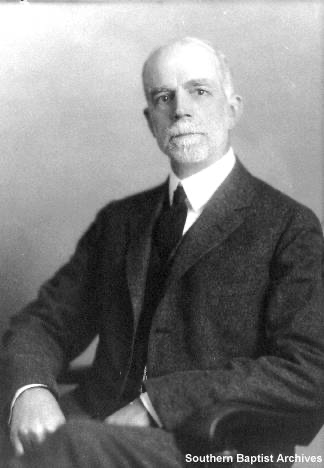
From this conviction developed the historic Baptist emphasis on liberty of conscience and religious freedom. Early Baptists such as John Smyth, Thomas Helwys and Leonard Busher argued that faith cannot be compelled and that civil authorities have no rightful power to impose religious belief. Their concern was not merely political tolerance but the integrity of faith itself. Genuine faith must be freely embraced, because each person stands personally accountable before God. In later Baptist thought, this principle was often expressed through the language of “soul competency” or “soul competence,” especially associated with U.S. Baptist theologian E. Y. Mullins.
The phrase can be misunderstood if it is detached from its theological setting. It does not mean that the isolated individual is self-sufficient, infallible or free from the authority of Scripture and the claims of Christian community. It means that each person is competent and responsible to respond directly to God, and that no priestly, ecclesiastical or civil intermediary can believe, repent or obey on another person’s behalf.
These principles help explain both the strength and the difficulty of Baptist life. Freedom of conscience does not abolish community, and soul competence does not imply individualism. Baptists are also a covenant people, gathered into churches and associated with other churches for worship, mission, discernment and mutual accountability. The challenge is to hold these convictions together. Conscience must be formed by Scripture and tested in community, but community must not become coercive; association may establish common convictions, but it must remain cautious about turning every contested interpretation into a condition of belonging. The enduring Baptist task is therefore not merely to defend freedom, but to practise it faithfully: to preserve space for conscience, dissent and responsible judgment while sustaining genuine fellowship under the lordship of Christ. A Baptist tradition true to its own history should be recognised not by the absence of disagreement, but by its capacity to remain faithful, free and charitable in the midst of it.
Disagreement is not an occasional malfunction of Baptist life. It arises naturally from convictions Baptists hold dear. Baptists acknowledge Scripture as the supreme written authority in matters of faith and conduct while recognising that Scripture must be interpreted. They affirm liberty of conscience while understanding the church as a community of discernment. They defend the autonomy of local congregations while voluntarily participating in associations, unions, ministries and global Baptist bodies. They proclaim the lordship of Christ while recognising that sincere Christians sometimes reach substantially different conclusions about what obedience to Christ requires. These tensions need not be treated merely as institutional weaknesses. Properly held, they can become disciplines through which Baptists learn humility, patience, responsible judgment and participation in the body of Christ.
Scripture and certainty
At the centre of historic Baptist identity stands a strong commitment to Scripture. Baptists have characteristically insisted that neither ecclesiastical tradition, episcopal authority, state legislation nor theological fashion possesses the final word over Christian faith and conduct. Scripture provides the normative witness through which the church hears the gospel and by which its teaching and practice must continually be tested. Historically, this conviction encouraged Christians to challenge inherited religious arrangements. Baptist dissent was not dissent for its own sake, but arose from the conviction that obedience to God might require Christians to question authorities that had acquired unwarranted power over faith and conscience. Biblical authority and freedom of conscience were therefore closely related rather than opposing principles.
Affirmation of biblical authority does not, however, eliminate disagreement. Christians sharing a high doctrine of Scripture may differ over the interpretation of particular texts, the synthesis of biblical teaching, and the implications of ancient texts for contemporary moral questions. Stephen Holmes has observed that the criteria by which Christians judge arguments are partly shaped by the communities within which they are formed. Nigel Wright similarly reminds evangelicals that Scripture is never read in an interpretive vacuum. Tradition, culture, reason, social location and self-interest influence what readers notice and what they regard as plausible. These observations do not diminish biblical authority. They encourage greater honesty about the human processes through which biblical authority is received and interpreted.
This recognition challenges what might be called the fallacy of certitude: the assumption that sincere commitment to Scripture should produce one unmistakable conclusion on every significant question. Such an expectation risks confusing the authority of Scripture with the infallibility of our interpretation. Christians may confidently affirm that God speaks through Scripture while remaining appropriately modest about their own capacity to hear perfectly. Historical distance, linguistic complexity, theological tradition, cultural assumptions and personal interests all affect interpretation. The possibility that our reading may be incomplete is therefore not an argument for scepticism. It is an argument for humility, continuing study, and willingness to listen carefully to Christians whose experience or interpretation differs from our own.
Such humility does not imply that every interpretation is equally plausible. Arguments may still be assessed according to textual evidence, theological coherence, historical understanding, moral consequence and faithfulness to the character and mission of Christ. Baptist freedom does not abolish judgment; it makes responsible judgment more important. The alternative to authoritarian certainty need not be relativism. It is disciplined discernment: stating convictions clearly, submitting reasons to scrutiny, listening seriously to contrary arguments, acknowledging genuine uncertainty where it exists, and remaining open to correction by Scripture, the Spirit and the gathered church.
Conscience and responsibility
Freedom of conscience has been among the Baptist movement’s most consequential contributions to Christian thought. Yet conscience is easily misunderstood as personal preference: “This is what I believe, therefore nobody may question me.” Historically, Baptist arguments were more demanding. Conscience concerned a person’s ultimate accountability before God. Because faith cannot properly be coerced, neither magistrate nor ecclesiastical authority should compel religious profession contrary to conviction. The biblical paradigm appears in the apostolic declaration, “We must obey God rather than human beings,” and in narratives such as Daniel’s refusal to abandon prayer despite imperial command. Baptist appeals to conscience were therefore grounded not in individual self-assertion but in responsible obedience.
Early Baptists applied this principle with considerable courage. John Smyth argued against magisterial coercion in religion, while Thomas Helwys and Leonard Busher likewise defended religious liberty. Roger Williams later developed similar arguments in the North American context. Their advocacy arose partly from the experience of religious minorities subjected to coercive religious establishments. Baptist arguments for liberty were consequently theological as well as political: theological because God alone is finally Lord of conscience, and political because civil or ecclesiastical institutions exceed their proper authority when they compel religious profession. The Baptist defence of conscience therefore emerged from a theology of accountable freedom rather than an ideology of unrestricted personal choice.
Freedom of conscience must nevertheless be distinguished from the claim that every opinion commands equal respect. Conscience may be wise or immature, informed or poorly informed, sensitive or distorted. The New Testament can speak of conscience as weak, pure or defiled precisely because conscience is neither autonomous nor infallible. Christian conscience requires formation through Scripture, prayer, worship, theological reflection, moral practice, community and responsiveness to the Holy Spirit. An appeal to conscience should therefore invite rather than terminate discussion. The conscientious Christian should be able to give reasons, hear objections, test assumptions and, where necessary, revise a conclusion.
This qualification is especially important in cultures strongly shaped by individual autonomy. Baptist language about soul freedom can easily be absorbed into the assumption that personal authenticity is the highest moral authority. That is not historic Baptist teaching. Freedom of conscience means freedom for responsible obedience to God, not freedom from accountability to God or neighbour. Yet the opposite error must also be resisted. Correcting individualism cannot mean transferring sovereignty of conscience from the believer to a denominational body. Baptist theology has historically been suspicious of concentrated ecclesiastical authority. The question is therefore how the conscience of the believer, the discernment of the congregation and the legitimate authority of an association should relate when serious disagreement persists.
The gathered church
A Baptist congregation is not merely an aggregation of autonomous individuals. Traditionally it is a gathered community of believers covenanting together under the lordship of Christ. Church meetings at their best are therefore more than exercises in parliamentary procedure. They are acts of spiritual discernment in which members listen to Scripture, one another and the Spirit. Voting may sometimes be necessary, but the deepest goal is not victory for a faction. It is faithfulness. The congregation must therefore cultivate practices through which disagreement can be expressed without either suppressing dissent or mistaking every dissenting voice for prophetic insight.
This understanding places responsibilities on both majorities and minorities. A majority should not assume that numerical strength establishes theological correctness; Baptist history itself would be unintelligible without minorities willing to challenge established authority. Yet dissenters should not presume that minority status automatically confers moral or theological superiority. Sometimes dissent is courageous; sometimes it reflects poor judgment, ideological rigidity or unwillingness to accept legitimate communal decisions. Christian discernment requires sufficient humility to contemplate both possibilities. The Baptist ideal is neither majority domination nor minority veto, but a community in which participants seek together to determine what fidelity to Christ requires.
Healthy Baptist decision-making therefore depends upon the quality of the process preceding a decision. Members require accurate information, sufficient time for reflection, access to competing arguments and confidence that contrary perspectives can be expressed without intimidation. Leaders should distinguish disagreements over fundamental Christian confession from disagreements involving interpretation, ethical judgment or prudential questions. They should also recognise that processes of discernment have theological significance in themselves. A decision reached through careful listening, transparency, patience and mutual respect embodies a different ecclesiology from one reached through pressure, caricature or procedural haste. The manner by which Christians decide reveals what they believe about authority, persons, conscience and the Holy Spirit.
Disagreement as a Christian practice
The deeper question is not how Baptists can eliminate disagreement but how they may disagree faithfully. Conflict becomes destructive when motives are imputed without evidence, when institutional mechanisms are used primarily to defeat opponents, or when winning matters more than truth. Churches damaged by controversy rarely suffer only from differences of opinion. They suffer from mistrust, wounded relationships and loss of confidence that disagreement can be survived. Yet disagreement can also become a gift. It can expose assumptions, sharpen theological reasoning and distinguish inherited habit from Christian conviction. It may reveal truths a majority has overlooked or force dissenters to clarify arguments insufficiently tested.
Baptist communities therefore require virtues as well as procedures. Courage is needed because conscience sometimes requires dissent; humility because conscience can be mistaken; patience because discernment takes time; honesty because artificial consensus serves nobody; charity because disagreement easily becomes contempt. Wisdom helps distinguish convictions essential to Christian identity from those on which diversity may be sustained. Forgiveness becomes indispensable when Christians fail to practise these virtues. These virtues do not make disagreement disappear. They enable Christians to remain in relationship while disagreements are examined, contested and, in some cases, left unresolved.
E. Y. Mullins famously defended the Baptist “right of private judgment” as both dangerous and emancipating. He acknowledged that Protestant liberty could generate fragmentation but argued that compelled religion prevented intellectual and spiritual maturity. For Mullins, loyalty to Christ supplied the controlling principle. Private judgment is therefore “private” only in the sense that nobody can believe or obey in another person’s place. It should never mean judgment isolated from Scripture, community, history, reason, neighbour or God. Baptist freedom is thus most faithful when it produces not independence from others but responsible discernment among others.
This is both the grace and the danger of Baptist disagreement. Freedom without accountability can become individualism, while authority without freedom can become control. Baptist ecclesiology asks believers to inhabit the difficult space between them. Yet Baptist congregations do not exist in isolation. They form associations, accredit ministers, establish colleges, share resources and make collective statements. Such bodies inevitably develop boundaries. Once that occurs, a more difficult question follows: when does a conviction become sufficiently fundamental to justify excluding those who disagree? That question lies at the centre of the second article in this series.
Rev Dr Rod Benson is General Secretary of the NSW Ecumenical Council and a minister of the Uniting Church in Australia serving at North Rocks Community Church in Sydney.
Image source: Southern Baptist Archives

