
By Rod Benson
If “Judeo-Christian values” inadequately describes a single religious tradition, it is more problematic as a definition of Australian national identity. Australia has unquestionably been shaped by Christianity, which carries an indispensable Jewish inheritance. But historical influence and political ownership are different things. A tradition may help form a society without acquiring the right to determine who properly belongs within it.
Heritage and belonging
Australia’s institutions and moral vocabulary have many sources. Christianity has substantially influenced education, welfare, voluntary associations, public discourse and social reform. Churches established schools, hospitals and charitable organisations and contributed, for good and ill, to debates about public morality. Australian political culture has also been shaped by British common law, classical thought, Enlightenment philosophy, liberalism, republicanism, the labour movement, secular humanism and successive immigrant communities.
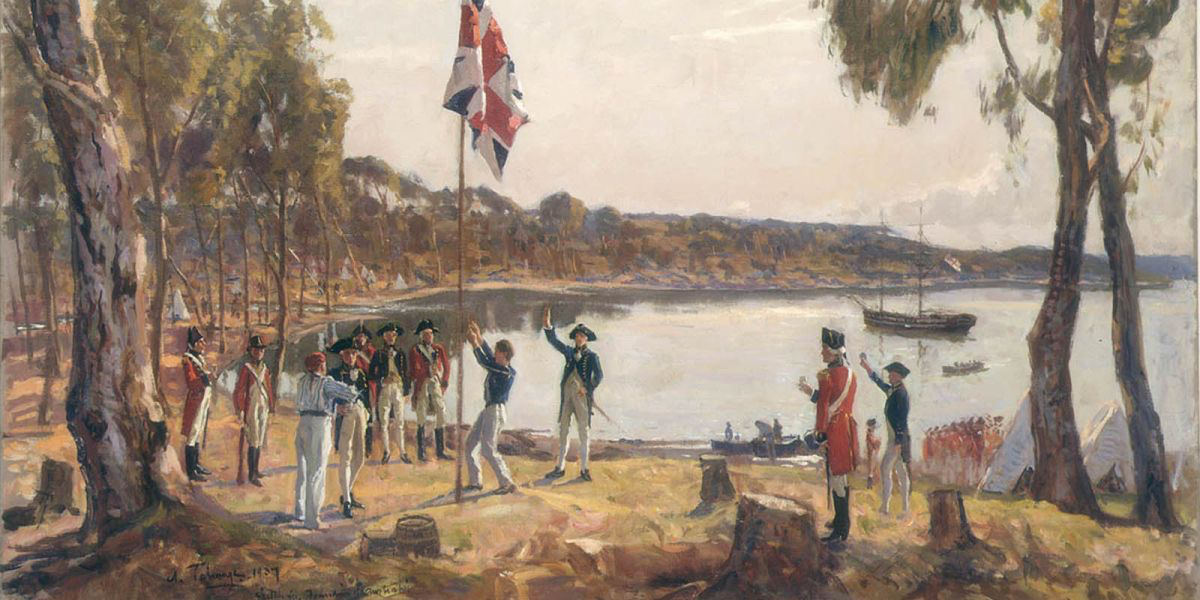
Aboriginal and Torres Strait Islander peoples cannot adequately be included simply as another influence in this catalogue. Their prior and continuing relationships with Country give them a distinctive standing in any account of Australia. National belonging must address dispossession and its continuing consequences, not merely welcome religious and cultural diversity. This sharpens the theological question: Christians must ask not only whether they welcome others into Australia, but what entitles them to imagine themselves as its hosts. An account of belonging that overlooks this question risks reproducing the assumptions of possession it otherwise challenges.
Christian influence should therefore not be romanticised. Christian institutions were entangled, in varying ways, with colonisation, missions, assimilation policies and practices that profoundly harmed Indigenous Australians. Other Christians challenged injustices and advocated Indigenous rights. Historical influence does not confer moral innocence. A mature account of Christian heritage requires gratitude, criticism and repentance, including a willingness to hear how that heritage is understood by those who experienced its coercive effects.
The language of a “Judeo-Christian Australia” can shift almost imperceptibly from historical observation to political judgement: from acknowledging biblical religion’s influence to suggesting that Christians and Jews belong more naturally than others. The former is a proposition open to historical investigation; the latter concerns the terms of citizenship and national identity.
Benedict Anderson’s description of nations as “imagined communities” helps illuminate this shift. Nations are not fictitious: millions who will never meet nevertheless imagine themselves as a community through shared stories, institutions, rituals, symbols and memories. The critical question is who appears naturally within those stories and who remains at their margins.
Pierre Bourdieu’s work on symbolic power raises a related question: who possesses authority to name social reality? Political language can establish communal boundaries as well as describe them. Michel Foucault’s analyses of discourse and power similarly expose how apparently neutral categories can produce insiders and outsiders. Neither approach demonstrates that every use of “Judeo-Christian Australia” is exclusionary. Both help us ask what the language accomplishes in particular contexts and whose belonging it makes less self-evident.
A faith that unsettles boundaries
Progressive Christian theology should recognise such exclusions because Scripture repeatedly challenges the conversion of religious identity into moral superiority. Israel’s election entails vocation and responsibility, not complacency. Amos compares Israel’s exodus with God’s providential movements of other peoples (Amos 9:7). The prophets judge Israel by faithfulness to God, expressed particularly through justice toward the poor, the stranger and those without social power.
Jesus intensifies this challenge. In the Good Samaritan, the exemplary neighbour belongs to a community many of Jesus’ Jewish contemporaries regarded with hostility. Elsewhere, Jesus places marginalised people and unexpected exemplars at the centre of moral attention: Samaritans and Gentiles, tax collectors and the poor, women whose voices were constrained, and people considered ritually or morally suspect. God’s kingdom does not abolish cultural identities, but radically relativises their capacity to establish hierarchies of human worth.
Paul’s declaration that there is “neither Jew nor Greek” concerns incorporation into Christ and should not simply become a modern political manifesto (Galatians 3:28). Nevertheless, it denies that these distinctions determine standing within Christ’s community. Ephesians develops the ecclesial consequences, portraying Christ as overcoming hostility between Jew and Gentile and creating a reconciled people (Ephesians 2:11–22). Neither passage requires cultural difference to disappear. Both resist its transformation into spiritual hierarchy.
Christian nationalism thus risks a fundamental theological contradiction. When Christianity becomes a badge of national belonging, the gospel can reinforce boundaries its central narratives transcend. The church’s task is not to rank citizens’ claims to Australia but to witness to a kingdom that relativises every nation, party and civilisation.
Shared principles, different convictions
Political philosophy offers another crucial distinction: a value’s genealogy differs from its contemporary public justification. Christians may ground equal human dignity in creation in the imago Dei. Biblical and Christian ideas have contributed to Western moral thought. But an idea’s Christian ancestry does not establish why every citizen should accept a public policy associated with it.
John Rawls’s “overlapping consensus” helps explain how citizens with different reasonable religious, moral and philosophical doctrines might endorse a shared political conception of justice for reasons internal to their worldviews. Such agreement exceeds temporary compromise: people can affirm common political principles without agreeing about ultimate reality or life’s meaning.
We might imagine Christians defending human dignity through humanity’s creation in God’s image; Jews through Jewish scripture and ethics; Muslims through Islamic accounts of creation and moral responsibility; and secular humanists through equality, autonomy or human flourishing. These illustrate the idea rather than reproduce Rawls’s own catalogue. Political agreement need not require metaphysical agreement, nor should these illustrations imply uniformity within any tradition.
This distinction also guards against exclusionary secularism. Religious citizens should not have to pretend their deepest convictions are irrelevant to political judgement. Christian arguments may enter democratic debate as Christian arguments. The challenge is to reason politically while recognising fellow citizens as free and equal participants.
Jürgen Habermas offers a different approach. In his account of the post-secular public sphere, religious citizens may speak explicitly from faith in informal debate. At the institutional threshold of parliaments, courts and public administration, however, coercive state decisions must ultimately be justified in generally accessible, non-religious terms. The burden of translation does not fall exclusively on believers: secular citizens should listen seriously and help discern whether religious arguments contain insights translatable into shared political language.
This “institutional translation proviso” remains contested. Critics question whether secular reasons are as philosophically or religiously neutral as the model can appear to assume. Nevertheless, Habermas identifies a real problem: how can citizens speak authentically from their traditions within institutions whose decisions bind people who do not share them?
A constructive Christian response is reciprocity. Christians may explain how the imago Dei, the prophets, the incarnation, the cross and resurrection shape their politics. They need not disguise theology as secular philosophy. Where coercive policy is concerned, however, they should also offer arguments neighbours can engage without accepting Christian revelation. This is a proposal for Christian public theology, not a straightforward deduction from Rawls or Habermas.
Consider a congregation advocating fair treatment for refugees. Its members might explain their commitment through biblical hospitality while also advancing publicly assessable arguments about human dignity, family unity and the consequences of detention. These arguments invite engagement without requiring agreement about biblical authority. Yet shared principles will not settle every policy question: people who affirm human dignity may disagree about its practical requirements. Reciprocity is a discipline of listening, reason-giving and accountability, not a guarantee of consensus.
Conviction without domination
Equal belonging does not require equal approval of every belief or practice. People possess equal dignity and civic standing; their claims remain open to criticism, and their actions to legitimate restraint. A plural democracy must protect freedom of conscience, including freedom to change or reject religion, while addressing coercion, discrimination and harm. Where freedoms conflict, restrictions require reasons that can be scrutinised and applied fairly. Religious majorities, minorities and secular institutions should all be accountable to these reciprocal standards.
This matters particularly when Christians invoke Jewish or Muslim traditions in arguments about national identity. Jewish people should not appear merely as Christianity’s ancestors or as partners enlisted to validate a civilisational label. Muslims should not appear merely as the outsiders whose inclusion demonstrates Christian generosity. Both must be heard as participants entitled to describe their own traditions, disagreements and public commitments. Taking antisemitism and anti-Muslim prejudice seriously gives equal belonging practical substance, without suggesting that these prejudices have identical histories or expressions.
What, then, might Christianity contribute? Biblical tradition offers resources for affirming equal human dignity; justice for vulnerable people; hospitality toward strangers; restraints on wealth and power; public truthfulness; reconciliation and peacemaking; care for creation; freedom of conscience; and responsibility for neighbours. The Magnificat’s reversal of power, Jesus’ identification with “the least of these,” and the early church’s economic sharing challenge any reduction of Christianity to private morality.
Christianity also offers resources for criticising progressive politics. Progressive Christian theology loses credibility when it merely supplies biblical quotations for conclusions reached elsewhere. Progressive movements, like conservative ones, can become tribal, self-righteous, coercive or inattentive to legitimate concerns about community, tradition, social cohesion and responsibility. The doctrine of sin gives no warrant for locating injustice exclusively among political opponents.
God’s kingdom cannot be identified with the political left any more than the right. This theological judgement follows from the conviction that God’s reign transcends every ideology. Christian public theology contributes most constructively when it subjects all political movements—including those Christians favour—to justice, truth, mercy, humility and the common good.
Seeking everyone’s good
This returns us to “Judeo-Christian values.” The expression can point, imprecisely, toward historical relationships, shared scriptures and overlapping moral genealogies. But it misleads when these become a homogeneous civilisation; when Judaism is absorbed into Christian history; when Islam becomes civilisation’s outsider; or when selected political preferences are presented as biblical faith’s obvious inheritance.
There is a better way to speak. Australia has been profoundly influenced by Christianity, which remains indebted to its Jewish origins. Jewish Australians have made distinctive contributions to Australian society. Both traditions offer significant moral resources for public life, but neither owns Australia. Acknowledging their influence need not diminish Indigenous peoples’ distinctive standing or the contributions of other religions, secular philosophies and newer communities.
Historical seriousness requires acknowledgement of Australia’s biblical and Christian inheritance; democratic equality requires that it never become a test of belonging. Christians should seek neither a “Christian Australia” nor privileged membership in a supposedly “Judeo-Christian” one. Their more demanding vocation is to contribute faithfully to a plural democratic common good.
That good is common because it concerns the conditions under which everyone can participate and flourish. It includes fair institutions, material security, freedom of conscience, opportunities for meaningful contribution and a habitable environment. It requires particular attention to people whose voices and needs are routinely overlooked. Christians serve it by bringing their convictions into public conversation, listening seriously to others and accepting that their own judgements may require correction.
This vocation follows from Christian conviction. The prophets ask whether justice is done. Jesus asks who became neighbour to the wounded stranger. Paul warns Gentile Christians against religious arrogance. The New Testament locates ultimate allegiance in God’s kingdom rather than nation, civilisation or political ideology.
The central question is what kind of society Australians intend to build together. Christians have deep resources for helping to sustain a community marked by justice, freedom, truthfulness, responsibility and peace. Perhaps the most persuasive testimony to that inheritance is not insisting that Australia belongs to us, but demonstrating what it means faithfully to seek the good of everyone who belongs to Australia.
Rev Dr Rod Benson is General Secretary of the NSW Ecumenical Council and a minister of the Uniting Church in Australia serving at North Rocks Community Church in Sydney.
Image source: National Indigenous Times

