
By Rod Benson
When I was ten or eleven years old, Mrs Woodward, one of my teachers, asked us to “do a project” on the “Dark Ages.” I believe I had not heard of this mysterious concept, but I did my research, such as it was in the technologically constrained world of 1970s New Guinea where I lived. To my surprise, I discovered that the term was largely pejorative, privileging the later Renaissance and Enlightenment periods, and casting doubt and gloom over centuries of vibrant lived experience that were anything but “dark.” Now, almost fifty years later, I find the term used to cast doubt on the apparent spiritual vitality and theological maturity of those known as Celtic Christians of the fifth to ninth centuries.
A misleading phrase
The expression “Dark Ages” certainly continues to evoke a populist image of European civilisation collapsing after the fall of Rome and remaining intellectually, culturally and spiritually dormant until the late 1400s and early 1500s. But the picture is misleading. The centuries between the fragmentation of Roman government in the West and the Reformation certainly witnessed warfare, epidemic disease, political instability and social upheaval. They also produced remarkable developments in Christian mission, theology, worship, education, art, architecture and social care. Far from being spiritually barren, medieval Europe was formed by centuries of religious creativity, institutional experimentation and cultural exchange.
The language of darkness did not originate as a neutral historical description. Renaissance humanists contrasted their revival of classical Latin learning with what they regarded as the cultural decline of the preceding centuries. Protestant polemicists sometimes depicted the medieval Church as corrupt, superstitious and largely devoid of authentic Christianity until the reformers recovered the gospel. Enlightenment writers added another contrast: medieval faith represented darkness, while modern reason brought light. Each interpretation served particular intellectual or religious purposes, but together they encouraged the mistaken belief that the Reformation appeared after a millennium of spiritual stagnation.
Contemporary historians rarely employ “Dark Ages” as a description of the whole medieval period. At most, the expression may be used cautiously for a particular time or place from which relatively few written sources survive. A shortage of surviving evidence, however, does not mean that nothing significant occurred. Darkness may describe the historian’s restricted field of vision; it should not be projected onto the lives, cultures or spiritual experiences of those being studied. Nor should the fifteen centuries between the apostolic era and the Reformation be treated as one undifferentiated age.
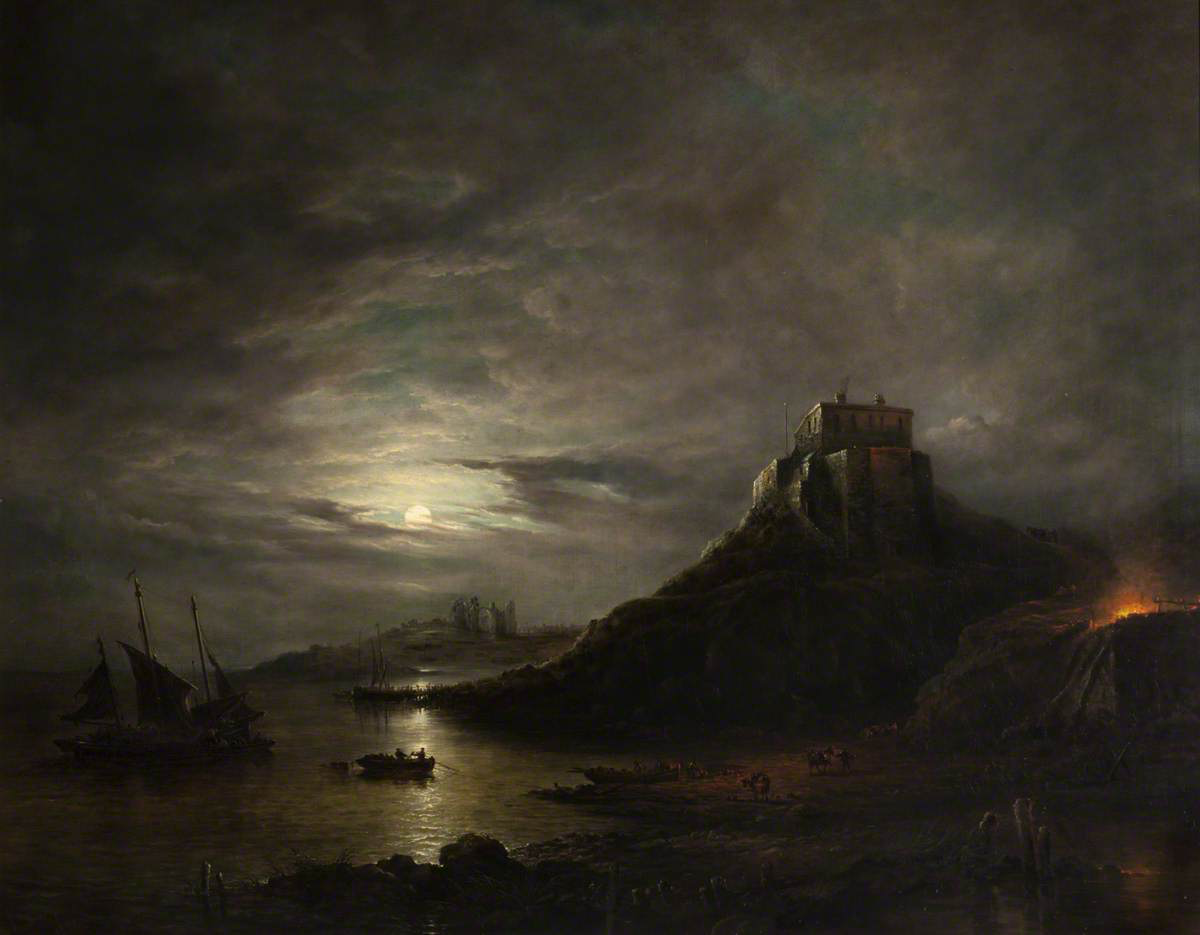
Michael Mitton offers a more constructive image in Restoring the Woven Cord, his influential study of Celtic Christianity. He rejects both the designation “Dark Ages” and its implication that little of spiritual worth occurred in Britain before the Reformation. “For Britain,” he suggests, “the period from the fifth to the ninth centuries should be seen as the ‘Light Ages’ in which, arguably, a light shone that was brighter than any since.”[1] Mitton’s language is arresting, although it should not be converted into another romantic historical generalisation. Nevertheless, the image of light more accurately reflects the missionary energy, theological imagination, artistic achievement and liturgical creativity evident in early medieval Britain and Ireland. The communities associated with Patrick, Columba, Aidan, Hilda, Cuthbert and Bede were neither culturally inert nor spiritually impoverished. They developed distinctive patterns of prayer, learning, pastoral care and Christian mission whose influence extended into continental Europe.
From the ancient Church to medieval Christendom
Christianity began as a Jewish messianic movement and developed within the linguistic, philosophical and political environment of the Roman world. Imperial roads, cities, ports and trade networks assisted its expansion, while missionaries, merchants, migrants, soldiers, enslaved people and households carried the faith far beyond Palestine. Christianity was never confined to Western Europe: important communities flourished in North Africa, Egypt, Syria, Armenia, Ethiopia, Persia, India and eventually Central Asia and China.
Constantine’s adoption and patronage of Christianity, together with the establishment of imperial toleration during the fourth century, transformed the Church’s public position. Constantine favoured Christianity from the early fourth century but was not baptised until near his death in 337. Meanwhile, Alexandria, Antioch, Constantinople, Edessa, Carthage and Hippo became major centres of theological and liturgical development. Medieval Europe inherited Christianity from this much larger Jewish, Mediterranean, African and Asian world.
The medieval period emerged gradually as Roman government fragmented in Western Europe and new kingdoms and local political communities developed. This transition involved serious disruption, but not the disappearance of civilisation. The Eastern Roman, or Byzantine, Empire continued until 1453, preserving and transforming Roman law, Greek learning, Christian theology and elaborate liturgical traditions. In Western Europe, bishops, monasteries, households and local Christian communities maintained forms of religious and cultural continuity amid political change. Rather than imagining that Rome fell and darkness immediately descended, it is more accurate to speak of authority, learning and cultural production being redistributed, adapted and reorganised.
The long conversion of Britain
The Christianisation of Britain offers a powerful example of the period’s spiritual significance. Christianity was present in Roman Britain well before the Anglo-Saxon migrations. British bishops attended continental church councils during the fourth century, and Patrick emerged from a Romano-British Christian environment. After Roman administration ended early in the fifth century, Christian communities continued, especially in Wales and western Britain. Political fragmentation, migration and the formation of Anglo-Saxon kingdoms nevertheless transformed the religious landscape.
It is tempting to describe what followed simply as the conversion of Druid-led pagan Britain to Christianity. The reality was more complex. Druids had exercised religious, intellectual and legal functions in some Iron Age Celtic societies, but almost all surviving written accounts of them were composed by Greek and Roman observers. Roman authorities acted against particular Druidic centres and practices, yet the extent and effectiveness of any comprehensive suppression remain uncertain. By the time of the Anglo-Saxon missions, several centuries of Roman rule, cultural change and Christian presence had intervened. There is little evidence of a unified Druidic establishment confronting early medieval missionaries.
The religious world of post-Roman Britain was diverse. Many British communities preserved forms of Christianity, while Anglo-Saxon settlers practised varieties of Germanic paganism. Older customs may also have survived or been reinterpreted within new religious settings. Britain’s conversion was therefore neither a single event nor the straightforward replacement of one uniform religion by another. It was a long and uneven process involving preaching, persuasion, royal patronage, marriage, cultural adaptation and community formation.
A decisive stage began in 597, when Augustine and a group of monks sent by Pope Gregory the Great arrived in Kent. King Æthelberht, whose Frankish wife Bertha was already a Christian, granted them freedom to preach. Augustine established his mission at Canterbury, which became an enduring centre of English Christianity. The conversion of a ruler could encourage the baptism of members of the royal household and eventually influence a wider population, but it did not amount to the instantaneous conversion of an entire kingdom. Some royal courts reverted temporarily to pagan practice, and Christianisation proceeded unevenly over generations.
Nor was the conversion of the English solely a Roman achievement. Irish and Irish-influenced Christianity played a crucial role. In 635, King Oswald invited a missionary from the island monastery of Iona to evangelise Northumbria. Aidan established a monastery on Lindisfarne and became known for disciplined prayer, pastoral humility, generosity to the poor and patient missionary work. From Lindisfarne and related foundations, Christian communities spread through northern England.
Roman and Irish traditions differed most visibly over the calculation of Easter, although clerical tonsure and patterns of ecclesiastical organisation also distinguished them. At the Synod of Whitby in 664, King Oswiu accepted the Roman calculation of Easter for his kingdom. This decision neither eliminated Irish influence nor brought every disagreement to an immediate end. Roman, British, Frankish and Irish streams continued to shape English Christianity. Their interaction demonstrates that medieval Christian unity did not require complete cultural uniformity.
This missionary movement produced more than nominal adherence. Monasteries became centres of prayer, hospitality, education, craftsmanship and service. Bede, who died in 735, composed biblical commentaries, works of chronology and the influential Ecclesiastical History of the English People. The Lindisfarne Gospels, normally dated to about 715–720, united the Latin text of the Gospels with artistic patterns reflecting Mediterranean, Germanic and Insular influences. Such achievements support Mitton’s description of the fifth to ninth centuries in Britain and Ireland as “Light Ages” rather than a time devoid of intellectual or spiritual vitality.
Mission as translation and cultural encounter
The conversion of Britain formed part of a much wider missionary movement. Christianity spread among the Irish, Franks, Germanic peoples, Slavs and Scandinavians through differing combinations of preaching, royal support, migration, monastic foundations, family relationships and commercial contact. Missionaries learned languages, translated Christian texts and sometimes helped create new literary cultures. In the ninth century, Cyril and Methodius translated Scripture and liturgical texts for their mission among the Slavs. Cyril and his associates developed the Glagolitic alphabet; the Cyrillic script was created later within the tradition established by their disciples.
Mission was rarely a simple movement from Christian enlightenment to pagan darkness. Missionaries entered societies possessing established moral codes, sacred places, political structures, oral traditions and understandings of nature. They rejected some customs, tolerated others and reinterpreted still others within a Christian framework. Local languages and artistic forms did not simply disappear. They became vehicles through which the Christian story was received, contested and expressed.
It should also be noted that Christian mission was not always peaceful. Some rulers adopted Christianity partly to strengthen diplomatic relationships or consolidate political authority. Christian kings could use law, military power and compulsory baptism to enforce religious conformity. Charlemagne’s campaigns against the Saxons provide a particularly troubling example of conquest becoming entangled with Christianisation. A historically responsible account must distinguish persuasive witness from coerced conversion and acknowledge that both occurred.
At its best, medieval mission created durable communities rather than merely securing professions of faith. Monasteries, parishes and schools gave Christianity social form. The gospel was communicated through worship, preaching, storytelling, images, festivals, hospitality, care for the vulnerable and the example of disciplined communities. Conversion was not simply the acceptance of new ideas. It involved the gradual reordering of time, relationships, moral expectations and communal identity.
Theology as a living and contested tradition
Theology between late antiquity and the Reformation was not a static collection of propositions guarded against inquiry. Christian teaching developed through biblical interpretation, worship, philosophical reflection, controversy and pastoral need. The councils of Nicaea in 325, Constantinople in 381, Ephesus in 431 and Chalcedon in 451 sought to clarify Christian teaching concerning the Trinity and the person of Christ. Their formulations became foundational for much of Christianity, although disagreements over language, authority and Christology also contributed to enduring divisions.
The theological inheritance was diverse. Augustine’s reflections on grace, sin, freedom, the Church and political life profoundly influenced Western Christianity. Greek theologians developed rich accounts of incarnation, creation and human participation in the life of God, although Eastern Christianity was never theologically uniform. Syriac writers such as Ephrem developed theology through poetry, biblical symbolism and hymnody rather than through abstract treatises alone. Theology was composed in sermons, letters, liturgical texts, monastic rules and spiritual writings as well as in formal doctrinal works.
From the eleventh century onward, cathedral schools and emerging universities provided increasingly organised settings for theological inquiry. Scholasticism brought Christian teaching into sustained conversation with logic, law, medicine and philosophy. The growing Western reception of Aristotle relied on texts transmitted through both Greek and Arabic intellectual traditions, together with the work of translators and commentators from several religious communities.
Anselm described theology as faith seeking understanding. Peter Abelard demonstrated the productive role of questions and apparent contradictions. Thomas Aquinas constructed an extensive account of God, creation, virtue, law and grace, while Bonaventure united theological reasoning with contemplative spirituality. Their conclusions should not be accepted uncritically, but their intellectual achievements cannot reasonably be dismissed as obscurantism.
Medieval universities institutionalised debate through lectures, commentaries and formal disputations. Theology could become overly technical and was constrained by ecclesiastical authority, yet it was not merely the passive repetition of inherited formulas. Medieval thinkers disputed the relationship between faith and reason, nature and grace, divine sovereignty and human freedom, papal and conciliar authority, and Scripture and tradition. The Reformation inherited this sophisticated culture of theological argument even as it challenged many of its conclusions.
Liturgical innovation and Christian formation
Christian worship underwent extensive development during these centuries. The earliest Christian communities arose within the scriptural, prayerful and festal world of Judaism, although the precise relationship between Jewish and later Christian liturgical forms is complex and should not be reduced to a simple line of borrowing. Scripture reading, psalmody, prayer, baptism and the Lord’s Supper became defining practices of Christian identity. By late antiquity, churches had developed substantial eucharistic prayers, extended preparation for baptism and annual commemorations of Christ’s death and resurrection.
The Christian calendar gradually took shape around Easter, Pentecost, Epiphany, Christmas, Lent and commemorations of martyrs and saints. These observances did not all emerge at the same time or develop uniformly across the Christian world. Holy Week enabled worshippers to move imaginatively and bodily through the final events of Jesus’ life. Lectionaries organised the public reading of Scripture, while creeds placed central theological convictions within worship. The passing year became a repeated participation in the story of creation, incarnation, cross, resurrection and promised renewal.
Music played an equally important role. Christian worship developed from biblical psalms and canticles into diverse traditions of hymnody and chant. Ephrem the Syrian employed hymns to teach doctrine and contest rival interpretations of Christianity. Ambrose of Milan promoted Latin hymnody in the West, while Byzantine Christianity produced elaborate poetic and musical forms associated with figures such as Romanos the Melodist.
What is now called Gregorian chant was not composed personally by Gregory the Great. It emerged gradually, particularly through the interaction of Roman and Frankish musical traditions during the Carolingian period, and was subsequently expanded and standardised. Its association with Gregory gave it authority, but its actual formation was collective and historical. Gregorian, Ambrosian, Mozarabic, Byzantine and other traditions demonstrate the musical diversity of medieval worship.
Architecture, imagery and ritual also shaped belief. Christian communities moved from domestic meetings and adapted spaces into basilicas, baptisteries, monasteries, pilgrimage churches and cathedrals. Processions, vestments, incense, bells, sacred images and ceremonial action engaged the body and senses. Romanesque and Gothic churches embodied theological claims through stone, sculpture, glass, proportion and light. Visual art did not function merely as a substitute Bible for people unable to read; it also served devotional, commemorative, political and liturgical purposes for people across the social spectrum.
The Eucharist occupied an increasingly central place in medieval sacramental life, although its frequency and popular accessibility varied. Theological accounts of Christ’s eucharistic presence became more precise, especially during controversies of the eleventh and twelfth centuries. Baptism, confirmation, marriage, ordination, penance, the Eucharist and ministry to the sick were gradually organised into the Western framework of seven sacraments. Peter Lombard’s twelfth-century Sentences was particularly influential in consolidating that enumeration. The framework emerged over centuries rather than being delivered as a complete system at the beginning of the medieval period.
Liturgy was not a decorative addition to medieval Christianity. It was one of the principal means by which Scripture, doctrine, memory, moral identity and communal belonging were formed. Worship shaped the imagination even of those unable to follow its Latin texts in detail. At the same time, in some settings, an increasing distance between clergy and laity, infrequent lay reception of Communion and the use of a language no longer widely understood generated pastoral tensions that later reformers would address. These patterns varied significantly according to period and region and should not be treated as universal medieval practice.
Monasticism, learning and economic life
Monasticism was among the period’s most consequential spiritual and cultural movements. The Egyptian desert traditions associated with Antony and Pachomius inspired both solitary and communal forms of ascetic life. Basil shaped communal monasticism in the East, while Benedict’s sixth-century Rule became especially influential in Western Europe. Benedictine spirituality joined prayer, work, stability, hospitality, discipline and communal reading.
Monasteries were not merely shelters in which civilisation survived while darkness prevailed outside. They were communities of worship, education, agriculture, craftsmanship, hospitality and economic production. Their libraries and scriptoria copied biblical, liturgical, patristic and selected classical texts. This work contributed significantly to textual preservation, but monasteries were neither the only agents of preservation nor universally committed to saving all ancient literature. Byzantine scholars, Islamic intellectual centres, cathedral schools, urban workshops and secular patrons also transmitted important bodies of learning.
Monasteries sometimes educated clergy and members of elite families, received travellers, distributed alms and provided forms of care for the sick. Their capacities differed greatly, and they should not be imagined as modern schools, hospitals or welfare agencies. Nevertheless, their combination of stable community, land, literacy and religious obligation made them important social institutions.
Their success also created difficulties. Monasteries accumulated property, wealth and political influence, and their estates participated in hierarchical economic systems. Privilege could compromise the simplicity and discipline that monastic life professed. This tension generated recurrent reform. Cluny emphasised liturgical observance and freedom from some forms of local secular interference. The Cistercians sought greater simplicity and a stricter observance of Benedict’s Rule, while the Carthusians developed a demanding synthesis of solitude and community. Medieval monastic history was marked by cycles of institutional expansion, criticism and renewal.
Economic and political changes transformed the wider Church. Bishops assumed important civic responsibilities as Western Roman administration weakened. Churches and monasteries became major landholders, while rulers sought influence over episcopal and abbatial appointments. The Investiture Controversy of the eleventh and twelfth centuries exposed the struggle between papal claims and royal power. It also demonstrated that medieval Europe was not simply governed by an all-powerful Church: ecclesiastical and secular authorities continually negotiated and contested their respective jurisdictions.
Urban expansion and commercial growth created new forms of wealth, poverty and social organisation. Guilds and religious confraternities connected economic activity with worship, charity and mutual assistance. The Franciscan and Dominican movements responded to urban conditions through preaching, education, ideals of voluntary poverty and pastoral service. Their rapid growth reveals a society capable of generating new spiritual forms in response to changing economic and cultural circumstances. Later disputes over Franciscan poverty also demonstrate how difficult radical ideals became to maintain within expanding institutions.
The spiritual life of ordinary Christians
Medieval spirituality cannot be reduced to clerical institutions or famous theologians. Lay Christians expressed their faith through parish worship, household devotion, pilgrimage, charitable giving, confraternities, guilds, festivals, fasts and local commemorations. They encountered biblical narratives through sermons, music, sculpture, stained glass, manuscript illumination and sacred drama. The agricultural year became intertwined with the Christian calendar, connecting ordinary labour with rhythms of penitence, celebration, thanksgiving and hope.
Women exercised significant spiritual and intellectual influence despite restrictions imposed by ecclesiastical and social structures. Macrina contributed to the theological and ascetic formation of her brothers Basil of Caesarea and Gregory of Nyssa. Hilda presided over the double monastery at Whitby. Hildegard of Bingen wrote visionary theology, composed music and reflected on the natural world. Clare of Assisi established a distinctive Franciscan form of life, while Julian of Norwich produced a profound meditation on suffering and divine love. Beguines formed semi-independent communities of prayer, work and service outside conventional monastic structures, although their status varied across regions and periods.
Popular spirituality was not free from superstition, manipulation or fear. Relics, indulgences and pilgrimage could be exploited economically, while some devotional practices displaced attention from the biblical and communal centre of Christian faith. Yet such abuses should not define the whole period. Medieval devotion also nourished repentance, generosity, courage, solidarity and a vivid awareness of the nearness of God.
Christianity, Islam and Judaism
The emergence and expansion of Islam from the seventh century transformed the Mediterranean, North Africa, the Middle East and the Iberian Peninsula. Ancient Christian communities came under Muslim rule, while Arabic-speaking Muslim, Christian and Jewish scholars created flourishing intellectual cultures. Islamic civilisation did not merely preserve Greek learning. Its scholars translated, criticised and developed philosophical, mathematical, medical and scientific traditions in their own right.
Translations from Arabic and Greek contributed to the Western European reception of Aristotle and other ancient thinkers. Muslim philosophers such as Avicenna and Averroes became significant interlocutors for Jewish and Christian scholars. This exchange was neither a simple transfer from one civilisation to another nor an unbroken story of peaceful cooperation. It occurred through commerce, conquest, translation, controversy and the movement of texts across linguistic and religious frontiers.
Jewish communities made indispensable contributions to medieval intellectual, medical, literary, economic and civic life. Christian scholars occasionally learned from Jewish languages and exegetical traditions, even while Christian institutions and rulers subjected Jewish communities to discriminatory restrictions, forced disputations, expulsions and violence. A responsible assessment of medieval Christianity must acknowledge the long history of Christian anti-Judaism. The period’s spiritual creativity existed alongside grave failures to recognise the dignity and religious integrity of Jewish neighbours.
The crusades reveal the dangerous convergence of religious devotion, penitential practice, political ambition, economic interest and organised violence. Participants could sincerely understand themselves as pilgrims performing sacred service, yet crusading armies also inflicted conquest, dispossession and massacre upon Muslims, Jews and Eastern Christians. Such episodes warn against replacing the myth of medieval darkness with an equally misleading romantic picture of Christian civilisation.
Reform before the Reformation
The medieval Church accumulated wealth, exercised coercive power and frequently failed the poor, religious minorities, dissenters and women. Reform was repeatedly necessary. Yet reform did not begin with Martin Luther. Desert monasticism is often interpreted, in part, as a searching response to Christianity’s increasing accommodation within imperial society, although its origins also lay in older traditions of asceticism, martyrdom and biblical discipleship. Benedictine, Cluniac and Cistercian movements pursued different forms of institutional and spiritual renewal. Franciscans and Dominicans responded to the wealth of the Church and the pastoral needs of expanding towns.
Later movements questioned clerical privilege, papal centralisation and ecclesiastical corruption. Conciliar thinkers argued that a general council might possess authority to correct or restrain a pope. John Wycliffe and Jan Hus criticised aspects of ecclesiastical wealth and authority and called for biblical and pastoral reform, although their programs differed and should not simply be treated as incomplete versions of Protestantism. Medieval Europe contained many reforming impulses, some accepted by ecclesiastical authorities and others condemned.
The Protestant Reformation was therefore both a rupture and an inheritance. It transformed debates over Scripture, grace, authority, sacraments and church government, but those debates possessed long histories. The reformers inherited biblical manuscripts, creeds, universities, theological vocabulary, hymnody, pastoral structures and liturgical traditions from earlier Christianity. Even their protests were possible because previous generations had preserved Scripture, cultivated theological argument and repeatedly attempted to reform Christian institutions.
The notion of the “Dark Ages” consequently obscures more than it explains. Between the decline of Roman authority in the West and the Reformation, Christianity took root among diverse European peoples, including the inhabitants of Britain. Its missionaries crossed cultural boundaries; its theologians debated the mysteries of faith; its liturgies ordered sacred time and formed Christian imagination. Manuscripts were copied, schools and universities founded, churches built, prayers composed, music developed, the sick tended, the poor assisted and generations formed in faith.
These centuries contained deep shadows, as every age does. Mission could accompany conquest, religious institutions could defend privilege, and devotion could coexist with violence and exclusion. Yet the period was also illuminated by learning, beauty, contemplation, service, courage and hope. Medieval Christianity was not spiritually dormant. It was a living and contested tradition in which mission, theology, worship, economics, culture and political power continually interacted.
The Protestant Reformation did not restore spiritual light after a thousand years of moral darkness and apostasy. It emerged from within a long and complex Christian history whose spiritual achievements, liturgical vitality, unresolved tensions and moral failures remain part of the inheritance of the whole Church. To recover that history is not to romanticise medieval Christendom. It is to recognise that Christian renewal has always depended upon a faithful and reverent reception of the past: giving thanks for its wisdom, repenting of its failures, and discerning how its diverse traditions may continue to illuminate faithful life in the present, lighting the way for future generations.
Rev Dr Rod Benson is General Secretary of the NSW Ecumenical Council and a minister of the Uniting Church in Australia serving at North Rocks Community Church in Sydney.
Reference
[1] Michael Mitton, Restoring the Woven Cord: Strands of Celtic Christianity for the Church Today (London: Darton, Longman and Todd, 1995), 14.
Image source: ArtUK

