
How the Fourth Gospel, Coleridge and the language of poetry offer a richer account of knowing
By Rod Benson, 21 November 2026
The question behind the poetry
Does a poem have the capacity to tell the truth without stating a proposition that could equally well be expressed in prose? For the Anglican priest, poet and literary critic Malcolm Guite (his surname rhymes with “sight”), the answer has relevance for both literature and Christianity. Modern culture often places empirical explanation and logical analysis on one side, imagination and feeling on the other. Guite disputes the implied hierarchy. Imagination is neither a decorative supplement to genuine knowledge nor a licence to invent comforting falsehoods. At its best, it is a disciplined capacity for seeing relationships and meanings that habitual perception leaves unnoticed.
His central scholarly statement so far, Faith, Hope and Poetry (2010), develops this claim through detailed readings that stretch from The Dream of the Rood and Shakespeare to Samuel Taylor Coleridge, Thomas Hardy, Philip Larkin and Seamus Heaney. Its core argument is that good poems contribute to our ways of knowing and therefore to the practice of theology. Guite later explores related themes in his study of Coleridge, and in Mariner (2017), Lifting the Veil and The Word within the Words (both 2021).
The key theological point of departure is the New Testament text John 1:1–14. The passage identifies Jesus Christ with the eternal Word, or Logos, through whom creation comes to be, whose life is light for humanity, and who becomes flesh. These are first of all claims about Christ, not propositions about poetry. Yet Guite draws from them an account of why embodied language may carry meanings greater than its literal description. He explicitly says that studying the embodiment of many meanings in finite poems can illuminate the incarnation as the supreme embodiment of meaning.
Creation: a world that can be understood
John’s opening phrase recalls Genesis and describes creation through the Word (Jn 1:1–3). The Greek logos may be translated “word,” “discourse” or “reason,” but its use here cannot be divorced from Jewish traditions of divine creative speech and wisdom. In the Gospel, the Logos is ultimately identified with Jesus, not merely with an impersonal rational principle. Guite’s use of this passage is consequently Christological before it is philosophical.
On an incarnational reading, the world is not made meaningful only when human beings project significance upon neutral matter. Its intelligibility precedes us. Human beings nevertheless know it through finite and revisable acts of attention, interpretation and language. The geological history of a valley and its significance as a place of grief, belonging or wonder are not competing descriptions; they answer different questions. Poetry attends particularly to relationships of significance without displacing scientific explanation.
This argument needs a boundary. The theological claim that creation originates in the Logos does not prove that each object is a secret divine message, nor does a powerful metaphor guarantee a correct interpretation. Imagination is receptive and creative, but it is also susceptible to prejudice, fantasy and error. The world must be allowed to correct what we imagine about it.
Illumination: learning to see again
In John 1:4–9, the Word is described in the imagery of life and light. The Gospel employs this language to speak of revelation, recognition and the human response to Christ. Guite’s analogical use of illumination concerns changed perception: a poem can make the familiar newly visible, sometimes without telling us a single additional fact. The opening chapter of Faith, Hope and Poetry is explicitly concerned with poetry and transfiguration, and later chapters return to transformed vision, blindness and hope.
Consider the difference between knowing that someone is grieving and imaginatively recognising what grief does to the texture of ordinary time. Neither emotion nor metaphor substitutes for evidence, but both can disclose dimensions of experience left thin by detached description. Imagination can also unsettle a confident moral judgment by allowing a reader to inhabit another person’s situation.
Theological illumination is not identical to aesthetic intensity. A poem can profoundly move readers and still mislead them. Christian talk of grace adds a further claim: human perception may need moral renewal, not just stimulation. A creation-shaped capacity for imagination can be clouded by fear, self-interest and habit. To see more truly may therefore involve repentance as well as artistry. Guite’s Lifting the Veil describes imaginative awakening in connection with Christ’s parables and with moral and prophetic imagination.
Incarnation: why form matters
John 1:14 brings the argument to its decisive claim: the Word becomes flesh. Classical Christian doctrine understands this as a unique event in the life of Jesus Christ. Guite does not suggest that poems are additional incarnations. Rather, poetic making supplies a limited analogy: meanings become perceptible in particular arrangements of words, sounds, rhythm and images. To paraphrase a sonnet may preserve its topic while losing something essential to what that sonnet communicates.
Shakespeare’s A Midsummer Night’s Dream offers Guite a classic image of the poet giving shape to imaginative apprehension; his reading of the play belongs to a sustained treatment of poetic truth in Faith, Hope and Poetry. This is an account of embodied meaning, not a claim that a poem possesses divine authority. The difference protects both literature and Christology: human poets work with given languages and created materials, whereas the incarnation is the Christian confession of God’s unique self-disclosure in Jesus.
From here, the movement to Christian worship is intelligible. A creed, a psalm, a sung prayer and a sacramental gesture cannot be understood merely as containers of detachable information. Their patterned language and embodied actions help form attention and memory. Guite’s The Word within the Words treats Scripture, liturgy and sacrament within his account of the incarnate Word and poetic vision.
Coleridge, metaphor and responsible knowledge
Coleridge is Guite’s principal philosophical companion. In Biographia Literaria (1817), Coleridge distinguishes a primary imagination bound up with perception from a secondary imagination exercised consciously in artistic making. This offers Guite a way to challenge the notion that imagination begins only when facts end. His Mariner reads Coleridge’s life through The Rime of the Ancient Mariner, with its strange treatment of estrangement from nature, guilt, blessing and renewed vision.
The French philosopher Paul Ricoeur supplies a useful comparison, though not evidence of a direct influence on Guite. In The Rule of Metaphor, Ricoeur argues that metaphor can create fresh meaning and redescribe experience. The insight helps explain how poetic language may disclose truth without functioning as a disguised scientific report. The test is not whether an image is physically literal, but whether its imaginative redescription is responsible to language, context and the world it seeks to illuminate.
A constructive formulation brings three dimensions together. Imagination is natural because it belongs to the capacities of created human beings; it may be transformed by grace because perception can be morally distorted; and it participates only analogically in divine creativity because humans respond to a world they did not make. This threefold arrangement is my synthesis of Guite’s themes, not a scheme he formally sets out. It should not blur the distinction between the theological claims of John’s prologue and the philosophical claims made on their basis.
Conclusion: a larger field of truth
Guite’s importance lies in refusing a false choice. Rational analysis and imaginative apprehension are not rival authorities competing to describe exactly the same things in exactly the same way. Their judgments can correct and deepen one another. Poetry cannot establish the truth of the incarnation, but the incarnation provides Guite with a theological reason to take the embodiment of meaning seriously. His intellectual project asks Christians not to think less rigorously, but to recognise more of what responsible understanding involves.
That conclusion immediately raises a sharper question. If Scripture itself teaches through narrative, metaphor, poetry and paradox, what happens when a Christian community equates fidelity to Scripture with interpretive literalism or doctrinal closure? The second article considers this challenge—and asks how imaginative openness can be held accountable to the text, the tradition and the demands of justice.
Rev Dr Rod Benson lives in Sydney and writes about a range of topics from books and local history to food, faith, philosophy, ethics, research skills, and everyday life. Away from the keyboard, he enjoys cooking for friends, walking in the Australian bush, exploring a beach, discovering new restaurants, and reading philosophy, fiction and poetry. He is married to Emma and is minister of North Rocks Community Church, a Uniting Church congregation.
Sources and further reading
Samuel Taylor Coleridge, Biographia Literaria (1817).
Malcolm Guite, “Faith Hope and Poetry is out in Paperback!”, 14 March 2012 (author’s own account of his project). https://malcolmguite.wordpress.com/2012/03/14/faith-hope-and-poetry-is-out-in-paperback/
Malcolm Guite, Faith, Hope and Poetry: Theology and the Poetic Imagination (Ashgate, 2010).
Malcolm Guite, Lifting the Veil: Imagination and the Kingdom of God (Square Halo Books, 2021).
Malcolm Guite, Mariner: A Voyage with Samuel Taylor Coleridge (Hodder & Stoughton, 2017).
Malcolm Guite, The Word within the Words, in the My Theology series (Darton, Longman & Todd, 2021).
Paul Ricoeur, The Rule of Metaphor (ET; University of Toronto Press, 1977).
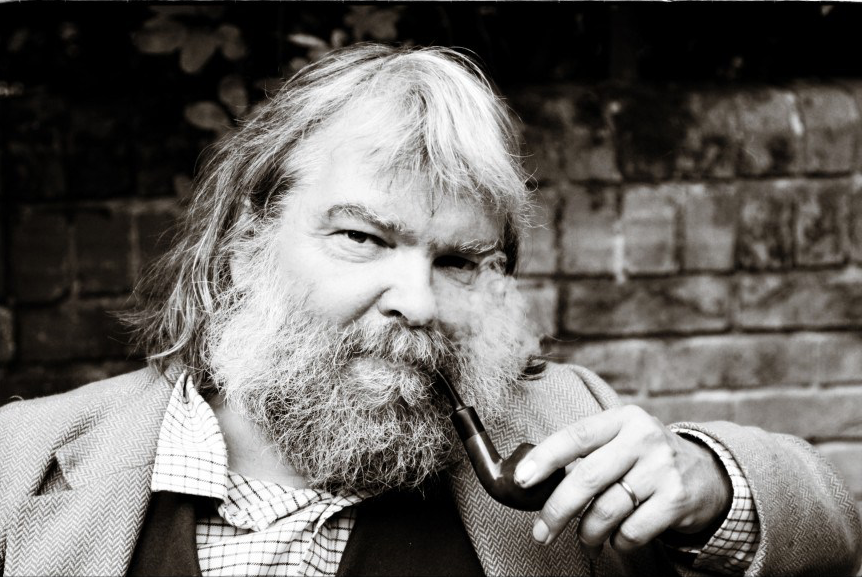
Image source: Malcolm Guite website

