
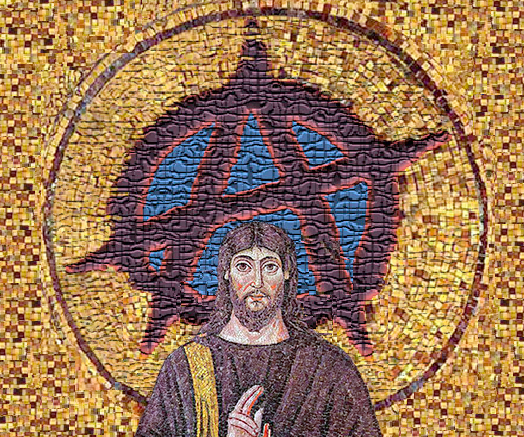
Christian anarchism is a theological and political doctrine holding that ultimate authority belongs to God rather than the state, and that the teachings and example of Jesus radically undermine coercive power, violence, domination, and nationalism. Christian anarchists typically emphasise the practice of nonviolence, voluntary community, mutual aid, economic justice, and radical discipleship shaped by the Sermon on the Mount. Many advocates of Christian anarchism regard the kingdom of God as an intentional social order transcending conventional political sovereignty and subverting the coercive practices of state power.
Christian anarchism is clearly a radically idealist approach to political life. As one might expect, critics often claim it is politically naïve, theologically unconventional, socially impractical, and hopelessly utopian. There are good reasons for such claims.
First, Christian anarchism is regarded as unrealistically optimistic about human nature. Political theorists frequently argue that Christian anarchism underestimates the persistence of selfishness, violence, tribalism, and institutional corruption in human societies. Modern states emerged, at least in part, because human communities require robust mechanisms for restraining conflict, enforcing agreements, and protecting vulnerable people from predatory and exploitative behaviour.
Critics contend that voluntary cooperation and moral persuasion alone are insufficient for maintaining order in large, complex societies. From a theological perspective, Augustinian traditions in particular stress the reality of sin, both in the human heart and in the world at large, and emphasise the necessity of the exercise of imperfect political authority within a fallen world. Christian anarchism is therefore criticised for possessing an excessively idealised anthropology.
Second, Christian anarchism appears unable to address practical questions of governance. Political philosophers often ask how the political doctrine would manage large-scale social coordination: infrastructure, public health, criminal justice, national defence, economic regulation, environmental protection, or technological governance. It is assumed that anarchism, in either its Christian or secular forms, is inadequate to the task required of it.
Moreover, while Christian anarchists frequently advocate decentralised and participatory forms of community, critics argue that such proposals remain vague when confronted with the administrative realities of modern nation-states containing millions of citizens and highly interconnected economies. Even sympathetic observers sometimes conclude that Christian anarchism functions more effectively as moral critique than as a workable political program.
Third, Christian anarchism is accused of selectively interpreting the teachings of the New Testament. Some biblical scholars and theologians argue that Christian anarchists privilege certain teachings of Jesus while minimising or reinterpreting passages that appear more accommodating toward political authority. In particular, Romans 13 has historically been interpreted as affirming the legitimacy of governing authorities as “instituted by God,” with clear implications for those who dispute such political authority.
Likewise, the pastoral epistles encourage orderly social conduct rather than revolutionary political resistance. If Jesus taught what amount to anarchist principles, so the reasoning goes, why do the New Testament writers and the early church not reflect these principles in concrete ways? Further, critics claim that Christian anarchism implicitly constructs a canon within the canon, such as elevating the Sermon on the Mount while sidelining texts that acknowledge the provisional legitimacy of civil government.
Fourth, Christian anarchism is criticised for political quietism or moral withdrawal. Some political theologians worry that Christian anarchism can unintentionally weaken constructive engagement in democratic life. If all coercive political systems are viewed with deep suspicion, Christians may retreat into small intentional communities while abandoning broader struggles for justice within existing institutions.
Critics may argue that, despite their evident flaws, democratic societies allow their citizens to restrain oppression, protect minorities, advance labour rights, and pursue social reform through law and policy based on universal principles of justice. By contrast, Christian anarchism is sometimes accused of preferring personal moral purity over responsible participation in imperfect but necessary political processes.
Fifth, Christian anarchism challenges deeply embedded assumptions about sovereignty, patriotism, and authority. Both secular and religious critics often regard Christian anarchism as destabilising because it radically relativises national loyalty and political sovereignty. Modern political systems depend upon citizens recognising the legitimacy of legal authority, taxation, military service, and civic obligation.
Christian anarchism questions whether any state can legitimately demand ultimate allegiance from people of faith whose primary loyalty belongs to the kingdom of God. Theologians may argue that this position risks undermining social cohesion, while political philosophers may regard it as insufficiently attentive to the goods produced by stable institutions, constitutional order, and civic identity.
Yet such judgments often overlook both the theological seriousness and ethical force of the tradition of Christian anarchism. The unusual political philosophy is not principally a call for chaos, lawlessness, or the abolition of all forms of social organisation. Rather, it is a radical critique of coercive power grounded in the teachings and example of Jesus Christ as revealed in the writings of the New Testament. This is what gives the doctrine its Christian distinctive. At its best, Christian anarchism represents an attempt to take the radical social ethics of the New Testament seriously and consistently.
The central claim of Christian anarchism is that God alone is sovereign. No earthly state, ruler, ideology, or nation may claim ultimate allegiance. The Christian’s highest loyalty belongs to the kingdom of God rather than the kingdoms of this world. This conviction emerges repeatedly within the New Testament. When the apostles declare, “We must obey God rather than men” (Acts 5:29), or when Jesus relativises political authority before Pilate by insisting that his kingdom is “not from this world” (John 18:36), the foundations of Christian anarchist thought are readily visible.
Christian anarchists do not reject outright the provisional necessity of governments in a “fallen” and violent world. What they reject is the moral absolutism frequently attached to political authority in the contemporary world. States sustain themselves through coercion. We are all subject to laws backed by force, we benefit socially from the existence of organised systems of punishment and military power, and we all face the threat of state-based violence. By contrast, Jesus consistently proclaimed and embodied a social vision grounded not in servanthood, reconciliation, mercy, and enemy-love.
Moreover, a critical reading of the New Testament suggests that the Christian faith embodies a profound suspicion of domination by authoritarian power structures, and that allegiance to the rule or reign of God relativises all political sovereignties. The way of Jesus is radically different from the way our world is currently organised.
The Gospels reveal a Messiah profoundly resistant to conventional political power. For example, Jesus refuses Satan’s temptation to rule the kingdoms of the world through coercive authority. He rejects the revolutionary nationalism that many in first-century Judea expected from a deliverer. He rebukes the disciples when they seek status and privilege. In Mark 10:42–45, Jesus contrasts the rulers of the Gentiles, who “lord it over” others, with the pattern expected among his followers: “whoever wishes to be great among you must be your servant.” In the kingdom of God, greatness is measured not by control but by self-giving love.
This ethic reaches its full expression in the Sermon on the Mount, sometimes described as Jesus’s political manifesto. Statements in that sermon calling followers of Jesus to love enemies, forgive without limit, bless persecutors, refuse retaliation, and seek peace are interpreted by Christian anarchists not merely as private spiritual ideals but as the basis for an alternative social order.
The teaching to “turn the other cheek” challenges cycles of vengeance and humiliation. The command to love enemies undermines the logic of tribalism and perpetual warfare. The call to forgive those who have wronged us destabilises systems built upon retribution and exclusion. In this sense, Christian anarchism is less an ideology than a form of discipleship shaped by the crucified and risen Jesus.
The early church lends some historical plausibility to this radical interpretation of the Sermon on the Mount. Before Christianity became entangled with imperial power under Constantine the Great, many Christians viewed military service and participation in state violence with suspicion. The church understood itself as a distinct community whose identity transcended ethnicity, empire, and national allegiance. Christian anarchists often regard the Constantinian union of church and empire as a profound theological compromise in which Christianity exchanged prophetic witness for political influence.
Among modern advocates, the Russian novelist Leo Tolstoy remains especially significant. Tolstoy argued that institutional Christianity had largely betrayed the teachings of Jesus by legitimising warfare, punishment, and state coercion. In The Kingdom of God is Within You, he insisted that the nonviolent ethics of Christ should govern not only private morality but public life itself. Though often dismissed as unrealistic, Tolstoy’s moral vision profoundly influenced Mahatma Gandhi and indirectly shaped the nonviolent activism of Martin Luther King Jr.. Christian anarchism has therefore exercised influence not merely through abstract political theory but through grass-roots movements of social transformation grounded in moral resistance rather than violent revolution.
Critics observe that Christian anarchism tends to underestimate the persistence of evil and the practical complexity of modern societies. Humans are capable of extreme selfishness, cruelty, exploitation, and collective violence. Some degree of institutional order appears unavoidable for the proper functioning of a community, whether local or global. Yet Christian anarchism performs an indispensable prophetic function precisely because it refuses to sanctify political systems simply because they are necessary. It reminds Christians that political realism must never descend into moral surrender to the status quo.
Its enduring value lies in its critique of political idolatry. Modern states often cultivate forms of devotion resembling religious faith: patriotic liturgies, national myths, military glorification, and demands for unquestioning loyalty. Christian anarchism challenges such tendencies by insisting that no nation is sacred and no government beyond moral judgment. The kingdom proclaimed by Jesus relativises all earthly sovereignties.
Christian anarchism also offers a constructive social vision. The New Testament church practised forms of economic sharing, hospitality, care for the vulnerable, and reconciliation across social divisions. These communities were imperfect, yet they embodied a moral imagination grounded in voluntary love rather than compulsion. Christian anarchists contend that virtue cannot be reduced to external enforcement. Compassion, generosity, forgiveness, and solidarity possess moral quality because they are freely chosen rather than externally imposed.
The tradition of Christian anarchism also preserves an important eschatological dimension of Christian faith. Christianity itself contains profoundly utopian hopes: swords beaten into ploughshares, enemies reconciled, justice flowing like a river, and the peaceable kingdom of God. Christian anarchism refuses to abandon these visions simply because history remains tragic and incomplete. It insists that the church must continue to witness, however imperfectly, to a different way of being human together.
Within democratic societies, principles of Christian anarchism may retain potential for reforming power. First, they call democracies to resist the urge to absolutise nationalism and to cultivate a politics of humility, recognising the equal dignity of all people beyond borders, race, or ideology. Second, they encourage restorative rather than purely punitive approaches to justice, emphasising reconciliation, rehabilitation, and mercy alongside accountability. Third, they challenge societies to recover the ethic of neighbour-love through practical solidarity with the poor, the stranger, and the socially excluded.
Christian anarchism does not provide a blueprint for sustainable political order in the contemporary world, but it does ask a vital moral question for every society claiming to uphold universal principles of justice and humanitarianism: how would our institutions and public life change if they were shaped less by domination and fear, and more by the self-giving love revealed in the way of Jesus?
Rev Dr Rod Benson is General Secretary of the NSW Ecumenical Council and a minister of the Uniting Church in Australia serving at North Rocks Community Church in Sydney.
Further reading:
Gary Chartier, Christianity and the Nation-State (Cambridge: Cambridge University Press, 2023).
Alexandre J. M. E. Christoyannopoulos, Christian Anarchism: A Political Commentary on the Gospel (Exeter, UK: Imprint Academic, 2010).
Alexandre J. M. E. Christoyannopoulos (ed.), Religious Anarchism: New Perspectives (Newcastle Upon Tyne: Cambridge Scholars Publishing, 2011).
Davor Džalto, Anarchy and the Kingdom of God: From Eschatology to Orthodox Political Theology and Back (New York: Fordham University Press, 2021).
Jacques Ellul, Anarchism and Christianity (trans. Geoffrey W. Bromiley; Grand Rapids: Eerdmans, 1991/1988).
Peter Marshall, Demanding the Impossible: A History of Anarchism (Binghamton, NY: PM Press, 2010).
Brian Morris, Visions of Freedom: Critical Writings on Ecology and Anarchism (Montreal: Black Rose Books, 2019).
Terry J. Stokes, Jesus and the Abolitionists: How Anarchist Christianity Empowers the People (Minneapolis: Broadleaf Books, 2024).
Leo Tolstoy, The Kingdom of God is Within You (New York: Cassell, 1894).
Mark Van Steenwyk, That Holy Anarchist: Reflections on Christianity and Anarchism (Minneapolis: Missio Dei, 2012).
Image source: Robert Graham’s Anarchism Weblog

