
Each year, as College Chaplain at Worcester College at the University of Oxford, New Testament scholar N. T. Wright would meet first year undergraduates, welcoming them to the college and breaking the ice.
Most were happy to meet him; but others said, “You won’t be seeing much of me; I don’t believe in god.”
I developed stock response [he writes]: ‘Oh, that’s interesting; which god is it you don’t believe in?’ This used to surprise them; they mostly regarded the word ‘God’ as a univocal, always meaning the same thing. So they would stumble out a few phrases about the god they said they did not believe in: a being who lived up the in the sky, looking down disapprovingly at the world, occasionally ‘intervening’ to do miracles, sending bad people to hell while allowing good people to share his heaven.
Wright’s response to this familiar “spy-in-the-sky” theology was to say, “I’m not surprised you don’t believe in that god. I don’t believe in that god either.”[1]
But let’s not laugh too soon. As a person of faith, it is just as instructive to ask: “What kind of God do I believe in?” Unconsciously, we can fall into the trap of domesticating God, reducing the divine to something manageable. Each of us needs the full witness of Scripture, informed by experience, reason, and tradition, to grasp who God is and what God requires.
What, then, are we to make of this “tiny text” located between Amos and Jonah? What does Obadiah teach us about God, about our world, and about ourselves?
This is the shortest book of the Hebrew Bible. There are thirteen men named Obadiah in the Hebrew Bible, but we know nothing about this one except that he was a prophet, relaying a message from God.
His message, however, is clear: an unrelenting vision of judgment directed toward Edom, a neighbouring nation-state. Obadiah’s task was to announce to the Edomites that God had witnessed their pride and violence, and will “bring them down” (v. 4). They will be “destroyed by slaughter” (v. 9); “no survivor will remain” (v. 18); “as you have done, it will be done to you” (v. 15).
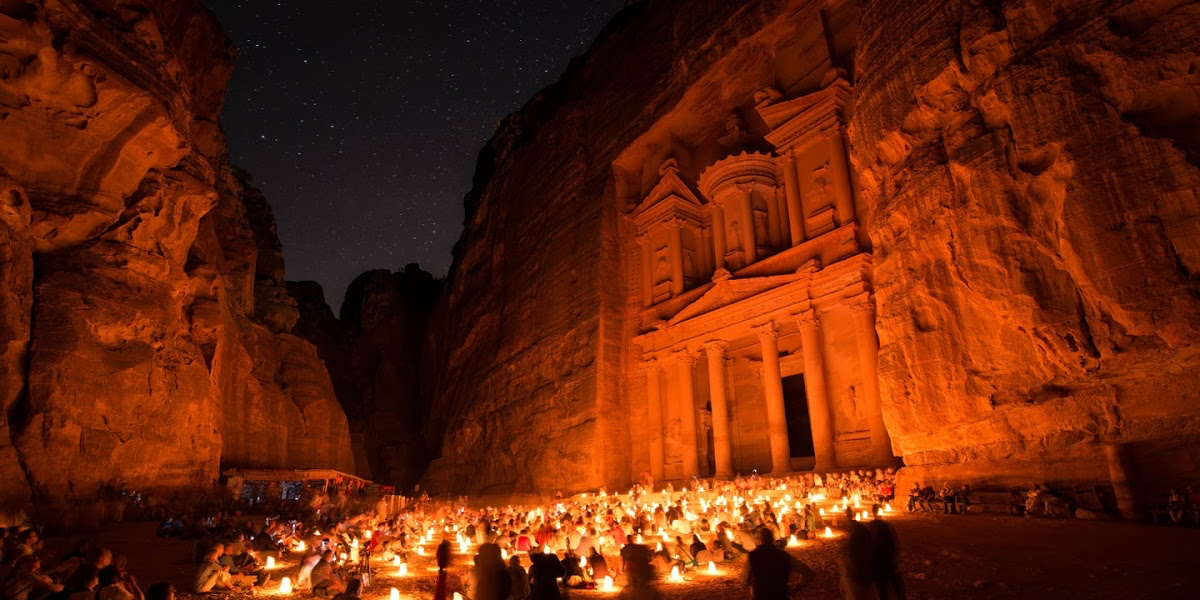
The people of Edom were descendants of Jacob’s brother Esau (see Gen 25:19-34; 27:1-41; 32:3; 36:1-19). The Edomites and the Israelites had a common ancestor in Isaac, and his father Abraham. Edom was located just South of the Dead Sea, in what is now southern Jordan, extending to parts of the Negev desert in southern Israel. The city of Petra, today a tourist destination, is located there.
Edom was a region of rugged mountains providing mineral wealth, nomadic agriculture, and natural fortifications. The “King’s Highway,” a major north-south trade route between Damascus and the Gulf of Aqaba, ran through Edom (see Num 20:17).
By about 800 BCE, Edom had become a vassal state of the Neo-Assyrian Empire, enhancing its regional power and increasing its wealth through international trade. These economic growth factors sadly led to corruption, violence and aggression against neighbouring countries, especially Judah.
The kinship narrative of Genesis frames Edom and Israel as “brother nations,” but there was a long history of conflict between them (e.g., 2 Kg 8:20-22; 2 Chr 21:16f). As Babylon besieged and destroyed Jerusalem in 586 BCE, Edom appears to have collaborated with the invaders, taking advantage of Judah’s plight and perhaps hoping to expand its borders westward to encompass Jerusalem (see Ps 137:7; Ezk 25:12-14; 35:1-15).
Biblical scholar Daniel C. Timmer observes that “the intensity and focus of Edom’s aggression against Jerusalem in the context of the latter’s fall to Babylon in 586 were unprecedented (cf Ezk 35:5).[2] When the end came for Jerusalem, Edom rejoiced.
Obadiah’s prophecy speaks into this long hostility, as do Isaiah (Isa 34:5-13) and Jeremiah (Jer 49:7-22). There was no relief for Edom, and the nation fell into rapid decline and ceased to exist. By the time of Jesus, the Nabateans had displaced the Edomites from their ancestral lands. Their descendants settled in Idumea, were they were forced by the Hasmoneans to adopt Jewish culture, and finally the Romans assimilated them into the Greco-Roman world.
Today, Edom is a footnote to history. Obadiah’s prophecy came true: “no survivor will remain of the house of Edom, for the Lord has spoken” (v. 18).
I want to make four observations from this sorry story.
First, behind every national failure and historic decline is a narrative of individual moral compromise:
A pattern of choosing wrong over right, preferring falsehood to truth, and tolerating small acts of evil. God condemns Edom not for abstract geopolitical misalignment but for concrete actions: gloating over Judah’s fall, looting the city, cutting down fugitives, and betraying survivors (vv. 12–14).
At the core is pride (v. 3) – not merely national arrogance but a deeply personal disposition that deceives and destroys.
We face the same challenge: each of us either participates in, consents to, or resists the moral direction of our community and nation. Let not the pride of your heart deceive you. Justice begins with moral clarity.
Second, the inverse is also true: God holds nations, as well as individuals, accountable to divine justice.
Obadiah offers an important perspective on a robust theology of history. God is not a distant observer but an active sovereign who governs the rise and fall of nations.
For Edom, the prophet declares that political alliances will betray them, their wisdom will fail, and their famous strongholds will not withstand external threats (vv. 1-9). The fragility of treaties, the volatility of military action, and the inevitability of strategic miscalculation are instruments through which divine judgment unfolds. Justice is not merely punitive; it restores moral balance and opens the possibility of the common good.
There is also the principle of moral symmetry in verse 15: “As you have done, it will be done to you.” This foreshadows the teaching of Jesus: “Whatever you want others to do for you, do the same for them” (Mt 7:12). How does this principle play out in Australian public policy? How do we measure up?
Third, God is committed to universal redemption, renewal, and restoration.
The goal of history is not regional alliances between warring Arab states, national security, or economic prosperity, but the establishment of divine rule. The fall of Edom is not an end in itself, nor the act of a capricious deity, but part of a larger movement toward the vindication of God’s people and the renewal of the world.
Despite the gathering darkness, Obadiah envisions the universal acknowledgment of God’s sovereignty and the formation of a community marked by justice and peace centred on Zion (v. 21) – both a physical location and a theological symbol of God’s reign. Scripture consistently directs attention to this horizon.
Even amid conflict, injustice and suffering, this eschatological vision lends coherence to the present, assuring us that even in moments of apparent disorder, God is guiding history toward a just, meaningful, and ultimately glorious end.
Finally, Obadiah addresses the realities of war and peace, justice and mercy.
He assumes conflict and suffering as features of history in a fallen world, yet his moral logic resists any easy justification of violence. Edom is judged for opportunism, exploitation, and failure to show mercy to “brother Jacob.” Actions driven by pride, greed, or indifference remain morally accountable before God.
If history is moving toward the full establishment of God’s kingdom, violence cannot be its final horizon. Wars may at times be unavoidable in a fallen world, but their purpose, execution and results must be measured against the just and merciful character of God. Justice without mercy hardens into retaliation; mercy without justice risks trivialising evil.
Obadiah therefore presses the necessity of justice, while the wider canon of holy Scripture opens the possibility of mercy beyond judgment. His vision invites us to resist arrogance and cruelty, to hold justice and mercy together, and to live now in ways that anticipate God’s promised restoration and peace.
As we conclude, let me ask you:
Where do you see subtle forms of pride shaping your judgments, actions, or silence in the face of injustice? How might you actively resist these patterns in light of Obadiah’s warning that “the pride of your heart has deceived you”?
In what concrete ways should the principle “as you have done, it will be done to you” reshape your expectations of Australian national policy, community service, and public discourse?
How can you embody a faithful balance of justice and mercy in situations of conflict or disagreement, so that your responses reflect not retaliation or indifference, but the character of God and the hope of God’s coming kingdom?
Sermon 851 copyright © 2026 Rod Benson. Preached at North Rocks Community Church, Sydney, Australia, on Sunday 19 April 2026. Unless otherwise noted, Scripture quotations are from The Christian Standard Bible (Nashville: Holman Bible Publishers, 2020).
Rev Dr Rod Benson is General Secretary of the NSW Ecumenical Council and a minister of the Uniting Church in Australia serving at North Rocks Community Church in Sydney.
References:
[1] N.T. Wright, Simply Christian (and several other books by Wright).
[2] Daniel C. Timmer, Obadiah, Jonah and Micah (Downers Grove: IVP, 2021), 4.
Image source: Petra at night. Google Arts & Culture
Taking it further…
Reflection questions
- According to the sermon, what historical actions of Edom led to the prophet Obadiah’s condemnation of the nation?
- How does the sermon explain the principle, “As you have done, it will be done to you,” and how is it connected to the teaching of Jesus in Matthew 7:12?
- Why does the sermon argue that God is concerned not only with individuals but also with the moral accountability of nations?
Application questions
- Where do you see pride influencing your own attitudes, decisions, or responses to the failures and suffering of others, and how might you resist it?
- Can you think of a recent conflict in which you were tempted either toward harsh justice without mercy or mercy without accountability? What would a more faithful balance have looked like?
- Obadiah points toward God’s ultimate purpose of restoration, justice, and peace. How might this hope influence the way you respond to injustice, suffering, or discouragement in the present?

