
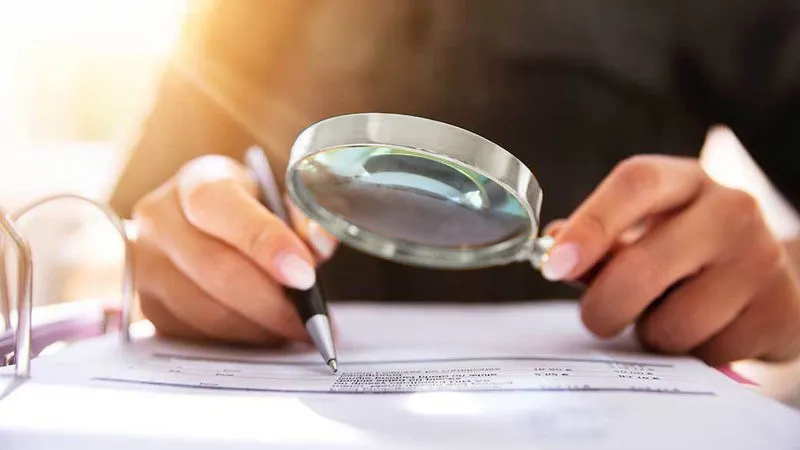
We live in an information-saturated world where it is increasingly difficult to discern facts from falsehoods, and truth from fabrication. Tech giants have largely abandoned internal fact-checking of content posted to their platforms. The rise of AI, including confected images, has accelerated the decline of public confidence in news and information sources, tempting many of us to abandon faith in even the most robust and reliable truth claims and statements of fact.
This is not merely dangerous for our own intellectual and moral formation, but for the future of democracy and freedom. In a politically partisan and ideologically charged world, we need access to reliable information and the capacity to filter out unreliable information more than ever. A careful approach to fact-checking cultivates disciplined habits of attention and is not beyond the skill level of most adult readers.
The following 12 principles offer a structured way to assess the reliability of news and information in a complex media environment.
1. Identify the original source
Trace the claim back to its earliest verifiable origin. Many misleading stories rely on second- or third-hand reporting. Primary sources such as official documents, direct interviews, raw data carry more evidentiary weight than summaries or commentary.
2. Evaluate the credibility of the publisher
Consider the track record, editorial standards, and ownership of the outlet. Established organisations with transparent corrections policies tend to be more reliable than anonymous or highly partisan platforms.
3. Check the author’s expertise and intent
A named author with relevant qualifications or experience is generally more trustworthy than an anonymous writer. Also assess whether the piece aims to inform, persuade, entertain, or provoke.
4. Check the date and context
Outdated information is frequently recirculated as if it were current. Confirm when the material was produced and whether circumstances have changed since publication.
5. Corroborate with multiple independent sources
Reliable claims are usually reported across several independent outlets. Be cautious if a striking claim appears in only one place or is repeated across sites that simply echo each other.
6. Examine the evidence provided
Look for data, documents, direct quotations, and verifiable references. Exercise caution with assertions that lack supporting evidence, or come with vague references like “experts say.”
7. Verify images, videos, and multimedia content
Visual material can be especially persuasive—and easily misused. Check whether images or videos have been taken out of context, edited, or recycled from unrelated events. Tools such as reverse image search, metadata inspection, and geolocation clues can help establish authenticity and context.
8. Use dedicated fact-checking organisations
Consult independent fact-checkers such as AAPT Fact Check, Full Fact, or PolitiFact. These groups specialise in verifying contested claims and often provide detailed methodological explanations.
9. Watch for emotional or manipulative language
Highly charged language, sensational headlines, or appeals to outrage can signal an attempt to bypass critical reasoning. Reliable reporting tends to prioritise clarity over emotional impact.
10. Distinguish claims from interpretations of data
Even when data is accurate, the conclusions drawn from it may be selective or misleading. Look at how statistics are framed: What is included or excluded? Are comparisons fair? Are alternative explanations considered? Sound fact-checking involves assessing not only whether the data is correct, but whether the reasoning built upon it is justified.
11. Distinguish between reporting and opinion
News articles, editorials, and opinion pieces often coexist within the same publication. Ensure you are not treating interpretation or commentary as if it were verified reporting.
12. Reflect on your own biases
Perhaps the most difficult step is internal. People tend to accept information that confirms prior beliefs and dismiss what challenges them. Effective fact-checking requires a deliberate willingness to question one’s own assumptions.
These practices do not guarantee that your information sources will be completely reliable and error-free, but they will reduce the likelihood of being misled and boost the integrity of your engagement with public information.
Rev Dr Rod Benson is General Secretary of the NSW Ecumenical Council and a minister of the Uniting Church in Australia serving at North Rocks Community Church in Sydney.
Image source: Magnifico

