
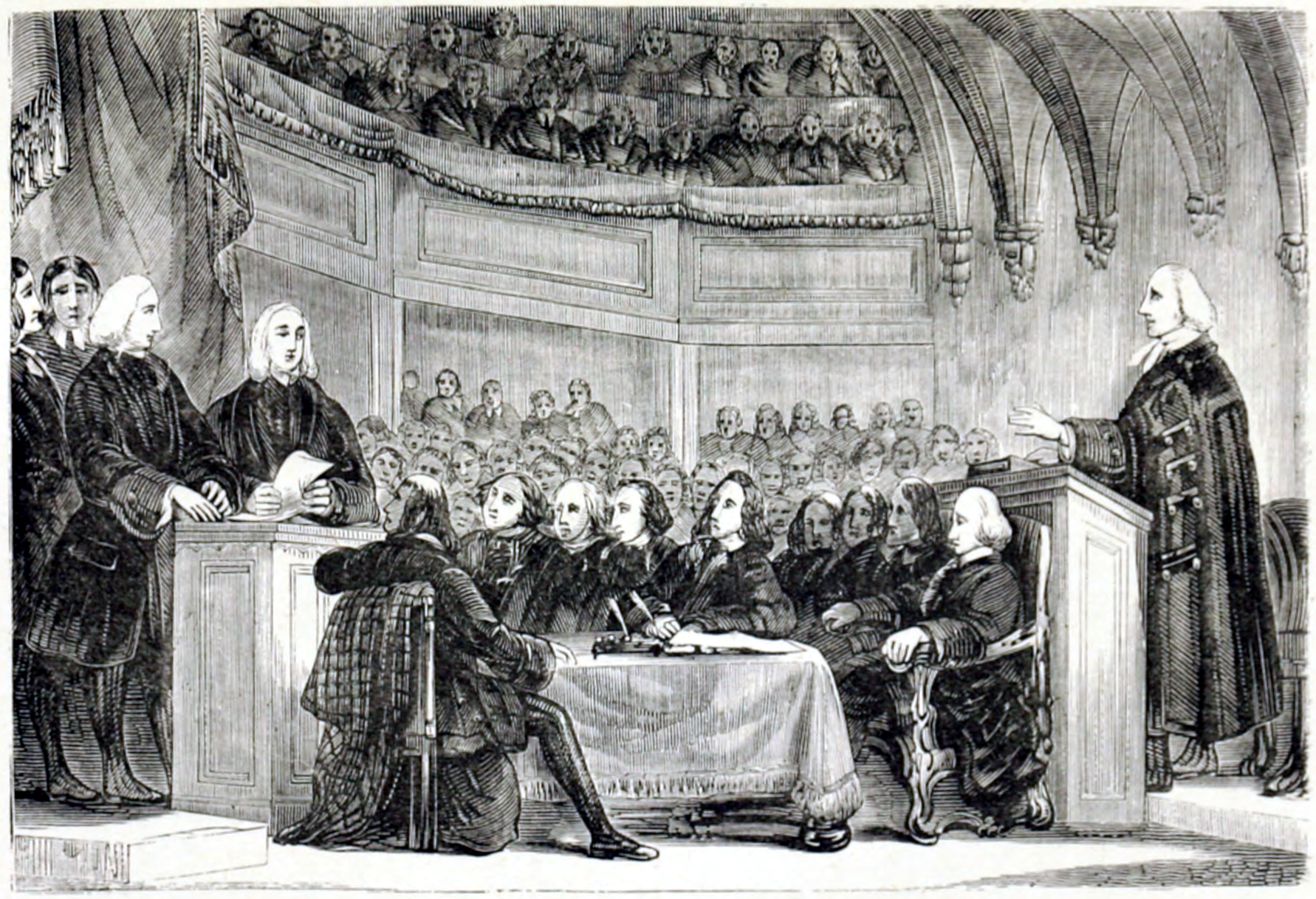
The Marrow Controversy was one of the most significant theological disputes in eighteenth-century Scottish Presbyterianism. Although it emerged within a specific ecclesial and historical setting, its underlying questions remain deeply relevant: What is the relationship between grace and obedience? How should the gospel be preached? Can assurance of salvation coexist with serious holiness? And what happens when the church subtly turns Christianity into moralism? These questions continue to shape contemporary Christian preaching, discipleship, and spirituality.
The controversy takes its name from a seventeenth-century English devotional work titled The Marrow of Modern Divinity, written by Edward Fisher and first published in 1645. The book presented Reformed theology through a dialogue format and sought to navigate between two opposite errors: legalism and antinomianism.
On the one hand, it rejected the notion that human obedience contributes to justification before God. On the other hand, it rejected the idea that grace eliminates the necessity of holiness and obedience. The “marrow” of the gospel, according to the book, was the free grace of God given in Christ to sinners apart from works.
The controversy erupted in Scotland in the early eighteenth century when Thomas Boston discovered the book and became convinced that it articulated the biblical doctrine of grace with unusual clarity. Boston and a group of ministers later known as the “Marrow Men,” including Ralph Erskine and Ebenezer Erskine, believed that the Church of Scotland had drifted toward a practical legalism. In their view, ministers increasingly preached moral improvement and covenant conditions in ways that obscured the freeness of the gospel.
The immediate flashpoint came in 1720 when the General Assembly of the Church of Scotland condemned portions of The Marrow of Modern Divinity as doctrinally dangerous. The Assembly feared that the book encouraged antinomianism by downplaying the role of repentance and obedience. The Marrow Men responded with the “Representation” of 1721, defending the book and protesting the Assembly’s conclusions. What followed was an extended debate over the nature of saving faith, assurance, repentance, sanctification, and the offer of the gospel.
At the heart of the controversy was the question of conditionality. The Marrow Men argued that the gospel is not offered only to the morally serious, spiritually awakened, or sufficiently repentant. Rather, Christ is freely offered to sinners as sinners. Repentance and holiness are fruits of grace, not prerequisites for receiving grace. They feared that much contemporary preaching effectively taught people to improve themselves before coming to Christ. Such preaching, they argued, destroyed assurance and burdened consciences.
The Marrow theology strongly emphasized the distinction between law and gospel. The law reveals God’s holiness and humanity’s sinfulness, but it cannot save. The gospel proclaims what God has accomplished in Christ for sinners. Confusing these categories inevitably produces either despair or self-righteousness. The Marrow Men believed that many ministers preached the gospel as a new law — a softer covenant of works in which faith, repentance, and obedience became conditions people had to fulfil in order to gain divine acceptance.
Yet the Marrow Men were not antinomians. They insisted that genuine faith produces holiness. Union with Christ transforms the believer’s life. Obedience matters profoundly, but it flows from gratitude and communion with Christ rather than fear or merit-seeking. Sanctification is the fruit of justification, not its basis. In this sense, the controversy anticipated later Protestant debates over assurance, revivalism, and evangelical spirituality.
The implications for theology today are substantial. First, the Marrow Controversy remains a warning against moralistic Christianity. Many churches still proclaim a message centred more on self-improvement, ethical performance, or therapeutic fulfilment than on divine grace. In both conservative and progressive settings, Christianity can become subtly conditional: acceptance is granted to those who are disciplined enough, politically aligned enough, emotionally healthy enough, or socially righteous enough. The Marrow tradition insists that the gospel begins with divine generosity toward the undeserving.
Second, the controversy highlights the importance of assurance in Christian experience. Much contemporary Christianity is marked either by shallow certainty or chronic anxiety. The Marrow Men sought a middle path grounded in Christ rather than introspection. Assurance does not arise from achieving moral perfection but from trusting the promises of God in Christ. This emphasis has significant pastoral implications, particularly in contexts shaped by burnout, shame, and spiritual insecurity.
Third, the controversy speaks to preaching. The Marrow Men argued that Christ should be freely and indiscriminately offered to all hearers. Preaching should not merely exhort moral behaviour or provide religious advice. It should announce good news. Contemporary preaching often collapses into motivational speaking, political commentary, or behavioural management. The Marrow tradition calls preachers back to proclamation centred on grace, union with Christ, and the transforming power of the gospel.
Fourth, the controversy illuminates the relationship between holiness and freedom. Legalism frequently produces either pride or exhaustion. Yet permissiveness produces moral fragmentation and spiritual shallowness. The Marrow theology offers an alternative vision in which holiness arises from delight in God rather than coercion. Obedience becomes participatory and relational rather than merely regulatory.
Finally, the Marrow Controversy reveals how theological disputes are rarely abstract. They shape the emotional and spiritual atmosphere of the church. A legalistic church culture tends to produce fear, concealment, and performance. A grace-shaped culture tends to foster honesty, gratitude, repentance, and joy. The dispute in eighteenth-century Scotland was therefore not merely about doctrinal precision; it concerned the lived experience of the Christian life.
The enduring significance of the Marrow Controversy lies in its insistence that the gospel is fundamentally good news for sinners rather than a religious mechanism for managing virtue. In every generation, the church faces the temptation either to dilute grace or to detach grace from discipleship. The Marrow Men sought to hold these realities together: salvation is entirely by grace, and grace transforms those who receive it. Their struggle remains one of the central tensions of Christian theology and pastoral ministry today.
Rev Dr Rod Benson is General Secretary of the NSW Ecumenical Council and a minister of the Uniting Church in Australia serving at North Rocks Community Church in Sydney.
Image source: Origin of the First Secession from the Kirk of Scotland (Wikipedia).


