
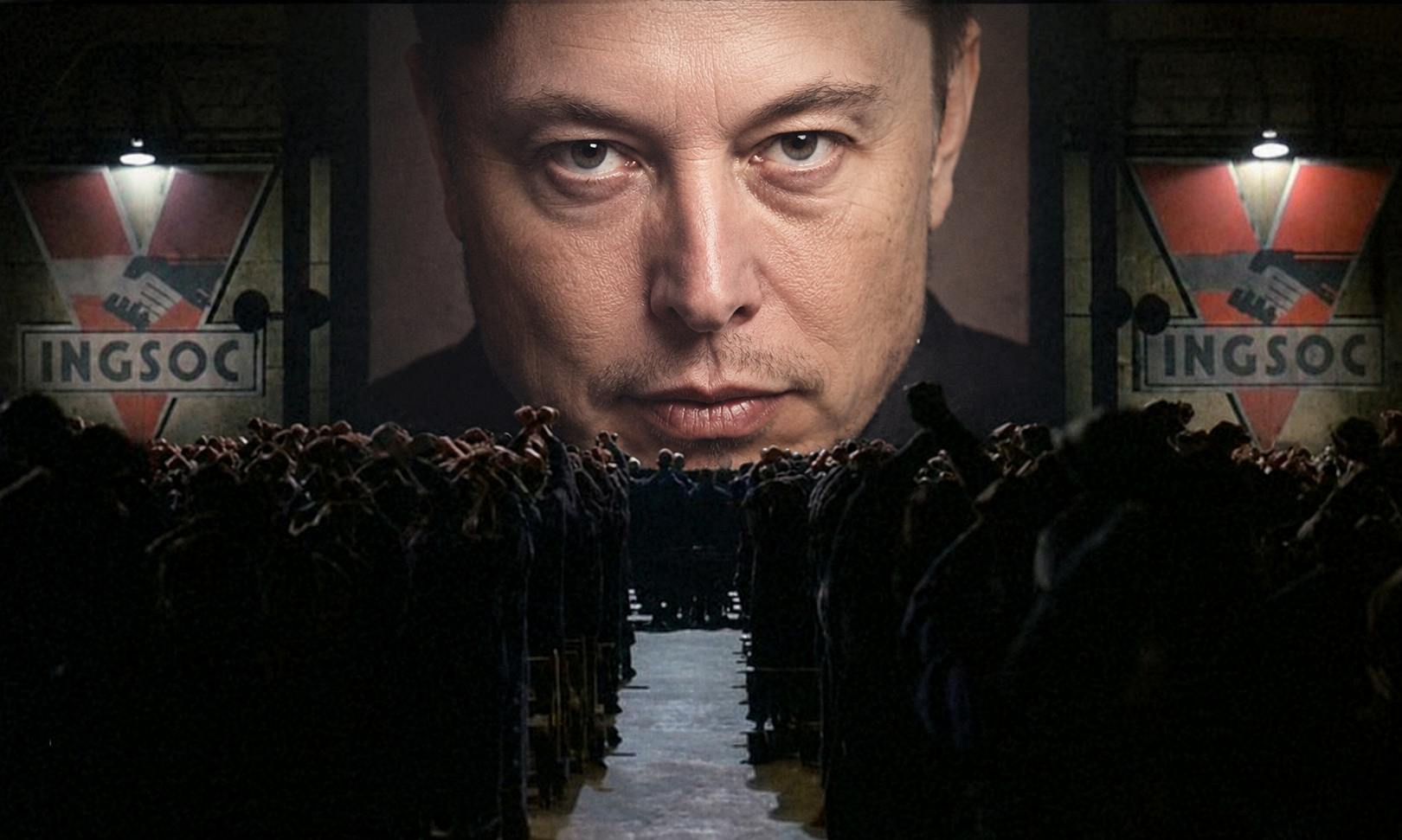
News that the world has seen the arrival of its first trillionaire captures public attention because it triggers shock and envy, and pushes familiar questions about wealth into unfamiliar territory. Human societies have always contained rich and poor, merchants and labourers, rulers and subjects. Yet a personal fortune measured in trillions of dollars represents wealth on a scale historically associated not with individuals but with governments and nation-states.
The prospect raises questions that extend far beyond economics. The issue is not whether entrepreneurial success should be rewarded. Most modern societies celebrate innovation, creativity, investment, and risk-taking. Many great fortunes were built by creating products and services that improve the lives of millions. Advances in technology, medicine, transportation, communication, and energy have often been driven by individuals willing to take extraordinary risks and pursue ambitious visions.
Yet the emergence of trillionaire wealth invites serious moral reflection. What happens when vast economic resources are concentrated in the hands of a single private individual? Can democratic institutions remain healthy and independent when private fortunes rival public budgets? What ethical obligations accompany such wealth? And what does society’s fascination with trillionaires reveal about our understanding of success, power, and human flourishing?
These questions deserve consideration not only from economic and political perspectives but also from philosophical, ethical, and theological ones.
Wealth and democratic society
One of the most common concerns about extreme wealth involves its implications for the future of democracy.
The health of democratic societies rests upon the principle of political equality. Citizens may possess significant differences in talent, education, occupation, and income, but each person is assumed to possess equal civic standing. Public decisions are meant to emerge through democratic deliberation rather than through the preferences of a tiny super-wealthy elite.
Critics of extreme wealth argue that vast fortunes challenge this principle. In all forms of political society, wealth may be translated into influence through campaign donations, lobbying, media ownership, philanthropy, legal resources, and privileged access to political leaders. Individuals possessing extraordinary resources may exercise influence far beyond that available to ordinary citizens.
Supporters of concentrated wealth accumulation object that this criticism confuses wealth with political power. Governments possess armies, police forces, courts, and taxation powers, whereas wealthy individuals do not. Historically, the greatest threats to liberty have often emerged from states rather than entrepreneurs.
It is true that economic and political power are not identical in nature. Yet in modern societies the two forms of power increasingly intersect. Influence may be exercised not only through coercion but through information, technology, communication networks, and cultural institutions. Ownership of major digital platforms or technological infrastructure can shape public life in profound ways without requiring formal governmental authority.
The concern is not that wealth and political power are identical but that extraordinary concentrations of private wealth may undermine the notion that citizens should participate in public life on something approaching equal terms.
Wealth creation and wealth concentration
A balanced analysis must distinguish carefully between wealth creation and wealth concentration. Public discussions of inequality sometimes imply that large fortunes are inherently unjust. Such assumptions are often simplistic. Many fortunes arise because entrepreneurs create products or services that millions of people voluntarily choose to use. Consumers, employees, investors and founders all benefit from such outcomes.
Indeed, much of the prosperity enjoyed in contemporary societies is the result of entrepreneurial initiative and technological innovation. From this perspective, the accumulation of wealth may be understood as a reward for creating value, and criticism of extreme wealth should not become criticism of commercial enterprise itself.
The more difficult question concerns concentration. A person may legitimately create enormous value while society still asks whether the resulting accumulation of wealth creates new ethical and political challenges. The issue is not whether wealth should exist but whether wealth on a certain scale generates forms of influence that exceed democratic accountability. The debate turns to how societies should respond when economic success reaches levels capable of fundamentally reshaping public life.
Justice, opportunity, and social mobility
Questions of justice inevitably arise whenever private wealth becomes highly concentrated. Some critics focus primarily upon inequality. Others are less concerned with inequality than with its political and moral consequences. If a society contains wealthy individuals but also provides widespread opportunity, social mobility, and economic security, many people may regard inequality as morally acceptable. Problems emerge when large disparities become linked to declining opportunities for others.
Political philosopher John Rawls argued that inequalities are justified only if they improve the condition of the least advantaged members of society. This approach does not require equality of outcome. Rather, it asks whether social and economic arrangements contribute to the wellbeing of those who possess the fewest advantages.
Similarly, the capabilities approach developed by Martha Nussbaum and Amartya Sen shifts attention from wealth itself toward human flourishing. The key question becomes whether people possess genuine opportunities to develop their capacities through education, healthcare, meaningful work, political participation, and social inclusion.
A related concern involves social mobility. Wealth often generates additional wealth through inheritance, investment, and privileged access to networks of influence. Over time, societies risk developing extreme forms of economic aristocracy in which opportunities become increasingly determined by the inherited advantages of a very small elite rather than talent or effort.
Such concerns invite reflection on whether future generations will enjoy fair access to the opportunities that enabled previous generations to prosper and order society in particular ways.
Technology and the new architecture of power
Historically, wealth was associated with land ownership, natural resources, manufacturing, or finance. Today, however, it is phenomena such as digital platforms, artificial intelligence, satellite systems, communications infrastructure, and data storage facilities that have become major sources of economic and social power.
This development introduces entirely new ethical questions. Technological systems increasingly shape how people communicate, gather information, form opinions, consume media, and participate in civic life. Control over such systems may confer influence extending far beyond conventional business activities.
Artificial intelligence provides an important example. Decisions concerning the development and deployment of advanced AI systems, for example, could affect employment, education, healthcare, warfare, privacy, and political communication. If control and distribution of such technologies become concentrated within a small number of corporations or individuals, traditional mechanisms of democratic accountability may struggle to keep pace.
The rise of trillionaires cannot be separated from broader questions concerning technological governance. The issue is not merely who owns the wealth but who shapes the infrastructure and key decision-making through which modern societies function.
Character, power, and the problem of moral risk
Much of the debate surrounding extreme wealth focuses upon economics, politics, and social justice. Yet the question of the moral character of those who exercise extraordinary power needs to be brought into the mix.
Discussions of trillionaire wealth may assume the presence of a relatively benign figure such as a visionary entrepreneur, a gifted innovator, or a highly capable business leader whose fortune reflects unusual talent and determination. Such assumptions, however, are insufficient as a basis for political and ethical reasoning. Sound institutions are not designed solely for good people. They are designed for human beings as they actually are: capable of wisdom and generosity, but also susceptible to pride, self-interest, error, malevolence, and domination.
This insight lies at the heart of the modern democratic tradition. Constitutional government, separation of powers, judicial oversight, freedom of the press, and regular elections all arise from the recognition that power requires accountability. Their purpose is not merely to restrain bad rulers but to acknowledge a more fundamental truth: no human being should be entrusted with unchecked power. The same principle applies to extraordinary concentrations of private wealth.
The issue is not whether a particular billionaire or trillionaire is morally admirable or flawed. Rather, it concerns the risks created whenever vast economic and technological influence depends upon the moral judgement of a single individual. A trillion-dollar fortune may provide significant influence over communication networks, artificial intelligence systems, financial markets, cultural discourse, political movements, and philanthropic priorities. The consequences of poor judgement therefore become correspondingly larger.
One concern involves narcissism. In popular usage the term is often employed carelessly, but at a general level narcissistic tendencies include excessive self-confidence, diminished receptivity to criticism, an inflated sense of personal importance, and an exaggerated belief in one’s own judgement. Wealth and celebrity can reinforce such tendencies by insulating individuals from ordinary forms of correction and accountability.
The danger is not merely psychological but institutional. Individuals surrounded by loyal supporters, dependent employees, and extraordinary financial resources may gradually lose contact with the corrective influences that help most people recognise their limitations. What begins as confidence may become overconfidence; what begins as vision may become grandiosity.
An even more troubling possibility concerns malevolent uses of wealth. Most public discussion assumes that wealthy individuals seek recognition through philanthropy, innovation, or public achievement. Yet power can also be used to spread misinformation, reward allies, punish critics, manipulate public discourse, undermine democratic institutions, or advance purely personal interests.
The strongest argument for accountability is therefore not that powerful individuals are necessarily bad people but that no society can safely assume that they will always pursue the moral good. Institutions should be judged not only by how they function under benevolent leadership but also by how they perform when entrusted to less admirable personalities.
Religious traditions have long recognised this danger. Judaism and Christianity affirm both the dignity and fallibility of human beings. Human persons are capable of remarkable creativity and generosity, yet also vulnerable to pride, self-deception, and domination. The biblical critique of kingship reflects precisely this concern. The problem is not that rulers are always wicked but that power tends to magnify both virtues and vices. The same insight applies to economic power in the contemporary world.
Human flourishing and the meaning of success
Beneath political and economic debates lies a deeper philosophical question of the ultimate purpose of wealth and wealth creation. The ancient Greek philosopher Aristotle argued that wealth is an instrumental good rather than an ultimate one. Money is valuable because it enables other forms of flourishing. It provides security, opportunity, education, leisure, and the resources necessary for a good life. Yet wealth itself is not the highest human good.
Notable setbacks notwithstanding, modern national economies generally excel at generating economic growth, innovation and productivity. They are often less successful at explaining why such achievements matter. The fascination with billionaires and trillionaires may reveal something important about contemporary culture. Such individuals are often admired not for what they possess but for what they symbolise. Wealth may be interpreted as evidence of intelligence, competence, creativity, independence, or achievement.
Yet philosophical traditions have consistently questioned whether accumulation alone constitutes genuine success. Human flourishing also involves friendship, family, virtue, wisdom, beauty, creativity, community, and meaningful participation in society. When economic achievement becomes the dominant measure of human worth, societies risk narrowing their understanding of what it means to live well. The deeper issue, therefore, is not simply the existence of immense wealth but the values that such wealth reflects and reinforces.
Religious and theological perspectives
Religious traditions introduce a further dimension by examining not only the distribution of wealth but also its spiritual significance. The Judeo-Christian tradition generally affirms the moral legitimacy of productive work, commerce, and private property. The Bible contains numerous examples of wealthy individuals who are positively portrayed and whose legacy is admirable. Wealth itself is not regarded in these religious traditions as inherently evil.
At the same time, biblical faith consistently subjects wealth to moral scrutiny. The Hebrew prophets repeatedly condemned societies in which prosperity coexisted with exploitation, corruption, or neglect of the vulnerable. Their concern was not accumulation alone but the social consequences of accumulation.
The teachings of Jesus follow this established moral trajectory and expand its economic focus. Jesus repeatedly warns against the spiritual dangers associated with wealth accumulation. These warnings are sometimes misunderstood as condemnations of prosperity per se, but they actually raise concerns about the tendency of wealth to become an object of trust, security, or devotion. In other words, the teaching of Jesus about the accumulation of wealth often relates to its potential to lead to idolatry rather than worship and service toward God. The core problem is not possession but attachment.
Throughout Christian history, thinkers such as Augustine and Aquinas argued that material goods are legitimate but should remain subordinate to higher goods. Human beings flourish not through possession alone but through rightly ordered relationships with God, neighbour, and creation. Modern Catholic social teaching develops similar themes through its emphasis upon human dignity, solidarity, the common good, and the universal destination of goods. Property rights are recognised as important, yet ownership carries social responsibilities.
These traditions offer a perspective often absent from contemporary debates. They ask not only how wealth is acquired or distributed but what wealth does to the human soul.
The question of enough
Perhaps the most profound question is the simplest: How much is enough?
Critics of extreme wealth often struggle to identify a precise threshold beyond which wealth becomes morally problematic. Ten billion dollars? One hundred billion? One trillion? No obvious answer exists.
The difficulty suggests that the debate cannot ultimately be resolved through numerical limits. The deeper issue concerns questions about purpose and responsibility. At what point does wealth cease to function primarily as a means of flourishing and become an end in itself? At what point does influence become incompatible with democratic accountability? At what point does accumulation undermine rather than enhance human wellbeing?
Religious traditions generally approach the issue through the language of stewardship, moderation, contentment, and wisdom. Rather than asking how much one may possess, they ask how possessions should be used and what ends they should serve. This perspective reframes the discussion. The central question becomes not whether someone may become a trillionaire, but whether societies possess the moral imagination necessary to evaluate the actual moral purpose of such wealth.
Conclusion
The prospect of trillionaire wealth forces societies to confront some of the most important questions of the twenty-first century. These questions concern democracy, justice, technology, accountability, human character, and the meaning of human flourishing.
A thoughtful response must avoid simplistic conclusions. Wealth creation has generated enormous benefits for humanity and should not be dismissed. Innovation, entrepreneurship, and investment remain essential to economic progress. Yet it is equally reasonable to ask whether unprecedented concentrations of wealth create unprecedented concentrations of influence.
At its deepest level, the issue is not merely economic but anthropological and moral. Every political system, economic system, and religious tradition must eventually confront the same reality: human beings are capable of extraordinary wisdom and generosity, yet also of pride, self-deception, and domination. The challenge is therefore not simply how wealth is created, but how power is restrained, directed, and held accountable.
The trillion-dollar question is whether democratic societies possess a sufficiently rich moral vision, and sufficiently strong political and legal institutions, to ensure that extraordinary economic power concentrated in the hands of a tiny elite of super-wealthy individuals serves genuinely human ends and remains accountable to the common good.
Reflecting on the current state of play, we could be forgiven for taking a pessimistic view of the world’s future. Let’s hope and pray that we are wrong.
Rod Benson lives in Sydney and writes about a range of topics from books and local history to food, faith, philosophy, ethics, research skills, and everyday life. Away from the keyboard, he enjoys cooking for friends, walking in the Australian bush, exploring a beach, discovering new restaurants, and reading philosophy, fiction and poetry. He is married to Emma Goodsir.
Image source: author

