
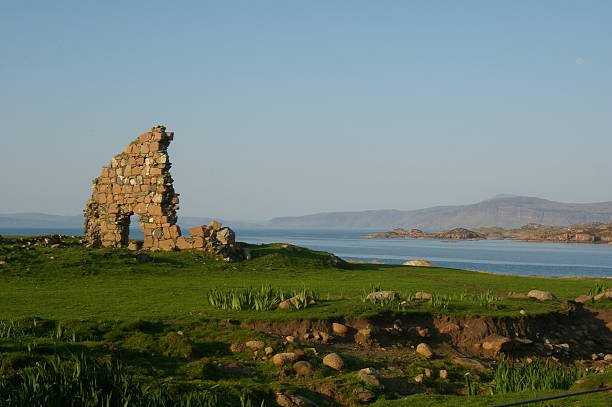
The small Hebridean island of Iona has long occupied a place in the religious imagination of Europe. Barely five kilometres long and home to a small resident population, it attracts thousands of pilgrims, tourists, clergy, artists, and spiritual seekers every year.
To many, Iona is not merely scenic or historically interesting. It is experienced as a “holy place,” a landscape where memory, prayer, suffering, beauty, and witness merge.
In Christian theology, holiness does not imply “magical” geography or divine favour limited to a single location. A place takes on a holy or sacred identity as people encounter God through prayer, sacrifice, hospitality, repentance, worship, or acts of courage. It is the experience of encounter with God that makes it holy.
Iona represents a rare accumulation of sacred memory. It is a place where history and spirituality have become intertwined in beautiful and generative ways over many centuries.
Early human settlement
Iona’s sacred character almost certainly predates Christianity. Archaeological evidence indicates human presence on the island for thousands of years before Columba arrived in the sixth century. Excavations have uncovered traces of prehistoric farming communities, burial sites, worked stone, pottery fragments, and ancient field systems. The island contains evidence associated with both Neolithic and Bronze Age habitation.
The standing stone known as St Martin’s Cross is Christian and medieval, but nearby landscapes preserve hints of much older ritual awareness. Burial cairns and ancient earthworks suggest that the island already possessed symbolic or spiritual significance long before it became associated with Celtic monasticism.
The isolation of the island contributed to this early reverence. Surrounded by powerful Atlantic waters and exposed to dramatic weather patterns, Iona naturally evokes awe, vulnerability, and reflection. Such environments frequently become associated with ritual and sacred meaning.
The island’s reputation rests especially on five major elements that continue to draw pilgrims and visitors.
1. The legacy of St Columba and Celtic Christianity
The central reason Iona became holy in Christian consciousness is its association with Saint Columba. In AD 563, Columba and a small group of companions sailed from Ireland and established a monastic community on Iona. From this remote island they began one of the most influential missionary movements in early medieval Europe.
The monastery became a centre of prayer, scholarship, evangelism, and pastoral care. Monks travelled from Iona throughout Scotland and northern England, contributing significantly to the Christianisation of the Picts and other peoples. The island therefore became symbolic of missionary courage and spiritual discipline.
The distinctive spirituality associated with Celtic Christianity also contributes to Iona’s appeal. Although modern romanticism sometimes exaggerates or idealises “Celtic spirituality,” there genuinely existed within these communities a strong sense of God’s presence in creation, rhythms of prayer integrated into daily life, deep hospitality, penitence, simplicity, and reverence for scripture.
Pilgrims often come seeking connection with this older Christian tradition, especially amid modern experiences of fragmentation, technological overload, and institutional distrust. Iona offers an imaginative return to a form of Christianity that appears quieter, more communal, and more contemplative.
2. The power of sacred architecture
A second major attraction is Iona Abbey itself. Although the original early medieval monastery suffered destruction through Viking raids and later decline, the abbey was rebuilt in the twelfth and thirteenth centuries and subsequently restored in the twentieth century.
The physical presence of the abbey matters profoundly. Sacred architecture shapes spiritual perception. Thick stone walls, cloisters, worn pathways, candlelight, silence, and ancient graves communicate continuity across centuries. Visitors often describe a sense of stepping outside ordinary time.
The abbey church remains an active place of worship rather than merely an archaeological site. Daily prayers, Eucharists, hymns, and liturgies continue the rhythms of devotion that have marked the island for nearly fifteen hundred years.
Many pilgrims are drawn less by doctrinal interest than by the experience of contemplative stillness. Modern life is noisy, hurried, and commercially saturated. By contrast, Iona embodies slowness. The architecture encourages reflection rather than consumption. Even secular visitors often speak of sensing peace or transcendence within the abbey precincts.
The cemetery nearby also reinforces the island’s sacred character. Numerous Scottish, Irish, and Norwegian kings are traditionally believed to be buried there. Whatever the precise historical accuracy of these claims, the association contributes to the sense that Iona stands at the intersection of spirituality, mortality, and national memory.
3. Iona as a centre of learning
Another neglected aspect of Iona’s importance is its role as an intellectual and artistic centre. The monastery founded by Columba was not merely devotional; it became one of the leading scholarly communities in early medieval Europe.
Monks copied biblical manuscripts, preserved theological learning, taught literacy, and cultivated artistic traditions. Iona is often associated with the production of the magnificent Book of Kells, even though the manuscript may have been completed elsewhere after Viking disruptions. The intricate artistry of such manuscripts demonstrates a theology in which beauty itself became an act of worship.
The visual richness of Insular Christianity — illuminated initials, interwoven symbolism, animal motifs, and elaborate crosses — reflected a sacramental vision of reality. Material objects were not regarded merely as functional. Art, colour, craftsmanship, and the natural world could mediate divine glory.
This intellectual dimension complicates simplistic stereotypes of “primitive Celtic spirituality.” Iona’s monks were not merely isolated mystics wandering misty coastlines. They participated in rigorous theological reflection, scriptural study, pastoral ministry, and international scholarly networks.
4. Viking trauma and historical fragility
Popular portrayals of Iona sometimes omit the profound trauma the island endured during Viking invasions. Beginning in the late eighth century, Norse raids repeatedly devastated the monastery. Monks were killed, buildings destroyed, treasures looted, and manuscripts dispersed.
These events deeply shaped Christian memory across Britain and Ireland. Iona became not only a symbol of holiness but also of vulnerability. The suffering of the monks contributed to later ideas of martyrdom and spiritual perseverance.
This darker history is important because it prevents romanticisation. Sacred places are not immune from violence. Indeed, many become targets precisely because they symbolise identity, memory, and continuity.
There is also historical irony here. Later centuries saw substantial interaction and eventual integration between Norse and Celtic cultures throughout the Hebrides. The island therefore embodies both conflict and cultural fusion. Its history reminds pilgrims that holiness exists amid political instability rather than outside
5. Spirituality of landscape
The holiness of Iona cannot be separated from its landscape. The island possesses extraordinary natural beauty: white beaches, green hills, rocky coastlines, Atlantic winds, changing skies, and luminous water. Places such as St Columba’s Bay and the island’s northern cliffs evoke a sense of remoteness and elemental grandeur.
Across many religious traditions, natural beauty often becomes associated with transcendence. The landscape itself can encourage contemplation, humility, and gratitude. On Iona, this relationship between spirituality and nature is especially strong.
Part of the island’s power lies in its simplicity. There are few cars, limited commercial distractions, and a pace of life markedly different from large cities. Pilgrims frequently describe the ferry crossing from Isle of Mull to Iona as symbolically important: a movement away from busyness toward attentiveness.
The environment also reinforces themes deeply rooted in biblical spirituality. Sea and stone, storm and light, isolation and hospitality all become metaphors for the spiritual life. Walking across Iona often feels like participating in a living prayer rather than merely observing scenery.
This does not mean every visitor experiences mystical revelation. Yet many encounter a heightened awareness of silence, fragility, beauty, or interconnectedness. The physical environment helps make spiritual reflection more accessible.
Iona and social justice
Iona’s holiness is not only historical. The island continues to exercise moral and spiritual influence through the work of the Iona Community, founded in 1938 by the Scottish minister George MacLeod.
MacLeod believed Christianity had become disconnected from ordinary working people and social realities. He rebuilt the abbey using teams that combined unemployed labourers and theology students, intentionally joining worship with practical labour and social concern.
The modern Iona Community became internationally known for its commitments to peace, justice, ecumenism, environmental stewardship, and inclusive worship. Its liturgies and hymns have influenced churches around the world.
This contemporary dimension attracts many pilgrims who are searching not only for private spirituality but for ethical and communal renewal. Iona represents a Christianity concerned with reconciliation, poverty, peacemaking, and hospitality.
Particularly in periods of global conflict and political polarisation, the island has become symbolic of an alternative Christian imagination: one shaped less by triumphalism or tribalism and more by compassion and reconciliation.
For many visitors, this integration of contemplation and justice gives Iona continuing relevance.
Theological themes beyond “Celtic spirituality”
While many modern visitors speak of “Celtic spirituality,” the term can be used in vague or sentimental ways. Careful analysis reveals at least three theologically rich themes that have shaped Iona’s tradition.
1. Pilgrimage and exile
Early Celtic monks often embraced forms of voluntary exile for the sake of the Gospel. Leaving one’s homeland became an act of spiritual surrender. Columba himself may have understood his journey to Iona partly through this lens.
This theology of exile resonates strongly today in an era marked by displacement, migration, alienation, and ecological anxiety. Iona can therefore be interpreted as a place where Christians wrestle with questions of belonging and identity.
2. Rhythms of prayer
The monastic life on Iona revolved around repeated daily prayer, scripture, manual labour, and communal worship. Spirituality was not separated from ordinary life.
This integrated vision remains attractive in modern societies shaped by fragmentation and distraction. The island symbolises the possibility of living attentively and intentionally.
3. Creation as revelation
Although some modern writers exaggerate the ecological sophistication of Celtic Christianity, there genuinely existed a strong theological appreciation for creation as a witness to divine goodness.
Wind, sea, animals, seasons, and light frequently appeared in prayers and poetry. God was encountered not only in church buildings but through the created world itself.
This aspect of Iona’s theology has become especially influential in contemporary ecological theology and environmental ethics.
Pilgrimage, memory and personal transformation
People frequently come to Iona because they identify as pilgrims. Pilgrimage differs from tourism in intention, even though the two often overlap. A pilgrim travels not merely to see a place but to be cleansed and transformed by it.
Among other things, Iona has become a destination for people carrying grief, exhaustion, doubt, or spiritual longing. Some arrive after bereavement. Others seek discernment about vocation or relationships. Some come simply because they feel spiritually displaced within modern society.
The island’s small scale intensifies this experience. Pilgrims walk rather than rush. They participate in communal worship. They encounter people from many denominations and nations. The island becomes a temporary community of seekers.
Holiness on Iona is not presented as perfection. Its history includes Viking violence, ecclesiastical conflict, economic hardship, and modern tensions between preservation and tourism. Yet perhaps that complexity itself deepens the island’s spiritual credibility. Holiness emerges not from escape from history, but through faithful endurance within history.
Iona’s perceived sacredness arises from the convergence of memory, landscape, architecture, community, and spiritual aspiration. Whether they approach Iona from the perspective of a historian, pilgrim, tourist, or sceptic, visitors often discover that the island possesses a rare capacity to quieten the soul, enlarge the imagination, and deepen a sense of ordinary wonder.
Iona’s enduring attraction
Iona is more than a geographical location. It functions symbolically across many traditions.
For Catholics, it recalls continuity with the ancient undivided church. For some Protestants, it represents the welcome renewal of worship and deep links between liturgy and social justice. For secular visitors, it may symbolise a turn from consumerism and hurry to lived practices of simplicity, slowness and contemplation.
Writers, musicians, poets, and theologians repeatedly return to Iona because the island condenses several longings at once: rootedness, transcendence, beauty, memory, reconciliation, and peace.
Iona’s enduring attraction lies partly in this layered identity. The island and its community simultaneously embrace prehistoric landscape, medieval monastery, ecological sanctuary, pilgrimage destination, and theological symbol. Its holiness arises not from one single event or doctrine, but from centuries of human encounter with mystery, beauty, suffering, and hope.
Rev Dr Rod Benson is General Secretary of the NSW Ecumenical Council and a minister of the Uniting Church in Australia serving at North Rocks Community Church in Sydney.
Image source: istockphoto

