
By Rod Benson
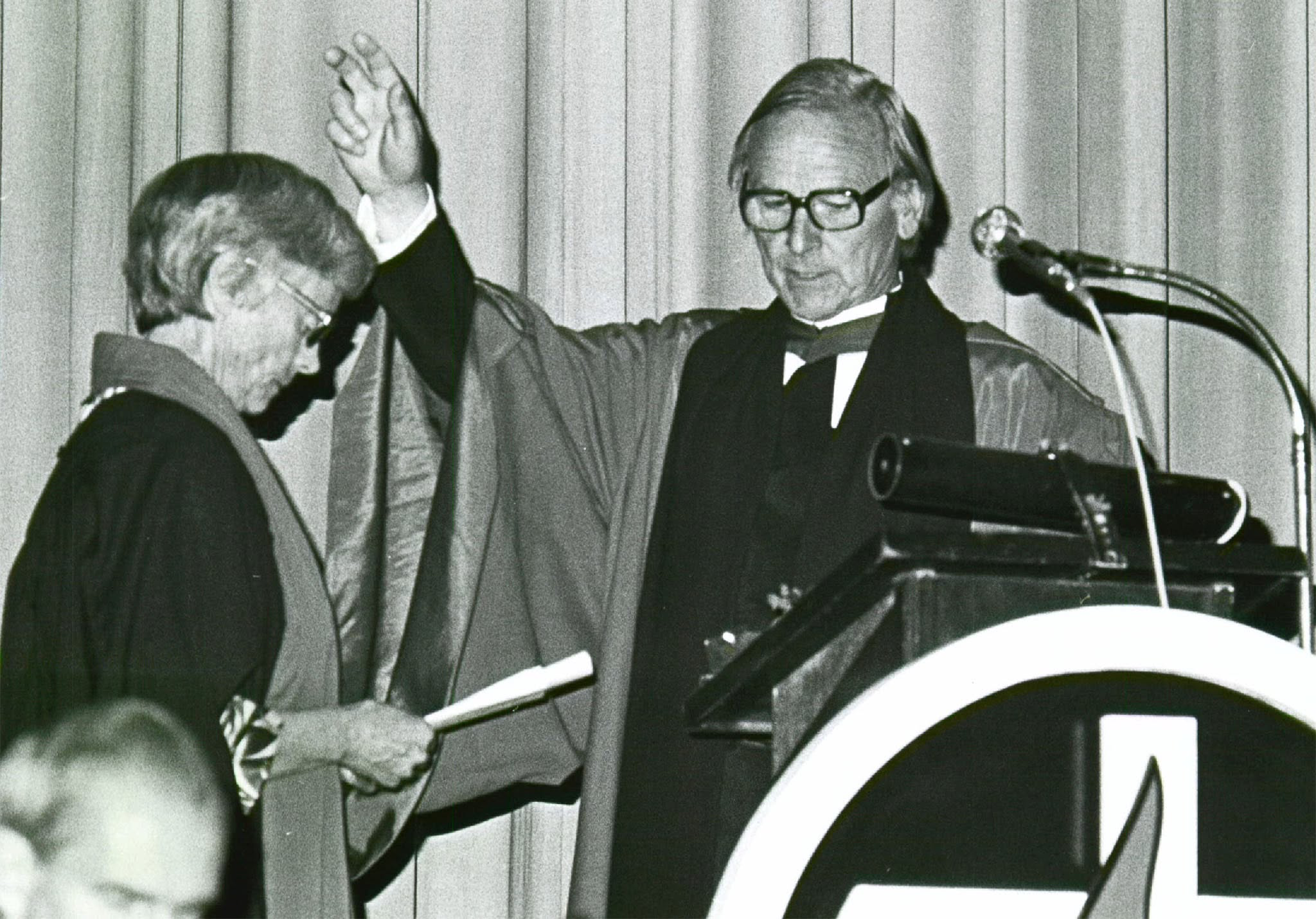
The Uniting Church in Australia was inaugurated on 22 June 1977 as one of the most significant experiments in Christian union in Australian history. It brought together the Congregational Union of Australia, the Methodist Church of Australasia and most of the Presbyterian Church of Australia after decades of prayer, negotiation and theological reflection.
Yet the new church was never intended simply to be an administrative merger or a mega-denomination. Its founding document, the Basis of Union, understood union as an act of Christian obedience. The participating churches sought to “bear witness to that unity which is both Christ’s gift and will for the Church.” They entered union believing themselves called to surrender their separate institutional identities to participate more faithfully in the one holy catholic and apostolic Church.
This origin remains essential for understanding the identity of the Uniting Church. Its name is deliberately unfinished. It is not the “United Church of Australia” but the Uniting Church, a church still travelling toward a unity larger than itself. The Basis of Union accordingly describes the people of God as a pilgrim people, travelling toward the promised reconciliation and renewal of the whole creation.
From without and within, the UCA is often perceived through its peak institutions, social policies and distinctive denominational culture. But it is best understood through a clear theological vision centred on Jesus Christ, shaped by Holy Scripture and the historic faith of the Church, open to progressive reform, committed to holistic mission, and oriented toward the coming kingdom of God.
The long road to union
Church union emerged from several converging developments. Congregationalists, Methodists and Presbyterians shared much of the Protestant inheritance and increasingly cooperated in theological education, overseas mission and social service. By the twentieth century many Christians were asking whether ecclesial divisions originating in European history should continue indefinitely in a relatively young Australian society. Maintaining parallel churches, colleges, mission agencies and administrative structures also appeared increasingly difficult to justify.
Moreover, the modern ecumenical movement was recovering the conviction that Christian unity belonged to the nature of the Church itself. The formation of the World Council of Churches in 1948, alongside other international experiments in church union, gave theological and institutional momentum to Australian conversations. Unity was increasingly understood not as an optional strategy for organisational efficiency but as part of Christian witness.
Formal negotiations developed over decades. A Joint Commission on Church Union, comprising representatives from the three churches, produced The Faith of the Church in 1959 and a second report on the nature, function and ordering of the Church in 1964. After extensive consultation and revision, the Basis of Union was completed in 1971. It was subsequently approved by the Congregational Union in 1973, the Methodist General Conference in 1974 and the Presbyterian General Assembly in 1974, clearing the way for inauguration in 1977.
One of the most important architects of the theological vision was J. Davis McCaughey, Presbyterian theologian and later the first President of the Uniting Church Assembly. McCaughey resisted the idea that union should merely preserve three traditions under one roof. The deeper task was to recover the fundamental sources of Christian faith and allow them to reform the churches entering union. His influence is evident in the strongly Christological character of the Basis of Union: Christ constitutes, rules and renews the Church, while the Church remains provisional and always subject to his judgment and grace.
Other figures contributed substantially to union, including Methodist theologian Harold Wood and the many members of the Joint Commission who undertook the patient theological and institutional work required to create the new church. Union was consequently not the achievement of a single visionary leader but the result of sustained ecumenical labour across generations.
The theological DNA of the new Church
The Basis of Union is more than a preface to the Constitution. It sets out a theological grammar for the UCA. The Church receives the biblical witnesses as the unique prophetic and apostolic testimony through which it hears the Word of God. It receives the Apostles’ and Nicene Creeds as authoritative summaries of the apostolic faith and acknowledges the Reformation witnesses while refusing to be confined by any single Reformation tradition. It recognises the contribution of contemporary scholarship and insists that the Church must remain open to constant reform under the Word of God.
This theological grammar is both deliberate and distinctive. The UCA is simultaneously catholic, Reformed, Methodist, evangelical and ecumenical in inheritance without being reducible to any one of those descriptions. Its four councils—congregation, presbytery, synod and Assembly—also reflect a deliberate mixing of Congregational, Presbyterian and connexional instincts. Authority is dispersed rather than concentrated in a single episcopal hierarchy or national governing body.
The Basis also places the mission of the Church within a much larger divine horizon. The Holy Spirit is given as a “pledge and foretaste” of the reconciliation and renewal God intends for the whole creation. Christian mission therefore includes proclamation, worship, discipleship and evangelism, but also reconciliation, service and participation in the healing of social life. From the beginning, this broad understanding helped make the UCA unusually active in Australian public life. Its 1977 Statement to the Nation signalled concern for justice, human dignity and the wellbeing of Australian society. Subsequent Assemblies have spoken on poverty, refugees, peace, Aboriginal justice, environmental responsibility, human rights and many other public questions.
From inherited Protestantism to a changing Australia
The UCA entered history at an awkward moment. It represented the culmination of a powerful twentieth-century ecumenical movement, but it was inaugurated just as the social position of Australian Christianity was beginning to change rapidly in the face of rising secularism.
In 1977, Protestant churches retained substantial cultural authority, large congregational networks and strong connections with schools, hospitals, welfare agencies and civic institutions. During the following decades Australia became more religiously diverse and significantly more secular. Church attendance declined, denominational loyalty weakened, congregations aged, and Christian institutions no longer enjoyed the same presumptive authority.
The UCA experienced these changes acutely. This decline should neither be concealed nor interpreted too simplistically. Much of the change reflects broad social changes affecting older Protestant denominations across Western societies. Yet the UCA must also confront internal questions about evangelism, the spiritual formation of younger Christians, the place of church planting, approaches to ministerial recruitment, and whether institutional structures inherited from a much larger church remain sustainable in a rapidly changing environment.
The challenge is theological as well as numerical. Institutional survival and Christian mission are not identical, but persistent institutional contraction can reduce the capacity for mission. A pilgrim church is not called to preserve every inherited structure, but neither can it evade serious consideration of whether it is forming new disciples and transmitting Christian faith between generations.
From multicultural to intercultural Church
One of the most important developments since union has been the transformation of the UCA from a predominantly Anglo-Celtic Protestant body into a far more culturally diverse church. The Basis of Union already declared that Christian unity transcends cultural, economic, national and racial boundaries and encouraged strong relationships with churches in Asia and the Pacific. In 1985 the Assembly formally declared the UCA to be a multicultural church.
The significance of this shift goes beyond demographic diversity. Tongan, Fijian, Samoan, Korean, Chinese, Indonesian and many other communities have brought different theological traditions, patterns of authority, approaches to worship and understandings of communal life. The UCA increasingly speaks not merely about multicultural coexistence but about becoming an intercultural church, in which different communities mutually transform one another rather than existing alongside one another.
This process has also exposed important theological differences. Some culturally diverse congregations are strongly evangelical, charismatic or socially conservative and do not necessarily share assumptions common within older Anglo progressive circles. Consequently, debates over Scripture, sexuality, church authority and mission cannot adequately be understood simply as conflicts between conservative remnants and a progressive mainstream within the Church. Increasing cultural diversity is reshaping where theological energy and numerical strength reside within the Church.
First and Second Peoples
An even deeper transformation has occurred in the relationship between First and Second Peoples. The antecedent churches participated in extensive Aboriginal missions, sometimes providing education, pastoral care and advocacy but also operating within paternalistic colonial assumptions and systems associated with dispossession and cultural disruption.
Aboriginal and Torres Strait Islander Christians increasingly sought greater authority over their own ministry. The formation of the Uniting Aboriginal and Islander Christian Congress in 1985 represented a decisive development. In 1994 the UCA entered into a formal Covenant with Congress. Assembly President Jill Tabart read the Covenanting Statement to UAICC Chairperson Bill Hollingsworth, acknowledging past wrongs and committing the Church to a new relationship grounded in truth and justice.
The revised Preamble to the UCA Constitution, adopted by the 12th Assembly in 2009 and subsequently endorsed through the Church’s councils, went further. It acknowledged that First Peoples had encountered the Creator before the arrival of European Christianity and recognised the violence and dispossession accompanying colonisation. This changed the theological character of reconciliation within the UCA. First Peoples were not simply to be recipients of the Church’s social justice concern. Covenanting required Second Peoples to reconsider the Church’s own history, structures and exercise of power. Reconciliation consequently became an ecclesiological issue: what would it mean for First and Second Peoples genuinely to walk together as one Church?
Women, ministry and changing leadership
The UCA also inherited a significant tradition of women’s ministry. Women had already been ordained within the antecedent churches before 1977, with pioneering figures such as Winifred Kiek, ordained in the Congregational tradition in 1927, demonstrating that women could exercise ordained leadership decades before union.
The Basis of Union deliberately affirmed that the Holy Spirit calls both women and men to preach, lead worship, exercise oversight and serve the world. Since 1977 women have served throughout the Church as Ministers of the Word, Deacons, chaplains, theological educators, moderators, synod secretaries, Assembly general secretaries and presidents.
At the same time, the nature of ministry has changed. The UCA restored the permanent diaconate and developed an increasingly diverse range of lay and ordained ministries. Pastors, lay preachers, chaplains and other ministry agents now exercise substantial responsibility, particularly as traditional placement patterns become more difficult to sustain. In many rural and smaller congregations, questions about the future of ministry are inseparable from questions about the future shape of the Church itself.
Evangelical, charismatic and progressive tensions
Theological diversity has been present in the Uniting Church from the beginning. The new denomination inherited Reformed, Wesleyan, evangelical, liberal and liturgical traditions, and charismatic renewal later added another significant stream. It would be misleading to recount UCA history as a simple progression toward theological liberalism. Evangelical congregations and ministers have remained an important part of the Church, frequently emphasising biblical authority, conversion, discipleship, evangelism and classical Christian doctrine. Renewal and charismatic movements have also exercised significant influence in particular congregations and regions.
These differences became especially visible through debates concerning sexuality. Controversies over the place of gay and lesbian Christians in ministry intensified during the 1980s and 1990s. Evangelical organisations such as Evangelical Members within the Uniting Church and later the Assembly of Confessing Congregations emerged partly from concerns about the apparent erosion of biblical authority and Assembly decisions in this area. The latter operated between 2006 and 2023.
The 2018 Assembly decision concerning marriage further exposed these divisions. Rather than replacing the Church’s existing understanding of marriage, the Assembly permitted two understandings to coexist, one describing marriage as between a man and a woman and another allowing marriage between two people regardless of gender. The decision attempted to maintain unity amid substantial theological disagreement, but disagreement has continued.
These debates reveal one of the central challenges of UCA ecclesiology. Its founding documents permit diversity of opinion in matters that do not enter into the substance of the faith. The difficulty lies in determining precisely where that boundary lies. For some, theological openness represents faithful reform under the Word of God. For others, certain developments represent departure from the biblical and confessional foundations that make Christian unity possible.
Congregations and the growth of institutions
Another striking development has been the increasingly uneven relationship between congregational decline and institutional growth. The UCA’s local congregations have closed, amalgamated or adapted in many places. Cooperative congregations, lay-led communities, new worshipping communities and experimental mission projects have developed alongside more traditional parishes.
At the same time, the Church’s social-service institutions have become enormous. The UnitingCare network is now one of Australia’s largest community-services networks, with tens of thousands of staff and volunteers operating across a wide range of health, aged-care, disability, community and welfare services. This is a remarkable expression of Christian service and continues the strong Methodist, Congregational and Presbyterian traditions of education, health care and social welfare. It also creates a profound identity question. What makes a large professionally governed hospital, aged-care provider or welfare organisation recognisably part of the mission of the Church? How are theological identity, Christian formation and ecclesial accountability sustained when an agency may employ vastly more people than participate in nearby congregations?
The contemporary UCA may therefore experience the paradox of expanding its social footprint while contracting its congregational footprint. Maintaining the relationship between identity and mission has consequently become one of its most important strategic challenges.
Public theology and the danger of losing Christian grammar
The UCA has frequently been recognised for courageous public advocacy. Its commitment to First Peoples, refugees, economic justice, peace, climate action and the dignity of marginalised people has flowed naturally from its understanding of God’s reconciling mission.
Yet public theology poses its own challenge. Churches may become so fluent in the language of public policy and human rights that the theological grammar underlying their commitments becomes difficult to hear. Christian advocacy is not weakened by engagement with widely shared moral principles, but it becomes ecclesially thin if the gospel, Scripture, worship and the person of Jesus Christ disappear from view.
The UCA’s history and theology strongly support engagement on controversial public issues. The harder question is whether its public witness is visibly generated by Christian worship, discipleship and theological conviction rather than merely echoing the moral vocabulary of compatible political or cultural movements.
An unfinished ecumenical experiment
Perhaps the greatest historical irony is that the UCA was created by institutional ecumenism at almost precisely the moment when enthusiasm for further large-scale denominational union began to diminish. The expectation that other churches might subsequently join the UCA was never substantially realised. Yet ecumenism did not disappear. The UCA has remained deeply involved in the National Council of Churches in Australia, state ecumenical bodies, theological dialogues, shared congregations and local cooperation. Its relationships with churches in Asia and the Pacific also reflect an ecumenical identity larger than Australian denominationalism.
What changed was the meaning of ecumenism. Unity increasingly came to mean cooperation without necessarily expecting organisational merger, and receptive ecumenism became the norm and goal of the ecumenical movement both globally and in Australia. In response to these ongoing changes and recalibrations, the UCA remains a permanent reminder that denominational boundaries are not ultimate, even if another great wave of Australian church union appears unlikely.
From inherited unity to negotiated diversity
Almost fifty years after inauguration, the deepest shift in UCA identity may be described as a movement from achieved denominational union to negotiated internal diversity. In 1977 the central question was whether three churches could relinquish separate institutional identities sufficiently to become one. Approaching the fiftieth anniversary of union in 2027, the question is different. Can one church sustain communion among communities increasingly differentiated by theology, culture, ethnicity, generation, geography and approaches to Scripture?
Later leaders and theologians, including Andrew Dutney, have repeatedly returned to the Basis of Union precisely because it offers resources for this challenge. The UCA’s future identity is unlikely to be secured simply by choosing between conservative and progressive versions of itself. Nor will it be secured by preserving structures designed for the church of 1977. Its more demanding vocation is to rediscover the theological foundations that made union possible: Jesus Christ as the Church’s living head, Scripture as prophetic and apostolic testimony, the catholic faith received through the creeds, openness to scholarly interpretation, dependence upon the Holy Spirit and expectation of the reconciliation and renewal of the whole creation.
The continuing importance of the legacy of J. Davis McCaughey, Jill Tabart, Bill Hollingsworth, Winifred Kiek and many other formative leaders lies partly in their capacity to embody different dimensions of this vocation: theological depth, ecumenical courage, gender equality, justice between First and Second Peoples and willingness to allow Christian faith to reshape institutional life.
The identity of the Uniting Church is neither exhausted by its progressive public reputation nor adequately described as the continuation of three Protestant traditions in a new form. At its best it is something more demanding: a pilgrim people centred on Christ, nourished by Scripture and sacrament, open to the Spirit, committed to reconciliation, courageous in public witness, diverse in culture and theology, and always seeking a unity larger than itself. That identity remains unfinished. Indeed, unfinishedness is part of its character.
The challenge confronting the UCA today is remarkably close to the challenge that confronted its founders: whether Christians with genuinely different histories and convictions can recognise that their unity in Christ is greater than the forces pulling them apart.
In 1977, the leading question was a pragmatic one: “Can three churches become one?” Fifty years later, the more searching question is, “What kind of unity can hold a genuinely diverse Church together while allowing it to remain recognisably Christian and faithfully engaged in God’s mission?” The answer we bring to this question will determine not merely whether the Uniting Church survives and flourishes as an ecclesial experiment and an Australian institution, but whether it continues to embody its distinctive and unfinished name.
There is reason to be both hopeful and joyful as we journey together with God through exciting and uncharted waters.
Rev Dr Rod Benson lives in Sydney and writes about a range of topics from books and local history to food, faith, philosophy, ethics, research skills, and everyday life. Away from the keyboard, he enjoys cooking for friends, walking in the Australian bush, exploring a beach, discovering new restaurants, and reading philosophy, fiction and poetry. He is married to Emma and is minister of North Rocks Community Church, a Uniting Church congregation.
References
Uniting Church in Australia, Basis of Union: https://uniting.church/basisofunion/
Uniting Church in Australia, The history of the UCA in 5 artefacts: https://uniting.church/the-history-of-the-uca-in-5-artefacts/
Uniting Church in Australia, The Covenanting Statement: https://uniting.church/the-covenanting-statement/
Uniting Church in Australia, Walking Together as First and Second Peoples: https://uniting.church/walking-together-as-first-and-second-peoples-welcome-pack/
Uniting Church in Australia, Foundations: https://uniting.church/foundations/
UnitingCare Australia, Our Network: https://unitingcare.org.au/about/our-network/
Image source: Uniting Church archives

