
My Uncle Bill McCrindle, who lived for many years at Beecroft, was a great storyteller. As a small child, I lived in Wollongong, then moved overseas, and returned to attend boarding school in Queensland. I don’t know when it was, but at some point in my disrupted but fabulous childhood, more than once, I heard Uncle Bill, in his customary dramatic style, tell the story of the ancient “cities of refuge.”
I’ve never forgotten the vivid conjured images of blood and gore, the cold hard hand of justice required by an ordered society, the mercy promised, and the huge relief when the rules are followed and mercy is received.
Where do justice and mercy meet? They meet at the city of refuge.
The right to due process
It’s a remarkable legal institution of ancient Israel: the establishment of six cities of refuge distributed across the region. At first glance, it’s simply an obscure aspect of ancient criminal law. Yet beneath the legal details lies a profound vision of justice shaped by mercy, restraint, and the protection of human life.
In an age often challenged by vengeance, fear and political expediency, Joshua’s cities of refuge offer important insights into criminal justice, the treatment of vulnerable strangers, and the mercy of God.
The purpose of the cities of refuge was to provide sanctuary for those who had unintentionally caused another person’s death. In the ancient Near East, where family honour and blood vengeance were powerful social realities, the nearest relative of the deceased, the “avenger of blood” (v. 5), was expected to pursue the killer.
Such customs helped deter violence in a society without modern policing, but they also risked perpetuating cycles of retaliation. Joshua 20 introduces an important qualification. Before vengeance could be carried out, the accused was entitled to flee to a designated city where the circumstances of the death could be examined with patience and impartiality. The right to due process preceded the right to punishment.
It’s a sophisticated moral vision. Scripture neither abolishes the seriousness of homicide nor endorses bloodthirsty revenge. It insists that justice is careful, impartial, and proportionate. Intent, circumstances and evidence all matter in the pursuit of justice. Even a person accused of causing death remains a bearer of the image of God (Gen 1:26f), and deserves a fair hearing before the community.
So it seems that, long before the emergence of modern legal systems, the law of Israel recognised that justice requires procedures that protect both victims and the accused.
Modern liberal democracies such as our own here in Australia continue to wrestle with these principles. A healthy criminal justice system seeks to balance accountability with fairness, punishment with rehabilitation, and public safety with the protection of rights. Independent courts, the presumption of innocence, legal representation, and the careful weighing of evidence all reflect principles that resonate with ancient Israel’s concern that judgment should never be reduced to vengeance.
Whenever a society bypasses due process through mob justice, political persecution, or arbitrary detention, they move away from the biblical ideal of justice governed by wisdom rather than passion.
Joshua 20 also reminds us that law should be accessible. The cities of refuge were strategically distributed throughout the land so that no Israelite was outside a circle of safety. We now accept that justice should not be available only to the wealthy, the powerful, or the privileged. We affirm that institutions of justice should be genuinely accessible to those who need them most.
Where do justice and mercy meet? They meet at the city of refuge.
Justice for resident aliens
But there’s more. Verse 9 states that these provisions applied not only to ethnic Israelites but also to “the resident alien among them.” Foreigners living within Israel enjoyed the same legal protections as native-born citizens in cases involving accidental homicide. This inclusion reflects one of the recurring themes of the Hebrew Bible:
God’s concern was that the stranger, the widow, and the orphan should not be left without legal protection. It was a way of demonstrating that we are all made in the image and likeness of God.
This principle does not translate directly into modern immigration policy. Ancient Israel was not a liberal democracy, nor were its resident aliens identical to today’s refugees or asylum seekers. Yet the moral instinct behind the principle is instructive. Governments do have legitimate responsibilities to maintain secure borders, uphold the rule of law, and distinguish between genuine refugees, economic migrants, and those who present security risks.
We do need procedures that distinguish genuine need from abuse while preserving the dignity of every person. But such responsibilities do not diminish the obligation to ensure that people fleeing persecution receive a fair hearing, humane treatment, and protection while their claims are assessed. A compassionate asylum policy therefore need not conflict with prudent border protection in the national interest.
Today, politicians like to tell us that we have a choice between either secure borders or compassionate welcome. Joshua 20 suggests that another way is possible: the development of laws and regulations protecting the community and the vulnerable by ensuring careful judgment rather than impulsive exclusion.
Now all of that comes at a considerable cost to the public purse, and there is an argument that goes like this:
By taking money from people to provide for their wants, we deny them the right to provide for themselves and their families and to make the moral choice of assisting others … The call to do good that lies at the heart of Christianity demands an individual response. You can’t do good by proxy.[1]
But if you think carefully about it, the argument falls apart. It creates a false choice between personal charity and public responsibility. Christian ethics affirms both. Justice is about our shared responsibility to protect the vulnerable through public institutions, while charity calls individuals to love and serve others freely.
Democratic taxation is one way in which citizens may act together in community for the common good, not merely “doing good by proxy.” Public provision cannot replace compassion, generosity, or neighbourly care, but neither can voluntary charity alone meet the systemic needs of the modern world.
The pressing needs of our world today therefore require generosity by individuals to those in need and a shared commitment to justice for all by the state.
We are following Jesus faithfully, and honouring the enduring ethical teaching of Scripture, when we provide transparent refugee determination processes, avoid unnecessary or indefinite detention, treat asylum seekers with dignity, and cooperate internationally to address the causes of displacement as well as its consequences.
Where do justice and mercy meet? They meet at our national borders, our immigration detention centres, and ultimately the homes and workplaces of generous and hospitable citizens.
Whispers of salvation in Christ
Beyond the legal and political implications, the story of the cities of refuge is also understood by Christians as foreshadowing what Jesus does for us through his death and resurrection. It was this evangelistic aspect that my Uncle Bill emphasised in the talks I remember from my childhood.
Just as someone who unintentionally kills another person flees urgently to the safety of a city of refuge, so sinners flee to God’s mercy. This echoes the image in the Letter to the Hebrews of those who “have fled for refuge” to God having “strong encouragement to seize the hope set before us” (Heb 6:18).
The one in need of salvation appeals to God for mercy, and God hears and responds, granting salvation through Jesus, delivering “hope as an anchor for the soul, firm and secure” (Heb 6:19a). That’s good news!
The comparison is less than perfect, since all of us stand guilty before God, and at least some of our sins are not accidental and unintentional. Yet salvation begins as we seek mercy rather than self-justification.
Joshua 20 reminds us that justice requires mercy, and mercy requires justice. It encourages compassionate laws and conventions. And it indirectly points to Jesus, our eternal refuge whose death and resurrection provide forgiveness, reconciliation, and a secure and eternal hope.
Where do justice and mercy meet? They meet at the cross, and in the prayer of a penitent sinner, and at the deathbed of an aged saint as they pass from this world to glory.
Thanks be to God.
Sermon 864 copyright © 2026 Rod Benson. Preached at North Rocks Community Church, Sydney, Australia, on Sunday 26 July 2026. Unless otherwise noted, Scripture quotations are from The Christian Standard Bible (Nashville: Holman Bible Publishers, 2020).
Rev Dr Rod Benson is General Secretary of the NSW Ecumenical Council and a minister of the Uniting Church in Australia serving at North Rocks Community Church in Sydney.
Reference
[1] Michael Portillo, “Ethics and public finance,” quoted in Richard Harries, Questioning Belief (London: SPCK, 1995), 161.
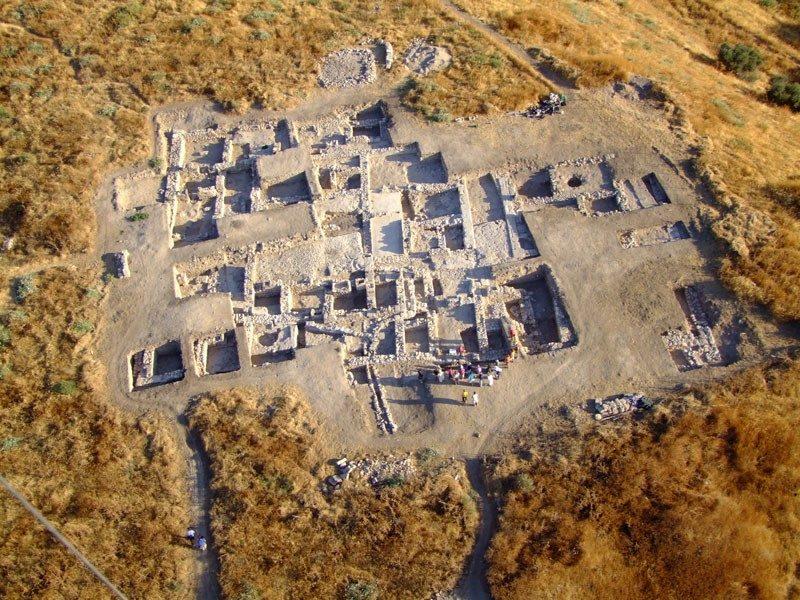
Image source: Kelsey Museum of Archaeology
Taking it further…
Reflection questions
- What was the original purpose of the cities of refuge in Joshua 20? Why is due process an essential expression of biblical justice, and how does this relate to contemporary legal systems?
- How does the sermon distinguish between personal charity and public responsibility in caring for refugees, asylum seekers, and other vulnerable people?
- In what ways does Rod argue that the cities of refuge foreshadow the saving work of Jesus Christ, and where do justice and mercy finally meet according to the Christian gospel?
Application questions
- Where do you see pressures in contemporary society to replace careful justice with anger, vengeance, or public outrage? How might Christians respond differently?
- How does remembering that every person bears the image of God shape the way you think about people who are accused of crimes, imprisoned, or seeking asylum?
- The sermon repeatedly asks, “Where do justice and mercy meet?” In your own family, workplace, church, or community, where is God calling you to embody both justice and mercy this week?

