
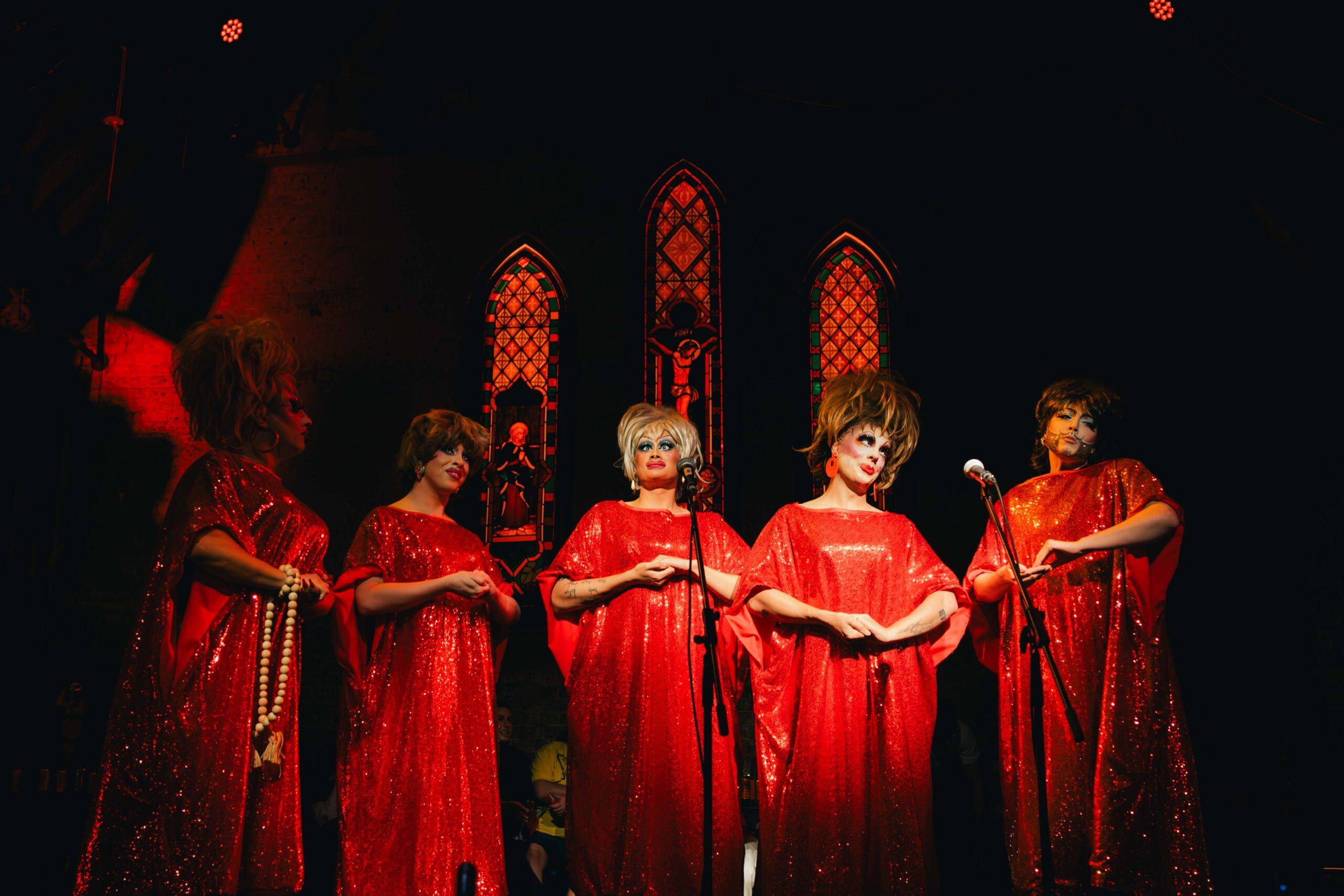
Recent controversy surrounding Sydney’s Divine Playhouse has reopened an enduring and vexed question within liberal democracies: Should artistic freedom extend to the deliberate parody of religious symbols held sacred by millions of believers?
Responding to performances and promotional material that appropriated Catholic imagery—including references to the Eucharist and the sacrament of confession—Archbishop Anthony Fisher argued that Catholics have every right to object publicly. His statement deserves careful consideration because it neither rejects artistic freedom nor demands legal censorship. Instead, it explores how artistic liberty, religious freedom, and civic respect ought to coexist within a pluralist society.
The strongest argument supporting Archbishop Fisher begins with an important distinction between criticism and ridicule. Christianity has never been exempt from reasoned scrutiny. The biblical prophets criticised Israel’s religion, Jesus challenged religious hypocrisy, and the history of the Church is punctuated by movements of reform that exposed corruption and abuse. Intellectual disagreement, satire directed at institutional power, and robust theological criticism all have an honoured place within democratic life.
The Archbishop’s approach raises a different concern. He argues that the deliberate appropriation, sexualisation and mockery of specifically sacred symbols is not criticism but a form of cultural denigration. For Catholics, the Eucharist is not merely a familiar image from Western culture; it is the sacramental centre of Christian worship. To parody it for entertainment inevitably touches convictions that believers regard as holy.
This raises a broader ethical principle. Freedom of expression establishes what people may legally do but does not settle what they ought morally to do. Liberal societies routinely distinguish between legal rights and civic virtues. Citizens remain free to speak offensively, but they may also be criticised for exercising that freedom without wisdom, charity or respect.
Archbishop Fisher insists that freedom of speech includes not only the artist’s freedom to perform but the citizen’s freedom to protest peacefully when artistic expression crosses ethical boundaries. And he articulates this democratic freedom, in this instance, as a moral responsibility on the part of concerned citizens to take concerted action to address the problem.
His argument also appeals to consistency. Most contemporary societies recognise that deliberately mocking the sacred practices of minority religions, Indigenous spirituality or Holocaust remembrance would rightly provoke public concern. If mutual respect is a hallmark of pluralism, Christians may reasonably ask why Christian symbols should receive less consideration simply because Christianity has historically occupied a majority position. Equality before the law should not become inequality in cultural respect.
The question of public funding adds another dimension. The controversy is not simply about whether artists may produce provocative work. It concerns whether taxpayers should subsidise artistic projects that many citizens reasonably regard as gratuitously offensive toward their deepest convictions. Governments regularly make judgements about which artistic projects warrant public investment. Citizens therefore have every right to question whether funding decisions adequately reflect principles of inclusion and respect.
Yet important counterarguments also deserve serious attention.
The strongest defence of unrestricted artistic freedom is that offence alone cannot become the standard by which art is judged. Throughout history, artists have challenged religious, political and cultural orthodoxies, often provoking outrage before later being recognised as insightful or transformative. If governments or religious communities acquire the power to suppress works because they offend sincerely held beliefs, freedom of expression may gradually be weakened.
A related concern is that religious ideas, like political ideologies, inevitably become subjects of public debate. While individuals deserve protection from discrimination or harassment, beliefs themselves remain open to criticism, parody and reinterpretation. Many defenders of artistic freedom therefore argue that sacred symbols inevitably become part of a society’s shared cultural vocabulary rather than remaining the exclusive property of particular religious communities.
Others question where any generally accepted ethical boundary could realistically be drawn. What one community regards as thoughtful satire another experiences as blasphemy. Artistic works frequently explore sexuality, power, hypocrisy and institutional authority through deliberately provocative symbolism. Attempts to distinguish legitimate criticism from unacceptable mockery may prove highly subjective, potentially creating uncertainty that encourages self-censorship.
There is also a specifically Christian caution. The New Testament nowhere suggests that the Church should expect legal protection from ridicule. Jesus himself endured mockery, humiliation and public contempt. The apostles proclaimed the gospel in societies that frequently misunderstood or caricatured Christian belief, yet they responded through faithful witness rather than legal prohibition. Christians therefore have good reason to resist any temptation to seek special immunity from criticism or offence.
At the same time, this observation does not invalidate Archbishop Fisher’s central point. Christians may decline to demand censorship while still arguing that certain forms of artistic expression are ethically irresponsible. Liberal democracy depends not only upon rights but also upon habits of mutual restraint. Citizens routinely exercise freedoms they possess while choosing not to cause unnecessary offence to neighbours whose convictions they recognise as deeply meaningful.
Ultimately, the controversy reveals that artistic freedom and religious freedom are not opposing principles but complementary goods requiring careful balance. Genuine pluralism protects both the artist’s freedom to create and the believer’s freedom to protest peacefully. Neither freedom should automatically silence the other.
The more fundamental question concerns the kind of public culture Australians wish to cultivate. A healthy democracy encourages fearless artistic exploration, robust criticism of institutions and open debate about religious ideas. At the same time, it benefits from an ethic of civic respect that recognises the profound significance sacred symbols hold for many communities. Deliberately mocking what others hold holy may be legally permissible, but it is not necessarily culturally constructive.
Freedom almost always carries reciprocal responsibilities. Artists should be free to challenge the assumptions of their society, including religious assumptions. Religious believers should remain free to voice principled objections without being dismissed as enemies of artistic liberty. Governments should fund artistic excellence without appearing indifferent to the dignity of the diverse communities they serve.
A mature pluralist society requires all three freedoms to coexist—not through censorship or intimidation, but through the difficult virtues of mutual respect, intellectual honesty and generous public dialogue. A mature Christian community ought to be able to take this challenge on board and arrive at a workable solution to the ethical dilemma.
Rev Dr Rod Benson is General Secretary of the NSW Ecumenical Council and a minister of the Uniting Church in Australia serving at North Rocks Community Church in Sydney. His city office is on Kent Street in the Sydney CBD, a couple of blocks north of the Divine Playhouse. Thus far, he has not been inclined to attend the venue nor protest at its doors.
Image source: The Wire

