
Tradition, diversity and growth
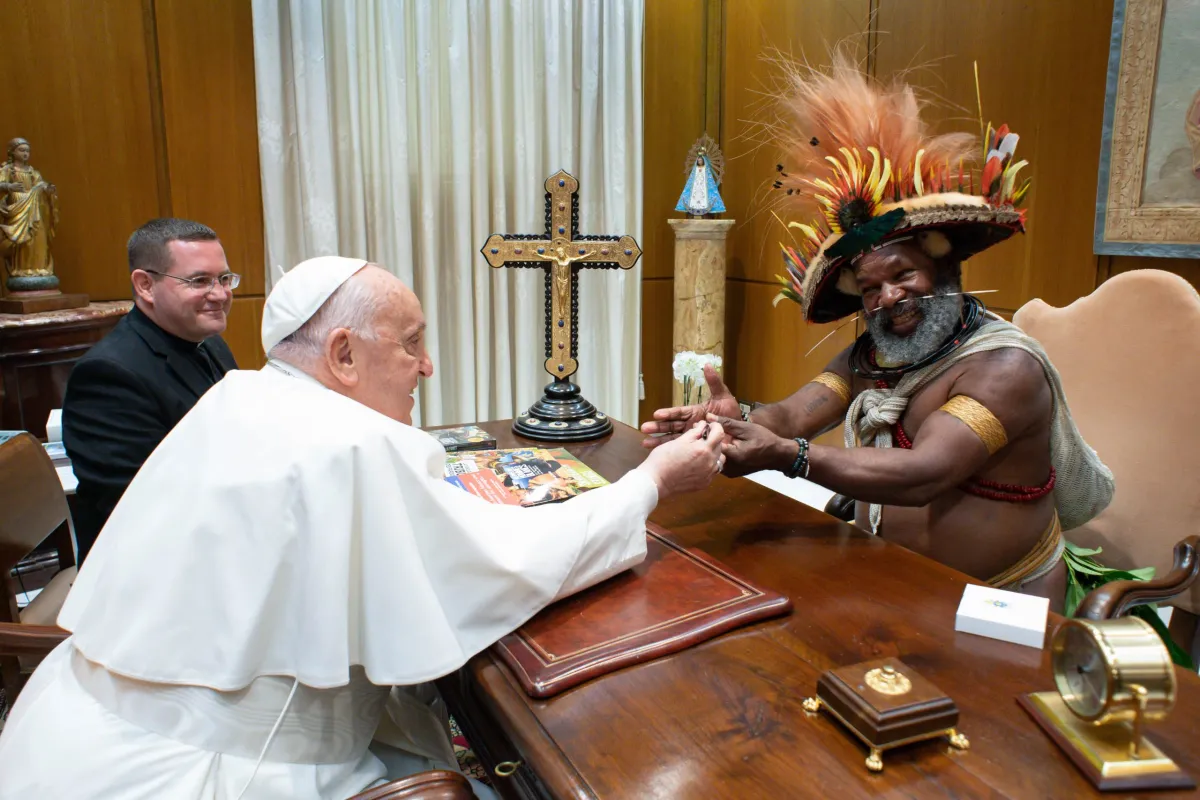
The history of Christian liturgy and worship in Papua New Guinea is a remarkable development in modern world Christianity. Within little more than a century, Christianity has become the nominated faith of an overwhelming majority of Papua New Guineans, flourishing within one of the world’s most linguistically and culturally diverse societies. The presence of more than 800 living languages, hundreds of distinct cultural traditions, and numerous Christian denominations have created extraordinary opportunities and formidable challenges not only for Christian mission but for Christian worship.
An enduring challenge is how the Christian faith might become authentically at home within Papua New Guinean cultures while remaining recognisably part of the one, holy, catholic and apostolic Church. The history of worship in Papua New Guinea is not merely a story of missionary expansion but of theological inculturation: the continuing process by which the gospel of Jesus Christ takes root within new cultures without losing its essential identity.
Before European colonisation, Papua New Guinea comprised hundreds of distinct societies, each with its own language, customs, beliefs, and social structures. During the late nineteenth century the island was divided between British Papua in the south and German New Guinea in the north, with Australia administering both territories following World War I. Into this complex setting came Catholic, Lutheran, Methodist, Anglican, and other Protestant missionaries who established the first small but enduring Christian communities despite immense challenges of distance, disease, mountainous terrain, and linguistic diversity.
Although foreign missionaries introduced Christianity to the main island and hundreds of smaller islands that today comprise PNG, its remarkable growth depended increasingly upon local Christians. Increasingly, indigenous evangelists, catechists, pastors, teachers, translators, and lay leaders have carried the gospel from village to village, translated Scripture into local languages, established congregations, and nurtured communities of faith. Christianity gradually became rooted within local societies, even as churches continued to negotiate the opportunities and ambiguities of their colonial context.
This indigenous leadership shaped the Church’s worship as profoundly as it shaped evangelism and social service in the name of Jesus. Across hundreds of language communities, Christians learned to pray, sing, hear Scripture, celebrate the sacraments, and confess their faith in their own languages. Local church communities became centres not only of worship but also of education, health care, reconciliation, and community life. The vitality of Christian worship in Papua New Guinea today rests largely upon generations of local pastors, theologians, musicians, translators, and lay leaders who have made the faith their own.
Christianity developed through several missionary traditions rather than a single ecclesiastical movement. The London Missionary Society established work in Papua from 1872, assisted significantly by Polynesian and other Pacific Island teachers whose contribution has often been underestimated. Methodist, Anglican, Roman Catholic, and other missions soon followed, while the Neuendettelsau Lutheran Mission commenced work near Finschhafen in 1886. During the twentieth century Baptist, Seventh-day Adventist, evangelical, and Pentecostal churches further enriched the country’s ecclesiastical landscape.
Catholic and Lutheran contributions
Initially, these traditions developed largely within distinct geographical regions. Missionary strategy, colonial administration, and informal denominational understandings all contributed to this pattern. Generally, Roman Catholics cultivated sacramental worship shaped by the liturgical year. Lutherans centred worship upon Word and Sacrament. Methodists, Presbyterians, and Congregationalists emphasised preaching, hymn singing, and disciplined Christian fellowship, while evangelical missions stressed biblical exposition, personal conversion, and active congregational participation. Despite these differences, all these traditions gathered in their own ways around Scripture, prayer, baptism, the Lord’s Supper, and the conviction that worship both proclaims and embodies the gospel.
Among these traditions, the Evangelical Lutheran Church of Papua New Guinea has exercised a particularly enduring influence upon worship, theological education, and Christian literature. Johann Flierl and the Neuendettelsau missionaries recognised that Christian faith could not flourish unless people encountered Scripture and worship in languages they understood. Rather than attempting to produce resources immediately in every vernacular language, they developed regional languages such as Jabêm and Kâte, which became important vehicles for preaching, education, and worship across neighbouring language groups. These languages fostered a shared Christian identity that transcended traditional tribal boundaries while preparing the way for the wider use of Tok Pisin in later decades.
The Lutheran contribution extended well beyond translation of Scripture. Worship, theological education, catechesis, hymnody, and biblical literacy formed an integrated pattern of Christian discipleship centred upon the regular proclamation of Scripture and celebration of the sacraments. Institutions such as the Martin Luther Seminary in Lae trained generations of pastors whose influence reached well beyond Lutheran congregations through theological education, ecumenical dialogue, and public leadership. As urbanisation and national mobility increased, the Church likewise recognised the growing importance of Tok Pisin as a language of national worship while continuing to value vernacular languages as essential expressions of local Christian identity.
The Roman Catholic Church has likewise exercised a profound influence upon the liturgical life of Papua New Guinea. As one of the nation’s largest Christian traditions, Catholicism has combined continuity with the universal liturgical heritage of the Church with a growing commitment to local languages, music, and artistic expression. Following the Second Vatican Council, the celebration of the Eucharist in Tok Pisin, Hiri Motu, and numerous vernacular languages became a powerful expression of active congregational participation.
The visits of Pope John Paul II to PNG in 1984 and 1995 were special high points, forging and strengthening a visible link with the long history of Catholic tradition in other parts of the world. At the same time, local artistic forms, music, processions, and visual symbolism were increasingly incorporated into worship, while remaining subject to careful theological discernment concerning the relationship between local custom and the authorised forms of the Roman Rite.
The Catholic Church has also invested heavily in the formation of catechists, liturgical leaders, musicians, and clergy. Seminaries, diocesan liturgical commissions, and educational institutions have encouraged sustained reflection upon worship, ensuring that liturgical renewal has been accompanied by theological formation. Through these ministries, Catholicism has contributed significantly to wider ecumenical conversations concerning worship and contextual theology throughout Papua New Guinea.
Contributions by other Churches
The United Church in Papua New Guinea has made a distinctive contribution to the nation’s worship. Formed in 1968 through the union of Methodist, London Missionary Society, and Presbyterian traditions in Papua and the islands region, it inherited a strong emphasis upon biblical preaching, congregational singing, lay participation, and Christian fellowship. Choirs have occupied a central place in congregational life, functioning not simply as musical ensembles but as communities of discipleship, witness, and service.
Synods, youth gatherings, and village fellowships have provided fertile settings for composing and sharing new hymns and worship songs, while schools and theological colleges have equipped successive generations of worship leaders. The United Church demonstrates how evangelical preaching, communal participation, and indigenous musical creativity can enrich one another without requiring elaborate liturgical structures.
Another notable influence has been the Evangelical Brotherhood Church (Evanselikal Brata Sios). Emerging from the ministry of the Swiss Evangelical Brotherhood Mission during the 1950s and formally constituted as an indigenous church in 1974, it reflects the evangelical pietist tradition with its emphasis upon the authority of Scripture, personal conversion, disciplined Christian living, and wholehearted congregational participation.
Within EBC, worship has generally been characterised by expository preaching, earnest prayer, and robust congregational singing rather than ceremonial forms. At the same time, the Church has contributed substantially to Bible translation, literacy, theological education, and especially the formation of indigenous pastors and evangelists. More recently it has embraced selected contemporary musical forms while seeking to preserve the biblical seriousness and Protestant devotional depth that have long marked its spirituality.
Although these various Christian traditions differ in theology, polity, and liturgical practice, they have increasingly encountered one another through urbanisation, national mobility, and ecumenical cooperation. As Papua New Guinea moved towards independence in 1975 and beyond, churches faced new opportunities to worship together in schools, universities, public ceremonies, and national gatherings. The challenge was never to create uniformity, but to cultivate unity while respecting genuine theological differences concerning ministry, sacraments, and ecclesial order.
Linguistic challenges
Throughout this development, language has remained both one of the greatest challenges and one of the greatest strengths of Christian worship. English serves important educational and administrative purposes, while Tok Pisin has become the principal language of communication across much of the country. Hiri Motu continues to play a significant role in parts of the south, alongside the hundreds of vernacular languages that shape village life and cultural identity. Christian worship has therefore become inherently multilingual.
Translation has consequently been far more than a technical exercise. Every rendering of biblical and liturgical language has required careful theological reflection upon how concepts such as grace, holiness, covenant, forgiveness, and reconciliation might be expressed faithfully within different linguistic and cultural worlds.
This work has depended primarily upon Papua New Guinean Christians. Local speakers, pastors, teachers, and translators, working alongside organisations such as the Bible Society, SIL International (the Summer Institute of Linguistics), and Wycliffe Bible Translators, have produced Scripture translations and literacy resources in scores of languages. Their work has enabled congregations to hear God’s Word, pray, and sing in the languages that carry their deepest cultural memories and relationships.
At the same time, Tok Pisin has become an important language of national worship, enabling Christians from many linguistic backgrounds to participate together without abandoning their mother tongues. In this respect, the multilingual character of worship in Papua New Guinea offers a striking contemporary expression of the biblical phenomenon of Pentecost. Diversity of language is not treated as an obstacle to Christian unity but as a gift through which the one gospel is confessed by many peoples.
Underlying this history is a profound theological conviction. Christian worship is never simply the preservation of inherited forms, nor the uncritical adoption of local customs. Rather, it is the continuing work of the Holy Spirit, who enables the Church in every culture to confess the same faith in ways that are both faithful to the apostolic tradition and genuinely at home within local communities. The Incarnation of Christ provides a helpful analogy. Just as the eternal Word became fully human within a particular culture and language, so the gospel continues to take flesh within the languages, music, artistic traditions, and social life of every people without ceasing to be the one gospel of Jesus Christ.
By the closing decades of the twentieth century, Papua New Guinea possessed an extraordinarily rich liturgical landscape. Churches had inherited diverse missionary traditions while cultivating indigenous leadership, vernacular Scripture, local music, and growing ecumenical cooperation. The resulting diversity has not diminished the Church’s catholicity but has given it fresh expression. Across hundreds of languages and many Christian traditions, worship has become both deeply local and unmistakably part of the universal Church.
The story is far from complete. The rapid growth of Pentecostal and charismatic movements, the emergence of contemporary worship music, increasing urbanisation, changing patterns of education and communication, and new ecumenical relationships have continued to reshape Christian worship in the twenty-first century. These developments form the focus of Part 2 in this series.
Rev Dr Rod Benson is General Secretary of the NSW Ecumenical Council and a minister of the Uniting Church in Australia serving at North Rocks Community Church in Sydney. He lived in Lae, PNG, as a child and predominantly attended services of the Swiss Evangelical Brotherhood Church.
Image source: America Magazine

