
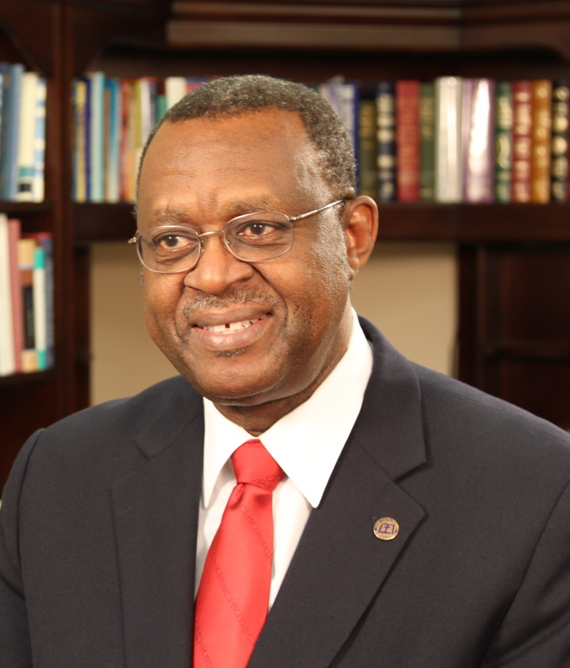
The sudden death of Neville George Callam on 16 August marks the passing of a singular figure who significantly reshaped global Baptist self-understanding and contributed to contemporary ecumenical theology.
As General Secretary of the Baptist World Alliance (BWA) from 2007 to 2017, he guided the principal global Baptist body through institutional transition, helping to reimagine it as a more coherent and genuinely worldwide communion. Inheriting an organisation facing constitutional reform, financial strain and questions of global representation, he strengthened foundations upon which the more integrated and strategically focused BWA of today could be built.
An extraordinary life
Born in St Ann, Jamaica, in 1951, Callam was shaped by a Baptist tradition with strong commitments to evangelism, education, emancipation and social justice. He studied at the United Theological College of the West Indies, the University of the West Indies and Harvard Divinity School, and was ordained in 1977. His pastoral ministry included the Grace/Mineral Heights and Tarrant/Balmagie circuits. Within the Jamaica Baptist Union he served as treasurer, acting general secretary and twice as president, while becoming a significant voice in Jamaican religious and public life.
Those Jamaican roots were decisive for his global ministry. Shaped by a society marked by slavery, emancipation, colonialism and nation-building, Callam consistently connected Christian discipleship with justice, human dignity, racial reconciliation and religious liberty. His theological ethics joined personal faith to public responsibility and combined strong Christian conviction with humility and respect for others.
Callam was not only an administrator with theological training but a scholar whose leadership was explicitly theological. His work encompassed Christian ethics, ecclesiology, ecumenism, race and ethnicity. His 2017 book, From Fragmentation to Wholeness: Race, Ethnicity, and Communion, examined the divisions created by race and ethnicity through a theology of communion, exploring especially the capacity of the Lord’s Supper to express reconciliation, shared identity and restored wholeness. The book provides an interpretive key to Callam’s wider ministry. Its title described much of what he attempted as pastor, theologian, ecumenist and denominational leader. Scholarship and administration were two expressions of the same ecclesial vision.
His commitment to ecumenism followed naturally. Active in the Jamaica Council of Churches and the World Council of Churches’ Commission on Faith and Order, Callam represented Baptists within the wider Christian family and strongly supported theological dialogue between denominations. His approach has aptly been described as “interdependence without imperialism,” genuine communion honouring difference without allowing theological, cultural or economic power to become domination.
This also profoundly resonated with Callam’s Baptist roots. He affirmed freedom of conscience and the responsibility of local churches while rejecting an individualism that confused autonomy with isolation. Baptist freedom required Baptist interdependence. As he observed on more than one occasion, the same God who speaks to us speaks to others, and Christians need to compare their discernments lest religious prejudice and introspective inclination distort their judgment on issues of substance.
Cape Coast: the Door of Return
The circumstances surrounding Callam’s election as BWA General Secretary gave his leadership extraordinary historical and theological resonance. In July 2007, during the BWA gathering in Ghana, Callam—a Jamaican descendant of Africans transported into Atlantic slavery—stood in sombre remembrance at Cape Coast Castle, one of the principal sites from which enslaved Africans were shipped to the Americas and Caribbean. I stood with him and other global Baptist leaders in the hot African sun that day, and it was for me a defining moment in my awareness and understanding of racial prejudice, human rights, and the possibility of reconciliation.
The following day he was unanimously elected General Secretary, becoming the first Black person to hold the office and the first from outside Europe or North America.
Cape Coast Castle embodied the violent displacement of millions of Africans: confinement, commodification, separation from family and homeland, and transportation through the infamous “Door of No Return.” Generations later, Callam crossed the Atlantic in the opposite direction. A descendant of those deprived of freedom and agency returned not in chains but as a pastor, theologian and respected international Christian leader. Symbolically, the Door of No Return had become a door of return.
The occasion also confronted the morally ambiguous Christian legacy of slavery. Christians participated in, benefited from and sometimes justified the slave system, while others became prominent abolitionists. At Cape Coast, Baptists gathered not for Christian triumphalism but for remembrance, confession, repentance and reconciliation. The BWA acknowledged Christian complicity and “sinful silence” and renewed its commitment to oppose racism, exploitation and contemporary slavery.
The symbolism requires historical precision. Christianity was deeply rooted in Africa centuries before European colonial expansion. Yet the forms of Western Christianity carried through the Atlantic world to the Caribbean, and much nineteenth-century European missionary expansion in Africa, were often entangled with colonial power. By the early twenty-first century, Christianity’s demographic vitality was increasingly located in Africa, Asia, Latin America and the Caribbean. Callam’s election embodied that transformation: authority within global Christianity was no longer simply flowing from traditional Western centres towards former colonial margins.
There was an almost biblical quality to the moment. Scripture repeatedly speaks of slaves becoming free, exiles returning home, the marginalised receiving honour and divided peoples finding reconciliation. Cape Coast could neither undo the past nor erase its continuing consequences. But Callam’s presence enacted a powerful Christian grammar of memory, liberation and hope.
Where his ancestors had been deprived of freedom, voice and agency, their descendant returned as a free man entrusted with global Christian leadership. Cape Coast thus became a symbol of historical reversal: memory without captivity to the past, repentance without despair, reconciliation without amnesia, and Christian unity transformed by the recovery of voices history had attempted to silence.
Reforming a global Baptist communion
The symbolism of Cape Coast was matched by the practical work that followed. Callam sought to ensure that BWA structures and decision-making reflected the cultural and theological diversity of the Baptist family. This was the institutional counterpart of his theology of communion: diversity need not result in fragmentation, but unity must not require cultural uniformity.
His administrative achievement was particularly significant because of the circumstances in which he assumed office. Major constitutional and operational changes followed the work of the BWA Implementation Task Force in 2008, some carrying potentially disruptive consequences. At almost the same time, the Global Financial Crisis threatened the organisation’s finances. Working collaboratively with officers, staff and committees, Callam guided the BWA through these pressures with comparatively little disruption while strengthening its systems and governance.
Administration was streamlined, fiscal and human-resources policies revised, information technology and conference management improved, and organisational responsibilities clarified. Mission, evangelism, theological reflection, freedom and justice were placed within more coherent relationships. For Callam, effective administration was an expression of godly theological stewardship: global communion required structures capable of listening across cultures, allocating resources responsibly, making decisions transparently and translating shared convictions into coordinated action.
Their significance became clearer after his retirement in 2017. Callam did not create the present BWA structure, and further transformation continued under his successor, Elijah Brown. But he helped establish the institutional conditions that enabled it and paved the way that others later walked. The more efficient, strategically focused and interconnected global ministry of the contemporary BWA rests significantly upon foundations strengthened during Callam’s decade of leadership.
Underlying these achievements was a distinctive personal style. Callam brought intellectual discipline, courtesy, patience and moral seriousness to leadership. His diplomacy did not arise from theological vagueness but from the conviction that people holding different perspectives could listen carefully to one another without surrendering their deepest commitments. This capacity made him particularly effective in the often difficult worlds of Baptist cooperation and international ecumenism.
Callam’s enduring contribution was therefore one of integration. He refused to separate theology from administration, Baptist identity from ecumenical responsibility, evangelism from justice, scholarship from pastoral ministry, or institutional reform from spiritual purpose. His ethics linked discipleship with public responsibility, while his ecclesiology encouraged Baptists to understand themselves not merely as autonomous churches and unions but as a worldwide communion participating together in the mission of God.
For Jamaican Baptists he was a distinguished son of a remarkable Christian tradition. For the Baptist World Alliance he was theologian, reformer, diplomat and bridge-builder. For the wider ecumenical movement he was a Baptist statesman who demonstrated that Christian unity could honour genuine difference without accepting fragmentation as inevitable.
For me, Neville was an encourager and an enabler, supporting the broad approach I took to my work on the BWA Commission on Christian Ethics, and as Vice Chair of the Commission on Creation Care (sadly a short-lived appointment due to personal circumstances). He also invited me to contribute to key Baptist initiatives on the global stage as a member of the BWA Resolutions Committee. I am deeply grateful for his passionate leadership and personal encouragement.
Cape Coast provides the fitting image of his legacy. Neville Callam stood where countless Africans had been stripped of liberty and agency and from there stepped into leadership of a worldwide Christian communion. His life could not reverse that history, but it witnessed to another possibility: that memory may lead to repentance, repentance to reconciliation, and the recovery of silenced voices to richer communion.
From fragmentation to wholeness was not merely the title of one of Neville Callam’s books. It was, in important respects, the trajectory of his life and ministry. Rest in peace and rise in glory, Neville Callam.
Rev Dr Rod Benson is General Secretary of the NSW Ecumenical Council and a minister of the Uniting Church in Australia serving at North Rocks Community Church in Sydney.
Image source: BWA

