
We have all been shocked by the tragedy unfolding on the Nepal–Tibet border: the brute force of nature, the destruction of communities and infrastructure, and the terrible loss of life. According to news reports I read this morning, there are at least 633 confirmed dead, about 3,000 missing, including 41 Australians, and more than 93,000 directly in need of aid. Our thoughts and prayers are with those who remain missing, and with their families.
Among other major devastation to local infrastructure, the disaster destroyed 40 kilometres of highway used by pilgrims travelling toward Mount Kailash in south-western Tibet, a place of profound religious significance.
Kailash is closely associated with the mythical Mount Meru, understood in Hindu and Buddhist cosmology as a sacred centre or axis of the world. Pilgrims traditionally walk around the mountain in an act of devotion, purification and spiritual discipline.
There is something deeply human in this search for a centre. We all seek some point of orientation around which everything else can be ordered, something stable enough to tell us where we stand. Sacred places function in this way, but so do nations, ideologies, careers, possessions and relationships. Every life revolves around one or more points of orientation. The Christian gospel is no different. As a Christian, what stands at the centre of your life? Or, to put it another way, who do you belong to? To whom do you owe ultimate allegiance?
What belongs to Caesar?
In Mark 12:13–17, some Pharisees and Herodians come to Jesus and ask, “Is it lawful to pay taxes to Caesar, or not?”
They are laying a trap. Roman taxation was a visible sign of imperial rule. If Jesus rejected the tax, he could be accused of sedition; if he supported it, he risked alienating those oppressed by Roman rule.
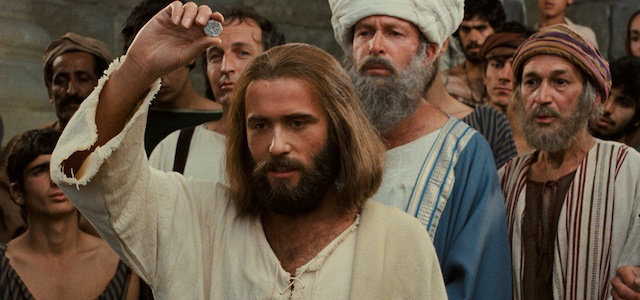
Jesus does neither; he refuses their terms. He asks for a coin, turns it in his fingers, and asks, “Whose image is this? And whose inscription?” “Caesar’s,” they reply.
Jesus answers, “Render to Caesar the things that are Caesar’s, and to God the things that are God’s.”
The saying is sometimes treated as though Jesus were separating religion from politics, but Roman politics was deeply religious, and Jewish faith embraced the whole of life. Jesus is asking something more fundamental: what may Caesar legitimately claim from us, and what belongs to God?
Governments possess genuine authority. We need to pay our taxes, obey the laws of the land, and fulfil our civic responsibilities. But Caesar’s claim has its limits. Jesus adds, “and render to God the things that are God’s.” The verb translated “render” carries the sense of returning what is due.
What then belongs to Caesar? The coin bearing Caesar’s image. What belongs to God? That is the larger question. Mark does not explicitly refer to the Book of Genesis, so we should not press the connection too far, but the biblical resonance is hard to miss. Caesar’s image is stamped on the coin; humanity bears the image of God. The coin may carry Caesar’s image, but we bear God’s image. I believe Jesus is effectively saying, “Give to Caesar his coin, and give to God all that you are.”
We belong to families, communities and nations. We have responsibilities to churches, employers, organisations and neighbours. These loyalties may be good, but none is ultimate. The ultimate claim upon our lives belongs to God.
Salvation as allegiance
New Testament scholar Matthew Bates uses the provocative phrase “salvation by allegiance alone” to recover dimensions of biblical faith that we can easily overlook. His point is not that we earn salvation through loyalty or obedience. Salvation always remains God’s free gift. Grace comes first. Jesus is the one who saves. The question is what we mean by “faith.”
If faith means agreeing that certain claims about Jesus are true, faith can remain detached from the way we live. If it is reduced entirely to inward trust, it can become a private transaction. Biblical faith is richer. It involves trust, fidelity, loyalty and entrusting ourselves to Jesus as Lord. “Salvation by allegiance alone” does not mean, “Be loyal enough and God will save you.” It means that the faith by which we receive grace is allegiance to Christ.
Obligation asks, “What must I do?” Allegiance asks, “Who do I belong to?” Christian obedience is not simply the fulfilment of religious duties. It arises from belonging. We do not perform enough good deeds to secure God’s favour; we respond to grace by entrusting ourselves to the God who calls and receives us. Faith says: I belong to God.
Competing loyalties
This is a key to understanding what it means to follow Jesus today. Caesar still exists, although Caesar now appears in many forms. Governments, markets, political parties, institutions, ideologies and leaders all make claims upon us. Nations ask for loyalty. Political causes ask for loyalty. Churches and communities ask for loyalty. The question is not whether these claims exist, but whether any of them has moved from the edge of our lives into the centre.
We may love our country, cherish its culture and work for its welfare, but the nation cannot become our Lord. We may support political parties and vote according to considered judgments about justice and the common good, but the party cannot become Lord. We may care deeply about political causes, but the cause cannot become Lord. We may admire leaders, but the leader cannot be Lord. Every earthly allegiance is measured against the prior claim of God on our whole lives.
We must be willing to question our own side as well as our opponents. What are we being taught to fear? Whose suffering have we stopped noticing? Which people are routinely presented to us as threats rather than neighbours? What behaviour are we willing to excuse in leaders we support that we would condemn in their opponents?
And perhaps most searchingly: what cause has become so important to me that I am prepared to become unlike Jesus in order to defend it?
Jesus does not say: give God Sunday morning, your prayers, your offerings, and your private spirituality, and then let Caesar, the market, ambition or self-interest organise everything else. If we bear the image of God, then our whole life falls within the horizon of God’s claim. Our conscience, relationships, money, politics, ambitions and speech belong to God. The way we treat vulnerable people belongs to God. Even our political opponents belong to God.
If my opponent also bears the image of God, disagreement cannot become permission for contempt. The neighbour, stranger and political adversary do not belong to us to classify, dismiss or dehumanise. They too belong to God. The image of God sets limits not only on what Caesar may claim from us, but also on what we may do to one another in Caesar’s name.
The freedom of belonging to God
If God is ultimate, then the state is not. The nation is not. Wealth is not. Career is not. Reputation is not. Family is not. Political success is not.
Allegiance to God frees us from every lesser claim that seeks to be absolute. I can love my country because I do not have to worship it. I can participate in politics because politics does not have to save me. I can support a cause without treating its opponents as enemies beyond redemption. I can criticise those I normally support and recognise truth in words spoken by my opponents.
This brings us back to Nepal and Tibet and Mount Kailash. Pilgrims who travel there walk around the mountain at the end of that obliterated highway because for them it represents a sacred centre, an axis around which the world turns.
You and I do not need to walk around a mountain to live in orbit around something. Every life has its centre. Something of value shapes our hopes, governs our fears, tells us who we are and determines what we will sacrifice. So perhaps the question Jesus places before us in Mark 12 is ultimately a question about the centre of our life.
What is it that you are circling? Is it your career? Your security? Your possessions? Your political identity? Your reputation? Your family? Your church? All of these may be very good in themselves, but none can bear the weight of ultimate reality.
Jesus takes a coin, looks at the image upon it, and asks us to distinguish what Caesar may legitimately claim from what belongs to God. The coin bears Caesar’s image. You bear God’s image. And so the great question is not, “What do I owe?” It is, “Who do I belong to? What is my ultimate allegiance?”
We cannot save ourselves through perfect obedience. Nor is allegiance another way to earn God’s favour. Salvation is by grace. But the faith that receives the grace of God is faith expressed as humble trust. It is less about believing a set of doctrines and obeying a set of rules, and more about fidelity and allegiance to the person of Jesus.
So render to Caesar what belongs to Caesar. Pay your taxes. Give governments their proper respect. Show your neighbours genuine love and care. Devote your skills and resources to the common good. Be loyal to the truth as you know it, and be committed to peace and justice. But do not give any earthly power what belongs to God.
The little coin Jesus held in his hand that day represented so much more than its monetary worth. The coin bore the image of Caesar, but you and I bear the image of God. And the one who bears the image of God belongs to God. That is where your allegiance lies.
That is your centre.
Sermon 869 copyright © 2026 Rod Benson. Preached at North Rocks Community Church, Sydney, Australia, on Sunday 30 August 2026. Unless otherwise noted, Scripture quotations are from The Christian Standard Bible (Nashville: Holman Bible Publishers, 2020).
Rev Dr Rod Benson is General Secretary of the NSW Ecumenical Council and a minister of the Uniting Church in Australia serving at North Rocks Community Church in Sydney.
Image source: Jesus Film Project
Taking it further…
Reflection questions
- In Mark 12:13–17, why does the sermon argue that Jesus’ response about paying taxes is about more than simply separating religion from politics?
- What is meant by the contrast between Caesar’s image on the coin and God’s image in human beings? What implications does this have for Christian discipleship?
- The sermon draws on Matthew Bates’s phrase “salvation by allegiance alone.” How does allegiance differ from understanding faith merely as intellectual belief, inward trust, or religious obligation?
Application questions
- Identify your centre. What currently shapes your hopes, fears, priorities and sacrifices most strongly? What practical evidence would show that Jesus rather than career, security, family, politics, reputation or possessions occupies the centre?
- Audit your allegiances. List the communities, institutions, political commitments, causes and relationships to which you feel significant loyalty. Which are healthy expressions of Christian responsibility, and which might be claiming more from you than they should?
- Render something to God. Choose one concrete area of life—money, speech, work, political participation, relationships, use of time, care for vulnerable people or service of the common good—and ask: If this truly belongs to God, what should change in my practice this week?

