
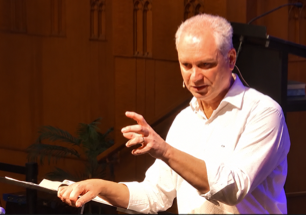
By Rod Benson
The debate over same-sex marriage within the Baptist Association of NSW & ACT provides a revealing contemporary test of Baptist convictions concerning Scripture, conscience, congregational autonomy and associational authority. The immediate question was theological: must Christian marriage be defined exclusively as the lifelong union of one man and one woman? The deeper question became ecclesiological: could Baptists who answered that question differently continue to belong to the same association? These questions should not be confused. Baptists may hold strong convictions about marriage without necessarily concluding that disagreement over marriage must terminate fellowship. The controversy became especially consequential because a theological conclusion was eventually converted into an institutional boundary.
The conservative case
The conservative position deserves to be stated in its strongest form. Many Baptists believe heterosexual marriage is grounded in the biblical account of creation, reinforced by the teaching of Jesus and the apostles, and integrated into a broader Christian theology of sex, embodiment, covenant and holiness. For them, the debate is not principally about political equality or changing social conventions. It concerns faithfulness to Scripture. From this perspective, affirmation of same-sex marriage would represent not merely a pastoral adjustment but a substantial revision of historic Christian teaching.
This argument deserves serious respect. It cannot fairly be reduced to prejudice, political conservatism or hostility towards LGBTQ people. Nor does congregational autonomy automatically answer it. Baptist churches voluntarily join associations, and associations possess legitimate responsibilities for common doctrine, ministry accreditation and institutional identity. Churches cannot plausibly claim that autonomy gives them an unconditional right to continued affiliation regardless of shared standards. The question is therefore narrower and more difficult: whether agreement about marriage should properly have become one of those standards.
From conviction to boundary
In November 2022 the Baptist Association of NSW & ACT adopted a Position Statement defining marriage as the lifelong faithful union of one man and one woman and identifying sexual intimacy outside such marriage as inconsistent with God’s intention. At the same time, the Association affirmed local-church autonomy. The coexistence of these positions exposed the tension that would shape the subsequent controversy: how far may an association establish common theological expectations while continuing to honour congregational freedom?
There is nothing inherently improper about an association adopting a position. Collective bodies must sometimes speak. The more significant development occurred when the marriage position became increasingly consequential for churches and ministers who could not affirm it. At that point the issue moved beyond corporate testimony. The Association was no longer simply saying, “This is the position our Assembly has adopted.” It was approaching the stronger conclusion that continued participation within recognised Baptist structures required conformity to that position.
This distinction matters because it changes the nature of the theological claim. A corporate position may represent the majority conviction of an association while leaving room for dissent. A boundary declares that dissent can no longer be fully accommodated. That step may sometimes be justified, but it requires an argument proportionate to its consequences. The central critical question is therefore not whether the Association possessed constitutional authority to act. It plainly did. The more important question is whether the theological case for moving from conviction to exclusion was sufficiently persuasive.
Why marriage became decisive
Supporters of the Association’s position may respond that marriage concerns creation, holiness and discipleship and therefore cannot be treated as a secondary matter. That concern deserves to be taken seriously. The argument for continued diversity should not depend upon describing marriage as unimportant. Marriage and sexuality plainly involve substantive Christian ethical claims. Nor should contemporary cultural acceptance of same-sex marriage be treated as evidence that the church must necessarily reach the same conclusion.
Yet importance alone does not determine boundary status. Baptists have lived with substantial disagreements concerning divorce and remarriage, the ordination of women, charismatic gifts, models of atonement, pacifism, eschatology and political allegiance. These issues are not identical, and comparison does not settle the marriage question. It does, however, generate a legitimate ecclesiological challenge: what theological criterion explains why disagreement over same-sex marriage requires institutional separation while serious disagreement concerning other questions of biblical interpretation and Christian practice remains compatible with association?
That question deserved more explicit attention in the NSW and ACT process. The strongest justification for the Association’s course would have required not merely demonstrating that the traditional position is biblically defensible or historically dominant, but explaining why continued fellowship with Christians holding another conscientious interpretation would compromise Baptist identity or mission. Without that further argument, the danger is that the significance of the moral issue itself becomes sufficient reason for exclusion.
Process and proportionality
Supporters of the Association can rightly emphasise that its decisions were not simply imposed by a small group of leaders. Formal assemblies debated the issues, constitutional processes were followed, and substantial majorities supported the direction taken. This matters. A fair account should not depict the outcome as arbitrary bureaucratic action. Baptist assemblies possess real authority, and the majority was entitled to determine the Association’s corporate position.
Yet procedural legitimacy does not exhaust theological evaluation. Baptist history itself bears witness to the possibility that properly authorised Christian majorities may be sincerely mistaken. The dissenting minority is not thereby presumed correct, but the Baptist tradition should make any majority cautious about treating numerical strength as sufficient theological vindication. The question is not whether the Association followed its constitution, but whether the institutional consequences attached to the position were proportionate to the theological disagreement.
A more accommodating approach might have preserved the Association’s traditional marriage statement while recognising that a minority of churches and ministers, after serious biblical and theological reflection, had reached another conclusion. Such an arrangement would undoubtedly have been difficult. It might have required careful protocols concerning marriage practice, ministry placement and institutional representation. Yet difficulty is not itself an argument against diversity. Baptist association has historically required the maintenance of common life among congregations that are not identical.
Majority and minority responsibilities
Those who opposed the Association’s position also bear responsibilities. Progressive Baptists should not assume that social change establishes the correct theological conclusion, nor should traditional Christians be casually characterised as prejudiced or anti-gay. The historic Christian understanding of marriage deserves serious exegetical and theological engagement. Appeals to conscience do not relieve dissenters of the obligation to offer persuasive arguments or to submit their conclusions to the scrutiny of the wider church.
Conversely, conservative Baptists should avoid assuming that disagreement necessarily arises from rejection of biblical authority. Some Christians who support marriage equality have arrived at their position through sustained engagement with Scripture, theological reflection and pastoral experience. One may judge those conclusions mistaken without denying their seriousness. The debate becomes less constructive when fidelity to Scripture is implicitly monopolised by one side and disagreement is explained chiefly as cultural capitulation.
The more demanding Baptist approach would recognise the possibility of serious Christian conviction on both sides while continuing to ask whether the disagreement itself must divide the association. This distinction between theological judgment and ecclesial recognition is crucial. Christians may believe another interpretation to be wrong without necessarily concluding that the people holding it should cease to be recognised as faithful Baptist partners.
LGBTQ Christians within the church
The controversy also concerns more than competing propositions. LGBTQ Christians belong within the ecclesial story. They are congregants, ministers, relatives, friends and participants in the church’s attempt to hear God faithfully. For some Baptist congregations, reconsideration of same-sex relationships emerged partly through sustained pastoral relationships with gay and lesbian Christians whose discipleship could not easily be reconciled with assumptions that had previously gone largely unexamined.
Such experience does not automatically resolve biblical interpretation. Traditional Christians are right to insist that the church must sometimes resist prevailing cultural assumptions. Yet experience cannot simply be treated as irrelevant. Christian theology has always been undertaken in concrete communities, and new encounters can expose questions earlier generations did not ask or consequences they insufficiently perceived. A mature Baptist discernment should therefore refuse two shortcuts: Scripture cannot simply be set aside because cultural attitudes have changed, while the experience and testimony of LGBTQ Christians cannot simply be dismissed because a traditional interpretation already exists.
My own experience
For me, these questions were not merely theoretical. My Baptist ministerial accreditation lapsed before the Association later distributed communications seeking affirmation of its marriage position since the Association had declined to recognise my ministry at (the Anglican) Moore Theological College. It would therefore be inaccurate to suggest that my refusal to affirm the Association’s marriage position caused the lapse of my accreditation.
Nevertheless, the later request created a genuine question of conscience since at the time of the debates I was discerning a return to pastoral ministry. I was asked to affirm the Association’s new position on marriage in wording I regarded as unnecessarily divisive. I declined to proceed and initiated conversations with Open Baptists and with the Uniting Church in Australia. My objection was not simply that other Baptists maintained a traditional understanding of marriage. I had worshipped, studied and ministered alongside Baptists holding that conviction for decades. The deeper issue was whether one contested interpretation should be transformed into a test of associational loyalty.
My Baptist formation had taught me to take Scripture seriously, honour conscience, distrust unwarranted concentrations of ecclesiastical power and accept personal responsibility before God. Those convictions continued to shape my response even after formal accreditation had lapsed. My subsequent move into ministry within the Uniting Church in Australia in 2025 should therefore be understood within a longer process of ecclesial transition rather than as a direct consequence of the marriage controversy. Yet the controversy confirmed an increasing tension between the Baptist tradition that had formed me and the manner in which associational authority was being exercised in NSW and the ACT.
I do not recount this as evidence of personal virtue or as proof that my theological judgment was correct. Conscience cuts in more than one direction. Conservative ministers who sincerely regarded heterosexual marriage as biblically mandatory were entitled to state and practise that conviction. The question was whether reciprocal liberty remained possible: whether Baptists could continue to recognise one another as Baptist Christians while acknowledging that conscience had led them to different conclusions on marriage.
Institutional separation
Eventually theological disagreement became institutional separation. Several churches unable to support the Association’s marriage position were removed from association. It would be too simple to say that one side alone “split the denomination.” The theological division already existed. Conservative Baptists believed progressive churches had departed from historic Christian teaching, while dissenting Baptists believed the Association had narrowed the legitimate range of Baptist diversity.
The more precise judgment is that the Association’s subsequent decisions converted an existing theological disagreement into formal institutional separation. This formulation avoids attributing all responsibility to either side while recognising that separation was not an automatic consequence of theological difference. A further ecclesiological decision was required: the disagreement would no longer be accommodated within the existing associational framework.
That decision deserves critical scrutiny precisely because another path remained conceivable. The Association might have retained its traditional marriage position while allowing conscientiously dissenting churches to remain associated. Such an arrangement would not have implied that all views were equally correct. It would have distinguished the question of theological truth from the question of the amount of theological diversity an association could responsibly bear.
Open Baptists as a constructive response
Open Baptists emerged from this conflict as a constructive attempt to preserve Baptist association across precisely this kind of difference. Its significance should not be reduced to support for marriage equality. Its more important ecclesiological claim is that Baptists holding different positions on same-sex marriage should remain capable of associating with one another. On this approach, a church may retain a traditional understanding of marriage or affirm marriage equality; the crucial expectation is willingness to recognise and remain in fellowship with Baptists who reach another conclusion.
This proposal deserves a sympathetic hearing because it draws upon recognisably Baptist convictions. It gives substantial weight to congregational autonomy, liberty of conscience, local discernment and voluntary association. It does not require theological indifference. Rather, it asks whether Baptist unity can be located at a deeper level than agreement on every contested moral question. In that respect it represents not a rejection of Baptist tradition but one plausible retrieval of it.
Open Baptists should not be romanticised as though it has solved every question of ecclesial identity. All associations eventually encounter boundaries, and openness itself must be tested when disagreement cuts against the assumptions of those who currently constitute the majority. Yet this future challenge should not diminish the significance of what Open Baptists is attempting. It offers a practical experiment in whether Baptists can maintain substantive theological diversity without regarding such diversity as institutional failure.
Its success will depend partly upon whether traditional Baptists can remain genuinely welcome within it, rather than merely tolerated until a progressive consensus develops. If it can sustain both conviction and diversity, Open Baptists may contribute something valuable not only to those displaced by the NSW and ACT controversy but to wider Baptist reflection on the meaning of association.
An historical irony
There remains an historical irony in the NSW and ACT controversy. A tradition shaped partly by resistance to imposed religious conformity developed mechanisms by which continuing recognition increasingly depended upon agreement with a particular conclusion on a disputed theological question. The analogy should not be exaggerated. The Baptist Association is not a seventeenth-century established church. Participation is voluntary, there are no civil penalties, and the Association possesses constitutional authority to determine its own membership and accreditation arrangements.
Nevertheless, the theological question remains recognisably Baptist: who possesses authority to require this confession from my conscience? Baptist history should make Baptists especially attentive to that question. The issue is not whether an association may establish boundaries, but whether the boundaries it establishes are demonstrably necessary to preserve its Christian identity and mission. A dissenting tradition should arguably require a substantial theological case before restricting the diversity it has historically claimed to value.
What might have been possible?
The alternative need not have been doctrinal neutrality. Traditional congregations could have continued teaching and practising heterosexual marriage. Progressive congregations could have reached different conclusions under their own understanding of Scripture and congregational discernment. Ministers could have acted according to conscience within the practices of their churches. The Association could have stated its majority position while acknowledging that some member congregations conscientiously disagreed.
Such an arrangement would have been untidy. Yet Baptist ecclesiology has often been untidy because voluntary association among autonomous churches necessarily generates complexity. Uniformity is administratively simpler than negotiated diversity, but administrative simplicity is not necessarily the highest ecclesial good. The relevant question is whether a tradition that values liberty, conscience and congregational discernment should accept some institutional untidiness in order to preserve fellowship across serious but non-foundational disagreement.
From this perspective, the NSW and ACT controversy represents a missed opportunity. The Association might have demonstrated that strong traditional convictions concerning marriage could coexist with a generous understanding of Baptist association. Instead, the increasingly narrow relationship between the marriage position and institutional recognition made diversity more difficult to sustain. That outcome may have produced greater doctrinal clarity, but it did so at the cost of a narrower associational identity.
The argument of the series
The first article in this series argued that Baptist commitment to Scripture, conscience and dissent should produce neither individualism nor relativism. Scripture remains authoritative, but interpretation requires humility. Conscience deserves protection, but conscience also requires formation. Disagreement is therefore not merely a problem to be eliminated. Properly practised, it can become a Christian discipline through which believers seek truth together.
The second article argued that Baptist freedom does not eliminate ecclesial boundaries. Associations require shared identity and may legitimately establish doctrinal and ethical standards. Yet a crucial distinction must be made between holding a conviction, adopting a corporate position and making agreement with that position a condition of fellowship. Because exclusion carries significant consequences, Baptists should be able to explain why a disputed issue has become so fundamental that common discipleship and mission can no longer continue across the disagreement.
This final article has applied those principles to the NSW and ACT controversy over same-sex marriage. The traditional theology of marriage deserves serious engagement, and the Association possessed legitimate constitutional authority to make decisions. The more difficult question is whether agreement concerning marriage needed to become a boundary of association. In my judgment, the case for that further step was insufficiently persuasive, particularly given Baptist commitments to congregational autonomy, liberty of conscience and the long-standing capacity of Baptist associations to encompass substantial theological diversity.
Open Baptists offers a different response. Rather than resolving the marriage controversy by requiring uniformity, it seeks to preserve fellowship among Baptists who reach different conclusions. That approach will have to prove itself over time, but it deserves to be regarded as a serious Baptist ecclesiological experiment rather than merely a progressive reaction to conservative decisions. Its central question is whether association may be deep enough to sustain disagreement without dissolving into either relativism or exclusion.
Taken together, the argument of these three articles is not that Baptists should possess fewer convictions. It is that they should exercise conviction with greater theological discrimination. Biblical authority without interpretive humility can harden into dogmatism. Conscience without communal accountability can dissolve into individualism. Congregational autonomy without association can become isolation. Association without adequate respect for conscience can become centralised control. The Baptist vocation is to hold these goods together.
Baptists have inherited a dangerous freedom. Their forebears defended it because they believed coerced faith was no faith at all. The contemporary challenge is to demonstrate that such freedom can produce mature discipleship: conviction without arrogance, liberty without isolation, authority without domination, diversity without fragmentation and disagreement without enmity. The tragedy of the NSW and ACT marriage controversy is not simply that Baptists disagreed. Baptists have always disagreed. It is that a disagreement which might have tested the depth of Baptist fellowship instead became a boundary separating Christians who had long worshipped, served and witnessed within the same movement.
The continuing opportunity—for churches remaining within the Baptist Association of NSW & ACT, for Open Baptists, and for those whose journeys have carried them elsewhere—is to learn from that experience. The most persuasive defence of Baptist freedom will never be another declaration about freedom. It will be communities capable of remaining faithfully together, under the lordship of Jesus Christ, when conscience does not lead every Christian to the same conclusion.
Rev Dr Rod Benson is General Secretary of the NSW Ecumenical Council and a minister of the Uniting Church in Australia serving at North Rocks Community Church in Sydney.
Image source: Epping Baptist Church

