
By Rod Benson
The controversy surrounding Macklemore’s removal from Ed Sheeran’s tour eventually reaches a question deeper than celebrity politics: can compassion remain morally credible when it becomes selective? Public culture is saturated with the language of kindness, inclusion, empathy and love. Yet those virtues are tested not when they are universally applauded but when recognising another person’s suffering becomes politically inconvenient. The central Christian question is not simply whether Macklemore, Sheeran, P!NK or Robert Kraft behaved correctly. It is whether our moral imagination remains universal when loyalties, fears and institutional interests encourage us to narrow it.
The modern language of human rights begins from an uncompromising premise: human dignity is inherent rather than awarded. Rights do not depend upon nationality, ethnicity, religion, political usefulness or public approval. A Palestinian child possesses them because the child is human. A Jewish child possesses them for exactly the same reason. Neither set of rights is diminished by acknowledging the other. This principle sounds elementary, yet political conflict repeatedly encourages societies to treat compassion as though extending it to one population requires withdrawing it from another.
The Israel–Palestine conflict makes this temptation especially powerful. Jewish history contains memories of persecution, pogroms, expulsion and genocide that make contemporary antisemitism a matter of profound seriousness. Palestinian history includes dispossession, occupation, displacement and recurrent violence, while the devastation of Gaza has intensified worldwide concern about civilian suffering and Palestinian rights. Responsible moral reasoning cannot make one history disappear in order to acknowledge the other.
What selective compassion means
Selective compassion does not necessarily mean that a person feels no sympathy for others. Human beings inevitably concentrate attention on particular relationships and causes. No one can respond equally to every injustice. The problem begins when the humanity of one group is experienced vividly while the suffering of another is rationalised, minimised or rendered invisible.
Selective compassion therefore becomes a form of moral compromise when universal principles are applied according to identity. Civilian deaths are treated differently depending upon whose military caused them; fear is recognised in one community and discounted in another; political violence is condemned selectively; or the language of human rights is deployed only when it reinforces existing loyalties.
This danger exists across political camps. Advocacy for Palestinians can become morally compromised if it minimises antisemitism, Jewish vulnerability or violence deliberately directed against Israeli civilians. Solidarity with Israel becomes morally compromised when Palestinian civilian suffering, displacement or basic rights are treated as secondary or expendable. Universal human rights provide a standard by which both forms of selective identification can be challenged.
The central test is not whether people arrive at identical political conclusions. It is whether the principles they invoke—human dignity, compassion, freedom and opposition to hatred—remain operative when applying them becomes costly, contested or institutionally inconvenient.
Costly compassion
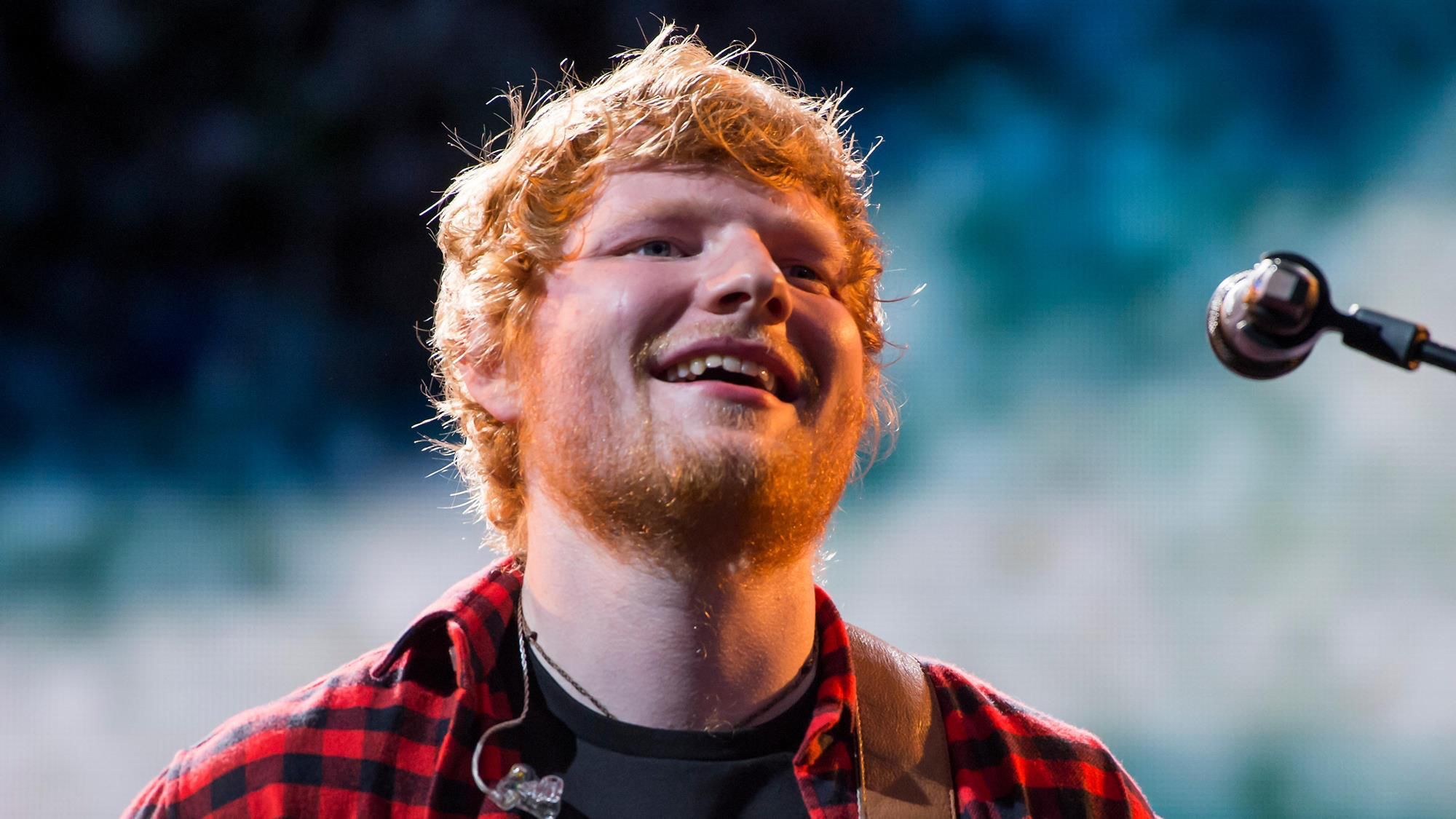
The Macklemore controversy brings this problem into popular culture because musicians such as Ed Sheeran and P!NK have long employed themes of love, vulnerability, healing and human connection. Their art does not thereby impose a duty to endorse Macklemore’s politics. No artist is morally required to adopt another performer’s analysis of Israel and Palestine. Yet public advocacy of compassion naturally invites questions about how compassion operates when circumstances become difficult.
Every song about kindness, empathy, love or changing the world may eventually be heard against what the singer did when such ideals encountered a costly test. This need not amount to an accusation of personal hypocrisy. Sheeran has stated that he was appalled by suffering caused by the conflict, that he attempted to mediate and that the decision to remove Macklemore ultimately belonged to the promoter and venues. He also cited obligations toward fans, musicians and crew whose livelihoods depended upon the tour. Those are morally relevant considerations rather than trivial excuses.
The better criticism is not that an artist who acts inconsistently with a public value has thereby been exposed as insincere. Human moral life is more complicated than that. Rather, values repeatedly invoked in art and public identity create legitimate expectations of coherence. The greater the gap between a proclaimed virtue and conduct under pressure, the more reasonable it becomes for audiences to ask whether the virtue functions as principle, aspiration or merely branding.
Macklemore’s responsibilities
That standard must also be applied to Macklemore. Conscience does not exempt an artist from responsibility toward collaborators, audiences or contractual commitments. A support act performs within another artist’s tour and therefore inhabits a relational rather than wholly autonomous role. The complete contractual circumstances remain publicly unclear. It is therefore difficult to know whether Macklemore violated explicit or implicit understandings about political speech. This uncertainty should temper categorical judgements.
His critics nevertheless raise a legitimate concern when they argue that he used another performer’s stage to advance a message some audience members experienced as highly divisive. The strongest response is not that discomfort is irrelevant. It is that controversy alone cannot determine what may be said. The ethical question turns on content, context, proportionality and whether political advocacy crosses into dehumanisation or hatred. Macklemore’s express distinction between criticism of Israeli policy and hostility toward Jewish people is relevant to that assessment.
P!NK, fear and compassion
P!NK’s response is important precisely because it complicates easy moral condemnation. She clarified that she did not oppose the phrase “Free Palestine,” did not demand Macklemore’s dismissal and did not favour silencing artists. Her concern centred upon aspects of the presentation that she said frightened her and people she loved. That fear should not be casually dismissed. A commitment to universal compassion must include serious attention to Jewish experiences of antisemitism and insecurity.
Yet universal compassion also requires asking whether Palestinian fear is heard with comparable seriousness. Palestinian families facing death, injury, displacement, hunger or destruction do not become morally less significant because acknowledging their suffering may be politically contentious. Compassion becomes selective when one community’s fear automatically receives interpretive priority while another community’s catastrophic experience is treated principally as a complication.
The proper response is not to reverse the hierarchy. The answer to selective concern for Jewish suffering is not selective concern for Palestinians. Christian ethics and universal human rights alike call for an enlargement of moral vision rather than a transfer of exclusion from one group to another.
Robert Kraft and the morality of institutional power
The same principle applies to Robert Kraft and the stadium owners involved in the dispute. Kraft presented his opposition to Macklemore in moral terms, arguing that the rapper’s rhetoric and imagery had caused hurt within the Jewish community. He also expressed willingness to speak directly with Macklemore and described peace and opposition to hatred as shared objectives. Those claims deserve fair representation.
However, moral concern acquires additional significance when accompanied by institutional power. Kraft was not merely another citizen criticising a musician. His organisation controlled access to a major stadium. Sheeran reported that multiple venue owners refused to host the tour if Macklemore remained involved, while Messina Touring Group said the resulting situation threatened subsequent performances.
A stadium owner has legitimate property and contractual rights. Refusing an artist access to a private venue is not equivalent to state censorship. But the legal distinction does not answer every ethical question. When private owners control scarce infrastructure required for mass cultural participation, decisions about access can significantly shape the boundaries of public expression.
There is an important distinction to be observed between legal free speech and cultural freedom. A person may lack a constitutional claim to a privately owned stage while still having reason to question the social consequences of concentrated private control over cultural space. Ocasio-Cortez’s characterisation of the episode as an abuse of power is an evaluative political judgement, but the underlying structural question remains legitimate: how should private power be exercised when a small number of institutions can determine access to audiences on a national scale?
The asymmetry of power
There is another asymmetry that should remain central. Macklemore, Sheeran, P!NK and Kraft all possess immense public visibility and resources. The civilians whose lives give the controversy its moral seriousness do not. It is therefore important that debates about professional reputations and artistic freedom do not displace attention from people facing death, hunger, displacement and destruction.
Macklemore himself attempted to reorder the discussion in this way by insisting that he, Sheeran and P!NK were not the true victims of the controversy. Whether one agrees with all aspects of his political argument, that redirection toward those bearing the greatest material burden is morally significant.
Jesus and the refusal of tribal compassion
The Gospels repeatedly depict Jesus expanding the boundaries within which compassion is expected. His most famous answer to the question “Who is my neighbour?” places a Samaritan at the centre of the story. The force of the parable lies partly in the fact that the compassionate figure comes from a community regarded with religious and ethnic suspicion. The wounded man’s need takes precedence over inherited boundaries of belonging.
Jesus’ command to love enemies extends the logic further. Christian love cannot be reduced to affection for one’s own people or sympathy for those whose causes one already supports. It demands moral recognition even when hostility, fear or political conflict makes such recognition difficult. This does not require treating all actions as morally equivalent. Jesus can confront wrongdoing while refusing to treat wrongdoers or outsiders as beyond the reach of mercy.
Christian compassion is therefore inseparable from truth. Jesus does not merely feel for suffering people; he also names hypocrisy, challenges exploitative practices and confronts those who misuse authority. Compassion without truth can become sentimentality or avoidance. Truth without compassion can become punitive and dehumanising. Mature Christian ethics requires the two to remain together.
Applied to Israel and Palestine, this ethic frustrates attempts to monopolise Christian compassion. Christians cannot invoke Jewish suffering as a reason to overlook Palestinians, nor invoke Palestinian suffering as permission to disregard antisemitism or Israeli civilians. The Gospel repeatedly resists forms of moral reasoning in which human worth is allocated according to tribal membership.
Jesus would also direct attention toward those carrying the greatest burden. Celebrity reputations matter less than lives exposed to violence, hunger and displacement. The moral centre moves away from powerful public figures and toward those whose suffering is easiest to overlook.
Compassion, pluralism and conflict
Universal compassion should not become moral simplification. Recognising Palestinian suffering does not require accepting every accusation against Israel without scrutiny. Recognising Jewish fear does not require accepting every restriction placed upon pro-Palestinian advocacy. Serious moral reasoning requires evidence, distinctions and a willingness to revise conclusions.
The language of genocide, apartheid, terrorism, antisemitism and censorship carries considerable moral and legal weight. Such terms should not be used merely as weapons for delegitimising opponents. They require careful definition and, where they concern legal classifications, attention to competent authorities and evidence. Compassion is not strengthened by factual carelessness.
Nor does the Christian command to love prevent political judgement. Jesus’ compassion coexists in the Gospels with sharp criticism of hypocrisy, exploitation and abuses of authority. Love is not moral passivity. It requires treating those with whom we disagree as human beings while remaining capable of naming practices that harm others.
A plural democracy cannot reasonably expect consensus on Israel and Palestine. Citizens will disagree about Zionism, the conduct of war, proportionality, historical responsibility, legal terminology and political remedies. The goal of public life should therefore not be enforced unanimity.
What democratic culture requires is a discipline of disagreement. People should be able to contest claims vigorously while refusing dehumanisation. Evidence should matter. Terms should be defined carefully. Freedom of conscience should be protected. Institutional power should be exercised with restraint. Communities should be permitted to articulate fear without demanding that the suffering of others disappear from view.
This form of pluralism is not moral relativism. It does not suggest that every claim is equally sound. It provides a framework within which competing claims can be examined without converting opponents into enemies whose humanity no longer counts.
From performance to practice
The controversy ultimately poses an uncomfortable question for contemporary culture. Compassion is easy to celebrate aesthetically because almost everyone approves of kindness in the abstract. Songs about love, empathy, peace and changing the world can unite audiences precisely because they leave many difficult political questions unresolved. But moral virtues become substantive only when they govern choices under pressure.
At that point beautiful words can begin to sound like branding unless they are accompanied by practices capable of surviving inconvenience. The criticism should be applied cautiously: no performer must adopt Macklemore’s politics to demonstrate integrity, and Sheeran’s responsibilities toward employees, audiences and fellow musicians were real. Yet the larger principle remains. Values acquire credibility when they constrain us as well as inspire us.
Christian discipleship makes the requirement stronger still. Jesus does not invite his followers merely to approve of compassion but to practise it across the boundaries by which societies divide worthy from unworthy sufferers. He challenges every version of compassion that becomes tribal, strategic or convenient.
The combined lesson of this controversy is therefore not that one celebrity possesses moral purity while another has failed. It is that compassion must remain universal precisely when circumstances tempt us to ration it. Palestinian lives matter without qualification. Jewish lives matter without qualification. Human dignity cannot depend upon whether recognising it advances our preferred political narrative. The measure of compassion is not the beauty with which we sing about it but the consistency with which we extend it when doing so becomes difficult.
Rod Benson lives in Sydney and writes about a range of topics from books and local history to food, faith, philosophy, ethics, research skills, and everyday life. Away from the keyboard, he enjoys cooking for friends, walking in the Australian bush, exploring a beach, discovering new restaurants, and reading philosophy, fiction and poetry. He is married to Emma. This is a fast developing story and the article above was written on 17 September. The author acknowledges that key players may have modified their stances since that date.
Image source: Premier Christianity

