
The Season of Creation Part 2
By Rod Benson
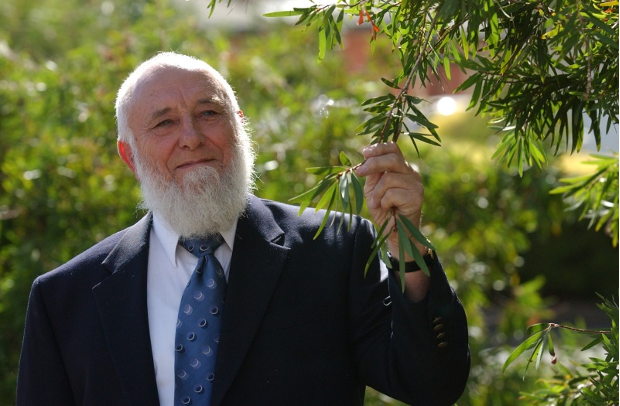
Norman C. Habel’s most substantial contribution to ecological biblical scholarship was his leadership in the Earth Bible Project, an international collaborative venture that sought deliberately to read Scripture from the perspective of Earth.
Closely related to the convictions that later informed his Season of Creation, the project asked what happens when interpreters attend seriously to Earth and non-human creation rather than treating the natural world principally as the setting for the human drama of salvation. Habel’s resulting ecological hermeneutic was deliberately challenging. It exposed anthropocentric assumptions in conventional interpretation while proposing new principles for reading biblical texts amid contemporary ecological crisis.
The Earth Bible Project produced a landmark five-volume series between 2000 and 2002, beginning with Readings from the Perspective of Earth, edited by Habel. The project team was based in Adelaide, although contributors came from a wider international scholarly community. Its principles were developed through consultation with ecologists and representatives of other disciplines. The subsequent Earth Bible Commentary series continued and developed this approach.
Suspicion, identification and retrieval
Habel adapted interpretive strategies already familiar within feminist and social-justice hermeneutics. Particularly important was a hermeneutic of suspicion and retrieval. The interpreter approaches a biblical text alert to the possibility that its human authors, and generations of subsequent interpreters, may have privileged human interests at the expense of Earth. The reader then identifies Earth as a subject within the text and attempts to retrieve neglected dimensions in which Earth possesses value, agency or voice. Habel explicitly acknowledged the influence of social-justice and feminist interpretation upon this approach.
This procedure makes an important methodological admission: ecological interpretation is not simply extracting an obvious environmental message already present in every biblical passage. Habel brings particular ethical questions to Scripture. That is not necessarily a defect—all interpreters approach texts with assumptions and concerns—but it means that an Earth Bible reading should be distinguished from a claim about straightforward historical meaning.
Two questions should therefore remain distinct. The historical-exegetical question asks what a biblical text most probably meant within its ancient literary, religious and social context. The constructive theological question asks how Christians should responsibly hear that text today amid environmental degradation and ecological crisis. Habel’s method is particularly powerful in addressing the second question. Problems arise principally when a constructive ecological rereading is presented as though it were identical with the intentions of an ancient author.
Six principles of ecojustice
The Earth Bible Team formulated six ecojustice principles to guide its work.
The first is intrinsic worth: the universe, Earth and its components possess value in themselves rather than merely because they serve human purposes. A forest, river or animal therefore cannot adequately be valued solely as a human resource.
Second is interconnectedness. Earth constitutes a community of interconnected living things mutually dependent upon one another for life and survival. Humanity exists within this community rather than independently of it.
Third is voice. This is a stronger claim than simply observing that biblical writers sometimes personify nature. Habel’s principle describes Earth as a living entity capable of raising its voice both in celebration and against injustice. Biblical passages in which land mourns, heavens declare, trees rejoice and creation groans consequently acquire particular significance.
Fourth is purpose. The universe, Earth and their components belong within a dynamic cosmic design in which each has a place. The significance of non-human creation cannot therefore be reduced to its usefulness to humanity.
Fifth is mutual custodianship. Earth is understood as a balanced and diverse domain in which responsible custodians function as partners with, rather than rulers over, Earth. Habel thus challenges models of human stewardship that can still leave humanity conceptually above the rest of creation.
Sixth is resistance. Earth and its components do not merely suffer human injustice but actively resist it. This is perhaps the most radical of the principles. Habel invites interpreters to take seriously biblical portrayals of land and creation responding to exploitation, violence and wrongdoing rather than regarding Earth as the passive stage upon which human history unfolds.
Challenging anthropocentrism
These principles expose a genuine weakness in some traditional Christian interpretation: exploitative anthropocentrism. Genesis 1:26–28, for example, has sometimes been interpreted as granting humanity virtually unrestricted authority over other creatures. Habel challenges the assumption that everything else possesses value principally because it serves human interests.
Yet an important distinction is required. Rejecting anthropocentric domination need not require rejecting human distinctiveness. Scripture assigns humanity particular characteristics and responsibilities, most notably in its affirmation that human beings bear the image of God. The theological problem arises when distinctiveness becomes domination, or when non-human creation is regarded as possessing no significant value apart from human usefulness.
A Christian appropriation of Habel can therefore affirm distinctive human vocation while drawing a different conclusion from it: greater privilege entails greater responsibility. Humans are neither merely one species indistinguishable from every other creature nor autonomous masters standing above creation. They are creatures with particular moral responsibilities within the community of creation.
The book of Job provides an especially fruitful biblical conversation partner for Habel, himself a distinguished scholar of Job. In Job 38–41, God confronts Job with seas, weather, constellations, wilderness and wild animals. Some inhabit places beyond human cultivation and appear to possess purposes largely unrelated to human usefulness.
This does not prove Habel’s six ecojustice principles. To claim that would risk circular reasoning. But Job provides powerful biblical resonance with Habel’s contention that God’s creation cannot adequately be understood solely from the standpoint of human interests. His ecological reading of Job therefore represents a development of themes already prominent within his longstanding Old Testament scholarship.
Why does Earth possess value?
One striking feature of the six principles is that they were deliberately expressed in non-theological and non-biblical language. The foundational principles do not appeal explicitly to “God” or “creation.” This was partly intended to facilitate dialogue with scientists and non-theistic religious traditions and partly to allow Earth to become the primary object of inquiry rather than being considered only as something belonging to God.
Within specifically Christian theology, however, this raises an important question. Why does Earth possess intrinsic worth? Why should humans practise custodianship rather than domination? Why should creation’s voice command moral attention?
A Christian theological development of Habel can answer these questions more explicitly than the six principles themselves do. Earth possesses intrinsic worth because it is God’s creation and is repeatedly pronounced good. Humans belong within creation because they too are creatures. The Word through whom “all things came into being” in John 1 is the Christ through whom, according to Colossians 1:15–20, all things were created and through whom God reconciles all things. Romans 8:18–25 similarly envisages the whole creation groaning, suffering and awaiting liberation.
These christological claims should not be retrospectively presented as the formal foundation of Habel’s six principles. Rather, they demonstrate how his ecological hermeneutic may be reintegrated within a more explicitly Christian theology of creation, reconciliation and new creation.
The question of biblical authority
Habel’s approach also raises an important question concerning biblical authority. The six ecojustice principles sometimes function not merely as aids to interpretation but as ethical criteria by which biblical texts and their interpreters are assessed. The method begins with a declared commitment to justice for Earth and asks whether particular texts suppress, oppress or liberate Earth.
For some Christian traditions this presents no unusual difficulty: feminist, liberationist and postcolonial hermeneutics similarly acknowledge ethical commitments from which Scripture is interrogated. Other traditions, particularly those maintaining stronger accounts of scriptural authority, may ask what theological warrant permits interpreters to judge biblical texts according to criteria deliberately formulated outside explicitly biblical and theological categories.
The question need not be resolved simply by accepting or rejecting Habel. Christian interpretation has always involved relationships among Scripture, tradition, reason, experience and moral judgment. Habel’s contribution is to make unusually explicit the ethical standpoint from which interpretation proceeds. The resulting challenge is to demonstrate that ecological criteria themselves stand within a coherent Christian theology rather than functioning as an unquestioned authority imposed upon Scripture.
Strengths and limitations
The Earth Bible method has considerable strengths. It makes interpreters conscious of assumptions they might otherwise overlook. It asks where Earth appears within a text, whether non-human creation possesses agency, whose interests dominate interpretation, and whether traditional readings have unnecessarily reduced creation to a collection of resources for human use. The original Earth Bible volumes demonstrate how these questions can generate fresh readings across a wide range of biblical literature.
There are nevertheless genuine limitations. Modern concepts of ecosystems, biodiversity and anthropogenic climate change cannot simply be projected back upon ancient writers. Some biblical texts genuinely are strongly human-centred, and ecological interpretation should acknowledge rather than disguise this. Scholarly assessment has consequently identified risks of both anachronism and selective literalism in ecological approaches of this kind. At the same time, defenders rightly observe that Scripture continues to possess normative significance for contemporary Christians, who must therefore ask how ancient texts address modern ecological realities.
The best use of Habel’s approach may therefore be as a corrective lens rather than a complete hermeneutic. Historical, literary, canonical, theological, christological and ethical approaches remain necessary. Earth Bible interpretation adds questions that conventional exegesis has too often neglected rather than rendering those other approaches unnecessary. Indeed, the publisher’s description of the original volume itself presents Earth Bible interpretation as capable of being used alongside other recognised critical approaches. Habel did not provide the final or definitive method for ecological interpretation of Scripture. He made it considerably harder for contemporary biblical interpretation to proceed as though Earth did not matter.
The questions Habel raised remain pertinent. Where is Earth in this text? What value does non-human creation possess before God? Does our interpretation unnecessarily privilege human interests? What voices have we failed to hear? And how should Christians read ancient Scripture faithfully in an age when human actions possess unprecedented capacity to damage the conditions upon which human and non-human life depend?
Habel’s Earth Bible hermeneutic does not answer every such question. But it permanently enlarges the conversation. It reminds Christian interpreters that the Bible begins with the creation of the heavens and Earth, repeatedly portrays creation as possessing significance before God, and ends with the hope of creation renewed. Humanity remains profoundly important within that story—but humanity is not the whole story.
Rev Dr Rod Benson is General Secretary of the NSW Ecumenical Council and a minister of the Uniting Church in Australia serving at North Rocks Community Church in Sydney.
Image source: Society for Old Testament Studies

