
Recent events at the National Press Club have prompted renewed reflection on freedom of the press, one of the foundations of democratic society.
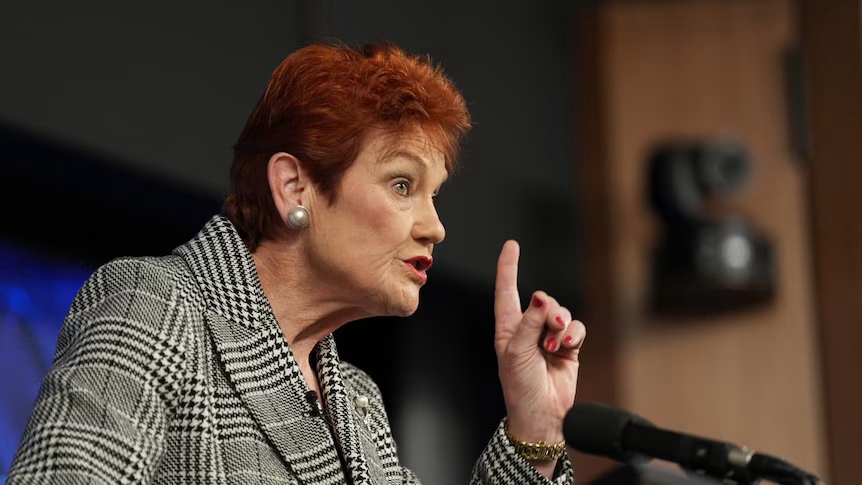
The immediate catalyst was an exchange between One Nation leader Pauline Hanson and Guardian Australia journalist Sarah Martin. During questioning following Hanson’s National Press Club address, Martin asked about the employment of Hanson’s daughter in a taxpayer-funded political role. Hanson responded by accusing the journalist of having an “obsession” with One Nation and challenged her motives rather than directly addressing the substance of the question.
Reports of the broader event also highlighted Hanson’s criticism of particular media organisations, and suggestions that some outlets might be denied access to future events. Hanson also indicated her intention to end public funding of the Australian Broadcasting Corporation, and to shut down the Special Broadcasting Service, established in 1975 to provide multilingual, multicultural and Indigenous media services reflecting Australia’s diverse society.
People may disagree about the quality of reporting by the Guardian, or about Hanson’s political views. Yet the incident raises a larger issue. What role does a free press play in a democratic society, and why does its preservation matter at a time of growing political polarisation, declining trust in institutions, and unprecedented disruption of the information landscape?
Freedom of the press is the principle that journalists and media organisations should be free to investigate, report, publish, and question those in positions of power without intimidation, censorship, retaliation, or undue interference. It is not a special privilege granted to journalists. Rather, it is an extension of the public’s right to know what governments, corporations, political parties, and other powerful institutions are doing.
The notion of a free press rests upon a particular understanding of human dignity. Citizens are not merely subjects to be managed by governments or consumers to be manipulated by commercial markets, but moral agents capable of reasoning, judging, and participating in public life. A free society assumes that truth will emerge through processes of open inquiry and debate.
The history of press freedom is closely connected to the history of democracy. Wherever citizens have sought greater political participation, they have generally demanded greater freedom to publish, discuss, criticise, and investigate. Conversely, whenever power becomes concentrated, those who hold it often seek greater control over information.
Throughout history, however, many arguments have been advanced to justify restrictions upon publication and public discussion.
The most common has been national security. Governments have argued that unrestricted publication may reveal military secrets, compromise intelligence operations, aid foreign enemies, or endanger lives during times of conflict. Such concerns are not entirely without merit. Most democratic societies recognise that certain classified information may legitimately be protected. The challenge is ensuring that appeals to national security do not become a convenient means of concealing incompetence, corruption, or abuse of power.
Another argument concerns public order. Authorities have often claimed that unrestricted publication may encourage violence, unrest, or social instability. Newspapers, pamphlets, and political movements have undoubtedly played significant roles in periods of social upheaval. Yet history also demonstrates that governments frequently label legitimate dissent as a threat to public order. The distinction between protecting society from violence and protecting governments from criticism is often difficult to maintain.
The protection of reputation has likewise been cited as grounds for limiting expression. Defamation laws recognise that freedom of speech should not include the deliberate dissemination of damaging falsehoods. A healthy society requires both freedom to criticise and protection against malicious untruth.
Historically, many restrictions were justified in the name of morality or religion. Governments and religious authorities often prohibited publications considered obscene, blasphemous, heretical, or socially harmful. Such restrictions reflected sincere concerns about social cohesion and moral formation. Yet they also remind us that institutions frequently claim the authority to determine what others may think, read and discuss.
More recently, restrictions have sometimes been defended as necessary to combat hate speech, racism, discrimination, and social division. These concerns deserve serious consideration, particularly in diverse societies. Nevertheless, history teaches that restrictions imposed for noble reasons can sometimes be used for less noble purposes. Governments and institutions rarely describe their actions as censorship. They typically present them as measures necessary for security, morality, harmony or the common good.
The modern defence of press freedom emerged most clearly in the writings of thinkers and activists such as John Milton (1608-1674) and John Stuart Mill (1806-1873). Their central insight was that human beings are fallible. No government, church, political movement, or intellectual elite possesses perfect knowledge. History repeatedly demonstrates that authorities have suppressed truths they found inconvenient while promoting ideas later shown to be false.
Mill argued that even mistaken opinions should generally be permitted expression because truth itself becomes stronger when tested through open debate. Beliefs that are never challenged can become little more than inherited assumptions. Public discussion helps societies distinguish knowledge from prejudice, evidence from propaganda, and truth from error.
Press freedom also serves democracy by strengthening accountability. Journalists investigate public institutions on behalf of citizens who lack the time, resources, or access to do so themselves. Investigative reporting has exposed political corruption, corporate misconduct, environmental destruction, organised crime, and human rights abuses. Democratic societies possess few alternative institutions capable of performing this watchdog function.
At the same time, defending press freedom does not require idealising the press. Many citizens have legitimate concerns about media bias, selective reporting, ideological conformity, commercial pressures, sensationalism, and concentrated media ownership. Journalists and editors are not immune from the limitations that affect every human institution. Like politicians, judges, clergy, academics and business leaders, they bring assumptions and blind spots to their work.
Freedom of the press must therefore be accompanied by media accountability. Professional journalism should aspire to accuracy, fairness, transparency, correction of errors, and openness to criticism. Defending press freedom does not mean defending every journalist, every article, or every editorial decision.
Similarly, a healthy democracy requires robust disagreement between journalists and political leaders. Politicians have every right to challenge reporting they regard as inaccurate, unfair, or politically motivated. Freedom of the press does not mean journalists should be shielded from criticism. The real danger arises when criticism becomes intimidation, exclusion, legal harassment, or attempts to undermine the institutional independence of the press itself.
The importance of these questions has increased dramatically in the digital age. The contemporary challenge is not merely protecting newspapers and broadcasters. It is preserving the conditions under which truthful and responsible public communication can flourish amid social media algorithms, misinformation networks, artificial intelligence, online propaganda, and fragmented audiences.
Today, many citizens receive information not from professional journalists but from influencers, activists, commentators, anonymous accounts, and algorithmically curated feeds. The result is an information environment that is more democratic in some respects but also more vulnerable to manipulation, distortion, and falsehood. Press freedom must therefore be understood within a much broader ecology of information than was imaginable even twenty years ago.
From a Christian perspective, freedom of the press also possesses a deeper ethical significance. Scripture demonstrates how and why the biblical prophets confronted kings, challenged injustice, and exposed corruption. John the Baptist publicly criticised political leaders. The apostles proclaimed truths that often brought them into conflict with powerful authorities. Jesus himself famously defended the notion of objective truth, and claimed that “the truth will set you free” (John 8:31f).
Journalism is not identical to prophecy, and its authority is different from that of Scripture, but it performs a function that is in some respects analogous. Both journalism and biblical prophecy depend upon the freedom to ask difficult questions, challenge established narratives, and speak truths that powerful people may prefer not to hear.
Ultimately, freedom of the press is not primarily about protecting journalists. Nor is it about guaranteeing that every published opinion is wise or true. Rather, it is about preserving a public sphere in which truth may be pursued, power may be scrutinised, and citizens may participate responsibly in democratic life.
Its value is not measured by how well it protects opinions we already agree with. Its value is revealed when it protects the asking of questions that those in power would rather avoid. Pauline Hanson’s hostile statements at the National Press Club yesterday demonstrate why press freedom matters more than ever.
Rev Dr Rod Benson is General Secretary of the NSW Ecumenical Council and a minister of the Uniting Church in Australia serving at North Rocks Community Church in Sydney.
Image source: ABC News

