
It was nineteenth-century German philosopher Friedrich Nietzsche who coined the phrase, “a long obedience in the same direction.” In Beyond Good and Evil, he argues that the enduring achievements of civilisation arise through sustained discipline not fleeting inspiration.
Evangelical writer Eugene Peterson later adopted the expression as the title of his classic book on Christian discipleship, arguing that following Jesus requires “a long obedience in the same direction.”[1]
Our lives are shaped by countless decisions. Most are small and soon forgotten, but a handful determine the overall direction of our lives. These defining choices establish the trajectory along which hundreds of subsequent decisions are made. They influence our relationships, our work, our habits, our character, and ultimately our legacy. We become what we repeatedly choose, deliberately or by default. Wisdom consists in exploring our options, recognising which decisions matter most, and making those our priority.
Among the most significant decisions is our choice of vocation. Work is not merely a means of earning an income but one of the principal ways we contribute to the common good. A vocation focuses our gifts, opportunities and responsibilities to realise our purpose. The most rewarding and satisfying vocations are often those in which our personal abilities meet genuine human needs.
Another significant choice is the question of a life partner. Marriage, where it is embraced, profoundly shapes every other dimension of life. There are few decisions that have greater influence on our personal happiness, family life, financial stability, and spiritual growth. While attraction and affection are important factors, enduring marriages are also sustained by shared values, mutual respect, trust, forgiveness, patience, and a common vision for family and society.
A happy and resilient marriage rests not only on physical attraction and romantic love but on commitment, companionship, and character. Where children are entrusted to a family, the blessings and consequences extend across generations. Parents pass on not only genetic inheritance but also habits, values, attitudes, and examples.
Our health also reflects the cumulative effect of thousands of choices. Although illness can be unavoidable, many aspects of physical and mental wellbeing are influenced by habits formed over decades. Nutritious food, regular exercise, adequate sleep, emotional resilience, meaningful friendships, and balanced rhythms of work and rest all contribute to flourishing.
These practices are similar to the way in which compound interest works: as we consistently maintain modest discipline over many years, we discover that it produces significant long-term benefits. Conversely, small instances of neglect can gradually accumulate into serious consequences. Wisdom encourages thoughtful stewardship of our bodies as a gift entrusted to our care by God.
The same principle applies to intellectual and moral formation. Every book you read, every conversation you pursue, every friendship you cultivate, every media habit you adopt, leaves its mark for good or ill.
Character forms over time, never in an instant. Small acts of honesty strengthen integrity and shape character. Regular generosity cultivates compassion and empathy. A life of prayer deepens our connection with God and helps us begin to see the world around us as God sees it.
On the other hand, habits of resentment, self-deception, and self-indulgence slowly erode our moral judgement and reduce our freedom and potential for doing good.
The most important decisions relate to ultimate reality. Everyone serves something, whether wealth, ambition, success, nation, family, pleasure, ideology, or God. The central question is not whether we worship but what we worship. Every other commitment ultimately reflects this deeper orientation of our mind and heart.
Joshua understands this clearly when, near the end of his life, he gathers the tribes of Israel and challenges them to renew their sacred covenant with God. After recounting God’s extraordinary faithfulness throughout their history, up to the present, he says, “Choose this day whom you will serve … but as for me and my house, we will serve the Lord” (Jos 24:15).
Joshua recognises that neutrality is impossible. Israel will inevitably serve some object of ultimate allegiance. The question is whether that allegiance will be directed toward the living God or toward the competing loyalties represented by the surrounding nations and their conceptions of ultimate reality.
Like Rahab in Joshua chapter 2, Joshua’s declaration here combines personal conviction with public responsibility. He says, “As for me,” expressing personal conviction about the big issues in life. Then he adds, “and my house,” acknowledging the responsibility he shoulders, and the influence he brings, shaping the lives and convictions of others through example, teaching, and proximity. Joshua is not seeking to rule his people by coercion. He is publicly declaring the moral values that will govern his own household, and leading by example.
Every generation faces competing claims upon loyalty and identity. Joshua reminds us that our most consequential decision relates to our moral compass and our response to the revelation of ultimate reality. We all make mistakes in life. We all have regrets; we all have missed opportunities. But the good news of Jesus offers forgiveness for the past, encouragement in the present, and wisdom for the future.
God guides those who seek him through prayer, reflection on Scripture, seeking out wise counsel, and patient discernment. The important question is not whether every decision we make is flawless, but whether we are willing to orient our lives in this moment toward what is just, good and true.
A successful life is not measured simply by achievements accumulated or ambitions fulfilled. It is measured by faithfulness to our calling, steadfastness in relationships, responsible stewardship of our body and our mind, and wholehearted devotion to God.
Joshua’s declaration, “As for me and my house, we will serve the Lord” (Jos 24:15), along with the call to “Be strong and courageous … Do not be afraid or discouraged” (Jos 1:6f, 9), continues to echo across the centuries because it recognises that every generation must choose its ultimate allegiance. The wisest strategic decision any of us can make is to order all our decisions around the worship and service of the living God, whose purposes endure from generation to generation.
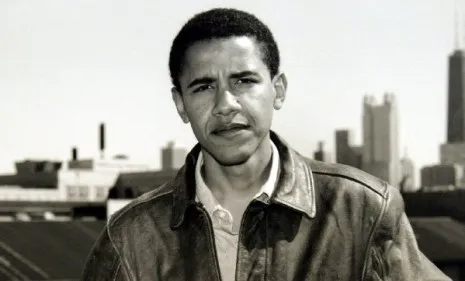
In my spare time, I’m involved in two book clubs, both of which met this past week. In one, the assigned book was A Promised Land, the first volume of President Barack Obama’s autobiography. It’s a long, dense and inspiring read. In the preface, Obama reflects
how my career in politics really started with a search for a place to fit in … and how it was only by hitching my wagon to something larger than myself that I was ultimately able to locate a community and purpose for my life.[2]
That is wise advice for all of us. Are you looking for real community? Do you want a place where you fit in? Do you want a tangible purpose for your life? Do you want to be part of something larger than yourself?
Hitch your wagon to something bigger than yourself. Connect your life with the life and teachings of Jesus. Become a participant in the ongoing story of God. Hold on to what matters. Be clear about what makes a good person, and what makes a just world. Resolve to say, with courage and hope, “As for me and my house, we will serve the Lord.”
Sermon 865 copyright © 2026 Rod Benson. Preached at North Rocks Community Church, Sydney, Australia, on Sunday 2 August 2026. Unless otherwise noted, Scripture quotations are from The Christian Standard Bible (Nashville: Holman Bible Publishers, 2020).
Rev Dr Rod Benson is General Secretary of the NSW Ecumenical Council and a minister of the Uniting Church in Australia serving at North Rocks Community Church in Sydney.
References
[1] Eugene Peterson, A Long Obedience in the Same Direction: Discipleship in an Instant Society (Downers Grove: IVP, 2000).
[2] Barack Obama, A Promised Land (New York: Viking, 2020), xiv (my emphasis).
Image source: Facebook/ Barack Obama
Taking it further…
Reflection questions
- What competing loyalties or “other gods” does Joshua identify in chapter 24, and why are they such a persistent temptation?
- What does Joshua mean by the challenge, “Choose this day whom you will serve”? Why is neutrality not an option?
- Barack Obama observed that he found his purpose in life “only by hitching my wagon to something larger than myself.” In what ways have you “hitched your wagon” to God’s intentions for your life?
Application questions
- How can regularly remembering God’s faithfulness in your own life help you remain steadfast during seasons of uncertainty or change?
- Joshua leads by personal example before asking others to respond. Where do you feel called to exercise that kind of moral or spiritual leadership?
- If someone observed your priorities, spending, speech, relationships, and use of time over the next month, what would they conclude you are really serving? What is one concrete change that would bring your life into closer alignment with your stated commitment to Jesus Christ?

