
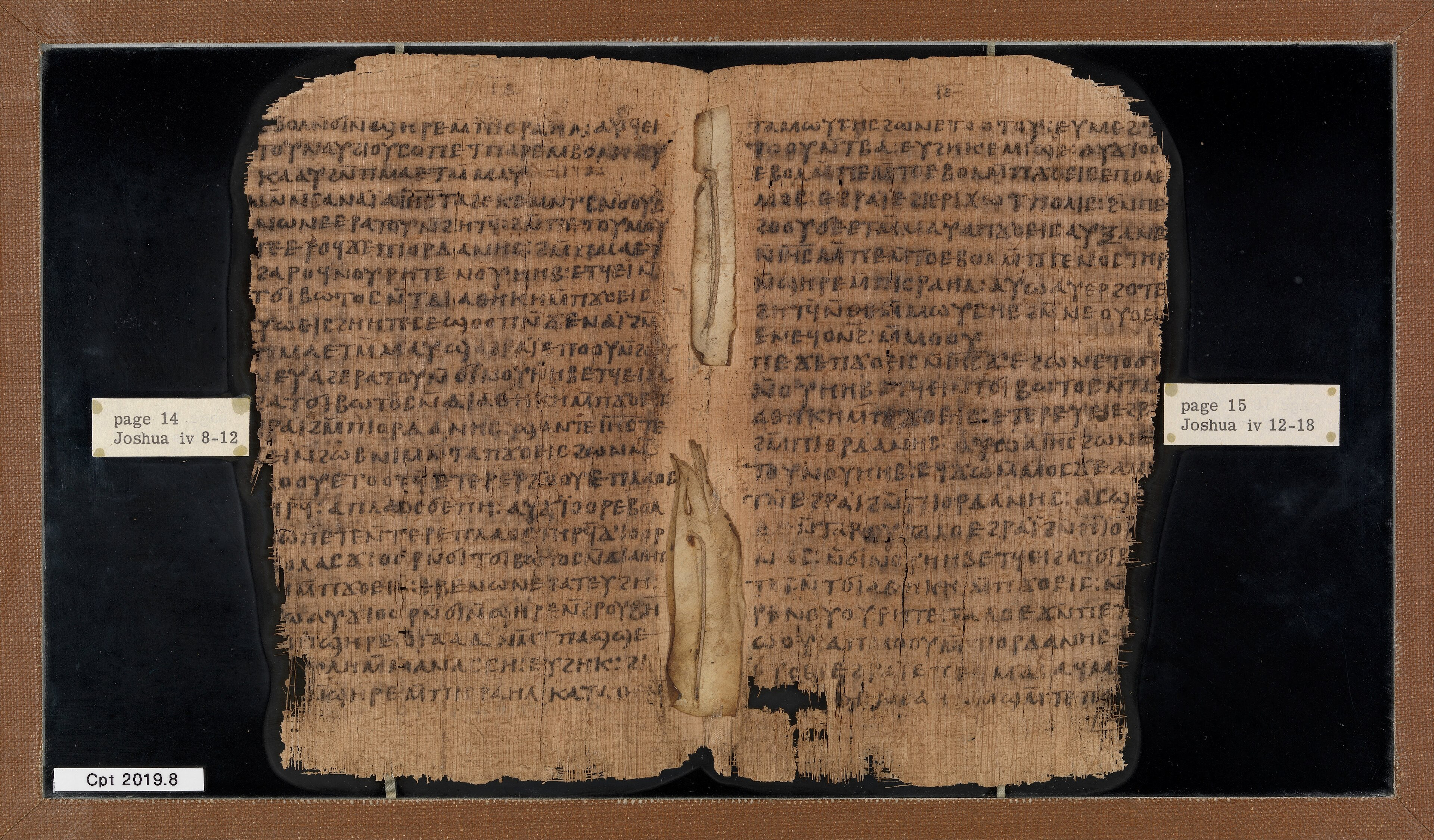
The question of the historicity of the Book of Joshua is contested in contemporary biblical scholarship. It is also a problem for non-academic readers. Along with what to do about the conquest narratives, otherwise known as the Canaanite genocide, the issue of whether the text presents actual historical events or folk myth affects how one reads the book devotionally or prepares sermons on it.
Modern readers are often confronted with a stark choice: either the events happened substantially as described, or the text should be regarded primarily as theological myth or national memory. Yet the scholarly discussion is considerably more nuanced than this polarity suggests.
The Book of Joshua presents itself as a historical narrative describing Israel’s entry into Canaan under the leadership of Joshua following the death of Moses. The book narrates military campaigns, covenant ceremonies, tribal allocations, and the establishment of Israel in the land promised to Abraham. Traditionally, Jewish and Christian interpreters regarded these events as essentially historical. Ancient interpreters generally assumed that Joshua described real people, real battles, and a divinely guided conquest occurring sometime in the Late Bronze Age, often dated to the thirteenth century BCE.
However, beginning especially in the nineteenth century, archaeological discoveries and critical biblical scholarship complicated this straightforward reading. Scholars increasingly questioned whether the conquest described in Joshua could be reconciled with the material evidence from Canaanite cities and settlement patterns. This debate intensified throughout the twentieth century and continues today.
One traditional position is often called the “maximalist” approach. Scholars in this camp maintain that the Book of Joshua substantially preserves historical memory of Israel’s entry into Canaan, even if some details are stylised, compressed, or theologically shaped. Archaeologists such as John Garstang and later conservative interpreters argued that certain destruction layers at sites like Jericho and Hazor provide evidence compatible with the biblical narrative. More recent evangelical scholars often defend a modified version of this position, suggesting that while Joshua employs ancient Near Eastern rhetorical conventions, the book still refers to genuine historical events.
A key argument for this view is that ancient historiography was never expected to function like modern critical history writing. Ancient texts routinely used hyperbole, selective narration, and theological interpretation. Thus, statements such as Joshua “left no survivors” may reflect military rhetoric rather than literal extermination. Similar exaggerations are found in Egyptian and Mesopotamian royal inscriptions. According to this perspective, the presence of theological shaping does not invalidate the historical core of the narrative.
Yet many historians and archaeologists remain unconvinced. Excavations at sites associated with Joshua’s conquest have often produced ambiguous or contradictory results. The famous case of Jericho remains central. Kathleen Kenyon’s excavations in the 1950s concluded that the city was either sparsely inhabited or already destroyed by the time Israel would traditionally have arrived. Likewise, Ai appears not to have been a major occupied city during the proposed conquest period. Such findings led many scholars to conclude that the conquest narrative cannot be read as straightforward military history.
This gave rise to alternative models for Israel’s origins. One influential proposal was the “peaceful infiltration” theory associated with Albrecht Alt and Martin Noth. Rather than a sudden conquest, Israelite groups may gradually have settled in the hill country over generations. Another approach, championed by George Mendenhall and Norman Gottwald, proposed a “peasant revolt” model, suggesting that Israel emerged internally from oppressed Canaanite populations rather than invading from outside.
These theories shifted scholarly attention away from conquest toward social formation. Archaeological evidence from the central hill country reveals a dramatic increase in small agrarian settlements during the Iron Age I period. Many scholars now see this as evidence for the emergence of early Israel. The question is whether these settlers were external invaders, internal reformers, displaced populations, or some combination of all three.
More radically, some scholars regard Joshua largely as a theological or ideological composition written centuries after the events it describes. Within this view, the book belongs to the so-called Deuteronomistic History, extending from Deuteronomy through Kings, likely edited during the monarchic or exilic periods. Scholars such as Martin Noth argued that these texts were shaped to explain Israel’s later national crises through theological reflection on covenant obedience and disobedience.
From this perspective, Joshua functions less as objective history and more as theological memory. The narrative presents an idealised account of Israel’s beginnings in the land. The emphasis falls not on modern historical precision but on covenant faithfulness, divine promise, and communal identity. The land is portrayed as Yahweh’s gift, received through obedience and trust.
This does not necessarily mean the text is “mere myth” in the modern sense of falsehood. In biblical studies, myth often refers to a narrative conveying profound communal and theological meaning irrespective of strict historical verification. Even scholars sceptical of Joshua’s historical reliability usually acknowledge that the book preserves ancient traditions, memories, and ideological concerns rooted in Israel’s experience.
For preachers, one of the greatest challenges concerns the book’s violence. Joshua contains narratives of herem, the “ban” or total destruction of enemies, which modern readers often find morally troubling. Here again historical questions matter. Some interpreters argue that the conquest accounts are heavily exaggerated war rhetoric rather than descriptions of literal genocide. Others contend that the narratives reflect ancient theological assumptions shaped by tribal warfare and national identity formation.
Critical scholarship has forced theologians and pastors to wrestle more honestly with these texts. The preacher can no longer assume that congregations will simply accept Joshua as transparent history. Nor can one easily dismiss the ethical difficulties posed by divine commands to destroy entire populations. Yet avoiding the questions altogether risks intellectual and pastoral shallowness.
A fruitful approach for sermon preparation may involve recognising several layers simultaneously. First, Joshua should be taken seriously as Israel’s sacred memory. Whether or not every event occurred exactly as narrated, the text reflects how ancient Israel understood God’s covenantal relationship with the people and the land.
Second, the narratives emerge from genuine historical processes surrounding the formation of Israel in Canaan, even if archaeology complicates simplistic readings.
Third, the book must be interpreted canonically and theologically within the broader biblical witness, including prophetic critiques of violence and the radically enemy-embracing ethics of Jesus.
The modern debate over the historicity of Joshua need not destroy the book’s theological significance. Rather, it invites more mature reading practices. Historical criticism can help distinguish between ancient literary conventions and modern assumptions about factual reporting. Archaeology can illuminate the social world behind the text without necessarily eliminating faith. Theology can explore how communities construct identity through narrative memory.
Joshua confronts readers with enduring questions: How does a community remember its origins? How are divine promises interpreted amid conflict? How should sacred texts involving violence be read in later ethical contexts? And what does faithfulness mean when historical evidence remains partial and contested?
For contemporary preaching, the wisest course lies between naïve literalism and dismissive scepticism. The Book of Joshua is neither reducible to modern historiography nor emptied of historical substance altogether. Rather, it is a complex theological narrative shaped by memory, tradition, identity, and faith. It is a sacred text whose power lies partly in its identity as sacred Scripture and partly in the hermeneutic tensions that continue to surround it.
Rev Dr Rod Benson is General Secretary of the NSW Ecumenical Council and a minister of the Uniting Church in Australia serving at North Rocks Community Church in Sydney.
Image source: Wikipedia

