
A Christian call for peace with justice
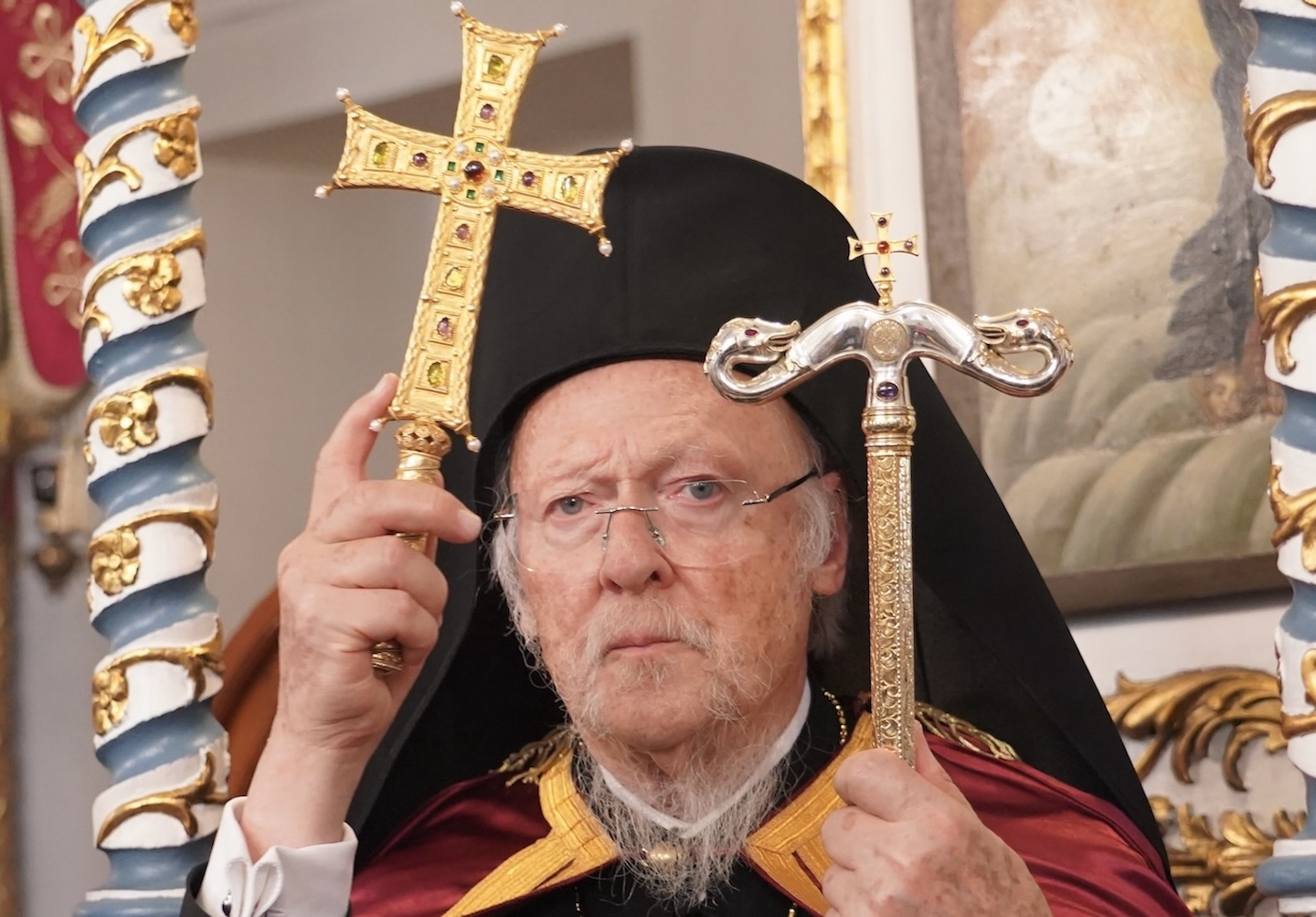
The Ecumenical Patriarch’s recent witness to peace raises profound theological and ethical questions for Christians everywhere. His rejection of the language of “holy war” is a welcome reaffirmation of a central conviction of the Christian faith. In an age marked by renewed militarisation, ideological nationalism, and the sacralisation of political violence, his words deserve careful attention by the whole Church and by national governments fighting and funding wars in many parts of our world.
There can be no holy war
Earlier this week, Ecumenical Patriarch Bartholomew declared: “There has never been, nor will there ever be, a ‘holy war’.” This is not a slick political slogan but a reasoned theological judgment. By their nature, holiness belongs to God and war belongs to the tragic realm of human sin, injustice, and failure. However necessary military action may sometimes appear within the Christian just war tradition, it can never be holy. Holiness and war are mutually incompatible concepts.
History repeatedly demonstrates the danger of confusing the kingdom of God with the ambitions of any nation. Crusades, religious wars, colonial conquest, and modern nationalist conflicts have all been accompanied by attempts to enlist God on one side or another. The New Testament presents Jesus not as a conqueror who triumphs through violence but as the crucified and risen Lord who overcomes evil through self-giving love.
That is the essence of Christianity. That is the source of its distinctiveness and power to transform persons, communities and institutions. That is Christianity’s most dangerous idea. Christians may disagree about the legitimacy of particular wars, but they should reject any suggestion that warfare itself can be sacred. War is inherently unholy.
The tragedy of Christian division
Bartholomew’s comments on the war in Ukraine are especially poignant because they concern two peoples who share the Orthodox faith. His lament is not only that Russia invaded Ukraine, but that one Orthodox church has justified the conflict in explicitly religious terms.
Whatever one’s political assessment of the war in Ukraine, the theological issue is clear. The Church exists to call persons and nations to repentance, justice, mercy and peace. The Church compromises its prophetic vocation when it becomes an instrument of state ideology or allows nationalism to eclipse the Gospel of Jesus. A Christian contradicts their redemptive purpose when they defend state ideology that glorifies power and war at the expense of justice and peace.
This warning extends beyond Eastern Orthodoxy. Every Christian tradition must ask whether its public witness serves Christ’s kingdom or merely baptises the interests of its own nation or political tribe. Every Christian tradition should ask its leaders to clarify their views on the efficacy of war and violence as legitimate means to secure justice and peace.
Standing with the persecuted
The Patriarch also reminds the Church that Christians continue to suffer persecution, particularly in the Middle East. The birthplace of Christianity remains marked by war, displacement, and uncertainty for many ancient Christian communities.
Such concern should never become sectarian. Christians are called to defend the dignity and rights of all people, regardless of religion or nationality. The same moral concern that seeks protection for Christian minorities should also embrace Muslims, Jews, Yazidis, Druze, Bahá’ís, and every vulnerable community threatened by violence or discrimination.
At the heart of Bartholomew’s message lies a deeply biblical vision of the Church. The Resurrection inaugurates a new creation in which hatred and vengeance no longer have the final word. Christians are called to embody that reality through forgiveness, reconciliation, hospitality, and peacemaking.
This is not political naïveté. Peace without justice preserves oppression, while justice pursued without regard for peace can become another form of domination. Scripture consistently holds these together. The prophets demanded justice in a world filled with injustice. Jesus blessed the peacemakers, not the warmongers. The Apostles proclaimed reconciliation through the cross, not by way of crushing one’s enemies and killing those with whom one disagrees.
What this means for Australia
Although Australia is geographically distant from many military conflicts, we cannot regard ourselves as a nation detached from the consequences of such conflict. Our political and military alliances, defence policies, humanitarian commitments, migration programs, and diplomacy all shape the international order in which we participate. This is the way of international diplomacy, and when we get the settings right, we give justice and peace a chance to flourish.
Christians should therefore encourage Australian governments to pursue peace with justice as a defining objective of foreign policy. This will take different forms in different global and regional situations, but it includes goods such as sustained investment in diplomacy, generous humanitarian assistance, support for international institutions that uphold the rule of law, and principled advocacy for human rights irrespective of political alliances.
Australia should oppose aggression whether committed by allies or adversaries, condemn violations of international humanitarian law wherever they occur, and support credible mechanisms for accountability. A nation respected for fairness, consistency, and commitment to international law contributes more effectively to lasting global stability than one perceived as applying different standards to different conflicts. That is a vision for Australia that I love and support.
A Christian responsibility
Patriarch Bartholomew’s appeal addresses not only governments but the Church. Christians cannot credibly advocate peace internationally while nurturing hostility or ideological division within their own communities. Every Church and every congregation is called to become a school of reconciliation where justice is pursued humbly and forgiveness is practised sincerely. Where the Church does this well, it is in a position to speak powerfully and prophetically to national governments, demanding and commending concrete actions to eschew war and work for peace.
In rejecting the notion of “holy war,” the Ecumenical Patriarch recalls Christians everywhere to the heart of the Gospel of Jesus Christ. The Church exists not to sanctify violence but to bear noble witness to the in-breaking kingdom of God in which righteousness and peace embrace. That gospel witness is urgently needed in Australia and throughout the world, calling governments and peoples alike to foster a vision for a just peace, and to pursue actions designed to bring peace founded on justice, reconciliation, and the equal dignity of all.
Rev Dr Rod Benson is General Secretary of the NSW Ecumenical Council and a minister of the Uniting Church in Australia serving at North Rocks Community Church in Sydney.
Image source: Archons of the Ecumenical Patriarch

