
Ecological hermeneutics in congregational life
Biblical interpretation shapes Christian imagination long before it forges explicit ethical stances on public issues. How Christians understand what Scripture teaches about creation, human identity, salvation, possession, hope and responsibility influences how they inhabit the world. Ecological hermeneutics—the interpretation of texts with attention to the intrinsic value of Earth, the non-human creation, and human ecological responsibility—concerns more than occasional preaching about environmental issues. Ideally, it contributes to Christian formation.
Some church congregations say relatively little about the global ecological crisis because environmental science and public policy appear distant from Scripture. Others speak strongly about ecological issues while employing biblical passages largely as illustrations of conclusions reached elsewhere. A more constructive approach seeks to hold biblical interpretation, theological reflection and contemporary knowledge together while respecting their relative distinctiveness.
Recovering creatureliness
Modern Western culture frequently casts humans as autonomous agents standing over against something called “nature.” Scripture arguably offers resources for questioning this division. Humans belong to the earth from which they are formed. Their lives depend upon water, food, animals, seasons and land. They are creatures before they are cultivators, rulers or stewards.
The biblical affirmation that creation belongs to God also relativises human possession. Sabbath traditions interrupt continuous productivity. Biblical wisdom repeatedly places human life within larger patterns beyond human control. Romans chapter 8 portrays the whole creation as groaning and hoping. This wider frame does not deny distinctive human responsibilities but locates them within the context of what we might call creaturely dependence.
The familiar language of “stewardship” may appear antiquated but remains useful because it emphasises accountability to God. Yet an embrace of the notion of ecological hermeneutics supplements stewardship with concepts such as membership, kinship, participation, mutual dependence and limitation. Biblical scholarship on animals reminds us that non-human creatures are not mere symbols or resources within biblical narratives. These perspectives encourage Christians to understand themselves as responsible community participants rather than managers of the world’s resources and future.
Salvation, materiality and hope
Ecological interpretation also raises important questions about salvation. Some forms of popular Christianity treat the physical world as temporary scenery from which human souls will ultimately escape. Christian doctrines of creation, incarnation and bodily resurrection point in another direction. Material existence is precious, and biblical traditions of new creation and cosmic reconciliation provide resources for imagining salvation as more than the rescue of isolated individuals or a quest for a non-material utopia.
Eschatological texts are diverse and often symbolic and should not be converted into ecological predictions. Christian hope gives substantial reasons for regarding material creation as meaningful within God’s purposes. This has the power to transform congregational imagination. Ecological responsibility becomes connected not merely with “saving the environment” but with what Christians believe about God, creation and redemption.
Land, country and justice
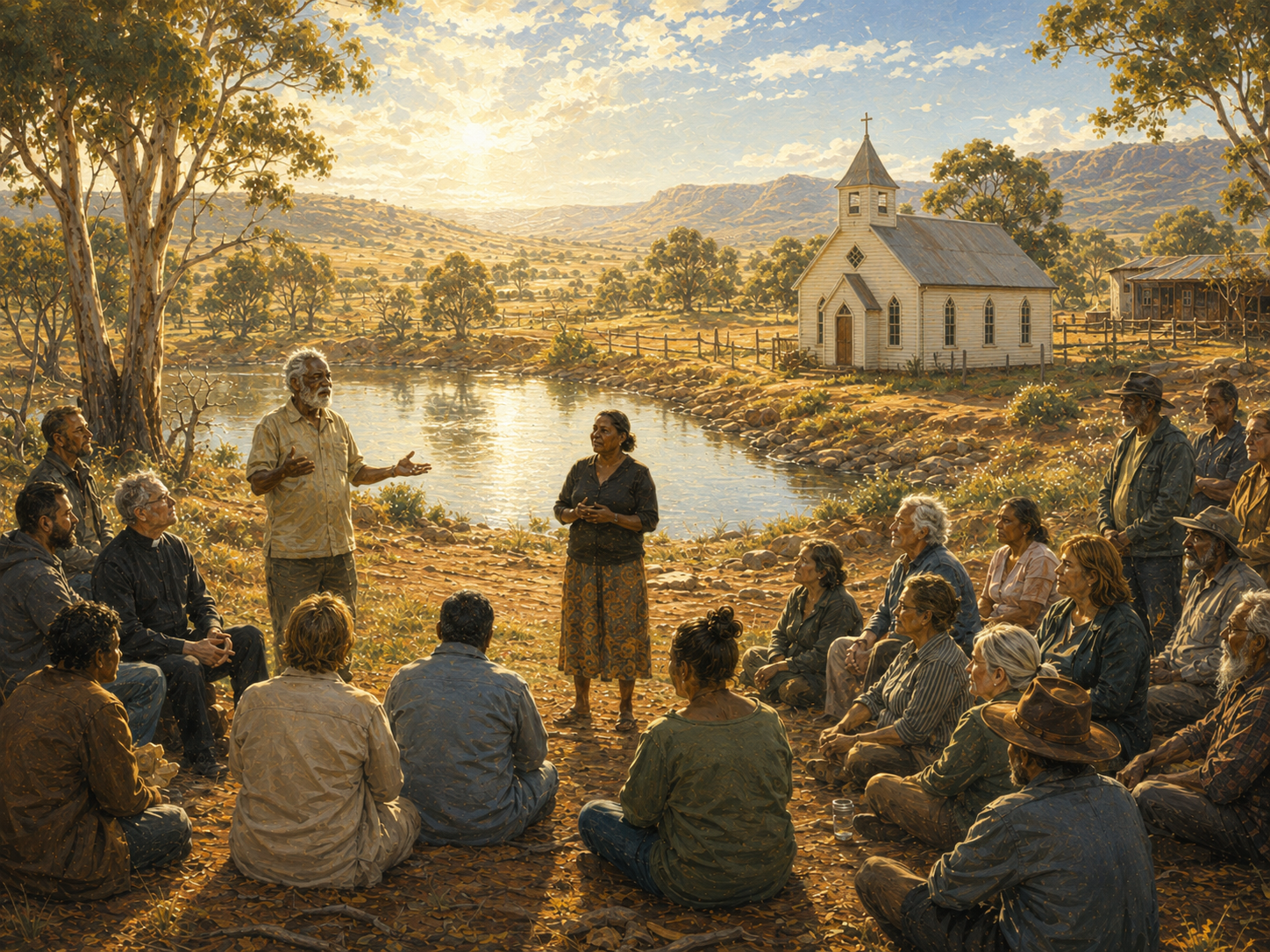
For Australian congregations, ecological interpretation should also take the language of land seriously. Land is never merely an abstract theological category. Faith operates within landscapes shaped by more than 60,000 years of Aboriginal and Torres Strait Islander relationships with Country and by the subsequent history of invasion, colonisation and dispossession. Indigenous ecological knowledge should not simply be extracted and incorporated into church programs as a useful supplement to Western environmentalism.
Indigenous Christians and communities possess their own rich theological voices and interpretive agency. Biblical traditions concerning land, promise, inheritance and belonging may consequently require rereading within a settler-colonial context. Such interpretation will sometimes disclose theological possibilities and at other times expose ways biblical language has been used to legitimise possession. Ecological hermeneutics is strengthened when these questions are neither romanticised nor avoided but wrestled with and embraced.
Moreover, the distribution of environmental harm is often unevenly spread among communities. Those with fewer economic and political resources may have fewer opportunities to avoid pollution, heat, food insecurity, water scarcity or displacement. Integral ecology offers a helpful framework because it connects care for the physical environment with social, economic and human questions rather than treating them as competing concerns.
Lament and pastoral response
Ecological hermeneutics also possesses a pastoral dimension that advocacy alone cannot provide. For many people, ecological crisis is not an abstract future problem. Bushfires, floods, drought, extreme heat, damaged landscapes and species loss may involve grief, trauma and disorientation. Christian responses should therefore include the spiritual practice of lament.
Biblical lament allows communities to acknowledge suffering without hurried explanation. It gives voice to grief, anger, bewilderment and hope. This is especially important when responding to natural disasters, where simplistic claims that particular events represent direct divine punishment can compound suffering and exceed what theology can responsibly know. Ecological preaching need not always conclude with a list of action points. Sometimes faithful interpretation simply helps communities mourn what has been lost.
Christian hope should likewise be distinguished from optimism. Hope does not guarantee that every threatened ecosystem will recover or that political action will succeed quickly. Nor does trust in divine providence absolve human responsibility. Hope may instead sustain truthful action when political and ecological outcomes remain uncertain.
Worship as ethical formation
Ecological hermeneutics enters congregational life not only through sermons but through all aspects of liturgy. For example, prayers of thanksgiving, confession and lament shape attitudes toward creation. Hymns provide theological vocabularies through which congregations imagine God’s relationship to the world. Baptism and Eucharist employ water, food and material elements, while seasonal observances can reconnect worship with creaturely life.
This is not to suggest that ecological worship is principally intended to mobilise Christians toward environmental activism. Christian worship is first directed toward God. If liturgy becomes merely an instrument for achieving predetermined political objectives, or endorsing specific policy settings, something of sacred importance is lost. Yet worship that celebrates the beauty of creation while leaving destructive habits entirely untouched may be equally inadequate. The relationship is better understood as formation. Worship forms people whose gratitude, repentance, restraint and hope can subsequently shape their action.
A practical congregational ecological hermeneutic might therefore ask six questions. What does the text say in its literary and historical context? What material world appears within it? What assumptions about land, animals or human power deserve critical examination? How does the passage relate to the wider Christian theological tradition? What does reliable contemporary knowledge tell us about the issue under consideration? And what faithful responses follow, while distinguishing theological principles from contestable policy judgments?
From interpretation to praxis
This method slows interpretation down, and that is one of its advantages. Ecological hermeneutics can influence preaching, Bible study, Christian education, prayer, investment, land use, energy consumption, food practices, advocacy and engagement with local communities. Its deeper contribution, however, is the formation of Christian imagination.
It encourages gratitude rather than entitlement, sufficiency rather than endless acquisition, solidarity rather than indifference, and humility rather than fantasies of unlimited human control. The church need not become simply another environmental organisation. It possesses distinctive resources concerning creation, repentance, justice, hope and the common good. Equally, those resources should not exempt it from learning from scientists, Indigenous knowledge holders, economists and communities directly affected by ecological disruption.
Ecological hermeneutics is therefore most valuable when it assists ordinary Christians to actively inhabit both Scripture and the contemporary world more attentively. Its purpose is not to make every biblical passage an environmental text. It is to help congregations recognise that Christian discipleship always takes place within the material creation Christians confess to be God’s world.
The usefulness of this method becomes clearest when it is tested against an actual text. Ezekiel 47:9 and 12, chosen for the 2026 Season of Creation theme, provides an especially instructive case. I will explore this in the next article in the series.
Rev Dr Rod Benson is General Secretary of the NSW Ecumenical Council and a minister of the Uniting Church in Australia serving at North Rocks Community Church in Sydney.
Image source: AI

